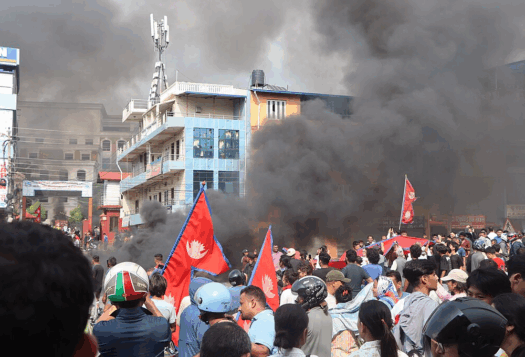
On September 8, 2025, youth protestors took to the streets of Kathmandu to protest rampant corruption, deepening inequality, and digital repression. At least 17 died in clashes between protestors and the state, triggering a second day of chaos and violence in which nearly 60 more perished, unknown arsonists set fire to government buildings, politicians’ homes, and businesses, and Prime Minister K.P. Sharma Oli resigned. On the evening of September 9, the Nepali army restored order; several days later, former Chief Justice Sushila Karki was sworn in as interim prime minister and announced March 2026 elections.
The remarkable political upheaval of September raised a number of critical questions: what drove the outpouring of mass frustration that toppled the government? How can the interim government—and the country as a whole—navigate the fraught political moment to hold legitimate, inclusive elections? Most importantly, what is required to address the concerns of Nepalis, implement lasting reforms, and deliver enduring stability and prosperity to the Himalayan nation?
In this collection, South Asian Voices’ editors compile perspectives on the causes of the September protests and the fresh challenges facing Nepal, including expert political, economic, and legal analysis.