




United States
Return to article
इस्लामाबाद मेमोरेंडम के बिना दुनिया
अमेरिका और ईरान के बीच तनाव चरम पर पहुँच रहा है| ऐसे में दुनिया समाधान के लिए क़तर और ओमान के साथ-साथ पाकिस्तान की ओर भी देख रही है। अमेरिकी राष्ट्रपति डोनाल्ड ट्रंप ने अमेरिकी हमलों को रोकने पर सहमति…
The World Without the Islamabad Memorandum
As tensions between the United States and Iran approach the breaking point, the world is looking to Pakistan, alongside Qatar and Oman, in search of solutions. U.S. President Donald Trump has agreed to pause U.S. strikes, offering a fragile window…
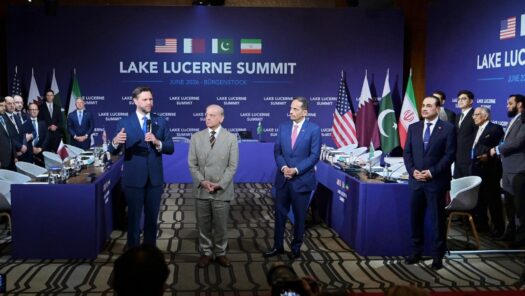
Why Pakistan Should Not Be Blamed When Peace Falters
Ahead of Lindsey Graham’s funeral in Washington, President Donald Trump offered what may prove to be the late U.S. senator’s most memorable epitaph. Graham, Trump quipped, had “never seen a war that he didn't like.” Indeed, Graham’s own recently leaked…
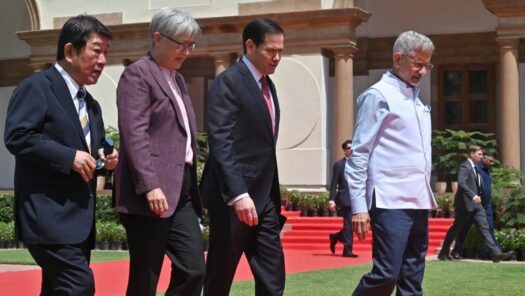
Why the Quad’s Functional Cooperation Still Matters in an Uncertain Indo-Pacific
The May 2026 Quadrilateral Security Dialogue (Quad) Foreign Ministers’ Meeting (FMM) reflected a concerted effort by the four member countries—Australia, India, Japan, and the United States—to reaffirm the grouping’s relevance and durability at a time when questions persist about its…
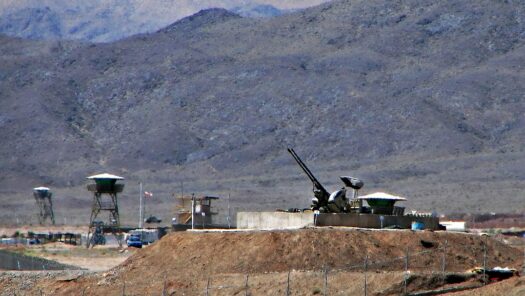
Eroding Nuclear Restraint: From Natanz to South Asia’s Next Crisis
The recent U.S.-Israel attack on Iran’s Natanz uranium-enrichment facility and the Iranian attack targeting Israel’s own nuclear enrichment facility near Dimona reflect an accelerating and dangerous shift in global nuclear politics: the erosion of the international norm against attacking critical…

SAV Q&A with Fahd Humayun: Pakistan and the “Islamabad Process”
On April 16, South Asian Voices spoke with Dr. Fahd Humayun about Pakistan's role as mediator and the prospects for the Pakistan-led peace process.