




Bangladesh has lived through fifteen years of elections in which genuine political competition was progressively dismantled. Under Sheikh Hasina’s rule from 2009 to 2024, the country came to resemble what comparative political scientists describe as a competitive authoritarian regime: formal elections continued to take place, but opposition parties were systematically weakened, harassed, and denied a level playing field. Political competition persisted in form, while opposition parties were stripped of the organizational, electoral, and institutional foundations required to function as a government-in-waiting. Regime-managed rivals were used to manufacture the appearance of pluralism. The result was not democratic alternation, but rule through managed elections that decimated the opposition.
Democracy, however, is not only about forming government. It is about protecting opposition as a permanent institution of power. A democracy is only as strong as its opposition and only as resilient as its capacity to tolerate defeat. As Bangladesh prepares for a historic election on February 12, policymakers would do well to recognize that this transition will succeed not simply if power changes hands, but if all parties are able to compete, lose, and return with the assurance that political defeat is temporary and political exclusion is unacceptable.
A Rare Democratic Opening
During Sheikh Hasina’s regime, opposition parties operated under conditions of sustained political repression and institutional marginalization. Comparative assessments document a long pattern of shrinking political space marked by the systematic targeting of opposition leaders, activists, and party organizations. As Freedom House has reported, the ruling party consolidated power not simply by winning elections, but by steadily undermining the organizational capacity, electoral reach, and institutional standing of its political rivals. This occurred through mass arrests of opposition activists, legal cases used to constrain party leadership, and restrictions on rallies and campaign activity. Local reporting documented widespread intimidation, violence, and the disruption of campaign events in the run-up to major elections, weakening opposition parties as functioning political institutions rather than viable contenders for power. The result was not merely polarization, but the systematic erosion of the opposition as a governing institution of democracy.
Bangladesh now stands at a rare democratic crossroads. Following the July 2024 uprising and the formation of an interim caretaker government led by Muhammad Yunus, political space has reopened with a degree of procedural credibility not seen in nearly two decades. The Election Commission has announced a timeline for national polls, and the party system, reshaped by the disqualification of the former ruling Awami League (AL) following legal proceedings arising from its role in mass violence against protesters during the uprising, is once again structured around genuine electoral competition between the Bangladesh Nationalist Party (BNP) and an eleven-party coalition that includes Jamaat-e-Islami and the National Citizen Party (NCP), alongside a growing field of smaller parties and independent candidates.
“A democracy is only as strong as its opposition and only as resilient as its capacity to tolerate defeat.”
Such party-system reconfiguration may raise questions about electoral legitimacy and representation, particularly in the absence of a large political party such as the AL. However, as David Bergman has argued, the absence of a major party does not automatically render an election illegitimate when it reflects accountability for past democratic violations and when voters retain meaningful avenues for political choice. One empirical implication of this argument is that legitimacy should be assessed by whether affected voters withdraw from politics or reattach to alternative political options. Evidence from a recent nationwide survey of more than 11,000 voters conducted by Bangladesh Election and Public Opinion Studies is consistent with this view. Rather than widespread disengagement, the data show substantial voter realignment: 48.2 percent of previous Awami League voters now indicate support for the BNP, while 29.9 percent report leaning toward Jamaat-e-Islami. This reattachment of voters across competing parties suggests that political representation is being reconstituted within the current competitive electoral field, with the result that electoral outcomes are no longer predetermined in the way they were under managed elections.
This is precisely the political opening that opposition parties in Bangladesh have long demanded: an environment in which they could compete freely for power, govern if elected, and serve as a parliamentary opposition if they were not. They sought elections that mattered and institutions that functioned. That moment has now arrived. However, if winners govern as before and losers return to confrontation, this transition will fail. For parties that endured years of repression and systematic marginalization, the temptation will be to treat power as something to be seized and defended at all costs. But democratic leadership requires a different instinct: to build institutions that protect not only today’s winners, but tomorrow’s losers.
The Ethics of Democratic Competition
In the run-up to the coming election, all major parties face a basic democratic obligation: to demonstrate restraint. That means campaigning without intimidation, mobilizing without coercion, and contesting without delegitimizing or trivializing rivals. It means accepting that uncertainty is not a threat to democracy, but its defining feature.
On election day, democracy will rest not only on turnout, but on process legitimacy. Responsible parties invest in polling agents, parallel vote tabulation, and electoral monitoring. They contest irregularities through legal channels, not through street mobilization. They treat the Election Commission as an institution to be strengthened, not captured. And they signal to their supporters that the ballot, not confrontation, is the ultimate source of authority.
In established democracies, parties lose elections without losing their future. That is not because elections are always perfect. It is because losers trust that the system will still belong to them tomorrow. Bangladesh’s parties now have the opportunity to build that trust.
The Responsibilities of the Winner
The next government will take power in a society marked by deep mistrust, politicized institutions, and an electorate that has learned to associate politics with coercion rather than choice. Years of repression and institutional capture have eroded confidence in state neutrality and transformed political contestation into a high-risk enterprise.
Governing such a country will require restraint as much as authority. The winner will face immediate pressures: containing factional conflict, restoring investor confidence, stabilizing a strained economy, responding to labor and student mobilization, and navigating a complex regional environment shaped by India, China, and Western partners.
It will also confront an unprecedented democratic mandate. In the coming election, citizens will cast two votes: one to elect their Member of Parliament in a single-member constituency and another on the July National Charter referendum. If approved by voters, the reform package is intended to curb the concentration of executive power that enabled prolonged personal rule, though its realization will depend on whether and how it is implemented by the elected government. Yet the central paradox of democratic transition is that parties entering office often inherit precisely the powers voters seek to limit. A government that delays, dilutes, or undermines these reforms may gain short-term discretion, but only at the cost of long-term legitimacy.
In this context, the temptation to centralize authority, neutralize rivals, and securitize dissent will be strong. But democratic reconstruction demands the opposite. Power should not be used to criminalize opposition, capture institutions, or convert the state into a partisan instrument. A democratic victory is not a license to rule without rivals; it is a mandate to govern with them.
The next government should therefore do what its predecessor refused to do: protect opposition rights, preserve institutional neutrality, and accept that its legitimacy rests not only on winning office, but on making political loss safe, temporary, and politically meaningful. In practice, this requires a set of enforceable institutional guardrails: limits on the use of criminal law and pretrial detention (jailing individuals before conviction) against opposition figures, guaranteed opposition access to parliament and public media, protection of peaceful assembly and campaigning, and credible insulation of electoral administration, courts, and law enforcement from partisan direction. Without such safeguards, electoral competition remains zero-sum, making democratic restraint unlikely to be sustained.
Democratic recovery will also require restoring the independence of the media and the autonomy of civil society. Over the past decade, segments of the media and civic sector came to operate less as watchdogs than as instruments of political legitimacy, reinforcing the narratives of those in power and normalizing the marginalization of opposition. Such “loyal” media ecosystems created an echo chamber around incumbents, insulating them from scrutiny and distorting public accountability.
Power that is not checked corrodes; power that accepts scrutiny endures. A viable democratic government should therefore resist the temptations of partisan applause, protect critical journalism from legal and political pressure, and rebuild civil society as an independent arena of oversight.
“The next government should therefore do what its predecessor refused to do: protect opposition rights, preserve institutional neutrality, and accept that its legitimacy rests not only on winning office, but on making political loss safe, temporary, and politically meaningful.”
The Responsibilities of the Opposition
In Bangladesh, electoral defeat has rarely been treated as a normal feature of democratic life. Losing office has carried high political costs: exclusion from decisionmaking, vulnerability to legal and administrative pressure, and, at times, systematic marginalization; not to mention intimidation, physical harm, and jail. This experience has shaped party behavior. Elections have been approached as zero-sum contests, and opposition has often been understood as a precarious condition rather than a permanent institutional role. If this transition is to mark a genuine break from the past, that understanding would have to change.
A party that loses a genuinely competitive election should not be politically marginal. It will retain a national organization, a substantial electoral base, and a legitimate parliamentary presence. In such a system, opposition is not a substitute for street mobilization or extra-institutional pressure. It is a core institution of democratic governance.
A responsible opposition should participate fully in parliament, lead legislative scrutiny, challenge budgets and policy proposals, expose corruption, and present an alternative program for the next election. Its objective is not regime change, but electoral alternation. In fact, the July National Charter explicitly recognizes this institutional role, including safeguards such as reserving the deputy speakership of a newly bicameral parliament for the opposition, though the durability of these protections will depend on whether the next government follows through on their implementation.
This is not a matter of political virtue, but political survival. As Adam Przeworski has argued, democracy stabilizes only when political actors accept that they can lose power without losing their political future. Parties that withdraw from parliament, boycott institutions, or substitute confrontation for contestation erode their organizational capacity and forfeit their credibility as governments-in-waiting. Parties that remain inside the system preserve elite cohesion, voter trust, and a viable path back to power. Bangladesh’s opposition parties should recognize this.
Yet in a post-authoritarian transition, the obligations of opposition, however demanding, ultimately depend on the conduct of those who govern. Opposition can function as an institution only if it is permitted to do so. Parliamentary scrutiny and electoral alternation are sustainable only when the party in power chooses restraint over domination and institutions over control. In this sense, while democratic responsibility is shared, the greater burden of safeguarding the transition necessarily falls on the winner.
Preventing the Next Authoritarian Turn
If Bangladesh is to complete its transition to true democracy, its next government should reject the logic of political exclusion, and its next opposition should reject the logic of permanent confrontation. Both must commit to building the institutions and norms that make competitive politics durable: independent electoral administration, parliamentary oversight, legal contestation of disputes, and the peaceful alternation of power.
A democracy is not secured by a single election. It is secured when no party fears extinction for losing one. This is the other half of democracy. And it is the part Bangladesh has been denied for far too long.
Views expressed are the author’s own and do not necessarily reflect the positions of South Asian Voices, the Stimson Center, or our supporters.
Also Read: Bangladesh Is Voting, but Stability Is Not on the Ballot
***
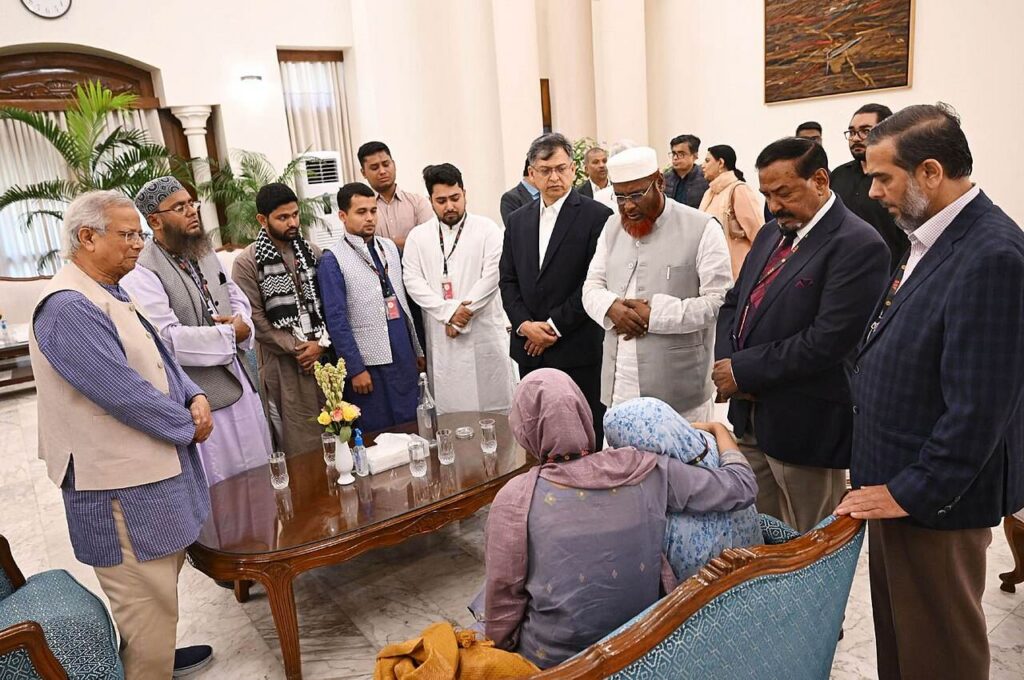
Image 1: Chief Adviser of the Government of Bangladesh via X
Image 2: Press Information Department of Bangladesh via Wikimedia Commons


