Nepal held elections on March 5, nearly six months after Gen Z protests led to the collapse of the government. The polls were touted as a clash between the legacy political establishment and a new generation frustrated by the persistent lack of economic opportunity and government accountability. On March 11, South Asian Voices spoke with Sonia Awale to make sense of the election outcome and discuss the road ahead for the Himalayan nation. Awale is the editor of Nepali Times and received a master’s degree in journalism from the University of Hong Kong.
The Rastriya Swatantra Party (RSP) swept to a convincing victory in last week’s election, securing 182 out of 275 seats, just shy of a two-thirds majority. What explains the party’s overwhelming success?
Yes, it was an RSP wave. One of the main reasons is that it was a protest vote against the established older parties who have been essentially rotating the premiership for the last couple of decades, especially after the 2015 Constitution. So, there was a whole lot of frustration with these three major parties: the Nepali Congress, the Communist Party of Nepal (Unified Marxist-Leninist) (UML), and the Communist Party of Nepal (Maoist Centre) (MC).
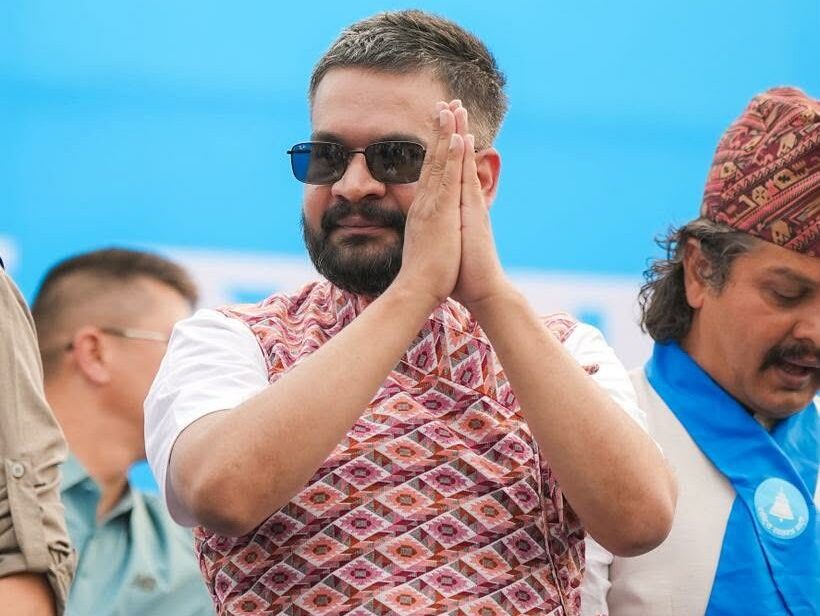
A second, and perhaps major reason, is that the RSP proposed former Kathmandu mayor Balendra Shah as the prime ministerial candidate of the party. That really did the trick, because he was a popular, very mysterious figure, and regardless of how his term as Kathmandu mayor was, he has developed sort of a cult following and an image as someone who delivers. So, I think having him as the prime ministerial candidate of the party was a very big part of the campaign.
Based on our reporting, the third factor is the Nepali diaspora. They don’t get to vote as of now, but they have influenced their families and friends back home in many ways. One of the platforms that RSP ran on was reducing out-migration of the youth, such that they could come back home and find jobs and better opportunities here. So, there were campaigns from diaspora members writing all over social media along the lines of, “if you want your children back home, vote for the RSP.”
So, there was a push from the diaspora, which also played a major part back in 2022, when RSP had just formed and Balendra Shah was not in the picture; even then, one of the main platform they ran on was bringing migrant workers, or at least Nepali youth, back home. Now, that might be challenging. We have at least four to five million Nepalis living, studying, or working abroad. How are they going to bring them home? It’s not going to happen overnight.
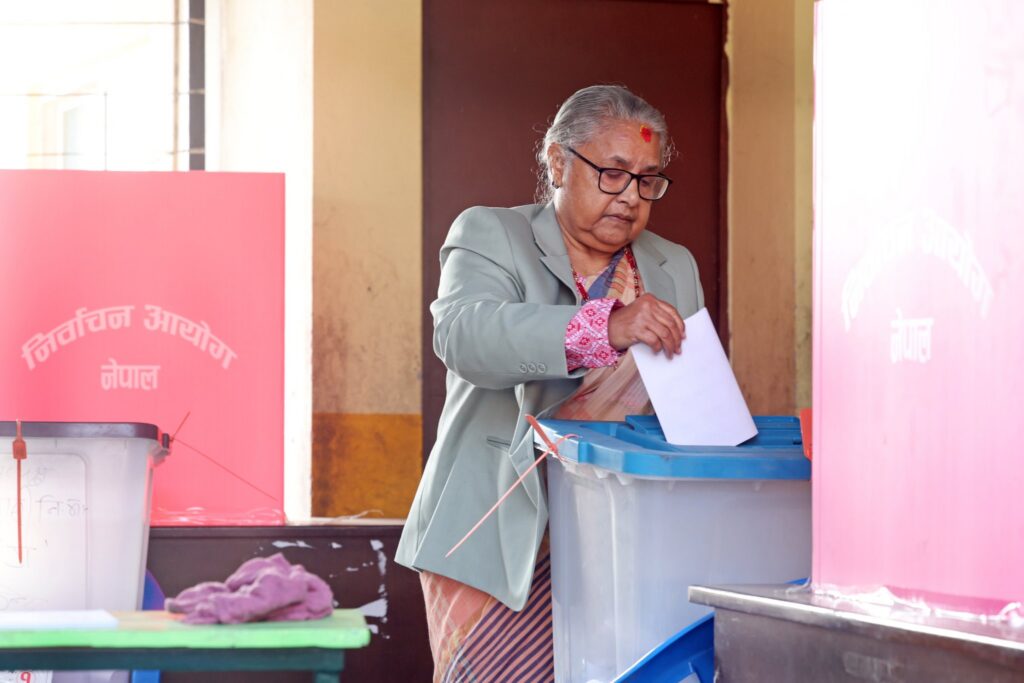
Voter turnout was around 58 percent, the lowest in nearly three decades. Which factors contributed to the depressed turnout, and what does that signal about the Nepali political environment as the new government takes power?
There were a couple of reasons. Again, people living outside the country can’t vote. So, that’s already like four or five million people who cannot show up to the polls.
A second reason is, even within the country, you have to vote in your home constituency, and that often means additional travel costs. For ordinary people, that could be at least fifteen to twenty thousand Nepali rupees (USD $100 to 135) round-trip per person. Not everyone can afford that.
Money is not the only factor: a lot of people also don’t vote perhaps because of work. Though the government did give leave for voting, convenience still matters. Given that a lot of migrants are here in Kathmandu, perhaps many of them chose not to go back home, which could have made a difference.
Third, I think there are also a lot of people who did not want to vote for the older parties, but were not confident about the newer parties yet. They say they’d rather not vote at all, arguing that “whoever gets elected, it will still be the same story again.”
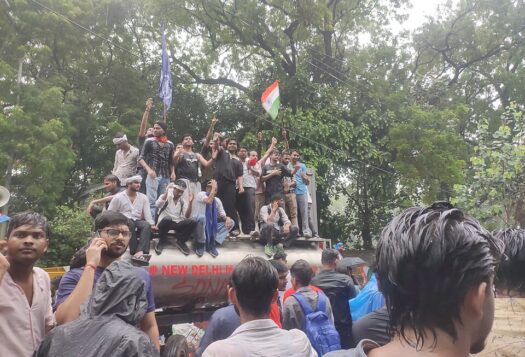
The Gen Z protests in September 2025 highlighted the tension between an older generation of entrenched political elites and a younger generation pushing for new leaders and new ideas to propel the country forward. The election results appear to indicate a rejection of the entrenched political elite—is that assessment correct? How was the spirit of the Gen Z protests reflected in the election outcome?
For sure, it was a rejection of the establishment. There’s no doubt about it.
Having said that, before the election, when I was speaking with some of the Gen Z activists, one of their major demands was investigations into the September 8 and 9 killings, with the report not having come out. But since then, there has been progress on that front. So, hopefully with a new government in place, or even before that, some of those demands can be met.
But yes, as I said earlier, this was a protest vote. In fact, if you had to critique something here, it would be the ideology of the RSP, which is still very unclear. Of course, we have their election manifesto, but when you really look at some of the agendas, you’re actually not sure where exactly they stand on a lot of issues. So, right now, people voting for Balen Shah, for RSP, they are voting for the popular names, not their ideology or strategy. They’re talking about 7 percent annual economic growth, but how are we getting to that? Even the campaign discourse about bringing Nepali diaspora back home—that’s four to five million people. What are we bringing them back to? If we do not have enough job opportunities here, how is that going to work out?
Unfortunately, now that people have voted for the RSP—and overwhelmingly so—there are such high expectations that some of them are probably not even possible to meet at this point in time. If these initial expectations are not met, people might again get frustrated. It’s easier to win elections than achieve effective governance.
“[The election] was a rejection of the establishment. There’s no doubt about it.”
Nepal’s new prime minister will be Balendra (Balen) Shah, a former engineer and rapper who served as the mayor of Kathmandu from 2022 to January 2026. What should readers expect from the country’s new leader?
That’s very difficult to answer, to be honest, because he’s a very mysterious figure. Half of his popularity is built on the fact that we don’t know much about him. In fact, he chooses not to speak with domestic media.
As mayor of Kathmandu, he was not as accessible as some of the other mayors. Again, that “aura” around him, that mystery, definitely adds to his popularity. But if you really look at his work, such as cleaning up Kathmandu and the beautification of the city, as well as reducing the bureaucratic hassle that the people of Kathmandu face, he has made things better for the city.
But at the same time, some of the more controversial issues have to do with what we call Sukhumbasi, which are people who don’t own land and may have been allotted land by the government. There was an issue with him displacing these people, as well as street vendors, without much prior notice and without so much as an alternative for these daily wage workers.
So, he’s done some good things, some not so good ones. But in an environment where you were not really seeing that many leaders who were creating tangible change, I think that really helped him gain some popularity.
If we go into his personal history, he is a structural engineer and a rapper. He was singing about social injustice early on his career, so you do see that he was angry and wanted change. But in some ways, his sudden rise to becoming mayor of Kathmandu was also a mystery, because it was such a rapid ascent. It’s difficult to answer the question, to be honest, because we are also not sure what to expect. But he’s with the RSP, and the party is full of technocrats who’ve done well in the field. That hopefully means there will be some well-informed policy decisions. Granted, you need good managers to run a country, technocrats alone aren’t sufficient. But I think it is also our responsibility to give the new government an opportunity to work it out.
You mentioned that one important policy priority for the RSP is reversing out-migration and bringing young Nepalis back home. Do we have any indication of how the RSP might actualize this policy agenda?
I would say it is somewhat unclear. Without even bringing migrant workers back home, at this point, we’d need to create 500,000 new jobs every year. How are we going to do that? The RSP’s focus on infrastructure, investment, and boosting the domestic economy are good priorities for sure, but they don’t yet have comprehensive strategies in place. We only have an election manifesto, after all. So, I think some details will only become clear as things move along.
In fact, even right now, as the crisis in West Asia continues, it puts two million Nepali workers in the region in the crossfire. How can we as a remittance-dependent economy navigate this situation? If, for some reason, they have to be rescued, we do not have the resources for that. Second, what will they come back to? How will our economy survive? I think RSP will plunge headlong into an economic turmoil. That impending economic crisis could be the very first challenge for their new government.
The release of the commission report on the Gen Z protests appears likely to be an important issue in the coming weeks. How will the new government look to navigate this politically sensitive matter?
I want to start off with the fact that the Sushila Karki government’s main priority was to conduct elections. So, I think that might be the reason why they were not so focused on the report, the content of which was likely to disrupt elections.
As for now, the new government being responsible for how to take the investigation further along is very interesting. Given that the RSP has nearly a super majority, they don’t really need any of the other parties for government formation. So, they could afford to lose their goodwill.
The sitting government in September is definitely responsible for the killings on September 8 and 9. But having said that, with regards to some of the attacks and arson that happened on the second day, there are some social media captures where you can identify some of the people involved, and if I’m not wrong, there were some RSP people involved. So, will they investigate that, too? There was also a sort of a jailbreak of Rabi Lamichhane, which they have denied. There was also the Kantipur Media Group office which was set on fire, for which a lot of people have blamed RSP. Some of these issues would present a conflict of interest.
Otherwise, I wouldn’t say they’ll have any other reservation. But again, we don’t have the full report. But I would like to think that they’ll move ahead with whatever comes next.
Although Shah is set to be prime minister, the party leader of the RSP is Rabi Lamichhane, an embattled political figure who was previously jailed on embezzlement charges. What do we know of the relationship between Lamichhane and Shah, and how will this dynamic influence the trajectory Nepali politics in the post-election period?
Their political careers started about the same time. In the 2022 election, it was Balen Shah who became the mayor of Kathmandu. Then, a couple of months after that, it was Rabi Lamichhane who formed the party that went on to become the fourth largest in parliament. In some ways, you could say Rabi Lamichhane learned from Balen Shah, in terms of using social media to challenge the establishment and become an alternative force.
The only difference between them was that Balen Shah was more of an independent, and Rabi Lamichhane went on to form a party and got into all kinds of controversies soon after. Things have not been easy for him because these cases are still pending, which is why he cannot be the next prime minister. In fact, even his position as a parliamentarian likely makes use of some legal loopholes.
But the relationship between these two feels very sudden: announcing Balen as the RSP’s prime ministerial candidate was when they started working together; I don’t think there’s a history of them having worked together prior to that. In fact, for the longest time, analysts, media, and everyone thought of them to be rivals that don’t get along with each other.
Even now, there’s a lot of speculation about what’s going to happen a couple of months into this alliance. Will they be able to handle two heads in one party? The last time there was a situation like this was in 2022, when UML and Maoist Centre came together. It was after the election, but they came together and formed a new party called the Communist Party of Nepal, and together they had a two-thirds majority. But these two had different party bosses, their egos clashed, things didn’t work out, and the party split.
So, right now, that is a possibility that something similar could happen within the RSP, because these are two very different personalities with their own agendas. If they’re able to work together, they should get five full years in government, which hasn’t happened in Nepal before. The only problem is if there’s internal conflict within the party itself. And it’s not in Lamichhane’s interest to take back Balen Shah as the prime ministerial candidate: That would be a major misstep, because a huge chunk of support for RSP comes from Balen Shah.
In fact, right before they announced Balen Shah as the prime ministerial candidate, RSP was quite unpopular. They had popular support in certain places but they did not have and they still don’t have a nationwide party structure. During the Gen Z protests in September, they were also not really well-liked, especially after the “jailbreak” of Rabi Lamichhane. There were some videos and photos of supporters that really backfired, and Rabi Lamichhane was forced to go back to his cell. Yes, there are pockets where they were extremely popular. But as a party, it was already losing touch; without Balen Shah there, it was not doing all that well.
Also, when RSP became the fourth largest party in parliament back in 2022, people expected them to be a solid opposition, because Nepal hadn’t had a proper opposition in such a long time. But they rushed to get into government twice and Rabi Lamichhane became home minister twice, presiding over his own cases, they went to government with the older parties that they are now protesting against, which are the UML and the Nepali Congress and the Maoists. RSP joined hands with the establishment, so people felt betrayed.
To sum it up, they were not that well liked before Balen Shah joined. Our reporters found that in a lot of places, people voted for RSP only because, for them, voting RSP was synonymous with voting for Balen Shah as prime minister. So, getting rid of him would be a big no, and I think the party definitely knows this.
“[I]t will really rest on how [Balen Shah and Rabi Lamichhane] actually come together. They’ve won the election, but how are they going to work together?”
Foreign countries—including India, China, and the United States—have watched political developments in Nepal closely. What can we tentatively expect from the new government’s foreign policy?
That is definitely something we’re also keeping a close eye on. The new government says they’re pursuing something called “development diplomacy,” which simply translates into Nepal’s non-aligned status and policy of equidistance with India and China. That’s consistent with the same policy as before.
However, one could argue, “in recent years, how much have we really followed our own policy?” That’s something that started back in the 1950s, when Nepal first opened up to the world and saw that sort of an equidistance with both of these two big powers could propel our own growth. In that way, it won’t be a big shift, but I think the RSP will probably not partake in some of the more controversial development projects. For example, the Millenium Challenge Corporation Compact with the United States was very controversial here. Also, China’s Belt and Road Initiative—infrastructure projects here in Nepal have always been very sensitive, especially the dealings with India and China, including our hydropower projects, for example.
As Nepali politics enter a new era, what important trends or developments should SAV readers look out for?
One would definitely be the current crisis in West Asia, especially because of workers who are in this highly sensitive conflict zone. This is not the first time this has happened, but this may continue for a while. It may not come to this, but if the new government has to rescue workers, that would be a major challenge. In addition, the economic fallout from the crisis in West Asia will be another big obstacle.
The second thing is that, while everyone is talking about RSP getting a near two-thirds majority, the party has no representatives in the upper house of the Nepali legislature. So, if they were to try to amend the constitution, for example, it would not be easy, and constitutional amendments were among the big demands of the Gen Z protest. Furthermore, in the 2022 election, RSP didn’t participate in provincial elections, which means they do not have any representatives at the provincial level, either. Then there’s local government where it has nominal presence at most. All this means that coordination and collaboration at different levels is not going to be so easy, because these positions are populated by older party loyalists. That will be a challenge, but also maybe an opportunity for everyone to come together.
Lastly, given the near two-thirds majority, the RSP should get a full five-year term, unless there’s an internal conflict. If there is an internal conflict, I’m afraid that’s not going to be very different from the highly unstable parliamentary politics we had for the last ten years. So, it will really rest on how these popular figures actually come together. They’ve won the election, but how are they going to work together?
Views expressed are the interviewee’s own and do not necessarily reflect the positions of South Asian Voices, the Stimson Center, or our supporters.
Also Read: Nepal in Churn: Political, Economic, and Constitutional Dimensions
***
Image 1: Balen Shah via X
Image 2: Sushila Karki via X