Editor’s Note: This is the second part of a two-part conversation with Avinash Paliwal. Read the first part here.
Last year’s political upheaval in Bangladesh and the ongoing conflict in Myanmar underscore significant challenges on India’s eastern flank. To make sense of these dynamics, South Asian Voices spoke with Dr. Avinash Paliwal on October 29 about Indian foreign policy toward Bangladesh, Myanmar, and the wider neighborhood. Dr. Paliwal is Reader in International Relations at the School of Oriental and African Studies, an expert on the international relations of South Asia, and the author of two books on India’s outlook towards its neighborhood, such as on India-Afghanistan ties and—most recently—India’s “near east.”
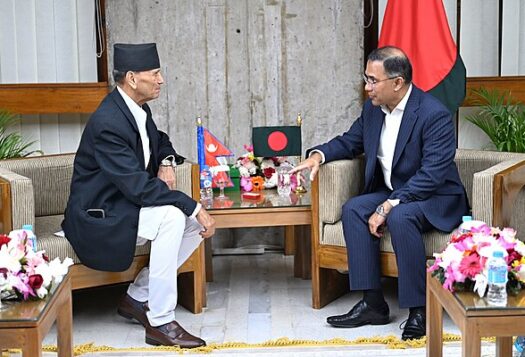
Under the interim Yunus government, India-Bangladesh ties have hit historic lows, as border and trade disputes pile up and Dhaka rehabilitates its relationship with Pakistan. Bangladesh also faces significant internal challenges—the country has taken only tentative steps toward reform and reconciliation, and much uncertainty remains ahead of planned elections in February 2026. Where do you see India-Bangladesh relations heading in the new year? Is there a realistic path back to constructive bilateral ties for the two neighbors?
Let me start with the last question first. Where is this going? It must be noted that for all the ills that we have seen being inflicted on this bilateral since August 5, 2024, when the Sheikh Hasina regime collapsed, the fact is that most, though not all, traditional political stakeholders in Bangladesh want the bilateral to actually stabilize. Be it the Bangladesh Nationalist Party (BNP), certainly the remnants of the Awami League (AL), the army chief, and even sections within the Jamaat-e-Islami. But almost all of them believe that right now is not the time for that conversation to occur, at least not in the open, because the environment is not conducive. But behind closed doors, they signal their desire for the bilateral to come back to some degree of normalcy.
Look, it’s a troubled relationship. But this is not the kind of hostility that you see between India and Pakistan, despite the rhetoric and all the media anxieties that have played out both in Bangladesh and in India and on social media, all the toxic politically charged rhetoric. India is just giving this whole situation time, and Bangladesh needs that time. I’m optimistic that the two sides can work together.
Let’s unpack the factors that can lead to a positive outcome and what the challenges are. The positive factor is that there is some degree of pragmatism in Dhaka, and it realizes that it cannot live without India. Geography, demography, culture, and history all militate against that. Even if you get Chinese financing, Chinese security support, and Pakistan’s reentry into Bangladesh—which could slow just as quickly as it seems to have witnessed an uptick—just the sheer geographic weight of India is so strong that you must learn to live with it in some ways. So, you can renegotiate that relationship, and that’s what we are seeing—the renegotiation happening.
India too is somewhat cornered internationally. The relationship with the United States is turbulent and unpredictable. With China, for all the noise of calming down, the relationship is still riddled with mistrust and security rivalry. So, the big geopolitical picture is dislocated and regionally you’re either fighting conflicts or planning to fight conflicts. You do not want your eastern front to be active.
In some senses, we’re going back to the 1960s, when India has just fought a war and lost to China. India has just fought a war with Pakistan that ended in a stalemate. It has an active insurgency in the Naga area and the Mizo areas and the Naxalbari movement starts around 1967. So, if you’re a security planner in Indira Gandhi’s first cabinet, this is a nightmare scenario, and you will not go and try to fix the biggest problem you have, you’ll try to fix the problem that you can, quickly. For Delhi, Bangladesh, right now, is a problem that you can do something about. This is why I retain a degree of optimism.
“For all the ills that we have seen being inflicted on this bilateral since August 5, 2024, when the Sheikh Hasina regime collapsed, the fact is that most, though not all, traditional political stakeholders in Bangladesh want the bilateral to actually stabilize.”
But there are challenges. First, from an Indian vantage, if tomorrow the political leadership in New Delhi wants to engage with Muhammad Yunus, they can do it. They have chosen not to do it, to a considerable extent because they do not see the interim government as a credible interlocutor. The timeline of this decision is also shaped by domestic political factors. Here I mean the forthcoming elections in Assam and West Bengal. Both states are critical for the Bharatiya Janata Party (BJP), and polarization is one way of winning them. The politics of these two states, which have powerful implications for the balance of power within the BJP, is militating against a quick rapprochement between India and Bangladesh at this point in time. I don’t see that changing till there is clarity on the electoral scene and what the picture looks like in these two states by mid-2026.
That’s one factor. The second is the elections that are being planned in Dhaka. Right now, the formal notification has not been issued, but the hope is that elections will happen by February 2026, latest by March. That is something New Delhi is waiting for. If they are not held, then Bangladesh is going into a deeper political abyss. In that situation, we don’t know whether Muhammad Yunus will last as chief advisor beyond February. Reform agendas have not gone anywhere. The economy is still stuck, and the bilateral trade with India has gone down because of this geopolitical friction.
Such a scenario will, once again, push the army chief General Waker-uz-Zaman to the fore. He has a direct channel with his Indian counterpart, is uncomfortable with the political status quo, the lack of effective institutions, especially the police, and the fact that the army is stretched thin to maintain law and order. But unlike August 2024, it will not be straightforward for Zaman to assert control this time round. As is often case, the political situation of the country also shapes views within the army brass. Unlike his Pakistani counterpart who has consolidated all political and military power within his office and being, such is not the luxury that Zaman enjoys.
But let’s assume elections are announced, and all the big political parties are on board. Ideally, this includes the Awami League in some shape and form. That’s the ideal scenario, even though there can still be violence. The kind of mandate that the election delivers will then be the second equally important determinant of where the India-Bangladesh relationship goes.
If, as many people expect, the BNP is able to form the government with some majority or being in a coalition of some sort, I do think that there are enough direct channels between the BNP leadership and New Delhi that they will start to put in the first building blocks of stability in this bilateral. But there’s no guarantee this will last. The BNP is fighting a lot of internal battles, which is often underappreciated. The BNP has to be careful that it does not lose the little bit of political capital and leverage that it has had in the run up to the elections.
The other party that has actually gained is the Jamaat-e-Islami. Here is a party, which has street presence, is not seen as corrupt, is fairly seen as being deliberately persecuted during the Hasina years, and their leader is proactive with both the communities in the country and Bangladeshi conservative diaspora in the UK and elsewhere in Europe. So, Jamaat has really emerged as a very strong contender, if not to lead the government, but to be an important political opposition. It is likely to shape the politics of the country for the next five to ten years.
Now, in that kind of cauldron, the dark horse of the Awami League truly kicks in. First, do you let them participate or not? Ideally, they should. Not letting the Awami League stand in this election would be a huge strategic error on the part of the interim government, I believe. If they do not, there will be factions of the Awami League who are likely to take a violent pathway to express their disaffection. But if they are offered an open field to come and participate in the election, the problem for the Awami Leaguers is they don’t have leaders on the ground who are willing to put their name on the ballot. They still worry for their lives and livelihoods, and face the risk of Hasina’s wrath from exile if they try to upend the family out of the party.
So, this election is a hugely important exercise: how it goes ahead and who comes out as the winner or perceptual winner will determine the India-Bangladesh relationship.
Finally, the bottom line from an Indian vantage is: what will be the status of Bangladeshi Hindus in this new formation, and India’s security in the Northeast? Is there is a new contract emergent after the elections? Now, one can criticize that Muslims in India are not being particularly respected, but that does not change India’s calculus; they still care about Bangladeshi Hindus.
Also, how does potential public pressure to prevent a rapprochement from happening factor in? Let’s assume BNP comes to power and says we want to rebuild ties, but under public pressure runs with the anti-India populist rhetoric just to remain in power. That would create a lot of problems, bring all the security anxieties India had about BNP supporting cross-border militants in northeast India or aligning with Jamaat’s politics, once again, to the fore.
Give us a sense of where India’s Myanmar policy stands today. There were reports about a year ago that there was some public engagement between New Delhi and some of the ethnic armed organizations, but obviously that has not meant turning entirely away from the junta. Then, there are recent reports of India exploring rare earth minerals in Kachin. Paint a picture for us of India’s pragmatic engagement with Myanmar.
Look, we need to understand that India does not have the kind of equities in Myanmar, the way it does in say Bangladesh, Nepal, Sri Lanka, or Bhutan. These are countries in which India has a lot of equity, a lot of expertise. There are deep-rooted interpersonal ties between India’s political leaders, bureaucrats, and the political and bureaucratic leadership of these countries. So, they can use levers. In Myanmar, that is not the case. The expertise and bureaucratic equities are limited, though not non-existent, when dealing with Naypyidaw and the ethnic armed organizations.
But three things have become very important with regards to Myanmar: scam centers, drugs, and rare earths. Scam centers have direct implications on Indian nationals. The amount of e-scamming or phone scamming of individuals across the country has gone up substantially over the past few years. The golden triangle from where the drugs come is also the center of gravity for the scams. There are many Indians who have been forcefully kidnapped or held hostage in those scam centers and made to work under subhuman conditions. Chinese and Thai nationals are also being targeted. So, scam centers are becoming a strategic concern and because they’re online, they have a global footprint. There’s a transnational criminal network operating in an ungoverned space. That’s not something that states like. Indian policy will be working with the junta. They’re the only ones who can deliver on this. Maybe the KIO can help with tactical stuff, but overall, it has to be the junta.
“Three things have become very important with regards to Myanmar: scam centers, drugs, and rare earths.”
The other thing here is that in Myanmar, Chinese and Indian interests are somewhat aligned—border stability, cracking down against ungoverned spaces, taming the drug trade. India might not say it out loud, but if the Chinese are clamping down on all these issues, it works for New Delhi.
But where the differences kick in sharply is rare earths. Rare earth mining in Myanmar is more or less being done by Chinese mining companies. This could be in ethnic armed organization-controlled areas. It could be in junta-controlled areas, anywhere. But the miner is a Chinese or has links back to Beijing or Yunnan. So, China has a lot of leverage and exerts a great degree of control. They can make the miners stop, determine who the customers are, all of it.
Interestingly, India has tried to use its equities with the Kachin and its long intelligence and security relationship with the Kachin Independence Organization (KIO) on this issue. A few years back, India decided that it needed to explore rare earths because it’s important for national security. If you want to build a semiconductor industry in India, make India the next Taiwan of sorts, then you need access to refined rare earths. That’s where Myanmar becomes important.
But the problem is that neither India nor the KIO have the kind of infrastructure to access the quantities of rare earths India needs. Those who have the infrastructure are tied to the Chinese. Even if India is able to marshal that kind of infrastructure and build a relationship with the KIO and the junta to get rare earths shipped to Indian territory, they don’t have the tech to refine it. China has a dominance over such tech, and it’s not giving it to the Americans, forget the Indians.
Unless that chokehold loosens, there won’t be much to see here. That’s where we see the rivalrous dynamic come in. Rare earths export controls have become a big issue for India in its negotiations with the Chinese over the recent few months.
Overall, Myanmar has become an interesting case of India losing out to Chinese influence. This would not have been the case had India gone in deep and worked with the KIO and built a relationship in the 1980s and 1990s. Then maybe today, it could have exploited rare earths, enjoyed that kind of influence. But that’s not the case.
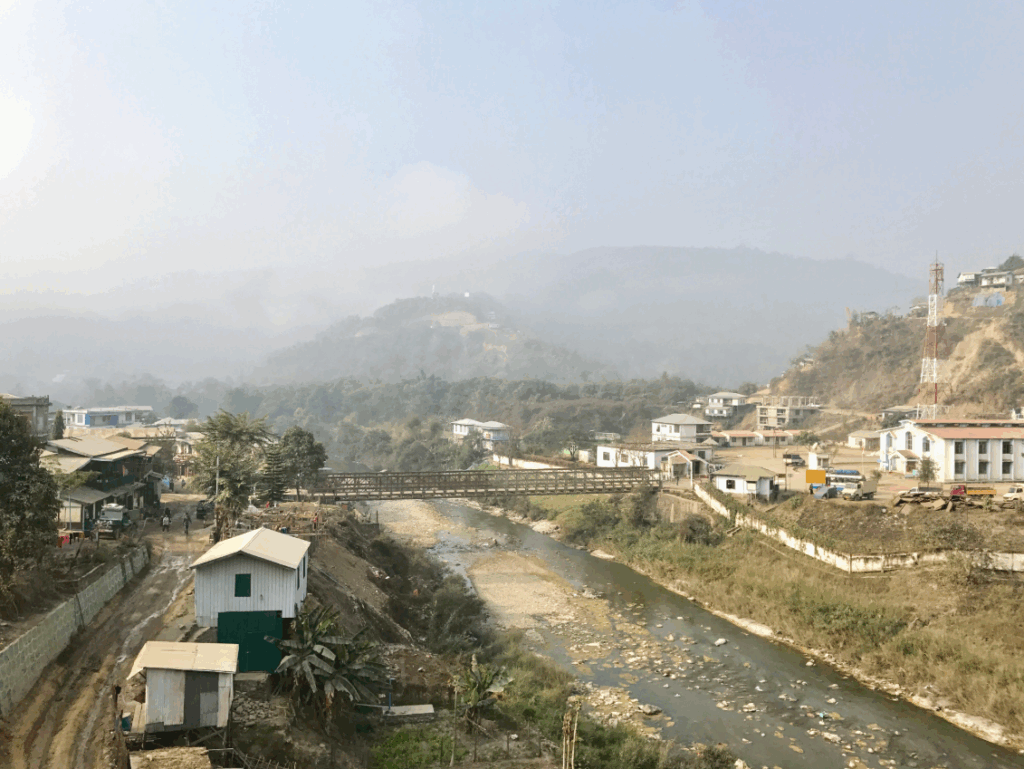
Let’s zoom out a little bit and talk about India’s neighborhood policy. You noted that nowadays there might be a feeling of “encirclement” for India given what’s going on in the region: over the past three years, we’ve had massive political upheaval in Sri Lanka, Bangladesh, and Nepal and interstate conflict between India and Pakistan, and now Pakistan and Afghanistan very recently. If India’s ability to become a leading power depends at least in part on stability in its neighborhood, how should India look to navigate these complexities going forward?
Do all these things that are happening challenge some of the fundamentals of India’s “Neighborhood First” policy? Yes and no.
Let me start with the no first. The causes of turmoil in India’s neighborhood are not necessarily of India’s making. Sheikh Hasina failed politically, and she had a lot of personal agency in that. This is not a person who’s becoming an autocrat because of external circumstances, or because the world is a bad place. No, she actively chose to do that for personal reasons, and she knew what she was doing. India worked with her, and that’s a choice. You can’t be an autocrat for too long and not have a functioning economy—there are limits to how far that can go. Those were both active choices and bad policies on behalf of Sheikh Hasina starting from 2011 or 2012 that led to that.
Of course, the shocks to the global supply chain with the pandemic and the Russia-Ukraine war exaggerated these issues, but the economic turmoil in India’s neighborhood is not necessarily of India’s making, or China’s for that matter. A lot of people blame Chinese debt trap diplomacy. But those were just bad policies.
The same for Nepal. I mean, you’ve got a troika of political leadership who can neither sort out the constitutional debates, nor can they fix the economy, nor can they provide for the people. And the biggest source of revenue is remittances. All of that shows structural weakness.
Pakistan, too. Pakistan’s economy has been doing badly, but that’s because of myopic economic planning, which is skewed in favor of a particular bunch of businessmen or the armed forces.
So, that’s my answer: this is not a so-called “ring of fire” of India’s making. This is something that it has had to deal with. This was long coming, and this is part of a larger churn that is happening. And not just in South Asia. This is happening in Southeast Asia, in Africa, the Middle East—every part of the world is seeing that kind of economic stress.
Now, of course, India could have anticipated it better. India could have dealt with it better in terms of its policy approaches. That’s where the criticism comes in—just saying you want a “Neighborhood First” policy means nothing. Honestly, to me, “Neighborhood First” means nothing because every country is different and you have to deal with every country differently. What India could have perhaps done better is to anticipate these challenges and engage with all different stakeholders in the neighborhood.
“‘Neighborhood First’ means nothing because every country is different and you have to deal with every country differently. What India could have perhaps done better is to anticipate these challenges and engage with all different stakeholders in the neighborhood.”
You don’t need to be a liberal interventionist or promoter of democracy the way Americans did it. They completely messed it up, in Afghanistan, in Iraq, and that’s a failed project. India never did that. India never professed to do that. But having the fundamentals of saying that, “look, in our neighborhood, which is important to us, we want to make sure the transfer of power is peaceful.” That’s not unachievable—making sure that leadership and regimes don’t change under duress. That is basically a commitment to keeping the social contract healthy to a certain extent.
Even that we did not see happen. Whether it was in terms of having a one-sided pro-Hasina approach, despite knowing the risks of that in Bangladesh, or the blockade of Nepal in 2015, or the coercive politics with Kathmandu.
In fairness, India did try to talk to Pakistan. It was not really getting much out of that strategy, but it shouldn’t completely cull all channels with Pakistan. The 2021 ceasefire was a moment when India did try to make more out of politically, when Bajwa was the chief. But Imran Khan jeopardized that initiative to serve his ambitions. Bajwa was willing to work with India, and vice versa. It’s a counterfactual that we would never know the answer to now. But perhaps something more could have been done with that moment than was done. Khan killed an initiative, and by the time Munir became chief, India had lost interest in reinvesting political capital in a dialogue. I think that is where the choices that India made, and so did Pakistan, in terms of their policy approach and tactics, cost both countries.
All this offered China a lot more space in the region than it deserves or desires. That’s the other thing. China today feels that it’s a resident power in the neighborhood. But that’s not entirely of China’s doing, that’s also because of Indian miscalculation.
I do hope that all these crises lead to learning in New Delhi that partisanship or having your favorites in the neighborhood is a strategy that will not work in the long term. You need to work with systems, whoever comes in. Sri Lanka is a good case. Maldives is a good case. These are the positive stories—India is working with Muizzu closely now, working with Dissanayake closely in Colombo. Five years ago, I would have said there’s no way India would work with the Janatha Vimukthi Peramuna (JVP). So clearly, learning is also happening.
New Delhi is not blind to its own errors. There is an institutional feedback loop. I hope that the feedback loop shows resilience moving forward. Because I don’t buy this whole thing of “ring of fire,” to be honest. I don’t buy that India has just lost the neighborhood. It has not; it’s just facing a moment.
Let’s end with a look to the future. With the thaw we’re seeing in the India-China relationship right now, is there space to have a conversation about the accommodation of each other’s regional interests, at least to some extent? How could India shape Chinese engagement in the neighborhood in a way that would be positive for New Delhi as well?
Well, India is still anxious about China’s presence in the neighborhood. I don’t think India has learned to live with the extra-regional influence in its neighborhood at such an intimate, grounded level that has come into being over the last decade or so. I think the Indians are still figuring out where in the neighborhood they can work with the Chinese, and where they cannot.
For instance, Myanmar is a country where India is willing to work with the Chinese. In fact, India wants China to succeed in some senses. If China can usher in some stability in that country, it is in India’s net interest.
But the moment it comes to countries where India feels that its core interests could be at risk, like Nepal, Bangladesh, Sri Lanka, and Bhutan, then I think the conversation becomes complicated. I don’t think the two countries have learned yet to truly talk about those red lines. They’re talking to each other by doing things. The Chinese do something, say in Colombo, and then realize they’ve crossed the line and then they get a bit of pushback from the Indians.
But I think more than any other country, more than all the Indian Ocean Region for that matter, the biggest pinch point for India in terms of China’s neighborhood policy remains Pakistan. What we saw in May is perhaps for the first time in the history of this triangular relationship where the Sino-Pakistani structural alignment became operationalized in real time during an active conflict. A lot of the losses that India faced on day one of the conflict were enabled by Chinese technology. That’s significant. Now, Indian planners are talking about a “two-and-a-half front” conflict.
I do not foresee a dip happening in the China-Pakistan relationship. If anything, the Chinese will be even more supportive of Pakistan in the defense domain—they have tasted success.
India is preparing for the next conflict, but so are Pakistan and China, together. This is where I think the real negotiation between India and China will truly happen. My fear is that the Indians might be willing to have that conversation right now, but the Chinese are not interested. The Chinese feel they can play hardball with India, both in the bilateral space and the regional space. That is a serious challenge for India in the next four to five years.
Views expressed are the interviewee’s own and do not necessarily reflect the positions of South Asian Voices, the Stimson Center, or our supporters.
Also Read: SAV Q&A with Srinath Raghavan: India’s Multialignment Strategy and Neighborhood Policy
***
Image 1: Randhir Jaiswal via X
Image 2: Ericwinny via Wikimedia Commons