




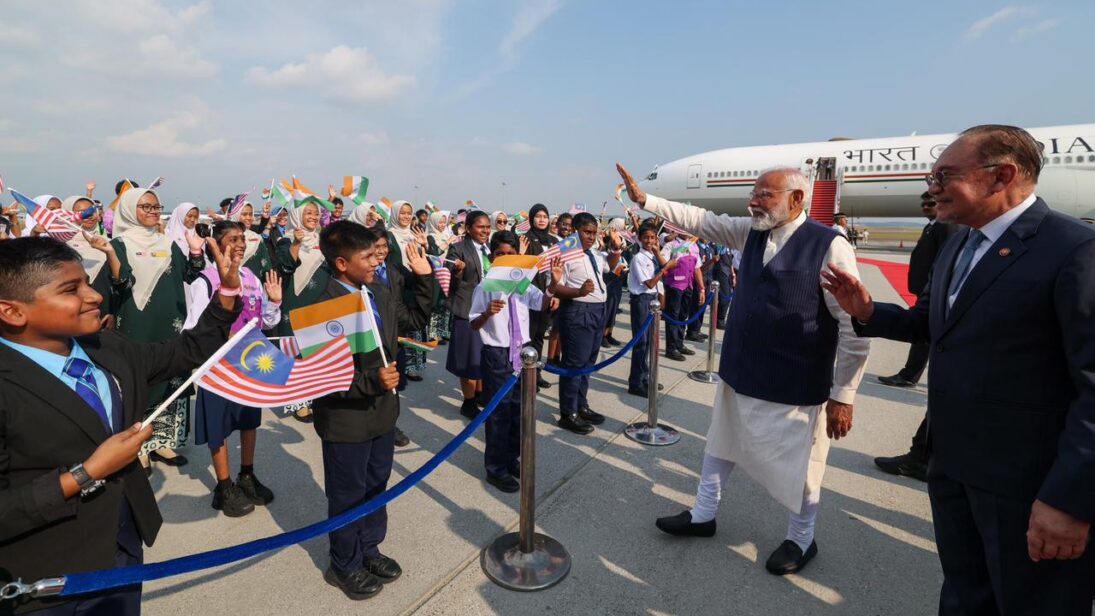
Indian Prime Minister Narendra Modi traveled to Malaysia in early February at the invitation of Malaysian Prime Minister Dato’ Seri Anwar Ibrahim. During his two-day visit, the two leaders discussed a range of issues of mutual interest, including trade, investment, energy cooperation, people-to-people ties, and strategic collaboration amid changing global dynamics.
This bilateral engagement was the first such meeting between the two leaders since the elevation of the India-Malaysia relationship to a Comprehensive Strategic Partnership in August 2024. As such, observers expected further progress on defense and security ties. However, while no breakthrough was made on defense procurement, both leaders expressed their satisfaction with the current state of the bilateral partnership, acknowledging regular exchanges, visits, staff talks, exercises, training courses, and defense industry collaboration. In order to advance the bilateral security partnership, India and Malaysia should now focus on defense industrial collaboration, counterterrorism coordination, and maritime security cooperation.
Historical Background
For the better part of three decades, India-Malaysia defense relations have steadily deepened. While the partnership started modestly, it has exhibited resilience even through political transitions, expanding in scope incrementally and yielding meaningful outcomes, particularly in army personnel training and the maintenance of defense equipment.
Historically, the post-Cold War period created space for defense engagement. The disintegration of the Soviet Union reduced ideological guardrails, allowing the Association of Southeast Asian Nations (ASEAN) and India to explore cooperative security frameworks. Among ASEAN countries, Malaysia was the first to sign a bilateral defense agreement with India in 1993.
The early defense relationship was pragmatic. Malaysia’s acquisition of MiG-29 fighters led it to seek Indian assistance in training and maintenance. The cooperation mechanism was subsequently extended when Malaysia inducted Sukhoi Su-30MKM fighters and Scorpène-class submarines. India has manufactured more than 200 Sukhoi fighter jets, offering it the experience and operational capacity to provide support to Malaysia’s smaller fleet. For example, more than 100 Malaysian technical personnel have been trained at Hindustan Aeronautics Limited (HAL) facilities in India. The same is true in the maritime domain: Malaysia operates a fleet of Scorpène-class submarines, six of which India has produced domestically at Mazagon Dock Shipyard. Cooperation on maintenance, repair, and overhaul has been driven by cost efficiency, technical familiarity, and lifecycle maintenance needs.
Last year, India and Malaysia delivered the defense partnership to new heights. The two countries finalized the terms of reference to establish the Strategic Affairs Working Group (SAWG) and the Su-30 Forum. The SAWG will act as a consultative mechanism to advance aspects of bilateral defense cooperation, while the Su-30 Forum will enable the exchange of expertise in maintenance of the Russian aircraft operated by both countries.
What began decades ago as a functional arrangement has given way to mutual trust and pragmatic cooperation driven by strategic, political, and perceptual dimensions. This consistent collaboration represents a promising foundation for the future.
“What began decades ago as a functional arrangement has given way to mutual trust and pragmatic cooperation driven by strategic, political, and perceptual dimensions.”
A Limited Partnership?
While technical and operational engagement has not yet translated into perfect strategic alignment, there remains a considerable opportunity for growth in bilateral security ties. For Malaysia, defense engagement with India is a vital part of its wider security framework. Similarly, India’s outreach in Southeast Asia can benefit from Malaysia’s insights and experience, ultimately enhancing regional stability.
For Malaysia, India is an important partner that has the power to influence the global political environment through its economic, military, and technological edge. However, after achieving upper-middle income status in 1996, Malaysia has most often looked eastward to Japan, South Korea, and China for economic and technological partnerships and focused on cultivating ties with countries in the Middle East for political and strategic reasons.
Despite cultural links and the substantial Indian diaspora in Malaysia, India has not been a top priority in Malaysian foreign policy in recent years. For one, New Delhi is absent from institutional frameworks like the Asia-Pacific Economic Cooperation (APEC) forum and the Regional Comprehensive Economic Partnership (RCEP), limiting its role to that of a diversification option rather than an indispensable partner for Putrajaya. In the defense realm, India is confined to issue-based collaboration without more formal alignment, making it a flexible partner rather than an ally and ultimately stopping short of a deep partnership on security.
Is this ceiling permanent? Recent developments suggest otherwise. The expansion of bilateral discussions into cyber security, artificial intelligence, and non-traditional maritime threats indicates a recognition on both sides that future security challenges lie beyond conventional defense issues. In January 2025, both countries inaugurated the Malaysia-India Security Dialogue to discuss cooperation and mutual assistance on security matters. Malaysia’s openness to Indian expertise in emerging technologies and India’s growing defense diplomacy in the Indo-Pacific point to a latent area of convergence.
Toward Deeper Cooperation
To build on the existing relationship, India and Malaysia should expand defense cooperation in defense industrial collaboration, counterterrorism, and maritime security.
In the defense industrial realm, Malaysia’s proactive stance in seeking technological and economic partnerships will likely open doors for India, given its growing prowess in defense innovations and emerging technologies. Furthermore, the recent establishment of HAL’s regional office in Kuala Lumpur is a promising step towards intensifying industrial collaboration. This has opened the door to potential defense exports of other HAL platforms, such as the HTT-40, Do-228, Advanced Light Helicopter (ALH), and Light Combat Helicopter (LCH), to Malaysia.
Elsewhere in the region, India’s export of the BrahMos missile system to the Philippines exemplifies the remarkable strides of the Indian defense industry in recent years; Malaysia is reportedly now also eyeing the air-launched variant of BrahMos. This move, alongside initiatives such as the Su-30 Forum, highlights a commitment to proactive engagement that can lead to new directions in defense cooperation. For instance, Malaysian Defence Minister Mohamed Khaled has announced modernization of the Su-30MKM by 2030. India can lead in such efforts by replacing Russian-origin N011M Bars with Indian components like Virupaksha. India and Malaysia can also work together to design chips for next-generation defence sensors and communication sets.
Beyond defense industrial collaboration, counterterrorism represents another fruitful avenue for expanded security cooperation. Both India and Malaysia perceive terrorism as a paramount threat, especially related to Islamic State-linked ideology, alleged cross-border networks, and online radicalization. In the recent bilateral meeting, both Modi and Ibrahim emphasized countering radicalization and combating the financing of terrorism, and agreed to cooperate in information and knowledge sharing, exchange of best practices, and capacity building. As transnational extremist networks increasingly link South and Southeast Asia, India and Malaysia’s co-chairing of the Counter-Terrorism Working Group and leadership of the upcoming Expert Working Group on Counter Terrorism Table-Top Exercise signals their intent to elevate the partnership from episodic coordination to sustained strategic collaboration.
Lastly, given Malaysia’s geographical position along the Malacca Strait and India’s growing maritime presence in the Eastern Indian Ocean, institutionalized maritime domain awareness (MDA) cooperation will be mutually beneficial. Regular information sharing through the Information Fusion Centre-Indian Ocean Region (IFC-IOR) could enhance monitoring of IUU fishing, piracy, and grey-zone activities. Rather than limiting engagement to maintenance and training, both sides should explore co-development in specific areas such as drone technology, AI-enabled surveillance systems, and cybersecurity tools. These three avenues—the defense industry, counterterrorism, and the maritime domain—hold significant promise as a tripartite agenda for growth in the India-Malaysia bilateral.
“A stronger security partnership with Malaysia reinforces India’s broader objective of deeper engagement in the regional security architecture while preserving ASEAN centrality.”
India-Malaysia Ties in Regional Context
Budding India-Malaysia ties should be seen as part of India’s long-term strategic reorientation towards Southeast Asia under its “Act East” policy. Since upgrading its earlier “Look East” policy in 2014, New Delhi has sought to institutionalize its economic, diplomatic, and security relations with ASEAN countries through forums like the ASEAN-India summit, ASEAN Regional Forum, East Asian Summit, and ASEAN Defence Ministers’ Meeting Plus. The ASEAN-centered approach has been supplemented by sub-regional initiatives like Mekong-Ganga Cooperation, the Indo-Pacific Ocean Initiative, and the Bay of Bengal Initiative for Multi-sectoral Technical and Economic Cooperation, providing India flexible platforms to advance regional cooperation. A stronger security partnership with Malaysia reinforces India’s broader objective of deeper engagement in the regional security architecture while preserving ASEAN centrality.
Within this wider engagement landscape, bilateral partnerships have served as the operational backbone of India’s strategy, providing India greater scope to work extensively in specific issue areas with individual countries. Such bilateral relationships also enable India to adopt a different approach to different countries based on strategic convergences. For instance, India’s engagement with Vietnam, the Philippines, and Indonesia rests on their shared concern about external interference in regional waters. By contrast, partnerships with Singapore and Malaysia have focused on broader issue sets, including industrial collaboration, AI, and emerging technologies. Elsewhere, engagement with mainland Southeast Asian countries like Myanmar, Thailand, and Cambodia has centered on connectivity.
Against this backdrop, deeper India-Malaysia ties would contribute to New Delhi’s defense industrial outreach in Southeast Asia. For instance, the HAL office established in Kuala Lumpur will also cater to the wider market in Southeast Asia. India’s success in maintaining and upgrading Malaysia’s Su-30 aircraft and Scorpène-class submarines reassures neighbours like Vietnam and Indonesia of Indian expertise in avionics and supply chain support.
In a regional and global context that seems ever more precarious, it is important for India and Malaysia to build on years of steady progress to make significant strides in their bilateral relationship. Deepening defense ties, strengthening counterterrorism exchanges, and investing in enhanced maritime domain cooperation could go a long way toward helping both countries diversify their strategic outlooks and enhance regional stability.
Views expressed are the author’s own and do not necessarily reflect the positions of South Asian Voices, the Stimson Center, or our supporters.
Also Read: The Intensification of India-Philippines Defense Engagement
***
Image 1: Narendra Modi via X
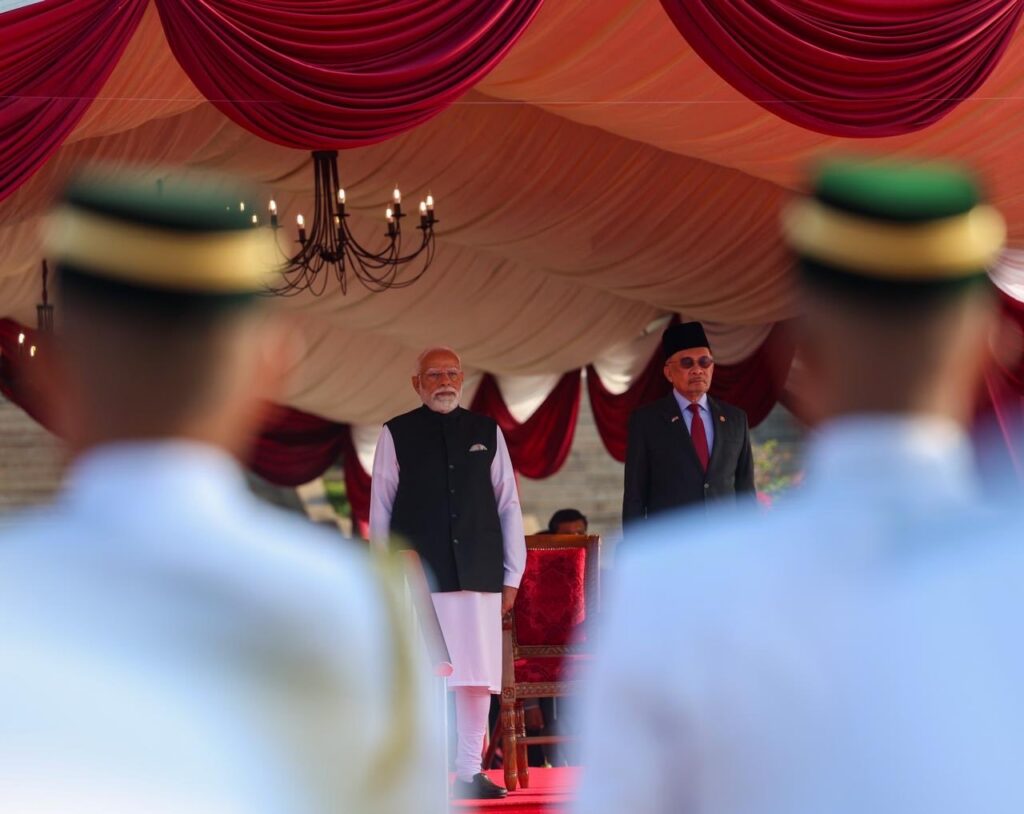
Image 2: Randhir Jaiswal via X


