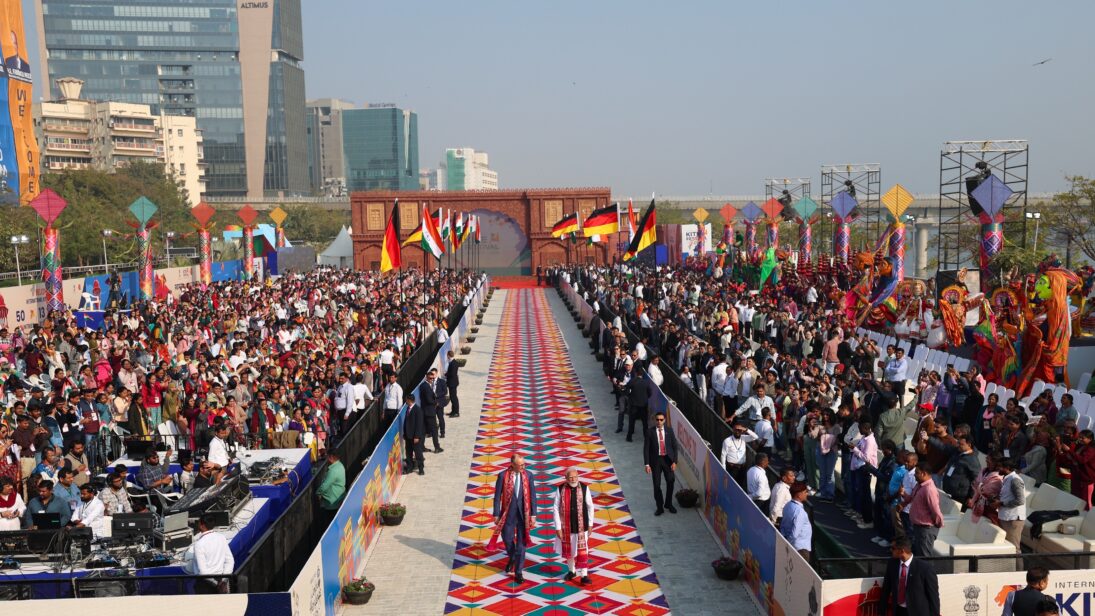
Within Europe, few bilateral relationships have expanded as rapidly in recent years as that of India and Germany. Notably, in January 2026, German Chancellor Friedrich Merz chose India as his first Asia visit since becoming chancellor in May 2025.
One key driver of this deepening relationship is shifts in German defense policy. Due to the Russian invasion of Ukraine and U.S. insistence that Europe contribute more to its defense, Berlin has departed from its post-World War II strategy of “military restraint” to undertake greater efforts to shore up its own defense. These developments have, in turn, strengthened Indo–German defense relations. Another factor is geoeconomic and technological diversification. Amid concern in Berlin and in Delhi about overreliance on Beijing and increasingly Washington, economic de-risking and greater supply-chain diversification have led to stronger Indo-German trade and technology cooperation. Yet the Indo-German relationship faces uncertainty in the future with the rise of the German far-right party, the Alternative für Deutschland (AfD).
Prior Bilateral Estrangement
Germany’s reputation has historically been positive in India because it does not carry the colonial legacy the United Kingdom does. However, the Indo–German relationship lacked strategic substance after World War II.
One primary factor was Germany’s culture of “military restraint,” coupled with its integration in the transatlantic security framework through the North Atlantic Treaty Organization (NATO). Berlin’s foreign policy instead prioritized non-military power, such as trade, developmental aid, cultural diplomacy, and human rights. This normative-centric foreign policy worldview significantly limited Indo-German security relations. For example, under the Angela Merkel government from 2005-2021, Germany maintained strict arms-export policies toward non-NATO countries and was reluctant to share military technology with India over human rights concerns.
Berlin’s policies conflicted with New Delhi’s need for partners with hard-power security capabilities, such as Paris, given border tensions with Islamabad and Beijing. Thus, although India and Germany signed a strategic partnership in 2000 and a bilateral defense agreement in 2006, the relationship centered more on commercial ties than security. In fact, Germany is India’s top trading partner within the European Union, followed by the Netherlands. The major exports from India to Germany include drugs and pharmaceuticals, garments, and electronic goods, while major exports from Germany to India include transport equipment, electrical and non-electrical machinery, and plastic materials.
In addition, Germany and India shared different views on China. As Senior Fellow Garima Mohan of the German Marshall Fund notes, most European countries prioritized their relationships with China and did not fully recognize India’s geopolitical importance. Germany specifically had long prioritized its relationship with China over India; much like Washington, Berlin believed that engaging economically with Beijing would make the country more politically liberal. In addition, German businesses sought to capitalize on the immense economic opportunities following China’s economic liberalization during the 1980s, and has long opposed tougher China policy. For example, in 2022, a group of German business executives argued against cutting off trade with China.
However, in recent years, the two countries have aligned more on issues that had long been contentious.
“[A]lthough India and Germany signed a strategic partnership in 2000 and a bilateral defense agreement in 2006, the relationship centered more on commercial ties than security.”
Germany’s Embrace of Hard Power
One reason relations between Berlin and New Delhi have improved is Germany’s greater investment in its own defense.
On February 27, 2022, exactly three days after Russia’s full-scale invasion of Ukraine, then-Chancellor Olaf Scholz gave a speech to the German Bundestag known as “Zeitenwende,” or “epochal shift.” In that speech, Scholz announced a major policy shift: Berlin would increase its defense spending to more than two percent of GDP each year, more than its average 1.3 percent spend over the prior 20 years.
In addition to the Russian invasion, growing concerns about the American commitment to European security, particularly Washington’s insistence that European countries spend more on defense, have also driven greater German defense investment. Notably, Merz has pledged to make Berlin home to Europe’s strongest conventional army by 2039.
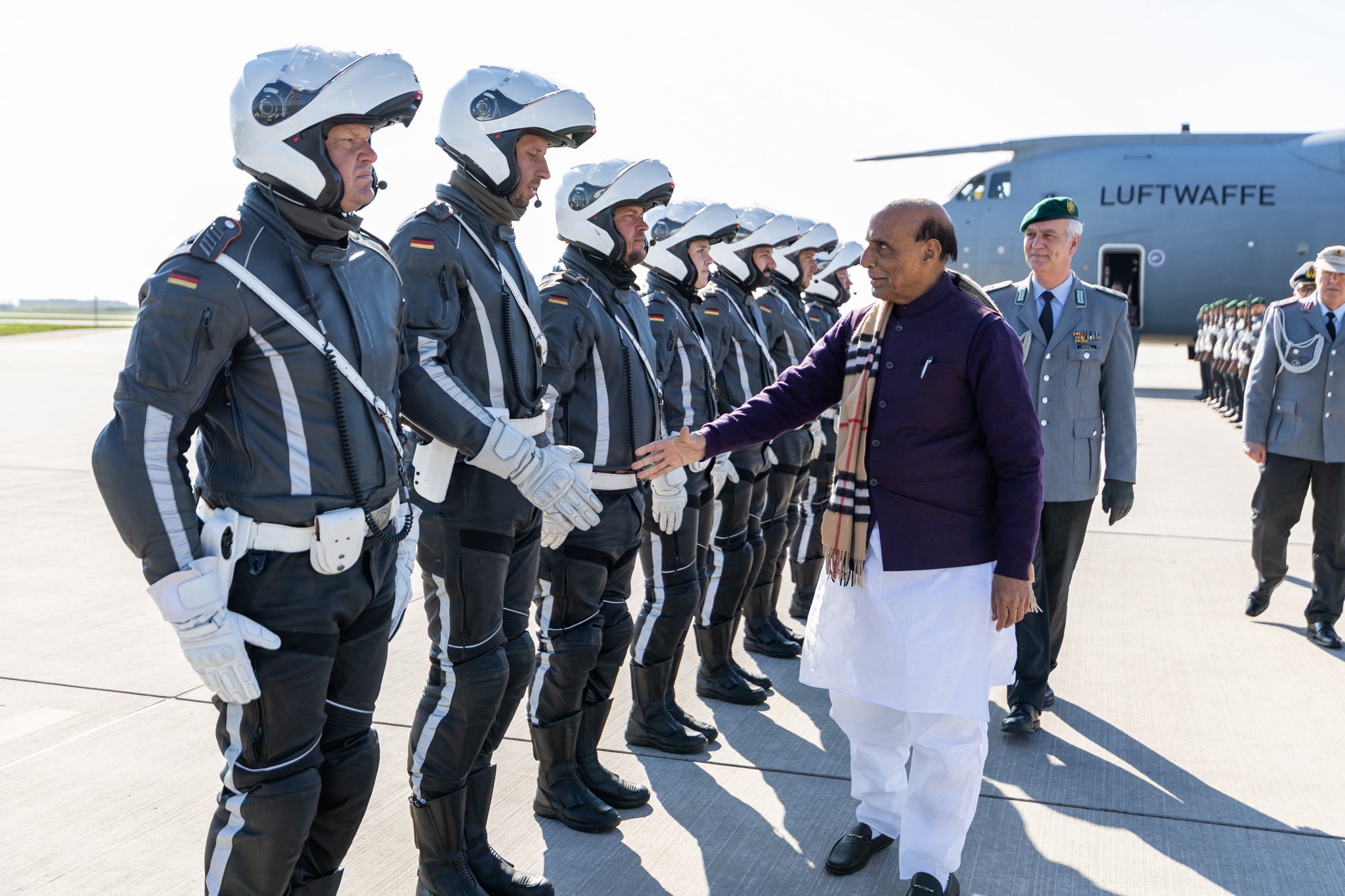
These shifts have correlated with increased Indo–German defense relations. For example, in Germany’s 2024 Focus on India strategy, one stated goal was to deepen defense industrial cooperation and become a reliable security partner for India to help reduce its reliance on Russian arms. Such political statements have been followed through with policy changes, particularly by easing its arms export policies toward India, allowing New Delhi to purchase German origin pistols and rifles, along with other spare parts.
These policy changes have since played a key role in facilitating greater technology transfer, which is one of India’s main demands from its defense partners. India’s desire to diversify away from Russian arms has been accelerated by the Ukraine War amid delayed arms deliveries, such as for the S-400, and Moscow’s growing dependency on Beijing. In addition, India also seeks to bolster and modernize its defense capabilities more broadly amid ongoing conflicts with China and Pakistan.
In this context, India has sought to capitalize on Berlin’s burgeoning defense industry. Notably, in the first half of 2024, India was the third-largest buyer of German arms, worth around EUR 153.75 million. In addition, the two countries are nearing the finalization of the German TKMS submarine deal, worth USD $8 billion. Furthermore, in April 2026, New Delhi and Berlin signed a Defense Industrial Cooperation Roadmap during Minister of Defense Rajnath Singh’s visit to Germany, reinforcing prior bilateral agreements to deepen defense cooperation during Scholz’s and Merz’s visits to India in 2024 and 2026, respectively.
Geoeconomic Diversification from Washington and Beijing
Another primary driver of greater Indo-German cooperation is geoeconomic diversification and de-risking from Beijing and, increasingly, Washington.
For many years, Germany, and the EU more generally, were very reluctant to even use the term “Indo–Pacific,” seeing it as an American effort to contain China. Germany’s policy shift toward China began to harden around 2020, when it released its Indo–Pacific guidelines. While Berlin did not openly call out China at the time and opted for “guidelines” as opposed to a “strategy,” the mere fact that Germany released such a policy document at all reflected Berlin’s growing attention to the China challenge. China’s support for Russia’s war in Ukraine and a growing trade deficit that has hit Germany’s manufacturing base hard, known as the “second China shock,” have accelerated this posture. In a remarkable development, in October 2026, Germany and France sent a letter to the EU Commission President Ursula Von der Leyen urging a tougher China policy—something that would have been unimaginable previously.
At the same time, Berlin has been negatively impacted by tariffs imposed by Washington. For example, Germany’s exports to the United States from January to November 2025 fell by nine percent from the previous year, and the tariffs cost Volkswagen EUR 8 billion. Of particular concern for Germany, and Europe more generally, was the Trump administration’s threat to impose eight percent tariffs on Berlin and other European countries if Greenland was not given to the United States. Even though the United States, Denmark, and Greenland nominally reached an agreement to bolster U.S. defense presence on the island in September 2026, the incident has severely damaged transatlantic relations. Europe is increasingly seeking ways to reduce its economic dependency on the United States in the long run, as illustrated by the EU’s recent trade agreements with India, the Latin American trading bloc Mercosur, and Indonesia.
India, too, is concerned about overdependence on the United States and China. While India initially believed the second Trump administration would strengthen its relationship with the U.S., policies such as the additional 25 percent tariff on Russian energy revived suspicions about American reliability. The Trump administration’s engagement with the Pakistani military establishment has only added to Indian concerns.
At the same time, India is reluctant to turn to China. Though bilateral relations seem to have thawed in recent months, the underlying structural problems plaguing India and China remain unresolved—namely the border dispute and China’s support for Pakistan. In addition, India’s continued restrictions for Chinese apps, technology, and investment in critical sectors pose a limit for deeper Sino-Indian trade relations, as India is aware that the risks of Chinese weaponization limit a mutually beneficial economic relationship.
Given this shared concern about overdependency on Beijing and Washington, Germany has been a key supporter in finalizing the India-EU free trade agreement; indeed, the German ambassador to India, Dr. Jasper Wiek, called it an “agreement of necessity.” According to a report by the Associated Chambers of Commerce and Industry of India, India’s trade with Germany could reach USD $50 billion after the FTA is implemented, deepening the already robust Indo-German commercial relationship.
In addition, during Minister of Commerce and Industry Piyush Goyal’s visit to Germany in October 2026, the two countries pledged deeper cooperation in emerging technologies. They sought to increase people-to-people interaction between India’s and Germany’s scientific ecosystems. That goal reflects the two countries’ broader desire to reduce dependency on American and Chinese technology.
“Given this shared concern about overdependency on Beijing and Washington, Germany has been a key supporter in finalizing the India-EU free trade agreement; indeed, the German ambassador to India, Dr. Jasper Wiek, called it an ‘agreement of necessity.'”
The Rise of the AfD and Uncertainty Going Forward
While India and Germany have never been as strategically aligned as they are at this geopolitical moment, the future of the partnership has become increasingly fragile, largely due to the rise of the AfD. Even other European far-right parties, such as France’s Rassemblement national (RN), consider the AfD extreme. Not only has AfD made electoral gains in the German state of Saxony-Anhalt, a member of the party was elected speaker of the state parliament in October 2026. This is the first time that a member of the far-right has had such representation in German state government since World War II.
The rise of the AfD has immense implications for India. In addition to their anti-immigration policies, which have already started to raise fears among the Indian community in Germany, the AfD has a very different China policy than the Christan Democratic Union, the party of current Chancellor Merz. The AfD wants to improve relations with China and does not consider the Indo-Pacific a foreign policy priority. In addition, the AfD is still very critical of the EU, and is pushing for Germany to leave the bloc. These would create major setbacks for Indo-German cooperation, as geoeconomic diversification from Beijing and Washington is a significant driver thereof.
However, the AfD still has a long way to go to gain power at the federal level, and it is possible that at some point they could also moderate their immigration policies and Euroskeptic attitudes as have parties like the RN in order to become more “electable.” Nevertheless, as the far-right is growing in popularity across Europe, New Delhi must continue to diversify its set of partners within Europe and elsewhere, deepen institutional relations within Germany, and indigenize where possible in key sectors, to become immune from potentially damaging domestic political shifts in Europe.
Views expressed are the author’s own and do not necessarily reflect the positions of South Asian Voices, the Stimson Center, or our supporters.
Also Read: The India-EU Defense Agreement: Industrial Logic and Strategic Context
Image 1: Ministry of External Affairs via Flickr
Image 2: Rajnath Singh via X