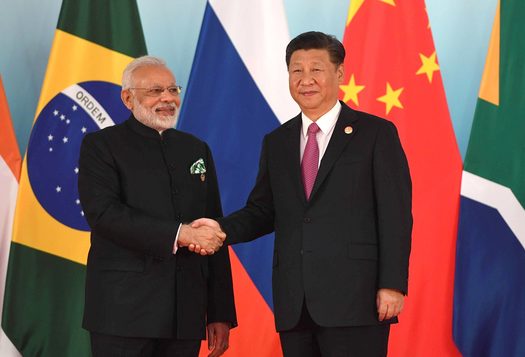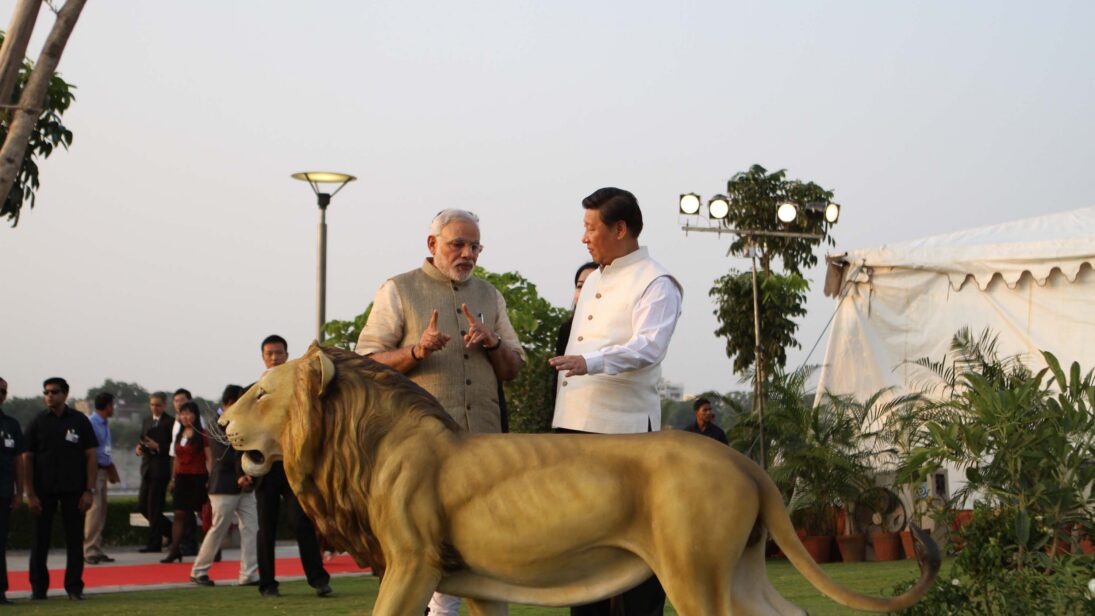
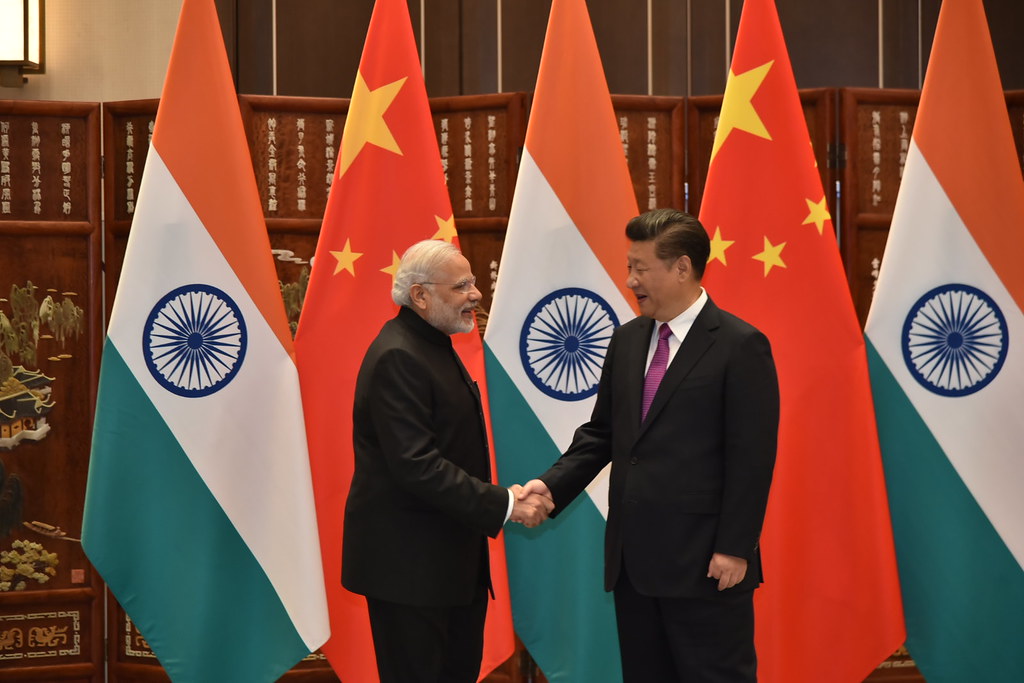
President Xi Jinping’s latest visit to New Delhi to participate in the BRICS summit in September 2026, his first visit to India in seven years, came in the wake of increasing speculation of a recent thaw in India-China relations. This line of analysis emphasizes the end of a four-year standoff on their disputed border after the two sides reached an agreement on patrolling rights in the remote Ladakh region in October 2024. Ever since, there has been a regular drip-feed of news relating to India considering opening its economic doors to Chinese investments, joint ventures, and bids. The thaw has also been interpreted as being fueled in part by the return of the Trump presidency and Beijing’s and New Delhi’s respective needs for strategic and economic stability.
However, despite signs of a thaw, structural divergences both on the border issue as well as the economic relationship are growing, not receding. The recent recalibration of U.S.-China ties has also caused unease in New Delhi. Xi’s visit, therefore, has been much less momentous or even significant than anticipated. There is a discernible gap between the expectations of the would-be thaw and the structural challenges that shape the India-China relationship in the first place, with significant implications for New Delhi’s China policy going forward.
Growing Power Imbalances and the Leverage-Creep
Much of the contemporary analysis of India-China relations in the present context rests on a template established in the 2010s. This could lead to misleading inferences and conclusions, given how much has changed in the bilateral relationship since 2019-20.
The Military Balance and Zeitgeist
Despite the still significant power gap, relations between China and India in the 2010s were relatively more equal than they are now. India had arguably moved away from its focus on Pakistan as its primary security threat and invested resources in bolstering deterrence vis-a-vis China. This shift combined procurements, infrastructure build-up (air bases and roads), forward deployments, and a graduated shift in doctrine from deterrence by denial toward deterrence by punishment. India’s assertive intervention in the Doklam plateau in 2017, a region contested between China and Bhutan, fit perfectly into this context as India signaled that its growing military prowess could now enable it to spring surprise on its larger neighbor.
India’s strategic elite at the time appeared cautiously upbeat about the prevailing balance. They considered maritime options to put pressure on China, widely known as the Malacca option. Military officials spoke confidently of being prepared for a two-front war. India’s growing strategic partnership with the United States and like-minded partners through the Indo-Pacific and the Quad was also seen as a substantive asset, especially as Beijing’s relations with the same countries was rapidly deteriorating.
However, the 2020 border skirmish, the subsequent four-year stand-off, and parallel developments have greatly ruptured this world. The crisis compelled India to adopt a defensive posture at the border, while quasi-abandoning more forward-looking and competitive deterrence building measures that were gradually being established in the years prior. India appears still in search of a coherent deterrence strategy that safeguards territorial integrity while not engendering a sharper security dilemma.
The military balance has become more skewed. India’s procurement and defense industrial ecosystem has also led to lags in enhancing its military power. China, on the other hand, is rapidly expanding its fleet of fifth generation fighter jets, with production reaching 120 a year, while India’s fleet is aging fast and struggling to expand in size.
“India appears still in search of a coherent deterrence strategy that safeguards territorial integrity while not engendering a sharper security dilemma.”
Economic Coercion
In the wake of the 2020 border clash, India chose to retaliate economically instead of pursuing a riskier strategy of military compellence. India’s growing nationalist policy was forming a consensus toward what New Delhi perceived as China’s predatory economic policies and its structural adverse impact on India and other like-minded countries. Stakeholders at the time believed that Indian manufacturing and industry could grow on its own terms and in time reduce dependency on Chinese inputs. A slew of economic measures, such as Make In India, Production-Linked Incentive (PLI) schemes, and others were expected to attract domestic and foreign companies to bet on India—especially the ones fleeing China during U.S. President Donald Trump’s trade war.
This situation has since greatly reversed. India’s manufacturing growth has declined in relative terms and advances in various sectors have been more assembly than manufacturing-based in nature. These trends have only deepened India’s reliance on Chinese capital, technology, know-how, and exports. This meant that when China instituted a complex web of export controls in April 2026, its effects were felt disproportionately in India. As Tarun Kapoor, an advisor to Indian Prime Minister Narendra Modi, put it in an address to a key automobile manufacturing association, “a country can hold us to ransom.” Without timely imports of key rare earth components, noted automobile companies warned that production could come to a halt within weeks or months, and that some companies may have to shift production to alternate countries.
While export controls and other restrictive measures are not India-specific by law and design, reports indicate that the strain in ties has negatively affected both the issuance of business visas for Indians as well as export shipments of critical minerals, fertilizers, and tunnel- boring machines. Hence, there is a consensus view in New Delhi that political and strategic ties determine the degree of Chinese responsiveness and supply reliability. Chinese analysts since at least 2023 have recommended that Beijing should adopt more retaliatory measures in the economic domain vis-a-vis India, including technology transfer denials and export controls. As well-known analyst Hu Shisheng suggests, China “must also improve its policy on industrial chain transfers – to India in particular – so as to avoid contributing to India’s development at the cost of China’s development.”
Beijing may officially nudge India towards win-win thinking, but concerns within the country of India emerging as a super-substitute to China through free trade, particularly considering the size of the Indian economy and the diversity in its industries, are growing stronger, as Hu Shisheng notes. According to Kapoor, this growing concern has created an “issue” that requires India to “move very fast” even as it aims to “learn” from China’s experience.
Promise and Pitfalls of the Economic Liberalization Argument
In this context, Beijing’s message to India prior to Xi’s visit for the BRICS summit had been to embrace liberalization toward Chinese businesses. This argument came through three interconnected points: India’s domestic manufacturing failures; the benefits of positive overall ties in terms of assured continuous supply of sensitive technologies, critical minerals, and exports; and the potential for India’s own growth and development through closer and more open economic cooperation with China. But due to a variety of factors related to territorial sovereignty and economic distrust, and despite pressure and persuasion from China, it appears that the Xi-Modi summit has not moved the needle on India’s position on both the economy and the border.
Due both to strong economic leverage that Beijing currently enjoys as well as the military imbalance at the border, Beijing likely expected greater moderation in India’s position vis-a-vis the border issue. This entails a more discrete handling of stand-offs and more concessions in terms of patrolling rights to the People’s Liberation Army (PLA). At the strategic level, Beijing wants India to de-link the border issue from economic development. This would have the effect of assuring Chinese businesses that “incidents” at the border do not have the potential to derail economic investments. New Delhi’s view, on the other hand, is that such a de-linking will further remove any remaining constraint on PLA aggression at the border. India needs cards with which to respond to violations, and the threat of reversion in overall relations theoretically provides some form of leverage.
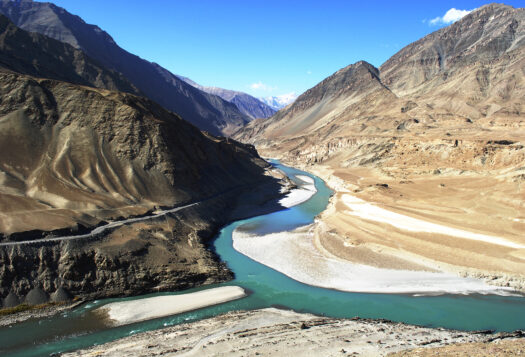
India and China have still not truly fully resolved patrolling disagreements in the Western sector, contrary to reporting at the time and since. Ahead of Xi’s latest visit, Indian and Chinese patrols entered into a standoff in the Taksing region in the state of Arunachal Pradesh that could not be resolved ahead of the summit. Meanwhile, grey zone contestation and rival sovereignty claims have hardened in the Eastern sector. This has occurred even as both sides continue to securitize the border, with China also constructing dual-use border villages and logistical facilities that enable all-year troop deployment. The border remains as contested as ever.
The economic relationship has not shown no sign of a take-off, either. If anything, even as India has reluctantly come to appreciate its systemic economic dependence on China, Beijing has started to leverage India’s existing acute dependencies while also making known its concerns about India benefitting from Chinese investment, know-how, and technology. Neither has India really lifted the web of restrictions it had imposed on Chinese businesses since early 2020. India’s Press Note 3, a sweeping measure to restrict investments from China, remains in place. More recent signs of partial opening have turned out to be extremely specific, limited in scope, or simply measures that are beneficial to Indian interests. This has led the Chamber of Chinese Enterprises to describe them as “partial optimization” rather than a “comprehensive liberalization.”
“Even if New Delhi may seek to embrace a closer economic relationship … China’s own ‘weaponization’ and industrial autarky have shrunken the prospect of a win-win economic relationship for the foreseeable future.”
The conditionality of the India-China “thaw” seemed to be borne out by Prime Minister Modi’s comments during his bilateral meeting with Xi, when he insisted that peace and tranquility at the border remain the basis of the development of overall ties. Prior to the visit, India had also taken a somewhat strident position on the Taksing incident, refusing to take Chinese advice on ‘not sensationalizing’ a border incident, in contrast to the trend of India’s response to border incidents since October 2024. At the same time, Modi called out the weaponization of technology and critical minerals, and an Indian regulatory authority announced a new investigation into Xiaomi for “alleged irregularities” just days prior to Xi’s visit.
India’s new China consensus is that realistically, it cannot wish away Beijing economically. This obviates the possibility of India undertaking a greater pivot toward de-coupling or de-risking initiatives. At the same time, the degree of China’s economic leverage is also strengthening the flip side of that argument—that deeper economic relations could erode India’s decision-making capability regarding both the border as well as the economic relationship over the coming years. Hence, even as there is a greater need for both India and China to project positive momentum, the recent Xi-Modi meeting has only shown how much deeper the structural divergence in the bilateral relationship has become. Even if New Delhi may seek to embrace a closer economic relationship and move past the bitterness of the Ladakh crisis, China’s own ‘weaponization’ and industrial autarky have shrunken the prospect of a win-win economic relationship for the foreseeable future.
What Will India Do?
India’s current China strategy emerged in the early 2000s, in a unipolar world, amid increasing strategic relations with the United States, a relatively stable border with a rising-yet-restrained China, and the hope that India may be closing the economic and power gap with its northern neighbor over time.
This zeitgeist has slowly ruptured and unraveled since 2020 across many dimensions: geopolitics, constraints within the neighborhood, as well as the military and economic gap with China. Hence, India’s China challenge is both deepening and broadening in unprecedented ways. Yet India’s mental map of responses and adaptations remain tethered to the preceding zeitgeist, leading to a degree of cognitive dissonance.
New Delhi is unlikely to adopt a competitive approach toward Chinese coercion on trade as well as the boundary in the short term, mainly to avoid escalation on both fronts. It needs to think of a more sustainable rather than maximalist strategy as it builds its own comprehensive power, such as employing denial strategies at the border, instead of seeking parity, and attempting political conciliation at the leadership level instead of hostility to tide over the economic stranglehold.
In the meantime, mitigating the structural inequities with China will require deeper structural economic and administrative reforms at home; improved relations with neighbors, both major and middle powers; and a sensitive handling of relations with China while also undertaking measures to address more short-term challenges related to economic vulnerability and grey-zone coercion at the border. Perhaps India’s primary learning from recent years should be that it adopted competitive and quasi-balancing strategies toward China without mitigating vulnerabilities first. Its global position was enhanced to the degree it was seen as challenging China as a near-peer continental power. But such an enhanced position was tenable only when the prospect of India as a rival to China was viable; its dividends are hollower when the prospect is no longer believed. India’s subsequent China approach has to be more modest and less frontal, but one that is based on greater policy innovation at home while also deepening trade, defense, and strategic ties with like-minded partners.
Views expressed are the interviewee’s own and do not necessarily reflect the positions of South Asian Voices, the Stimson Center, or our supporters.
Also Read: SAV Q&A with Pallavi Aiyar: Modi-Xi’s BRICS Meeting and India-China Relations
***
Image 1: Indian Ministry of External Affairs via Flickr
Image 2: Indian Ministry of External Affairs via Flickr