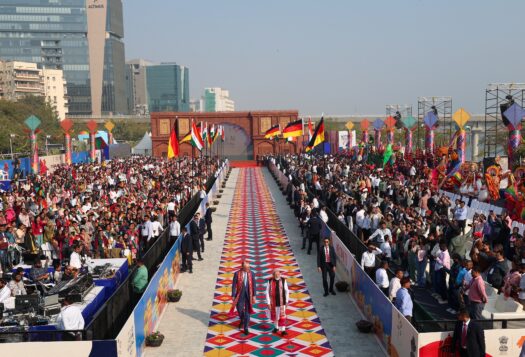
On September 12, on the sidelines of the summit of BRICS, an intergovernmental organization of developing countries, Chinese President Xi Jinping met Indian Prime Minister Narendra Modi in New Delhi on his first visit to India in the last seven years. The two leaders described their countries as “partners, not rivals,” even though their readouts differed on the border issue. The meeting could, however, alarm Islamabad. China and Pakistan call each other “all-weather” partners and “ironclad brothers,” and such claims have time and again proved more than merely diplomatic posturing.
India has built, strengthened, and repeatedly renewed the China-Pakistan friendship more than both the countries have shared ideology or culture. This link is most evident in two periods: after the 1962 war, when Beijing stood by Islamabad through its 1965 war with India; and in 2019, when India revoked Article 370 and made Ladakh a separate union territory. China called it “unacceptable.” While other factors, such as U.S.-Pakistan ties, the China-Pakistan Economic Corridor (CPEC), and Afghanistan, have all influenced the China-Pakistan relationship, the India factor has been the most constant among them.
If the Sino-Indian rivalry is what has most strengthened the China-Pakistan friendship, what happens when tensions between China and India ameliorate? From Pakistan’s vantage point, the answer depends on how far the current thaw goes. As of now, it appears too shallow to weaken a partnership that extends “higher than the Himalayas.” Despite that, this shift is already forcing Beijing and Islamabad to hedge, at least for now, and thus reducing the exclusivity of their friendship.
A framework that helps explain the China-Pakistan relationship is Stephen Walt’s balance of threat theory. Walt claims that states tend to balance against the most threatening state, rather than simply the most powerful one. The theory identifies four factors that determine the greater threat: aggregate power, geographic proximity, offensive capacity, and perceived intentions.
From Pakistan’s perspective, India meets all four criteria. It is a greater military and economic power, shares a long yet disputed border with Pakistan, has a much larger conventional force, and has also shown hostile intent toward Pakistan through New Delhi’s role in East Pakistan’s secession and the creation of Bangladesh in 1971, and more recently, the strikes on Pakistan’s territory in 2019 and 2025. As a result, Islamabad continues to search for external allies to balance the security threat it perceives from India.
But the same logic runs backward, as well. When a shared threat recedes, so too does the incentive to balance against it. Take, for example, the rapprochement between India and China following Prime Minister Rajiv Gandhi’s visit to Beijing in 1988 – the first visit of an Indian Prime Minister to China in 34 years – and the border agreements that the two countries drew up in the 1990s. Considering that calmer period of Sino-Indian relations, China was “far more circumspect” during the 1999 Kargil conflict, even if it did not abandon Pakistan entirely. The question now is whether Beijing can strike that balance again.
“India has built, strengthened, and repeatedly renewed the China-Pakistan friendship more than both the countries have shared ideology or culture.”
Forged by Rivalry
The China-Pakistan partnership was forged after the 1962 Sino-Indian war. In 1963, Pakistan provisionally ceded control of the Shaksgam Valley to China. Later, when Washington suspended military aid to both India and Pakistan during the 1965 war, China quickly filled the gap. In September 1965, a Chinese note to New Delhi backed Kashmiri self-determination, condemned India’s “unbridled aggression,” and gave India three days to dismantle its military works along the Sikkim border. This was an attempt to stop India from shifting troops to the Western Front against Pakistan. This constituted coercion on Pakistan’s behalf, and this act defined the partnership for decades.
A similar pattern emerges from the domain of multilateral diplomacy. China arguably shielded Pakistan at the UN by blocking the listing of Jaish-e-Mohammed leader Masood Azhar as a terrorist until 2019. Likewise, when New Delhi revoked Article 370, Beijing turned Pakistan’s letter into a closed-door Security Council meeting on Kashmir. It was the first time the Security Council had taken up the issue in decades.
The Sino-Indian rivalry has also strengthened the China-Pakistan relationship economically. CPEC is the flagship project of the larger Belt and Road Initiative. In 2015, when Xi announced roughly USD $46 billion in CPEC investment, Modi told China that the project was “unacceptable.” This is due to India’s claim on Pakistan-administered Gilgit-Baltistan, through which CPEC runs. From New Delhi’s viewpoint, by building infrastructure in such a disputed area, China tacitly endorses Pakistan’s control of the region.
From Galwan to the 2025 Crisis
The latest turning point in Sino-Indian relations was the 2020 Galwan clash and increasing Indian concerns about a two-front war. These apprehensions stem from the growing military cooperation between China and Pakistan. The arms import data is certainly illustrative: Pakistan’s arms imports from China rose 66 percent between 2016-20 and 2021-25, making Pakistan the fifth-largest importer of arms in the world. Chinese weapons accounted for 80 percent of those imports, up from 73 percent in 2016-20.
Furthermore, the May 2025 conflict between India and Pakistan demonstrated how Pakistan is dependent on China in real terms. According to the U.S. officials cited by Reuters, Pakistan’s Chinese-made J-10 jets shot down at least two Indian aircraft. Indian officials later blamed faulty intelligence about the range of the Chinese PL-15 missile for the loss of a Rafale. India’s Deputy Army Chief, Lieutenant General Rahul Singh, claimed that Pakistan received “live inputs from China” during the conflict.
While Islamabad denies this, Beijing has termed its defense ties with Pakistan “normal cooperation” not aimed at any third party. Pakistani officials instead credit their own Data Link 17, which connected Chinese jets and missiles to a Swedish-made surveillance plane. For Islamabad, the key point is that the Chinese weapons have worked in times of crisis and that the partnership has delivered when it matters most.
A Thaw Seen from Islamabad
The Sino-Indian rivalry extends beyond the disputed border, from Aksai Chin to Arunachal Pradesh. It also covers India’s record trade deficit with China, the mega-dam China has been building since 2025 on the Yarlung Tsangpo (which flows into India as the Brahmaputra), the impending succession of the Dalai Lama, the battle for influence in South Asia and the Indian Ocean, and India’s pivot toward Washington through the Quadrilateral Security Dialogue. None of these conflicts directly involves Pakistan, but each has helped keep the China-Pakistan friendship intact. Pakistan keeps India in check for China, and China tempers India’s regional ambitions for Pakistan.
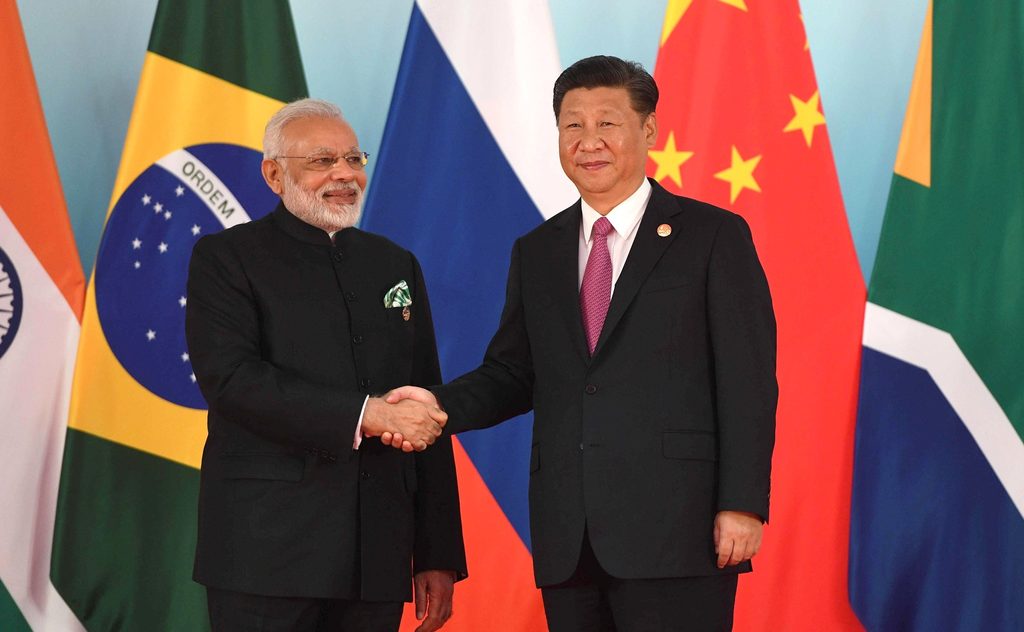
Given the depth and extent of these tensions, the would-be Sino-Indian thaw has proceeded slowly. It consists of an October 2024 agreement on border patrolling, Xi-Modi meetings in Kazan in 2024 and Tianjin in 2025, resumed direct flights, and India’s easing of curbs on Chinese investments. The rapprochement remains thin, however, as the September 2026 meeting in New Delhi has produced no concrete deliverables.
Pakistan perceives that the thaw has so far offered reassurance to its own relationship with China rather than signaling abandonment. A few days after the Xi-Modi meeting in New Delhi, China and Pakistan launched a Boundary Joint Commission in Islamabad to manage the boundary drawn under their 1963 agreement – the same agreement that placed the Shaksgam Valley under Chinese control. India rejected this development as having “no legal basis,” but Pakistan’s Ministry of Foreign Affairs called it a “vital milestone.” Less than three weeks after the Xi-Modi meeting, Pakistan’s Prime Minister Shehbaz Sharif claimed that ties with China have been the “anchor” of his country’s foreign policy.
Reassurance, however, is not exclusivity. Beijing, for its part, is hedging by compartmentalizing its relations with India and Pakistan. China’s readout of the Xi-Modi meeting during the BRICS summit called for “parallel, mutually reinforcing progress” on the border and the wider relationship. This characterization of Beijing’s approach to India indicates that it means to allow trade and travel with India to grow without a border settlement, while the new mechanisms it is instituting with Pakistan, such as the boundary commission, keep Islamabad close.
“Pakistan keeps India in check for China, and China tempers India’s regional ambitions for Pakistan. “
Pakistan is also hedging in its own way. It has deepened ties with Washington in what one analyst calls “a tactical adjustment,” pursuing critical minerals cooperation and especially close coordination through its mediation of the U.S.-Israel war with Iran. It has also formed a new security trilateral through the Mecca Joint Defense Agreement with Saudi Arabia and Turkey in August 2026, and more recently signed a defense industrial cooperation pact called the Badr Memorandum of Understanding with Turkey, Indonesia, and Qatar. It also hopes warmer Sino-Indian ties might open a path toward Pakistan’s BRICS membership, which India has opposed so far. Keeping all partners satisfied at once, however, will be difficult, especially in times of crisis.
What Comes Next?
The question to watch going forward is whether Beijing can continue to strengthen its ties with New Delhi without compromising its relationship with Islamabad in the months and years to come. The real test will be when China chairs BRICS in 2027, and there is another India-Pakistan crisis. Even though India-Pakistan crisis diplomacy has rarely been led by China, as it is often left to Washington, warmer ties between New Delhi and the BRICS chair then could tempt Beijing to play that role more visibly.
For now, Pakistani analysts tie the future of the China-Pakistan partnership less to India than to CPEC’s second phase and the security of Chinese nationals in Pakistan. But the old logic of a shared rival could also return quickly if a dispute over the Dalai Lama’s succession or a new border clash hardens Sino-Indian ties again. However, if the rivalry that built the friendship fades, the “all-weather” partnership will have to rise “higher than the Himalayas” on its own merits.
Views expressed are the author’s own and do not necessarily reflect the positions of South Asian Voices, the Stimson Center, or our supporters.
Also Read: SAV Q&A with Pallavi Aiyar: Modi-Xi’s BRICS Meeting and India-China Relations
***
Image 1: Shehbaz Sharif via X
Image 2: The Kremlin via Wikimedia Commons