Editor’s Note: This piece originally appeared in New Security Beat and has been republished with permission from the author and the editors.
When Pakistan’s Field Marshal Asim Munir addressed the 276th Corps Commanders’ Conference at General Headquarters in Rawalpindi on 6 July 2026, he stated that the country would take “all necessary steps” against India after its suspension of the Indus Waters Treaty (IWT). Pakistan’s climate minister, Musadik Malik, also took an aggressive tone in June 2026, when he warned that “if anyone lays a hand on Islamabad’s share of water, we’ll cut off that hand.”
Such statements represent the immediate (and continuing) dangers facing the IWT as it reached its sixty-sixth anniversary as a landmark water sharing agreement on September 19, 2026.
Indeed, the most plausible path to water weaponization between India and Pakistan does not begin with the closure of a river. It begins rather with a confluence of weakened communication between water officials, competing public narratives, political misinterpretations of hydrological changes, and growing acceptance of populist narratives.
In particular, these domestic populist narratives on both sides have sharpened considerably since April 2025, when India temporarily suspended the IWT following the terrorist attack on Pahalgam in the Union Territory of Jammu and Kashmir (J&K). Pakistan rejected India’s move, insisting that the treaty cannot be suspended unilaterally. In India, treaty cooperation has increasingly been framed through the populist language of security, terrorism, sovereignty, and its own fuller utilization of the waters of the Indus.
Thus, the central concern at present is not that India or Pakistan will suddenly weaponize the Indus basin. The real danger is that the political animus now surrounding the treaty will progressively weaken the technical mechanisms that help both countries distinguish deliberate interference from operational decisions, floods, droughts and other hydrological events. When trust in communication is lost, even a small change in river flow can become strategically important.
“The real danger is that the political animus now surrounding the treaty will progressively weaken the technical mechanisms that help both countries distinguish deliberate interference from operational decisions, floods, droughts and other hydrological events.”
The Cost of Politicizing the Indus
India and Pakistan have managed for decades to keep the IWT mechanism working, even as the broader political relationship between them has gone sour. The current crisis is different, however, because water cooperation itself has become increasingly entangled with the bilateral security dispute.
India’s securitization of treaty cooperation strengthens Pakistan’s arguments that water is being used coercively. And India and Pakistan’s confrontational populist rhetoric reinforces their arguments that normal cooperation cannot be separated from the wider security relationship. This feedback loop narrows the space for technical water diplomacy as political narratives tighten their grip.
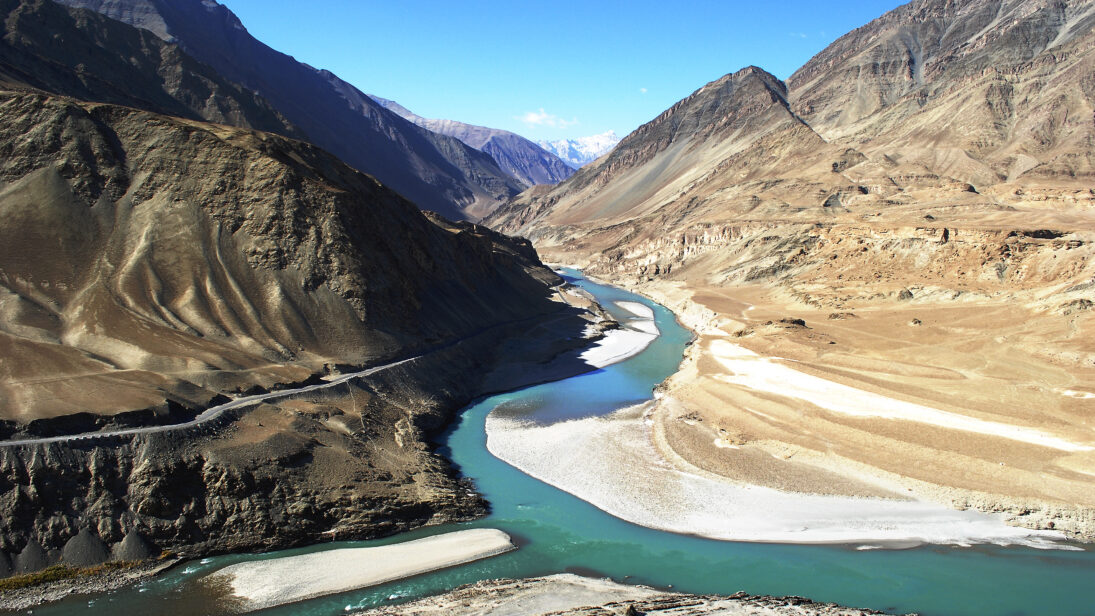
Yet these growing domestic populist IWT narratives do little to improve water security in either India or Pakistan. Domestic debates over fuller utilization of the Indus system in India extend beyond the narrower frame of J&K, although this upper-basin region itself faces significant water stress linked to infrastructure constraints, population growth, climate pressures, and difficult mountainous terrain. These constraints also directly affect agriculture and regional water management.
Because Pakistan’s water supply and its agricultural output are heavily dependent on the Indus Basin, its vulnerability to water insecurity has increased with climate pressures and declining water quality. Pakistan’s position in the top 10 countries vulnerable to climate-related risks reflects its acute susceptibility to extreme events. The catastrophic floods of 2022, which caused almost around 1,700 deaths and $15 billion in damages, while also internally displacing a further 816,800 people, offer only the latest example of this susceptibility. These challenges are compounded by weak policy implementation and fragmented governance, which hamper the integration of actions, accountability and service delivery.
Such conditions are fertile ground for populism, which has influenced the concept of environmental governance, particularly in water resources management. Populists often generalize water access as a right, presenting themselves as champions of the masses against both corrupt elites and, in many cases, a threatening outsider.
Populist Politics Theatre
Both Pakistan and India are methodically turning the Indus water-sharing agreement into an instrument of populist narratives of confrontation. This is especially true as Pakistan gears up for a stepped-up international campaign against India over the IWT.
Political actors in Pakistan have increasingly framed water security through a populist narrative in which downstream vulnerability is presented against an external upstream threat. Such framing can transform technical disagreements over treaty implementation into broader questions of national security and political legitimacy.
India’s decision to place the IWT in abeyance created a dispute about the status and workings of the agreement itself. And Pakistani political actors have since transformed this action into a broader public narrative of existential water insecurity.
Yet Pakistan’s concerns around downstream access to water cannot be dismissed as populism. For instance, Chenab flows at Marala declined sharply in May 2025 and fluctuated dramatically in December, shifting from unusually high discharges to exceptionally low flows within days. However, the political language through which those concerns are expressed can exacerbate perceptions of imminent threat and constrain space for technical and legal compromise of the treaty.
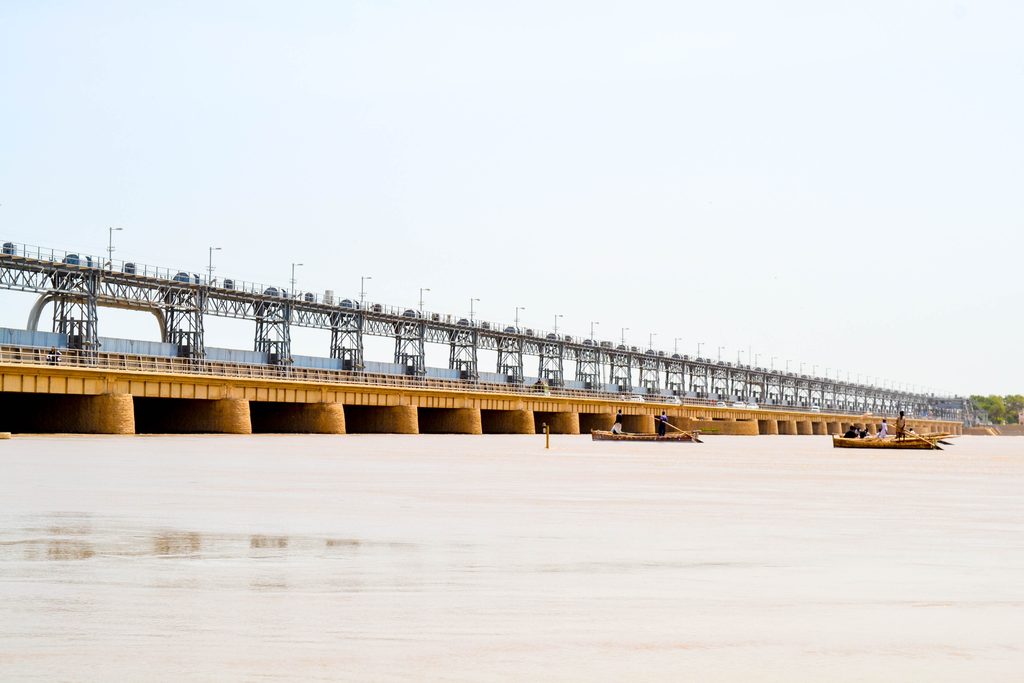
Pakistan has always questioned India’s major hydropower projects on western rivers like Baglihar and Kishenganga, arguing that some features could provide India with greater control over the timing of downstream flows. However, India has maintained that run-of-river hydropower development is permitted under the IWT, subject to its technical restrictions. These disagreements have consequently traveled through the treaty’s dispute-resolution mechanisms.
Pakistani officials have also warned that attempts to stop or divert water allocated to Pakistan under the IWT could be treated as an “act of war.” Public opinion in Pakistan often frames India as exploiting its upstream position, accusing it of water theft and manipulation of river flows. Scholars argue that these narratives are deeply ingrained in Pakistan’s hydrological policies and public consciousness.
Yet such rhetoric does overstate India’s immediate capacity. A senior Indian official acknowledged that existing projects on the western rivers can hold water for only 24 to 48 hours before it must flow to Pakistan. The dams, reservoirs and canals needed to withhold or divert significant flows would take years to realize at considerable cost in an ecologically sensitive region. Pakistan’s real exposure lies in short-term disruptions to the timing of flows, not an imminent cut-off.
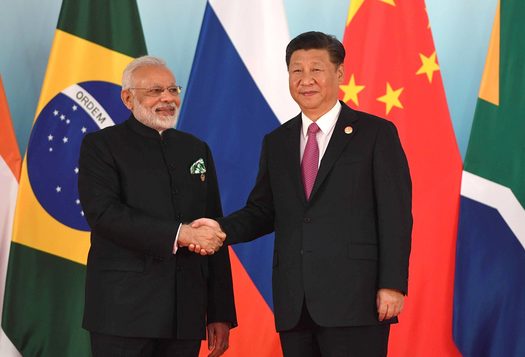
Significant elements of India’s own political discourse have formally tied the restoration of the treaty to Pakistan’s behavior on terrorism, and senior political figures in that country have since called for a much harder line on the treaty. Following the 2016 Uri attack, for instance, Prime Minister Narendra Modi invoked the formulation that “blood and water cannot flow together.” Modi once again invoked this formulation linking water cooperation with terrorism in May 2025, stating that “terror and trade cannot go together, water and blood cannot flow together.” Moreover, in June 2025, Home Minister Amit Shah was also reported to have stated that the treaty would not be restored and that India would redirect water previously flowing to Pakistan to Rajasthan through new canal infrastructure.
Consequently, these narratives increasingly operate as a reciprocal security dilemma. Indian statements linking treaty cooperation to terrorism and emphasizing fuller utilization of Indus waters heighten downstream threat perceptions in Pakistan. And warnings by Pakistan that interference with its water supply could constitute an “act of war” reinforce Indian perceptions that water cooperation cannot be insulated from the wider security relationship.
Indeed, the danger lies in this vicious feedback loop. Political signaling on one side becomes evidence for threat narratives on the other, progressively narrowing the space for technical water diplomacy.
“Indian statements linking treaty cooperation to terrorism and emphasizing fuller utilization of Indus waters heighten downstream threat perceptions in Pakistan. And warnings by Pakistan that interference with its water supply could constitute an “act of war” reinforce Indian perceptions that water cooperation cannot be insulated from the wider security relationship.”
What is at Stake in the Conflict Over the IWT
Today, the IWT faces a highly political environment defined by fragile trust and populist narratives. India has long regarded cross-border terrorism as a grave threat to its national security, and it has repeatedly accused Pakistan of supporting such acts against it. Pakistan also has suffered from terrorism, and as it denies these charges, it makes counter-accusations of its own—including charges of outside India support for groups such as Jamaat-ul-Ahrar. These competing positions are not just a matter of who is to blame for the violence, but represent a deeper struggle for credibility and representation on the international stage.
The most consequential effect of this political confrontation may lie in institutional terms, rather than in immediate hydrological damages. The Permanent Indus Commission has not met since May 2022, and legal mechanisms likewise have been undermined. For instance, the Court of Arbitration ruled against unilateral treaty suspension on August 31, 2026, but India refused to accept its authority, further casting doubt over the treaty’s dispute-resolution architecture. When one party disregards the treaty’s dispute-settlement machinery and the other answers with threats of war, neither engineers nor arbitrators can easily contain the next disagreement.
The future of the Indus basin runs not only through its dams and diversions, but also through the essential bilateral communication and trust architecture.
A Narrowing Window
The costs of political confrontation over the Indus are shared costs. Pakistan is more immediately materially vulnerable because of its downstream dependence on the Indus system. India risks weakening an institutional framework that has historically helped contain water disputes even during periods of severe bilateral hostility.
There is still a chance to reinvigorate the treaty’s cooperative mechanisms, but the political space for such action is closing. India and Pakistan need channels through which technical officials can communicate, and hydrological events can be separated from political and strategic intent. The prime security concern is not merely the prevention of weaponizing water by either country; it is the prevention of uncertainty about water being weaponized in politics.
Views expressed are the author’s own and do not necessarily reflect the positions of South Asian Voices, the Stimson Center, or our supporters.
Also Read: Rethinking India-Pakistan CBMs after the May 2025 Conflict: A Water Security Lens
***
Image 1: Sundeep Bhardwaj via Wikimedia
Image 2: Baharwassan via Wikimedia