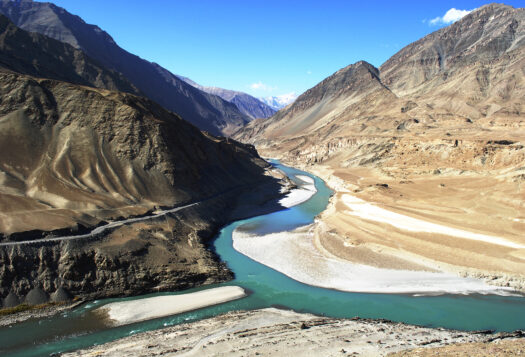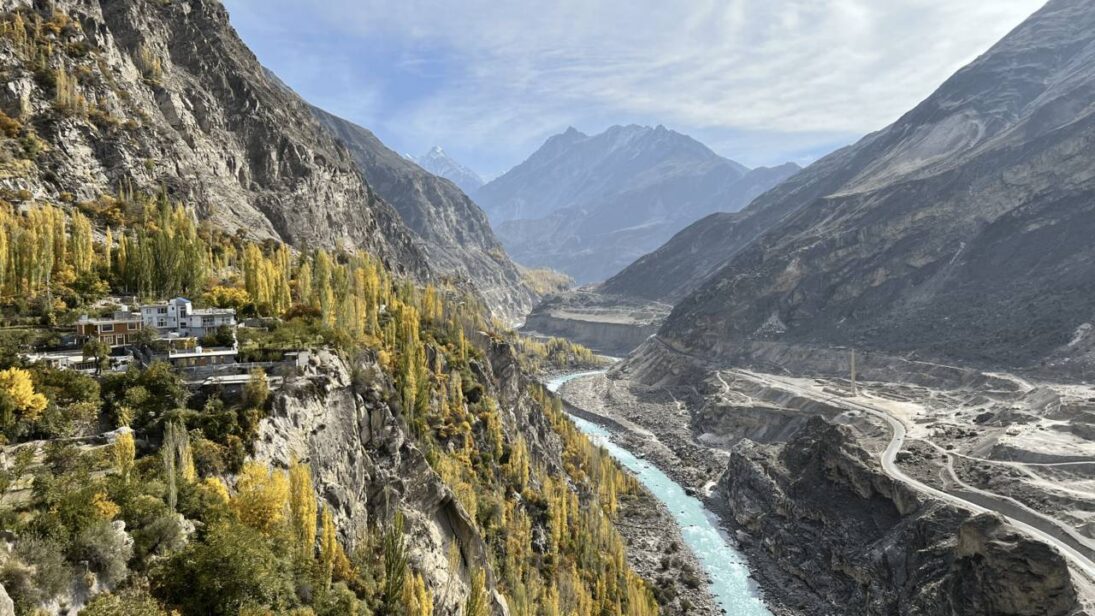
The May 2025 ceasefire ended the most serious India-Pakistan military confrontation in decades, but did not reverse one of the most consequential developments of the crisis. On April 23, 2025, in the immediate aftermath of the Pahalgam attack, India unilaterally suspended the Indus Waters Treaty (IWT); in June 2025, India’s Home Minister declared that the treaty would not be reinstated. That announcement brought attention to something beyond the May military confrontation: The IWT, for six decades one of the only bilateral mechanisms institutionalizing routine technical contact between India and Pakistan during periods of political strain, had now been pulled into the logic of security politics.
The downstream effects were immediate and instructive. With the collapse of the treaty’s data-exchange provisions — which had required the regular sharing of daily gauge and discharge readings, reservoir releases, and advance flood information — an information vacuum developed in the basin, but for limited notifications by India through diplomatic channels in August warning of cross-border flooding. By September 2025, Pakistani officials were publicly alleging that India was deliberately manipulating water flows through the Ravi, Sutlej, and Chenab rivers, and the accusations continued into December 2025. Regardless of the true cause of flooding, when institutionalized hydrological data exchange breaks down, it becomes more difficult to distinguish natural variability from deliberate action. In an already militarized bilateral relationship, that ambiguity can carry escalatory potential.
This dynamic raises a question that goes beyond the immediate management of the IWT dispute: how does India-Pakistan bilateral risk reduction adapt when one of its few functioning technical communication channels has been subordinated to security rivalry? The answer lies in expanding, not merely restoring, the bilateral Confidence Building Measures (CBM) architecture by incorporating water security governance as a distinct domain of strategic risk management.
CBMs: Proven Utility and Structural Limits
India and Pakistan have accumulated, across successive crises since 1947, an extensive if uneven architecture of CBMs. These include the 2003 Line of Control ceasefire understanding, the Agreement on the Prohibition of Attack against Nuclear Installations and Facilities, ballistic missile test pre-notification measures, and the DGMO hotline that has operated as a weekly institutionalized channel between military operations directorates.
India-Pakistan CBMs have delivered some crisis-management utility, but their contribution has remained limited. During the May 2025 crisis, for instance, a DGMO-to-DGMO call reportedly contributed positively to cessation of cross-border firing and air intrusions, with follow-up hotline contacts maintained in the days immediately afterward. The DGMO channel worked because it was institutionalized, technically straightforward, and insulated from broader political breakdown.
As the DGMO hotline example demonstrates, CBMs have helped manage escalation and reduce immediate risks during periods of confrontation, but they have typically focused on military and nuclear signaling. As a result, the bilateral CBM architecture has not yet addressed the deeper and structural drivers of the rivalry.
That narrow focus is increasingly difficult to sustain in a regional environment where strategic stability is shaped not only by armed confrontation, but also by transboundary environmental stress. Environmental change matters in this context because, unlike many traditional security threats, it generates pressures that are shared, cumulative, and difficult to contain within political borders. An environmental security approach to CBMs would apply the logic of the DGMO channel to water risks by creating routine channels of communication before a crisis occurs, rather than improvising them once tensions have already escalated.
“CBMs have helped manage escalation and reduce immediate risks during periods of confrontation, but they have typically focused on military and nuclear signaling. As a result, the bilateral CBM architecture has not yet addressed the deeper and structural drivers of the rivalry.”
The Erosion of the IWT
The adoption of a water security approach to CBMs is made even more pressing by the collapse of the IWT, which occupied a distinctive and important position within South Asia’s bilateral stability architecture. Established in 1960 under World Bank mediation, the treaty created the Permanent Indus Commission (PIC) — a body mandated to meet at least annually, exchange daily gauge and discharge data, supply advance flood information, and serve as the regular channel of technical communication between the two water bureaucracies. Unlike most India-Pakistan CBMs, which are triggered primarily during crises, the PIC’s function was routine and continuous, making the treaty a standing institutional contact point rather than an emergency instrument.
However, the IWT had been under sustained political and strategic pressure well before May 2025. Following the Uri attack in 2016, senior Indian political figures began framing the treaty as a national security issue rather than solely a cooperative framework. India began formally seeking treaty modification in 2023, citing dissatisfaction with dispute-resolution mechanisms and Pakistan’s resistance to renegotiation, while Pakistan saw any modification as weakening its rights as the lower riparian. Pakistan, for its part, also contributed to procedural strain by pressing for a Court of Arbitration over the Kishenganga and Ratle hydroelectric disputes, while India sought a Neutral Expert process for similar technical objections. The World Bank ultimately had to activate both tracks as its mandate was to facilitate the requests of both parties, while warning that concurrent proceedings posed “practical and legal” risks, deepening the very dispute-resolution dysfunction. Furthermore, Indian calls for IWT revision had been building for years, driven by India’s growing domestic water demands and hydroelectric project disputes.
India’s decision to unilaterally suspend the treaty in April 2025 was therefore unprecedented, but not disconnected from a decade-long discourse in which the IWT was increasingly coming under fire for a variety of reasons, including traditional security imperatives. At the same time, environmental stress has made the treaty’s erosion even more consequential: As hydrological volatility intensifies across the basin, the weakening of one of the few existing channels for routine water communication carries implications that are no longer only legal or diplomatic, but increasingly strategic.
The Environmental Security Imperative
The Indus basin is among the world’s most climate-vulnerable hydrological systems, and the IPCC’s Sixth Assessment Report documents accelerating heat extremes, intensifying precipitation variability, accelerated glacial retreat, and growing flood and drought risk, all of which directly affect the transboundary river systems shared by India and Pakistan. Glacial data also indicates that Himalayan glaciers are disappearing significantly faster in the 2020s than in the 2010s while high-emissions scenarios project major long-term losses of glacier volume. These physical trends translate directly into hydrological unpredictability across the Indus system — precisely the kind of variability that, in the absence of regular data exchange, can be misread through a security lens.
To be sure, environmental change will not displace the political and territorial disputes that have historically driven India-Pakistan rivalry. Rather, climate-linked hydrological stress is adding new and increasingly consequential variables to an already fragile bilateral relationship, and the existing CBM architecture was not designed to manage those variables. There are, however, limited precedents for cooperation. India and Pakistan have demonstrated past willingness to cooperate on disaster relief including the 2005 Kashmir earthquake and the 2010 and 2014 floods. This suggests that climate-related engagement can operate in a lower-politics register than formal diplomatic negotiations and may therefore offer a more practical basis for climate-focused CBMs.
The productive policy question is, therefore, not how to reinstate what existed before April 23, 2025, but how to build a more deliberately designed water security architecture that can perform some of the stabilizing functions the IWT provided while being more durable, more climate-adaptive, and less vulnerable to deployment as a coercive instrument.
A Post-Sindoor Climate CBM Agenda
Three practical proposals follow from the above analysis, representing not grand diplomatic initiatives but modest risk-reduction measures — precisely the kind of arrangements most likely to be feasible when political relations are poor.
First, India and Pakistan should establish a Bilateral Climate and Disaster Risk Working Group. This would be a dedicated technical body, staffed by officials from both foreign ministries alongside representatives from the Pakistan Meteorological Department, the India Meteorological Department, the respective National Disaster Management Authorities, and designated water officials. Its job would be deliberately narrow: quarterly meetings under normal conditions, with provision for emergency virtual convening during extreme weather events or periods of acute bilateral tension. The agenda would cover flood forecasting, heat event indicators, GLOF risk assessments, and early warning exchange. This arrangement would not replicate the IWT or depend on its restoration. The value of the working group would instead lie in maintaining a functioning technical contact point around risks that neither state can manage unilaterally.
The second proposal includes a Transboundary Water and Environmental Data-Sharing Mechanism. The suspension of the IWT’s data-exchange provisions has created the most immediate operational gap in the current bilateral architecture. A new mechanism does not need to replicate the full legal framework of the Permanent Indus Commission. Instead, it should be designed as a limited technical mechanism covering a specific and time-sensitive data set: upstream reservoir-release notifications, major rainfall anomaly alerts, glacial lake outburst flood warnings, and emergency reporting on unusual river conditions.
Pakistan, as the lower riparian, has an obvious interest in upstream data. India, for its part, also has an interest in a structured and credible channel through which it can transmit notifications and distinguish its actions from natural events. As noted earlier, India notified outside of the IWT via diplomatic channels about the cross-border flooding risk during August 2025. The mechanism’s value is therefore not symmetrical, but it is mutual.
“One year after the May 2025 crisis, the question for South Asian security analysts is whether the India-Pakistan CBM architecture can be adapted to reflect the full spectrum of risks that will increasingly shape bilateral security in the decades ahead.”
The third potential CBM is a Water Crisis Communication Protocol. The logic here echoes the DGMO hotline’s institutional lesson: a regularized and technically grounded platform that operates continuously rather than one convened ad hoc when tensions are already high. The water crisis communication protocol should apply the same design logic, creating a standing contact arrangement between nominated officials from the water bureaucracies of both countries with scheduled communication at regular intervals and a defined 24-hour clarification provision for disputed or unusual river-flow reports. The objective would be to reduce the risk that hydrological uncertainty is interpreted through the lens of strategic hostility.
None of these proposals depends on the resolution of the Kashmir dispute, full diplomatic normalization, or a level of bilateral trust that currently does not exist. In fact, they are most valuable precisely when political relations are poor and formal communication is constrained, because it is in those conditions that environmental and hydrological events carry the greatest risk of being read through a hostile security lens.
Moving beyond Restoration
One year after the May 2025 crisis, the question for South Asian security analysts is whether the India-Pakistan CBM architecture can be adapted to reflect the full spectrum of risks that will increasingly shape bilateral security in the decades ahead. The three proposals above are modest in ambition and deliberately so. They do not require a bilateral political breakthrough and ask only that both states acknowledge a shared operational interest in reducing the risks that flow from hydrological uncertainty in a nuclear-armed, climate-vulnerable dyad. That represents a less demanding threshold than the broader diplomacy that has eluded India and Pakistan for decades. Precisely for that reason, it may be achievable even when broader normalization is not.
Views expressed are the author’s own and do not necessarily reflect the positions of South Asian Voices, the Stimson Center, or our supporters.
Also Read: Strategic Waters: The Indus Treaty Abeyance and South Asia’s Hydropolitical Future
***
Image 1: Khalid Jawed via Wikimedia Commons
Image 2: Fajeeva via Wikimedia Commons