When kinetic conflict once again flared up between Pakistan and Afghanistan in late February 2026, China was one of the few third parties to offer its good offices to mediate in a region caught in the fallout of the U.S.-Israel-Iran conflict. China’s Special Envoy for Afghanistan shuttled between the two capitals, urging a cessation of hostilities, with Chinese President Xi Jinping even relaying this message through the Chinese ambassador in Pakistan.
However, for much of March, Beijing’s efforts were visibly faltering: Not only were Afghanistan and Pakistan refusing face-to-face dialogue, but Islamabad went so far as to strike a drug rehabilitation center in Kabul in mid-March, which by the Taliban’s account killed over 400 and injured hundreds more. While Qatar, Turkey, and Saudi Arabia were able to facilitate a ceasefire for Eid al-Fitr, this was only ever a temporary measure. But in mid-April, Beijing announced that Pakistan-Afghanistan talks it facilitated in Urumqi had yielded a commitment by Pakistan and Afghanistan to “explore a comprehensive solution” and a promise to not “take actions that would escalate or complicate the situation;” importantly, however, the meeting failed to produce an actual ceasefire or a joint statement.
While the Urumqi announcement seems promising in the short term, it is important to note that the last series of peace negotiations between Pakistan and Afghanistan enabled by Qatar and Turkey, following their mediation of the October 2025 ceasefire, failed to bear further fruit. This raises the question of the limitations of external mediation between Islamabad and Kabul in the long term.
China: Mediating In Vain?
In recent years, China has increasingly exhibited willingness to play the role of a peace broker globally while concomitantly espousing a policy of non-interference. In the case of Afghanistan and Pakistan, its arbitration is driven primarily by the need to preserve its economic interests under the Belt and Road Initiative, as well as by security challenges posed by the East Turkestan Islamic Movement. Equally paramount is China’s need to fill the regional vacuum following the U.S. withdrawal from Afghanistan, such that it does not cede influence to actors like India.
The formalization of Chinese mediation harkens back to 2017, when the China-Afghanistan-Pakistan trilateral was initiated at the foreign ministerial level. The first China-Afghanistan-Pakistan Trilateral Strategic Dialogue laid the groundwork in 2015, and was followed by a secret meeting in Urumqi the same year. Since December 2017, when that first foreign ministers’ dialogue took place, there have been six such dialogues. In May 2025, a meeting between the three foreign ministers yielded a breakthrough with Pakistan and Afghanistan agreeing to elevate their diplomatic relationship to the ambassadorial level.
Despite this progress, analysts have observed that there are limits to what Beijing can achieve. One of the rationales underlying China’s investments in Afghanistan-Pakistan was that economic development would have a positive trickle-down effect on the region’s security. This, in turn, would help stabilize China’s restive Xinjiang region by containing the threat posed by Uyghur separatists, who have historically leveraged the unstable milieu in Afghanistan and Pakistan. However, the long-festering Balochistan insurgency and the recurring attacks on Chinese nationals and worksites in Pakistan demonstrate that economic investment may not yield the security gains that Beijing seeks.
There are indications that Beijing—which had relied on the assumption that economic development would stabilize the security environment—is beginning to reckon with the fact that a stable environment is instead indispensable to the success of its economic investments. This would explain why China has reportedly shied away from committing to more large-scale projects under CPEC. At the same time, it also explains why Beijing has sought to bridge the gap between Islamabad and Kabul.
What distinguishes China as a mediator is its rare ability to exert influence over both parties. It could dangle the carrots of economic engagement, humanitarian aid, and international backing in front of a cash-strapped, largely alienated Taliban regime, with the stick being the withholding of those very same incentives. Given its already expansive, multi-sectoral ties with Pakistan, China could offer more inducements within their existing framework of “all weather strategic cooperative partnership,” involving more grants and concessions within CPEC; in turn, slowing down the pace of engagement or particular projects can themselves be useful levers China can use to exert pressure on Pakistan.
The weeklong Urumqi discussions bring China’s mediation bona fides to the forefront. Even without a joint statement, the meeting was a quiet success in that it happened at all. For now, the talks have temporarily paused the “open war,” with no reported cross-border airstrikes or direct military confrontation between Pakistani and Taliban forces. But for all of the progress it has facilitated thus far, China’s efforts may still fall short—not because it lacks sway, but because of the differences and distrust between Islamabad and Kabul.
“But for all of the progress it has facilitated thus far, China’s efforts may still fall short—not because it lacks sway, but because of the differences and distrust between Islamabad and Kabul.”
Different Intercessors, Similar Outcomes
Mediation efforts led by Qatar, Turkey, Saudi Arabia, as well as others who have indicated interest in doing so, such as Iran and Russia, face similar limitations. Among these actors, Qatar stands out for having the longest mediation history with the Taliban, formally institutionalized in 2013 when Doha became the host to the Taliban’s political office, through which it facilitated, inter alia, U.S.-Taliban talks, eventually producing what came to be known as the 2020 Doha Agreement. By mediating between Islamabad and Kabul, alongside its continued role as an interlocutor between the Taliban and third parties, Doha strives to retain its intermediary position while cementing its mediation diplomacy to expand its international influence. Similarly, for other Gulf Cooperation Council (GCC) states, de-escalating tensions between Afghanistan and Pakistan is aimed at ensuring that the conflict’s knock-on effects do not spill over into their interests, including regional trade, counterterrorism efforts, and overall stability of the region.
For its part, Saudi Arabia initially maintained low-level diplomatic linkages with the Taliban to avoid possible reputational damage, but there have been a few high-level meetings between the Saudi leadership and their Taliban counterparts in the years since the takeover of Kabul. Riyadh has also utilized religious intergovernmental bodies like the Organization of Islamic Cooperation and Islamic Development Bank to deliver humanitarian aid to Afghanistan. In mediating Islamabad-Kabul disputes, Saudi Arabia likely wants to ensure security for Pakistan, with whom it has a mutual defense pact that it is likely reluctant to invoke by intervening on Pakistan’s behalf in a conflict with Afghanistan. That Saudi Arabia has been implicated in the Iran war and reportedly has invoked the pact with Pakistan in its own favor further complicates its own regional balancing act.
Finally, Turkey has sought to mediate between Pakistan and Afghanistan because of its interests in helping to stabilize Afghanistan and present itself as a significant actor in the region and its deep alliance with Pakistan; indeed, its relationship with the latter is such that reports have surfaced of a possible Pakistan-Saudi-Turkey defense agreement coming to the fore. Moreover, Ankara fears a further Afghan refugee influx and the emboldening of terror groups along a destabilized Afghanistan-Pakistan frontier.
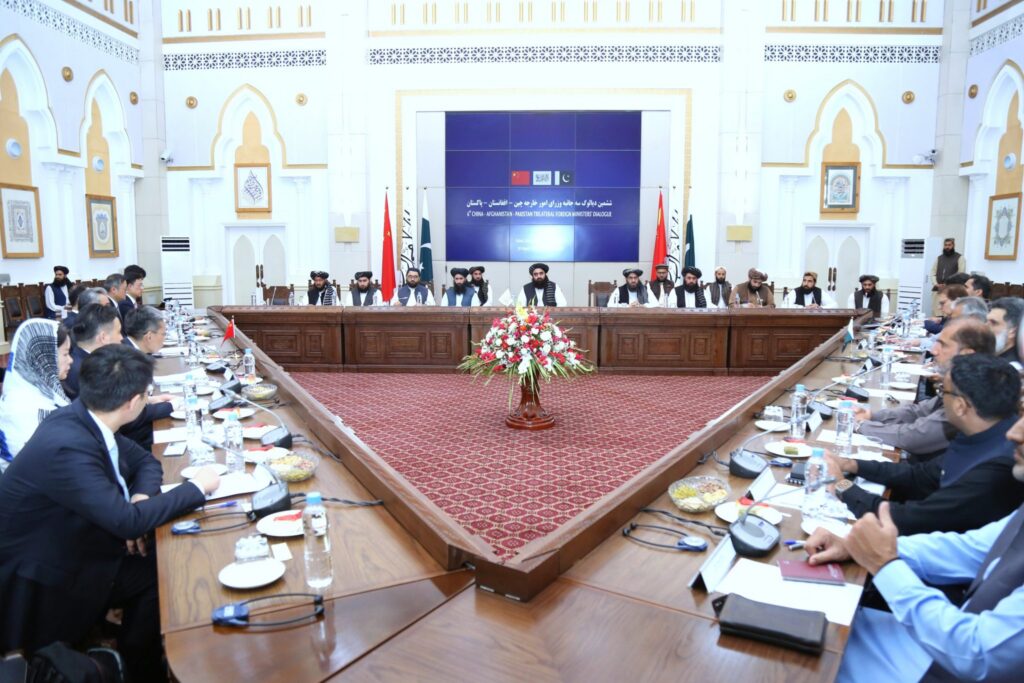
While Qatar and Turkey managed to broker a ceasefire between Pakistan and Afghanistan in Doha in October 2025, further peace talks in Istanbul ended in a deadlock. Then, reports surfaced of Saudi Arabia’s intercession, which bore limited success in the form of the Taliban releasing three Pakistani soldiers it had held captive following the October clashes. However, the tenuous Doha ceasefire ultimately collapsed in February 2026. With the ongoing U.S.-Israel-Iran conflict in the Middle East, few expected Riyadh, Doha, and Ankara would have the appetite to intervene. It was not until the March hospital attack that they were able to facilitate the Eid ceasefire. That Islamabad and Kabul did not seize this window to extend the truce into a longer-term settlement, either with these third parties or the Chinese in Urumqi, lays bare the limits of external mediation—no matter the identity of the mediator(s) in question.
Even the United States, which decisively shaped the regional order before its withdrawal from Afghanistan even without directly mediating disputes, does not seem inclined to get involved any longer. During the October 2025 Pakistan-Afghanistan clashes, President Donald Trump, who has been eager to offer his mediation services in conflicts around the world—including, as he has repeatedly remarked, in the India-Pakistan case—had been sure that he could solve the conflict “very quickly.” But in February 2026, Trump remarked that Pakistan is doing “terrifically well” in the renewed conflict, implying he trusts Islamabad to manage on its own without needing U.S. assistance. That has so far extended to Pakistan itself playing a key role as an intermediary between Washington and Tehran, for which the U.S. president has repeatedly expressed his appreciation.
That the Pakistan-Afghanistan front has been quiet since both the Urumqi and Islamabad talks were held is a positive sign, but it is too early to tell how long this quiet will hold. For instance, it is possible that Islamabad could use its elevated standing to flex its diplomatic and military muscles against the Taliban if and when the Iran war is peacefully resolved. But regardless of who, if anyone, intervenes, one thing is increasingly clear: The Afghanistan-Pakistan conflict has wider regional ramifications that require bilateral engagement to solve.
“Afghanistan-Pakistan tensions are underpinned by deeper, structural issues that no third party can cure without genuine and sustained political will on both sides.”
Why Bilateral Diplomacy Can Succeed
Afghanistan-Pakistan tensions are underpinned by deeper, structural issues that no third party can cure without genuine and sustained political will on both sides. Afghan governments for decades have refused to recognize the Durand Line, raising an “existential” issue for Pakistan, and both historically harbored or supported militant proxies that have undermined each other’s security. The Taliban’s dismissal of Pakistani requests to rein in the Tehreek-e-Taliban Pakistan (TTP), the Pakistan-focused terror group, often with a rebuke that it is Islamabad’s internal security matter, underscores why the success rate of external mediation remains unpropitious in the long run.
For tangible, lasting progress to happen, the Taliban would have to make a fundamental shift in its strategic calculus, which has not been forthcoming. The Afghan Taliban regard the TTP as their ideological brethren who cannot be disavowed. Indeed, in its July 2025 report, the UN’s Monitoring Team documented TTP fighters being incorporated into the Islamic Emirate’s law enforcement and army units for domestic security purposes. Moreover, the Afghan Taliban’s inability, or unwillingness, to curb the TTP stems from a fear that a crackdown could trigger defections to the Islamic State Khorasan Province (ISKP). Additionally, Pakistan would have to be willing to sustain negotiations with the Taliban, which until the Urumqi talks it was reluctant to do. If TTP attacks persist and the Taliban are unable to provide written and verifiable guarantees that they will rein in the TTP, Islamabad’s appetite for further dialogue may erode.
But the only way out is through. Until both sides appreciate the network of interdependence that binds them—from trade and transit routes, to cultural and people-to-people linkages, and above all, their intertwined security environment—no mediator, however credible, can bring about a permanent solution in the long term. Only a recognition of the costs of continued conflict and of the mutual gains that reconciliation could offer can put Afghanistan and Pakistan on the path to normalization. Third-party mediation, then, can only complement, not substitute, bilateral willingness for reconciliation.
Views expressed are the author’s own and do not necessarily reflect the positions of South Asian Voices, the Stimson Center, or our supporters.
Also Read: Beyond Bombing: Pakistan’s Sanctuary Problem in Afghanistan
***
Image 1: The State Council of the People’s Republic of China