Pakistan has emerged as a key mediator in the U.S.-Israel war with Iran, facilitating a ceasefire agreement on April 7 and hosting high-level U.S.-Iran negotiations in Islamabad on April 11. In the week following the first meeting of the “Islamabad Talks,” the Pakistani leadership has continued to engage in vigorous diplomacy across the region and started preparations to host a potential second round of talks. On April 16, South Asian Voices spoke with Dr. Fahd Humayun about Pakistan’s role as mediator and the prospects for the Pakistan-led peace process. Dr. Humayun is Assistant Professor of Political Science at Tufts University and received a PhD in Political Science from Yale University in 2022. His research focuses on the domestic opportunity constraints of leader decision making during interstate conflict.
How and why has Pakistan emerged as the primary facilitator of negotiations between the United States and Iran?
Let’s start with Pakistan’s stakes. Given its geography and energy needs Pakistan both is and would continue to be directly impacted by the present conflict. Consider its location, and the fact that it shares a 500 mile or so border with Iran. Also consider that Pakistan already has less than ideal relations with two of four neighboring countries. The last thing Pakistan wants is added volatility in the neighborhood, even if geopolitical volatility is something that Pakistan is hardly a stranger to.
Then there’s serious energy dependencies: around 85 percent of Pakistan’s imported crude comes through the Strait of Hormuz. The energy impact of the conflict was made extremely clear in the days following the launch of military operations against Iran, and Pakistan’s government has had to take the difficult decision of introducing energy saving measures in the last couple of weeks resulting in power outages across the country. Add to this Pakistan’s economic precarity, and the focus of both the civilian and military leadership in Pakistan in recent years to preserve economic stability.
And then of course demographics add another layer. 15 to 20 percent of Pakistan’s population is Shia, that’s around 40 million people, possibly the largest Shia population outside Iran. So, when it comes to the geopolitical turbulence of this particular conflict, Pakistan has to be mindful both of the downstream consequences of economic discontent and also sectarian unrest.
For these reasons, in some ways, it’s a no-brainer that Pakistan sees itself as being a very relevant stakeholder at this particular moment.
I think it’s also worth thinking carefully about the confluence of conditions that made it possible for Pakistan to emerge as a mediator and play this role. To start with, I think it’s fair to say that absent Pakistan, there really are not many countries who could claim to have sufficient strategic capital with both the Americans and the Iranians to be able to cast themselves as credible mediators. The Indians likely compromised themselves because of Prime Minister Modi’s proximity to Prime Minister Netanyahu’s government, especially so close to the outbreak of the conflict. The Chinese wouldn’t have been acceptable to the Americans. The Gulf countries had all been implicated in one way or another in the anti-Iranian coalition, and it’s quite likely that the Iranians would have little trust in any of them. Egypt and Turkey were both possibilities, but their stakes in seeing a peaceful resolution to this conflict perhaps weren’t quite as immediate or visible as Pakistan’s are and their leaders certainly don’t seem to have the capital that Pakistan’s Field Marshal Asim Munir appears to be enjoying at this time with the White House.
A second but perhaps less discussed factor that has enabled Pakistan to step up and play this role has to do with the aftereffects of Pakistan’s conflict with India last May. I think that conflict drastically reshaped Pakistan’s reputation in Washington. A couple of things became clear in that conflict. One was this marriage of defense preparedness and, relative to the Indians, a certain levelheadedness in terms of readily accepting de-escalation in a crisis that for many onlookers had clear escalatory potential. Those two things really helped re-indemnify Pakistan’s credentials as an anchor of regional stability, if you will, and also as an actor of consequence.
We saw a number of actors take note of that, because in the in the aftermath of the conflict, there were several countries expressing interest in signing arms deals with Pakistan. There was the much talked about Saudi-Pakistan defense pact, which I think added another layer of sheen to Pakistan’s reputation as a credible middle power of geopolitical consequence.
Lastly, I think it would be a mistake to underestimate the impact that the direct relationship that Asim Munir seems to have with the Trump administration has had on Pakistan’s ability to step forward and project itself as a credible intermediary in this process. After the conflict last May with India, Pakistan went out of its way to acknowledge the Trump administration’s role in helping bring about that ceasefire. The Americans’ role, of course, didn’t make the Indians quite as happy; India was also far more circumspect in terms of publicly acknowledging any role that the Trump administration might have played. I do think that profoundly changed the lens with which at least this administration in Washington viewed India and Pakistan.
“[A]bsent Pakistan, there really are not many countries who could claim to have sufficient strategic capital with both the Americans and the Iranians to be able to cast themselves as credible mediators.”
What will be the impact of the “Islamabad Talks” on Pakistan’s regional and/or global standing, if any?
Bringing two warring parties out of an active ongoing conflict and to the negotiating table, keeping in mind that this conflict was disrupting the world’s energy supplies and had sent global markets into a frenzy, is really no small feat—especially if you think about just how few countries either had immediate skin in the game or the geopolitical credibility (with respect to both the Iranians and the Americans) to be able to pull this off.
I think it’s fair to say that’s noticeable in the recognition and appreciation that Pakistan seems to have received, not just from the Iranians and the Americans, but also the Brits and the Europeans, who I think have all come to realize that, despite their power advantages, they just didn’t have the necessary equity to be able to serve as a bridge between Washington and Tehran.
Second, I think there’s the larger historical context of the United States’ fractious relationship with Iran going back to the revolution. Being able to facilitate the highest-level contact that’s taken place since then between Iranian and U.S. leaders in itself makes this an extraordinary diplomatic moment. Institutional memory of that is likely to leave a lasting impression in Washington, especially if we think about the significance of overcoming the enormous trust deficit between the Iranians and the Americans and getting them to agree to come to Islamabad and sit at the same table.
In terms of implications for Pakistan’s trajectory as a regional power, I think, in some ways, Pakistan’s attempts to mediate between Iran and the United States built, again, on how Pakistan was able to position itself following the conflict with India last May. I do think there’s an emerging consensus, at least privately if not publicly, that Pakistan could have escalated in that conflict, but that its response was more calibrated and restrained and overall more beneficial to strategic stability in the region than might have been the case.
So, what’s emerging both out of that conflict and then this current U.S-Iran conflict is a pattern of sorts. In the post-9/11 era, there was this reputation that Pakistan had acquired of being a source of regional instability, an irresponsible state, a risk to geopolitical stability. Going from that to actually being recognized as a regional stabilizer essentially marks a shift in how Pakistan is viewed, at least in the region, and I think there’s evidence that that shift has also taken place within the Trump administration.
How has the Iran conflict complicated Pakistan’s approach to the region, including its relations with Saudi Arabia and the United Arab Emirates (UAE)? How is Pakistan navigating its commitments under the recently signed mutual defense pact with Saudi Arabia?
For the Pakistanis, I don’t think there’s any ambiguity about what its obligations are to the Saudis. I should add here that the recent Pak-Saudi defense agreement builds on a longstanding partnership between Islamabad and Riyadh that has always included a functional military defense component. This current conflict notwithstanding, the signs all seem to indicate that Pakistan is maintaining its commitments to the Saudis, which makes this sort of three-dimensional diplomacy (balancing ties with the United States, Iran, and the Saudis) all the more impressive.
Indeed, the Iranians and the Americans had barely left Islamabad when reports began to emerge that Pakistan had deployed fighter and support jets to Saudi Arabia. Those jets in and of themselves, and the troops that Pakistan has committed, might not constitute a lot materially. But I think what it does do is raise Pakistan’s stakes in the conflict should the ceasefire break down and should Saudi Arabia be targeted again. And we’ve been seeing Pakistan’s leaders proactively communicating to the Iranians that Islamabad is bound to its obligations to the Saudis. I think the Iranians certainly understood that while this conflict was going on, and they respect that Pakistan is in this position where it doesn’t want to have to take sides. What this ultimately adds up to is the fact that Pakistan’s deployments in Saudi Arabia likely serve a strategic purpose, because they may deter further Iranian escalation. And the Iranians certainly don’t want to lose Pakistan as a mediator, because who else would they be left with? So yes, Pakistan is walking on a tightrope, but it’s done so before, and is used to holding the center of an otherwise complicated equilibrium.
With the UAE, it’s possible that things are more complicated, given both the UAE’s own tilt toward India and Pakistan’s tilt toward the Saudis, as well as rifts between the Saudis and the Emiratis over Yemen and broader geopolitical influence in the Gulf. That’s potentially reflected in the repayment that Pakistan is making to the UAE of about USD $3.5 billion, which is coming at a bad time because it’s going to put a strain on Pakistan’s foreign exchange reserves. It might also risk Pakistan breaching its commitments to the IMF at a moment when I think it’s fair to say that both Pakistan’s civilian and military leaders really do not want to jeopardize the country’s economic stability.
But, to be fair to the UAE, their security calculus has also really transformed because of this conflict. There are reports that they’re trying to tighten liquidity to fund their own domestic and regional defense initiatives. The region has become more insecure for them. And despite Pakistan making this repayment, it’s also helpful to remember that both the Pakistanis and the Emiratis have always prioritized high level engagement. There’s still a lot of respect there. The UAE continues to be a top source of Pakistani remittances, and I believe there is a possibility that Pakistan might be exploring trying to convert some of the money it owes into UAE investments in Pakistan’s energy and infrastructure sectors. I wouldn’t say it’s a relationship that has broken down at all, it’s just yet another relationship that Pakistan has to navigate in the context of a complicated set of regional dynamics.
What role do you see China having potentially played in Pakistan’s role as a mediator? What does Islamabad’s role in these talks signal for its relationships with the United States and China moving forward?
Pakistan puts a very high premium on its relationship with Beijing, which Pakistan’s leaders refer to as an “all-weather strategic partnership.” Given the enormous stakes of this particular U.S.-Iran conflict—it’s a regional conflict, but it has global consequences—I think it would be unrealistic to expect the Chinese to not have a stake in the outcome. Over half of Chinese energy imports come from the Middle East.
That said, my sense has been that the Chinese have adopted a hands-off approach so far. I think that also that has to do in large part with China’s professed policy of not interfering in the affairs of other countries.
But, at the same time, let’s not ignore the fact that the deputy prime minister and foreign minister of Pakistan flew to Beijing just days before the first round of the Islamabad talks, very likely to coordinate positions between Islamabad and Beijing, and perhaps also to get Chinese buy-in, since that would be instrumental in shoring up Pakistan’s ability to reassure the Iranians that it’s safe to seek an off ramp in this conflict.
The Pakistanis and the Chinese came out with a five point statement: those points included things like cessation of hostilities, start of talks, security of non-military targets, security of shipping lanes. I don’t think any of those are in and of themselves revelatory—these are not positions that any country is likely to have an issue with. But in issuing that document, I think Islamabad was in some ways strategically able to signal the presence of the Chinese as a stakeholder, which was probably important for the Iranians, especially given the lack of trust that exists between the Iranians and the Americans. So, just in terms of being able to convince the Iranians, “look, come to Islamabad,” I think that context really would have been important.
Additionally, I do think that Pakistan’s ability to work the China channel is something that the Americans probably appreciate, because they did it without having to sort of explicitly ask Pakistan, “can you bring the Chinese in?” I think it’s fair to say that the Americans would probably want China’s fingerprints on all of this to be as minimal as possible. At one point while Vance was in Islamabad, one proposal that was floated about joint patrolling in the Strait of Hormuz. I don’t think the Americans would want any arrangement in which the Chinese could potentially be a part of that. So, it helps that the Americans can rely on the Pakistanis to ensure that the Chinese are okay with everything that’s going on without needing the Chinese to be in the room themselves.
More broadly thinking about the U.S.-China-Pakistan triangle, I think any world in which Sino-U.S. competition doesn’t follow zero sum expectations for countries in the region is a good thing for Pakistan. I think these past few years, or at least with the Biden administration, there was this clear sense that the Americans very much thought that Pakistan should be written off as being in China’s camp, even though I think there was a concerted effort by the Pakistanis to signal, “Hey, we’re not in any camp. We don’t believe in camp politics, and we value our relationship with the Chinese, but we really want a good relationship with you as well.”
So, for Pakistan, it’s a big win if Sino-U.S. relations become less competitive. The more competitive it is, that puts pressure on Pakistan not necessarily to choose sides, but to convince outside powers that it isn’t necessarily in one camp or another.
“[There’s a] tacit acknowledgement within the international community of Pakistan’s role. The sense seems to be that the Pakistanis appear to be good at what they’re currently doing, so just let them continue.”
What does this moment mean for domestic politics in Pakistan, particularly considering the centrality of Field Marshal Asim Munir and Prime Minister Shehbaz Sharif on the international stage?
I think there is pretty much a multi-party consensus right now in Pakistan on the need to bring this conflict to a close. Everybody, including the Pakistan Tehreek-e-Insaf (PTI), whose leadership is incarcerated at the moment, is backing Asim Munir to play this role.
What does all of this mean for democratic politics in Pakistan? It’s difficult to say, but if Munir and Shehbaz Sharif can get this done, it’s not going to be a bad thing for them. There are two things at play here. One is, of course, the impression that Pakistan has been able to play a role in the “Muslim world,” trying to end a conflict that other countries like Saudi Arabia or others were all implicated in. That’s one reputational consequence of this for both Shehbaz Sharif and Asim Munir.
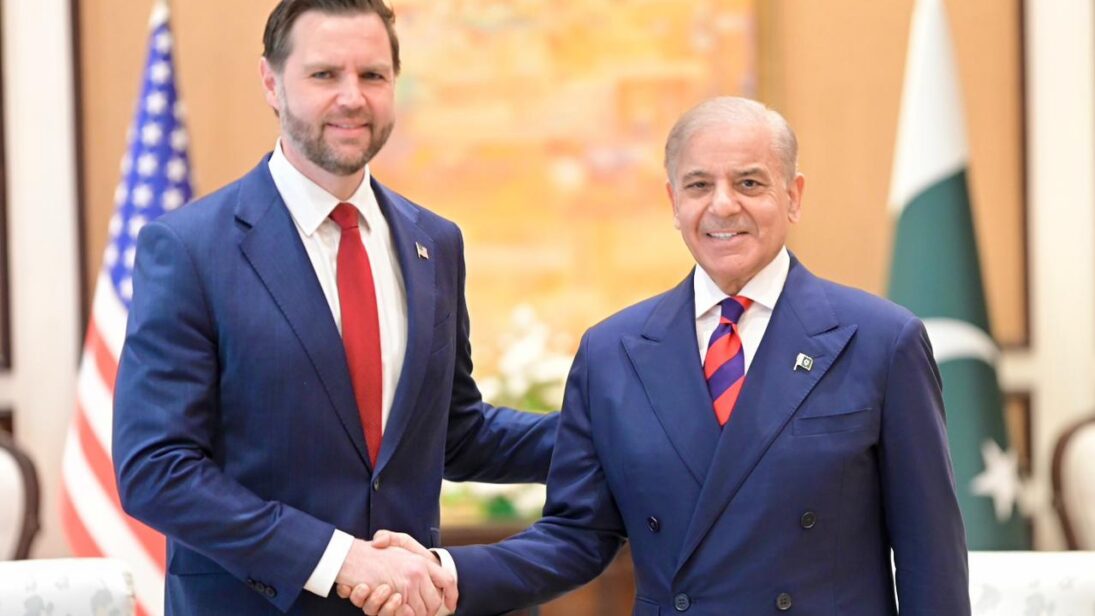
But the second is elevating Pakistan’s position with the Americans and being able to get Vance—and possibly Trump—to come to Islamabad, which is something that a lot of Pakistanis seem to have taken a lot of pride in. They were able to host the Americans and the Iranians and also, in some ways, start to turn the page on at least two decades of reputational bad blood with the Americans. Being able to break out of that is something that political leaders in Pakistan across the board are likely to appreciate.
With the Islamabad Talks concluding without immediate resolution but shuttle diplomacy ongoing, what are the prospects for a Pakistan-led peace process? How do you assess Pakistan’s role thus far and what do you expect in the coming weeks?
I’m cautiously optimistic. Field Marshal Asim Munir is in Iran, likely going to Washington next. The statement from the White House this week suggests that the president is very keen to have the process continued through the Pakistanis.
The language that was used seems to indicate that this is very much Pakistan’s “show” at the moment, caveating, of course, that the Pakistani prime minister is currently on a trip to Saudi Arabia, Qatar, and Turkey, and will be looking to ensure that all these regional players are on board with whatever happens.
But really, besides Asim Munir and Shehbaz Sharif, I don’t see any other world leaders working the phones or making high-level state visits at this critical time with the singular objective of trying to reach a deal that can bring this conflict to an end. I think that is in some ways reflective of a tacit acknowledgement within the international community of Pakistan’s role. The sense seems to be that the Pakistanis appear to be good at what they’re currently doing, so just let them continue.
Views expressed are the interviewee’s own and do not necessarily reflect the positions of South Asian Voices, the Stimson Center, or our supporters.
Also Read: Pakistan’s Bridge-Building Diplomacy in the Middle East
***
Image 1: Prime Minister’s Office via X
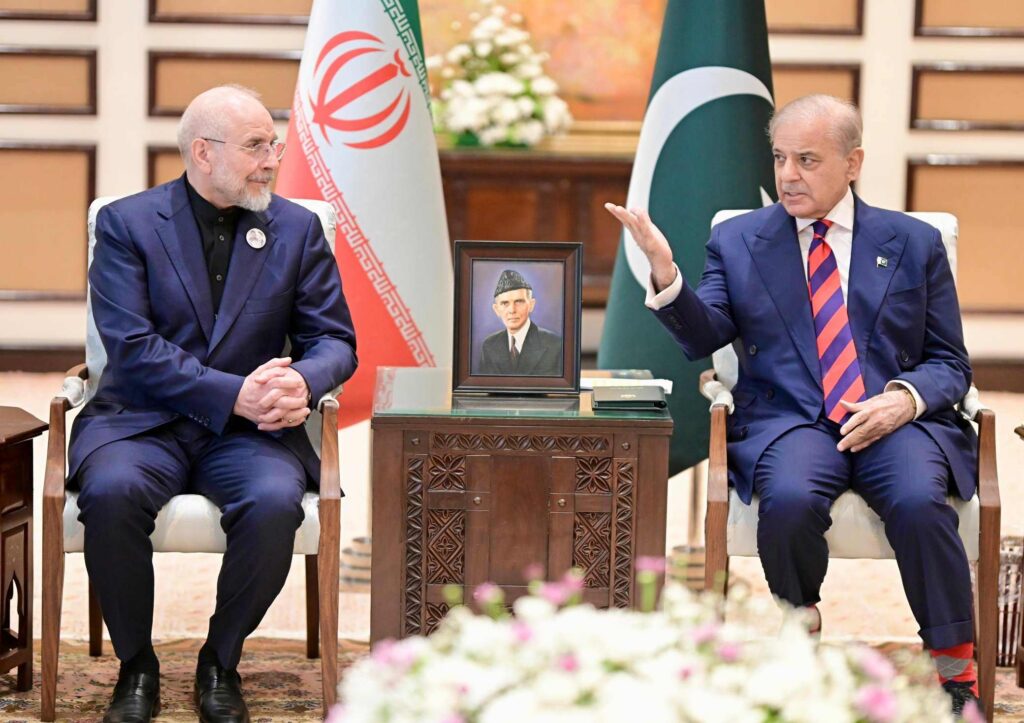
Image 2: Prime Minister’s Office via X