Pakistan has emerged as a key player in the Middle East war by positioning itself as a “bridge-builder.” By advocating de-escalation between Saudi Arabia and Iran as well as reportedly serving as a messenger between the United States and Iran, Pakistan has made clear that it does not want to be dragged into a war. Indeed, judging by recent developments, Pakistan’s bridge-building role and its renewed diplomatic confidence may well prove critical in driving down hostilities between Iran and the United States and Israel.
Pakistan’s pursuit of bridge-building diplomacy stems from three key motivations. First, the strategic dimension: ensuring that the war comes to a quick end. A prolonged war in which it would be required to align with Saudi Arabia harms Pakistan’s security and makes it vulnerable to cross-border attacks by Iran, as witnessed as recently as January 2024—a scenario further compounded by Pakistan’s ongoing military operations in Afghanistan. Second, the economic dimension: The current war will only exacerbate Pakistan’s socio-economic troubles, especially with the constrained petroleum supply chain driving up domestic fuel prices. Third, the domestic reputational dimension: If the Pakistani public perceived their country as not only aligning with Riyadh but actively siding with the United States and Israel against Iran, the popular backlash would put greater pressure on a government already hard-pressed to navigate competing interests and security threats.
That Pakistan can credibly build these diplomatic bridges is a testament to its success over the years in developing close relationships with Riyadh, Tehran, and increasingly with Washington. But even as its motivations to do so are well-founded, only time will tell how strong the bridges it has built will remain.
Strategic Risk
Pakistan’s worst-case scenario involves a significant prolongment of the war. The longer the war, the greater the battlefield and strategic complexities, and the higher the pressure from Saudi Arabia and other Gulf states to engage in a calibrated response against the Iranian regime.
The gravest consequence flowing from a scenario where Pakistan lends itself to the defense of Saudi Arabia against Iran resides in military countermeasures from the Iranian side targeting Pakistani territory. Unlike the current rhetorical condemnation and non-military response of the Gulf kingdoms to Iranian strikes on their territories, Pakistan would likely proportionally match Iranian retaliatory strikes. This debilitating scenario is compounded by Pakistan’s ongoing kinetic operations against the Taliban regime in Afghanistan.
“Pakistan’s bridge-building role and its renewed diplomatic confidence may well prove critical in driving down hostilities between Iran and the United States and Israel.”
Pakistan’s decision-makers would be disinclined to open simultaneous hot borders with its two Western neighbors. Their dilemma is further exacerbated by already-strained ties with the country’s eastern neighbor: Since the four-day crisis last year, Pakistan has been extremely sensitive to the weaponization of water by India following its unilateral abrogation of the Indus Waters Treaty, and to its alleged support to Tehreek-e-Taliban Pakistan (TTP) and Baloch Liberation Army (BLA). In a scenario where Pakistan is compelled towards active military support of Saudi Arabia and the Gulf States, internal security fault lines have the potential to worsen further as attention is diverted away from domestic security operations. Given the country’s complex threat landscape, Islamabad is anxious that kinetic participation in the Iran conflict would prove detrimental to its own security, and is therefore more than motivated to forestall such an eventuality.
Economic Fallout
Pakistan’s economic interests require its oil shipments and supply chains survive the negative impacts of the war. This is imperative for a government riddled with political instability and domestic performance deficits.
As such, the government announced an increase in oil prices as soon as the war commenced, with another price hike reportedly in the pipeline. Pakistan’s Navy instigated a commercial venture, Muhafiz-ul-Bahr, to ensure safe and secure Sea Lines of Communication (SLOCs) for the country’s supply of essential commercial commodities. Its diplomatic overtures to Iran, including Prime Minister Shahbaz Sharif’s felicitations on the appointment of Ayatollah Mojtaba Khamenei as the new religious leader of Iran, meant that Tehran allowed a Pakistani vessel to sail through the Strait of Hormuz on March 16. Recent reports suggest that at least three additional Pakistani oil tankers have passed through the Strait of Hormuz, signaling the state’s good ties with Iran.
In addition, Pakistan has been closely coordinating with its partners in Saudi Arabia to secure additional oil shipments and diversify its supply chain. In a quick move, Islamabad secured a guarantee of alternative oil supplies through Saudi Arabia’s Yanbu Port. This adaptability underscores the positive dividends that Pakistan is deriving from its bridge-building diplomacy. Nevertheless, strains on Pakistan’s economy are already evident, with the government deciding on reduced working hours and targeted subsidies to conserve fuel.
Domestic Audience Costs
Beyond Pakistan’s tangible strategic and economic pressures, domestic audience costs represent an even more challenging obstacle. Pakistan witnessed violent domestic opposition to the war, with an angry public storming the U.S. Embassy in Karachi, resulting in the death of 10 protestors. An equally violent demonstration in the Shia-dominated Gilgit Baltistan region saw the deaths of protesters as well as security personnel.
Should Pakistan be compelled to participate in a Saudi or Gulf military operation, the public is bound to see this as an extension of the U.S.-Israeli attacks against Iran. This will be politically costly and an unpopular move for the government, as the public remains supportive of Iran. The net effect would be another round of violent protests across the country, which, combined with inflationary pressures, would only add to decreasing support and heightened criticism of the government.
“[I]f the war escalates further beyond the present threshold, or if the much-speculated peace talks fail to bear fruit, pressure on Pakistan to take on a kinetic role and align with Saudi Arabia is bound to increase. This would effectively force a limit on its bridge-building role.”
Enduring Bridges?
Pakistan’s bridge-building role seeks to offset key strategic, economic, and domestic audience risks and costs. Alignment with Saudi Arabia is fraught with the possibility of Iranian missile and drone strikes on Pakistan’s territory. The economic burden for an already flailing economy worsens if oil supplies remain constrained. Finally, domestic audience costs are likely to increase in an emotionally-charged public atmosphere where siding with Saudi Arabia is perceived as associating with Israel and the United States.
For now, the country has done remarkably well by positioning itself as a “key interlocutor” opening channels of communication with the United States, Iran, Saudi Arabia, and other Gulf States. However, if the war escalates further beyond the present threshold, or if the much-speculated peace talks fail to bear fruit, pressure on Pakistan to take on a kinetic role and align with Saudi Arabia is bound to increase. This would effectively force a limit on its bridge-building role. And for a polity engaged in a delicate balancing act in the region and beyond, such a development could prove incredibly costly.
Views expressed are the author’s own and do not necessarily reflect the positions of South Asian Voices, the Stimson Center, or our supporters.
Also Read: The Role of Status in the Pak-Saudi Defense Pact
***
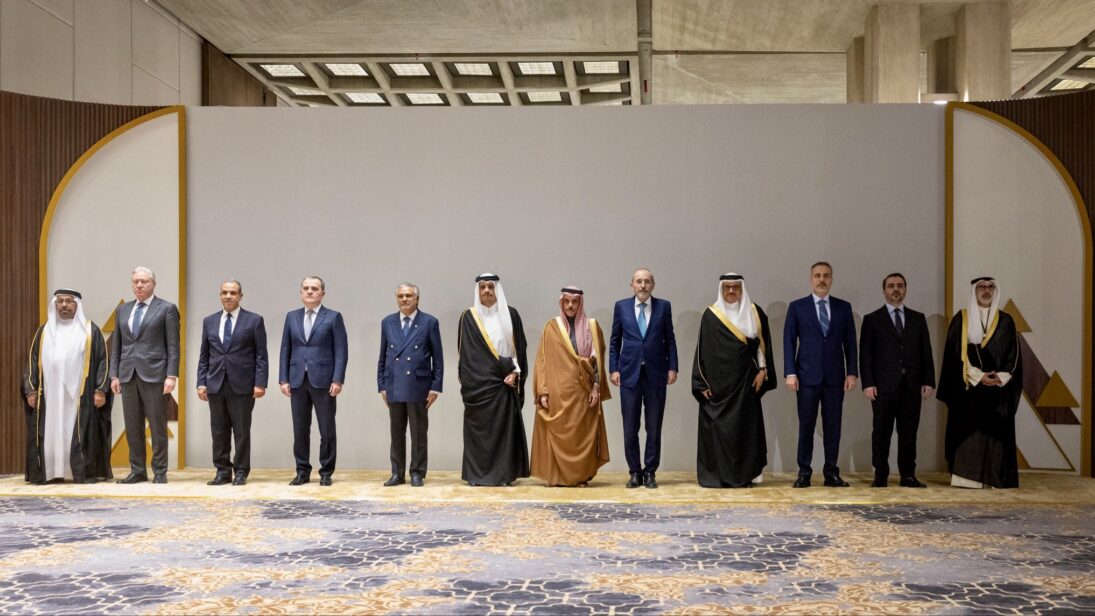
Image 1: Saudi Foreign Ministry via X
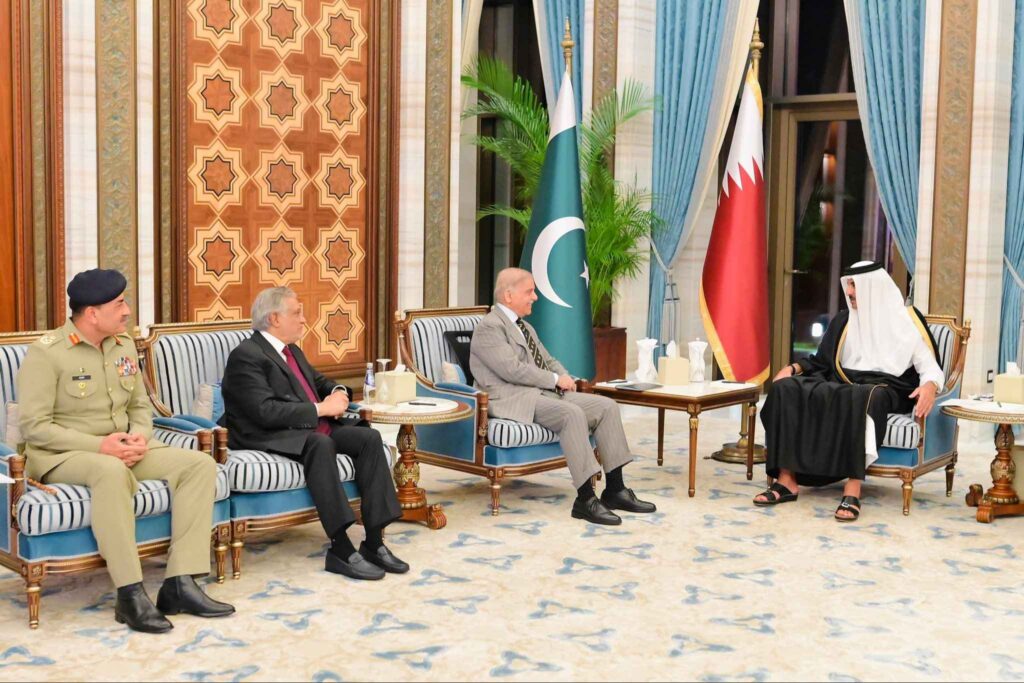
Image 2: Shehbaz Sharif via X