India has had a longstanding interest in the stability of Afghanistan, in no small part out of geopolitical necessity. In recent months, New Delhi has taken calculated measures to engage with the Taliban regime in Afghanistan to shore up its regional geostrategic interests, particularly as Pakistan, its nuclear-armed neighbor, has seen its star rise quite significantly on the international stage. Recent visits this past fall by Afghan Foreign Minister Amir Khan Muttaqi and Minister of Industry and Commerce Alhaj Nooruddin Azizi to India are an indication of the improving understanding between New Delhi and Kabul. This increase in bilateral engagement builds on the Narendra Modi government’s recognition that India’s continued economic assistance, goodwill activities, and capacity-building initiatives in Afghanistan and beyond can offer New Delhi an in-country soft power edge that few other regional players have.
Given Afghanistan’s dire need for economic assistance and financial support, India’s newfound closeness with the Taliban could be well-served by more deeply integrating Afghanistan into India’s prevailing infrastructure and road projects in and around Central Asia—namely through the expansion of the International North South Transport Corridor (INSTC).
Engagement Without Recognition
In the years since the U.S. withdrawal from Afghanistan and the rise of the Taliban, India has adopted a cautious approach of “pragmatic engagement” with the Taliban, without recognizing its legitimacy or endorsing its governance model. It has done so in part to maintain its presence and safeguard its substantial economic and infrastructural investments, which total about USD $3 billion across more than 500 projects across Afghanistan over the years. While the Taliban still carry a major trust deficit and political isolation around the world, New Delhi does not want to negate years of work, especially at a moment when its other key relationships in the neighborhood seem increasingly fragile.
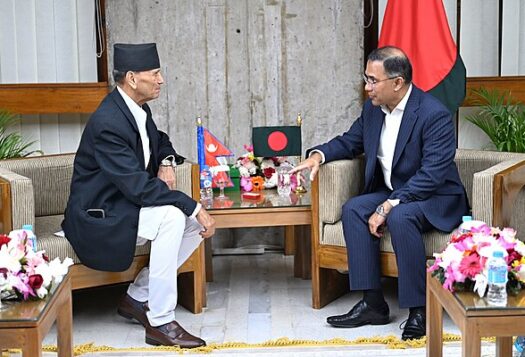
To that end, the Modi government has in recent months welcomed the Afghan Foreign, Industry and Commerce, and Health Ministers, and upgraded the Technical Mission established in Kabul in 2022 to a full Embassy of India. Meanwhile, the Taliban Foreign and Industry Ministers have also invited Indian business groups to set up textile centers, mining operations, pharmaceutical hubs, and agriculture businesses in Afghanistan, offering assurances for the safety and security of Indians. Both countries have also agreed on the institutionalization of the Joint Chamber of Commerce and Industry and initiation of the Air Freight Corridor on the Kabul-Delhi and Kabul-Amritsar sectors, which will expedite efficient movement of goods between both nations. More largely, the current Taliban administration has opted to focus on areas which fortify diplomatic and economic ties, like expanding cooperation in trade and health sectors.
“Given Afghanistan’s need for economic and infrastructural assistance and India’s own interest in bolstering its wobbling regional reputation, India should consider developing a subsection of the INSTC through Afghanistan and into Central Asia to further cement this renewed relationship.”
India’s continued developmental assistance and humanitarian support—no longer directly or indirectly backed by the United States—have reoriented the Taliban’s confidence in New Delhi’s capabilities and the Indian presence in Afghanistan. As a result of these favorable conditions, India-Afghanistan bilateral trade has reached USD $1 billion in 2025, though this is still below the 2019-20 total of USD $1.5 billion. Given Afghanistan’s need for economic and infrastructural assistance and India’s own interest in bolstering its wobbling regional reputation, India should consider developing a subsection of the INSTC through Afghanistan and into Central Asia to further cement this renewed relationship.
Potential Pragmatic Tie-Up
India aims to achieve USD $2 trillion in exports by 2030. The INSTC, a 7,200 kilometer long multi-modal transportation route linking the Indian Ocean and the Persian Gulf with the Caspian Sea via Iran, Central Asia, and Russia, is vital for achieving those export goals. The route was initiated by an Inter-Governmental Agreement by India, Iran, and Russia in 2000 to improve trade relations, reduce transit time, and cut transport costs between Eurasia, Central Asia, and India. Furthermore, this corridor also provides an alternate route to the Suez Canal while mitigating maritime piracy risks occurring in the Red Sea. In part thanks to the success of the INSTC, India’s trade with Central Asia has grown from merely USD $500 million in 2010 to USD $2 billion in 2023.
Still, adding a secure and safe transport corridor through Afghanistan into this region could offer multiple advantages. For India, creating a new freight corridor between Herat and Mazar-e-Sharif could allow it to take advantage of the shortest route to Central Asia that excludes the currently inoperative passes with Pakistan. India also has infrastructural development experience in the country, for example developing the 218 kilometer Delaram-Zaranj Highway that links southwestern Afghanistan with Iran through its Border Roads Organization (BRO) in 2009. The logistical advantages are also clear, with three Central Asian countries—Kazakhstan, Kyrgyzstan, and Tajikistan—already members of INSTC, along with Iran.

However, there are several possible challenges to the development of an INSTC subsection. Locally, the stability of Afghanistan under Taliban rule is still a concern, given that the National Resistance Front (NRF) is still actively engaging in guerilla attacks to destabilize the regime, and other terrorist groups such as the Islamic State-Khorasan Province (ISKP) and Al-Qaeda have continued their activities within the country. On the regional level, insurgent groups like Tehreek-e-Taliban Pakistan (TTP) have intensified cross-border activities, leading to active conflict between Afghanistan and Pakistan.
Globally, the extension of the INSTC faces two major concerns: financial inefficiencies and human rights violations. A new subsection will require significant financial backing, but Afghanistan’s irregular current funding is dependent on barter-based commerce, improper public taxation, and informal hawala networks; international sanctions and the cutoff of Afghan banks from the SWIFT international transaction network have limited Afghanistan’s economic activity. Lastly, the Taliban’s stringent laws excluding women and girls, its continuous violation of human rights, rampant corruption, and its support for terrorist groups like the TTP mean that the international community will continue to doubt its legitimacy as a government and a credible actor. Whether and how the Taliban decides to address these problems will determine its future as a legitimate authority.
“Backing a freight corridor linking the major economic centers of developing Central Asian countries via Afghan territory could significantly enhance Afghanistan’s regional and international standing as a major transshipment hub of Asia, as well as improve their trade ties with countries across the region.”
To begin with, developing and promoting an infrastructural project like the INSTC corridor will require regulating Afghanistan’s existing financial systems. India has expertise in handling major developmental projects in the past, and could involve itself more deeply by providing assistance in reforming the banking sectors. India already offered technical support to the Da Afghanistan Bank (DAB) in 2022 to help ease the pressure of the humanitarian crisis and financial inclusion; it can further adopt ideas from the blueprint of government’s Unified Payment Interface (UPI) which is based on Immediate Payment Service (IMPS) and design participation strategies, while Kabul executes and oversees the overall implementation. Such a financial inclusion program backed by secure and robust digital infrastructure would enable timely money transfer within Afghanistan, bringing aid to millions of Afghans while pushing them to utilize banking services. However, even as they no longer claim to be a “caretaker” administration, the Taliban are yet to demonstrate interest in policy planning of this scale and complexity, with or without the help of regional partners.
Conclusion
In the midst of an increasingly turbulent neighborhood, India can gain significant geoeconomic dividends by pragmatically deepening its ties with Afghanistan. Backing a freight corridor linking the major economic centers of developing Central Asian countries via Afghan territory could significantly enhance Afghanistan’s regional and international standing as a major transshipment hub of Asia, as well as improve their trade ties with countries across the region. While implementing the integration of Afghanistan into INTSC would require serious effort from India and its Central Asian partners, the benefits outweigh the costs in the long term, and could herald a new chapter of economic development in South and Central Asia.
Views expressed are the author’s own and do not necessarily reflect the positions of South Asian Voices, the Stimson Center, or our supporters.
Also Read: India’s Approach to Taliban 2.0: Cautious and Persistent
***
Image 1: S. Jaishankar via X
Image 2: S. Jaishankar via X