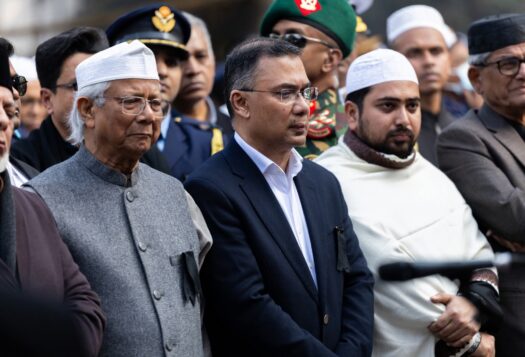
When Gen Z activists poured onto the streets of Kathmandu on September 8, Nepali state forces opened fire, killing at least 19 people and injuring nearly 300. In response to this violence, protests intensified the following day, and Prime Minister K.P. Sharma Oli resigned as buildings across the capital—including the federal parliament building—went up in flames, targeted by yet unidentified actors. On the evening of September 9, the army was called upon to stabilize the situation; later that week, former Chief Justice Sushila Karki formed an interim government and scheduled elections for March 2026.
To understand the stunning, rapid collapse of the Oli government, observers should look beyond the immediate triggers—like the September 4 social media ban and the youth-led backlash to state violence—toward the systemic failures that laid the groundwork for the political upheaval of September. The endemic shortcomings of Nepali politics limited state capacity and contributed to mounting public frustration. The central feature of this dysfunction was a self-serving elite that practiced transactional, exclusionary politics, paralyzed the state in pursuit of parochial interests, and captured and corrupted public institutions; these failings must be reckoned with as stakeholders begin to author the next chapter in Nepali political history.
Transactional Politics
Since Jan Andalon II, Sher Bahadur Deuba’s Nepali Congress (NC), K.P. Sharma Oli’s Communist Party of Nepal (Unified Marxist-Leninist) (CPN UML), and Prachanda’s Communist Party of Nepal (Maoist Centre) (CPN MC) have been the dominant political parties in Nepal. These parties—and their support bases—were built over decades on ideological grounds. However, in the two decades since the 2006 restoration of Nepali democracy, principled politics have increasingly given way to the brutal logic of transactionalism.
In the 2018 election, for instance, Oli and Prachanda came together under the banner of “communist unity” and secured a nearly two-thirds majority in parliament. However, this alignment unraveled after their personal ambitions clashed and the government collapsed. Subsequently, Prachanda supported opposition leader Deuba’s bid to become prime minister. In the 2022 general election, Deuba and Prachanda maintained the governing coalition and entered into an unholy electoral alliance of democratic and communist forces in order to counter Oli. After the election, Prachanda made a dramatic change, discarding this electoral coalition and joining hands with Oli, who later offered him the premiership.
“The central feature of this dysfunction was a self-serving elite that practiced transactional, exclusionary politics, paralyzed the state in pursuit of parochial interests, and captured and corrupted public institutions.”
Just since 2022, four different coalition governments have led Nepal: Prachanda and Oli, Prachanda and Deuba, Prachanda and Oli, and finally Oli and Deuba. This game of musical chairs for the premiership represents a deeply transactional pattern of politics divorced from ideological commitments, which has bred significant disillusionment with mainstream parties among activists and loyal cadres alike. Against this backdrop, calls for reform of Nepal’s major political parties must be heeded as the country enters its next political phase.
Alternatives Excluded
In addition to this transactional turn, Nepali parties have evidently failed over the years to accommodate emerging political movements, many of which drew significant support from young people; in fact, legacy actors often actively suppressed such players. Earlier attempts at alternative politics, such as the Bibeksheel Party‘s effort to mobilize urban activists or Baburam Bhattarai’s Naya Shakti Party’s appeal to dissatisfied voters achieved limited electoral returns.
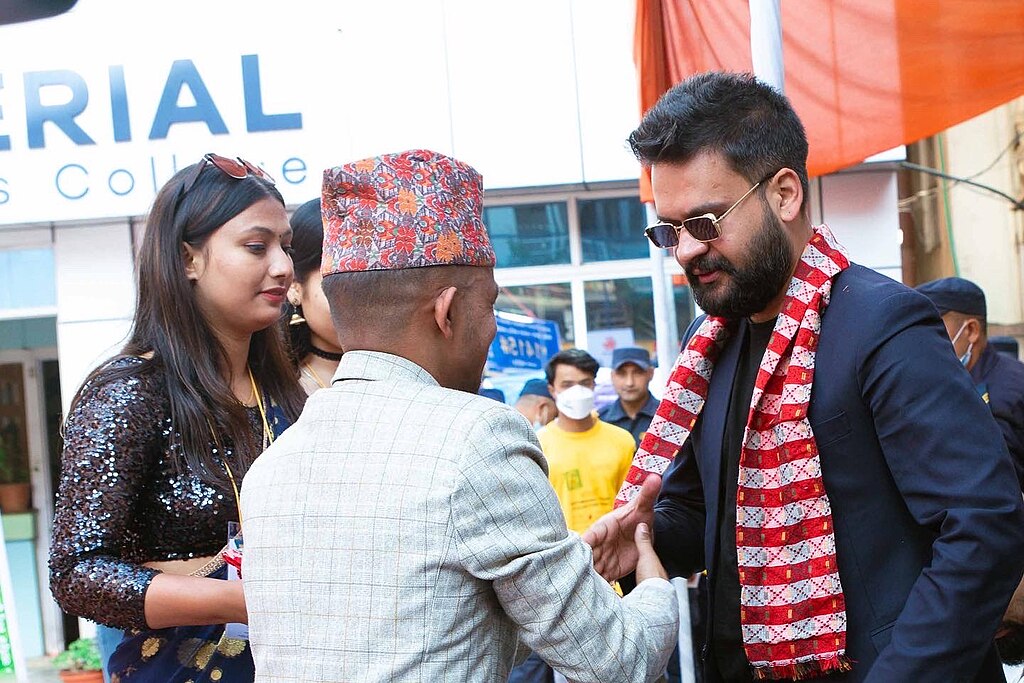
However, the 2022 local elections marked a turning point, as individual independent candidates achieved surprising victories. Former rapper and structural engineer Balen Shah won the mayoral race in Kathmandu Metropolitan City, grassroots activist Harka Sampang won in eastern sub-Metropolitan Dharan, and successful businessman Gopi Hamal claimed victory in Dhanghadi sub-Metropolitan City. These victories chipped away at the pervasive dominance of the mainstream national parties. But the most dramatic shift came in the 2022 general election, when TV presenter Rabi Lamichhane’s Rastriya Swatantra Party (RSP) captured 10.7 percent of the vote, elevating his newly-formed party to the fourth largest in parliament. Moreover, the general election also saw a drop in the vote shares of major political parties with new political forces, like the Janamat Party and the Nagarik Unmukti Party, entering parliament alongside RSP. Nepalis didn’t just act at the voter booth—months prior to the September upheaval, royalists held unprecedented protests which failed to secure tangible gains but provided one example of growing discontent.
Legacy political actors, instead of correcting course and learning from these electoral setbacks and clear demonstrations of public dissatisfaction, chose to obstruct the new, rising political forces. Oli harshly criticized Balen Shah, and Rabi Lamichhane was imprisoned after the formation of the Oli-Deuba government, spurring claims of politically-motivated prosecution and inhumane treatment. Certainly, though a victim of gatekeeping, Lamichhane was also himself compromised in the eyes of the public by repeated controversies, demonstrating that even some elected on reform platforms have struggled to break free of conventional political dysfunction. In sum, however, the exclusion of alternatives by mainstream parties—even as legacy actors failed to govern effectively—ultimately eroded the public legitimacy of the political system.
Political-Bureaucratic Rift
Another critical yet less-discussed weakness of the Nepali state was the growing, corrosive battle between the political leadership and the bureaucracy. This tussle was starkly reflected in the muddled prosecution of major corruption scandals, such as the infamous “Lalita Niwas” land scam in which the land where the prime minister’s official residence sits was transferred to private ownership. In this case, the anti-corruption agency provided immunity to cabinet decision makers, including the prime minister, on the grounds that Nepali corruption legislation prevents the prosecution of policy decisions by the cabinet. Even the minister who proposed such a transaction and received approval from the cabinet was not convicted by the court. By contrast, bureaucrats were convicted, including not only those who were part of the decision-making, but also those who were merely implementing cabinet decisions. In similar corruption scandals, selective prosecution has been a consistent feature.
Even the legislative process has been hampered by the rift between politicians and bureaucrats. For example, during the discussion for a new civil service bill, a legislative committee unanimously agreed to bar civil servants from political appointments for two years after retirement, over the opposition of senior civil servants. However, during the tabling of the bill in parliament, the “cooling off” provision had been significantly and inexplicably diluted. A parliament probe found that the actions of the chief secretary—the top bureaucrat in Nepal—during the saga was a breach of norms of institutional conduct. This case demonstrates a willingness to tamper with parliamentary legislation and reflects growing institutional dysfunction across segments of the Nepali state.
This continuing tussle between political leadership and the bureaucracy—with actors on both sides variously defending their parochial interests—underscores the sobering reality of a political system dominated by elites and patronage networks with weak checks and balances, poor transparency, and fleeting rule of law. This mutual distrust contributed in no small part to the dysfunction and paralysis that plagued the Nepali state.
Institutional Capture
Finally, rather than delivering efficient public service, the focus of Nepali political parties and their leaders has long been the capture of state institutions to extract resources, often for personal gain. In practice, key appointments were often considered to be made solely on the basis of party affiliation or financial quid pro quo. Consequently, over time, public institutions transformed into tools of extraction and patronage, resulting in mounting corruption and public anger.
In recent years, however, the capture of state institutions has transcended older patterns of corruption. One striking example was the Bhutanese refugee resettlement scandal, in which Nepalis were trafficked to the United States by falsely identifying them as Bhutanese refugees. The scandal involved an illicit network offering forged asylum seeking documents to over 160 victims in exchange for vast sums of money, in a shocking abuse of genuine refugee resettlement programs. In this case, several high-profile figures, including former Deputy Prime Minister Top Bahadur Rayamajhi, former Home Minister Bal Krishna Khand, and Home Secretary Tek Narayan Pandey, were implicated. Yet political interference systematically shielded other high-level actors from the investigation radar.
“Rebuilding Nepali political stability will require more than leadership change: it demands institutional repair, and political leadership willing to break with past patterns of corruption, exclusion, and transactionalism.”
Political shielding was also visible in the high-profile gold smuggling scandal via Tribhuvan International Airport. Despite linking sons or cousins of former vice president Nanda Bahadur Pun, former speaker Krishna Bahadur Mahara, and other leaders, no investigation or case was filed against the politicians. Previously, even the finance minister had attempted to interfere in a money laundering investigation, when he pressured the central bank governor to unfreeze more than USD $3 million transferred from the United States, and then tried to sack the governor when he refused to unfreeze the account.
Beyond damaging Nepal’s credibility on the international stage, these scandals illustrate dangerous internal trends: the creeping corruption of sensitive institutions and the systematic compromise of decision-making at the highest levels.
Conclusion
These systematic shortcomings indicate that the recent political breakdown was not a sudden event, but the culmination of deeper institutional decay. Nepal’s democratic transition generated demand for greater public participation, inclusive governance, strong institutions, and grassroots engagement; the failure to heed these calls has contributed to persistent political dysfunction and degraded governance, fueling widespread frustration.
The September crisis, therefore, reflected enduring political failures, not episodic disorder. The demand of the youth protestors was not wholesale regime change, but genuine reform. Over just two days, the credibility of the leadership was lost and the system capitulated under its own weight. Rebuilding Nepali political stability will require more than leadership change: it demands institutional repair, and political leadership willing to break with past patterns of corruption, exclusion, and transactionalism. Without drastic reform to hold political parties accountable, professionalize the bureaucracy, and restore faith among citizens, the next Nepali administration risks facing similar instability.
Views expressed are the author’s own and do not necessarily reflect the positions of South Asian Voices, the Stimson Center, or our supporters.
Also Read: Nepal’s Unfinished Economic Reckoning
***
Image 1: Bijay Chaurasia via Wikimedia Commons
Image 2: Janak Bhatta via Wikimedia Commons