On July 30, 2026, Pakistan’s federalism debate abruptly resurfaced when Interior Minister Mohsin Naqvi told the Pakistan Economic Summit that the governance “system” had collapsed. His intervention reflected a broader view among proponents of administrative restructuring that persistent governance, development, and security challenges in peripheral regions have reflect the limits of existing provincial arrangements. Presenting additional administrative units as a solution to the crisis, he urged political parties to consider creating new provinces or units. A day later, the military’s spokesperson endorsed a debate over an “administrative reset,” linking good governance to national security and questioning whether four provinces could adequately govern Pakistan’s large population, while insisting that any change should be advanced only through political and constitutional avenues.
Political reactions, however, were mixed. Pakistan People’s Party (PPP) leaders in Sindh rejected the proposal. Senior Pakistan Muslim League-Nawaz (PML-N) figures criticized Naqvi’s claim that the system had collapsed but expressed qualified support for the creation of additional units. While initially less vocal on the issue, Pakistan Tehreek-i-Insaf (PTI) subsequently reaffirmed its long-standing support for the creation of new provinces, including a South Punjab province, while maintaining that such reforms should be pursued by a government with a popular mandate.
This exchange has largely been presented as a debate about improving governance, particularly through smaller administrative units that would enhance state capacity of service delivery and make government more responsive to local needs, with the familiar subtext of civil-military politics. However, the deeper conflict concerns the control and distribution of the country’s fiscal resources. Redrawing provincial boundaries would reopen questions about the political units through which revenue, expenditure responsibilities, representation, and patronage are organized. Even if restructuring begins as a governance initiative, it cannot be implemented without reopening the distributive bargains underpinning Pakistan’s post-2010 federal settlement. Provincial governments that demand greater autonomy and resources from Islamabad have generally resisted transferring meaningful fiscal and administrative authority to elected local governments. Redrawing the lines of Pakistan’s provincial representation would necessarily bring to the fore both the unresolved politics of the National Finance Commission (NFC) Award and the continuing challenge of local devolution.
Redrawing provincial boundaries would reopen questions about the political units through which revenue, expenditure responsibilities, representation, and patronage are organized.
The Fiscal Politics of Administrative Reform
Pakistan’s present fiscal bargain emerged from a package negotiated among the major political parties, the federal government, and the four provinces in 2009-10. The settlement followed the democratic transition after the end of military rule in 2008 and reflected a broad consensus among the major parties that long-standing provincial grievances over autonomy and resource distribution needed to be addressed to strengthen the federation. The seventh NFC Award increased the provinces’ collective share of the federal divisible pool from 47.5 percent to 56 percent in 2010-11 and 57.5 percent thereafter, while increasing the relative shares of the smaller provinces, particularly Khyber Pakhtunkhwa and Balochistan. It also replaced the population-only formula for horizontal distribution with a multiple-indicator arrangement. Alongside the NFC Award, the 18th Constitutional Amendment transferred major governance responsibilities to the provinces and ensured that their collective share from federal revenue could not be reduced by a future award. Together, these measures strengthened provincial autonomy and helped moved Pakistan toward an ‘inclusive’ and substantive federalism.
This political settlement, however, has become increasingly difficult to sustain amid Pakistan’s growing debt burden and fiscal constraints. Over the past decade, Pakistan’s debt servicing, both domestic and external, has increased sevenfold as external debt reached USD $87 billion in 2025. Consequently, after provincial transfers, debt servicing, and defense expenditures, the federal government must rely on further borrowing to finance pensions, development, and social protection. At the same time, federal expenditure did not decline in proportion to the functions devolved to the provinces in 2011. This is because the federal government continues to operate in some policy areas assigned to the provinces, such as education, health, food security, culture, and climate change on the grounds of national coordination and standard-setting, which undermines the expected fiscal gains of devolution.
The provinces themselves are not without responsibility in this situation. Despite receiving larger and more predictable transfers and assuming additional functions, they have largely failed to mobilize new revenues from agricultural income, urban property, and real estate. Provincial expenditure has also become concentrated in salaries, pensions, and administrative costs. At the same time, devolution to the third tier, i.e., local governments, remains incomplete because elections have been delayed in Punjab due to repeated revisions of local government laws which allowed provincial governments to retain control over local administration and development funding. This outcome reflects political incentives as much as administrative weakness. Political parties supported devolution to the provinces because it helped stabilize the federation and strengthened their provincial strongholds. However, they have resisted empowering local governments because independently-resourced local representatives could develop rival political networks and weaken provincial control over development expenditure and political patronage.
The strain was clearly visible in the negotiations over the 2026-27 federal budget. The federal government asked the provinces to contribute more than Rs1.2 trillion toward strategic requirements, on top of the Rs1.95 trillion cash surplus already required under the IMF-backed National Fiscal Pact. The final budget capped the divisible pool at Rs13.35 trillion for the next three years, providing the federal government with an estimated Rs1.9 trillion in additional revenues. It also projected more than Rs2 trillion from the petroleum development levy, whose proceeds are not shared with the provinces. These measures have changed the vertical distribution of resources without formally revising the NFC Award. This “backdoor” NFC revision is directly relevant to proposals for establishing new provinces, which would create new expenditure claims and require reconsideration of the distribution formula. Khyber Pakhtunkhwa’s demand for a larger share after the former FATA merger already shows how territorial changes can unsettle an outdated formula. Naqvi’s governance reset proposal would thus require renegotiating Pakistan’s post-2010 constitutional and fiscal bargain.
The Missing Third Tier
The current debate often treats new provinces, administrative units, and local governments as interchangeable, even though each involves a different transfer of resources and political power. A new province would become a federating unit with its own assembly, executive, and position within federal institutions. An administrative unit, such as a division, would remain under provincial authority. Local devolution, by contrast, transfers political, administrative, and financial responsibilities from provincial capitals to elected local councils. This distinction matters because creating more provinces would add legislatures, ministers, and bureaucracies without necessarily improving citizens’ access to government. If the objective is to improve service delivery, reform should start by defining the responsibilities of local governments and ensuring regular financial transfers to them.
Provincial leaders have demanded greater autonomy from Islamabad, but they themselves have been far less willing to pass power down to the local level. Although the 18th Amendment spelled out the division of authority between the federation and the provinces, Article 140-A left the provinces to decide how local governments would operate and be financed. This has enabled provincial governments to constantly change local government laws, postpone elections, and retain control over funding. The problem became difficult to ignore in 2025, when the Punjab Assembly called for stronger constitutional protection for local bodies after years of delay and dysfunction. Provincial parties have little incentive to surrender this control, especially when elected and properly funded local representatives could compete for development resources and build their own political support.
If the objective is to improve service delivery, reform should start by defining the responsibilities of local governments and ensuring regular financial transfers to them.
The 2001 Devolution of Power Plan, when President Pervez Musharraf’s government transferred substantial functions to district governments, empowered elected nazims, and reorganized the administration around districts, tehsils, and union councils, provides an important precedent. Introduced after the 1999 military coup, the reforms sought to improve local administration while shifting political authority from provincial elites to locally-elected leaders aligned with the military government. These moves gave local representatives a meaningful role in planning and service delivery. But after the fall of the military government in 2008, provincial governments returned and, with little reason to preserve a system that limited their control, provincial leaders gradually reclaimed functions, budgets, and appointments from the districts.
The lesson from 2001 is that creating new provinces or administrative units will not, by itself, strengthen government at the local level. Any workable local system will need the provinces to participate in its design and accept a genuine transfer of authority and resources.
Federal Reform Through Bargaining
The renewed debate should not be reduced to a choice between retaining four provinces and creating smaller units. Pakistan’s governance crisis also reflects an unresolved distribution of functions and resources across the center, provinces, and local governments. New provinces may improve administrative access in some regions, but they would also create additional governments, expenditure obligations, and claims upon the NFC. Administrative units would remain dependent on provincial capitals, while local governments cannot deliver better services without regular elections, clearly defined functions related to municipal services, planning and development, and predictable revenues.
The central government cannot restructure the federation on its own, while the provinces cannot continue to keep local governments weak. The calls from Naqvi and the military have reopened the debate, but redrawing Pakistan’s map cannot, by itself, improve the country’s federal system: The disagreement over fiscal responsibilities would remain, as would the weakness of local government. Unless political parties agree on how revenue, expenditure, and authority should be divided among the three levels, redrawing provincial boundaries may change the structure of government without changing how well it works.
Views expressed are the author’s own and do not necessarily reflect the positions of South Asian Voices, the Stimson Center, or our supporters.
Also Read: Order Without Accountability: Implications of Pakistan’s 27th Amendment for Regional Stability
***
Image 1: Inam Photography via Flickr
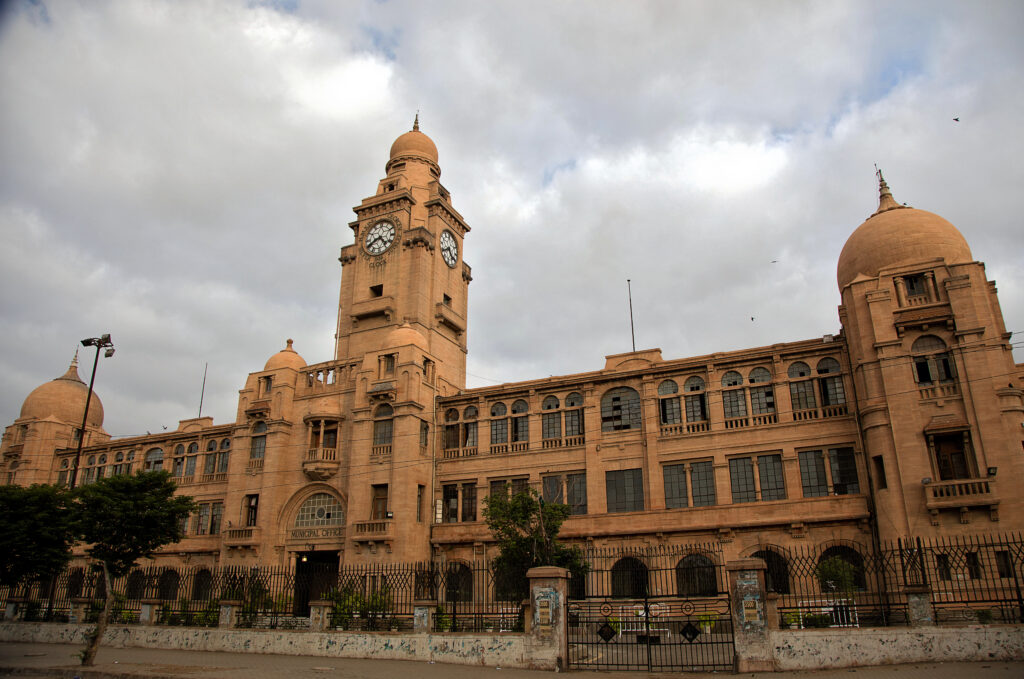
Image 2: Furqanlw via Wikimedia