India and Pakistan each emerged from the May 2025 India-Pakistan conflict, which has been widely assessed as one of the most intense military confrontations between the two nuclear-armed rivals in decades, claiming their own victory and restraint. This represents a curious convergence of narratives that has generally not been observed in Indian and Pakistani domestic crisis rhetoric.
This article argues that the May 2025 crisis can be understood through a discursive lens examining the ways in which India and Pakistan each shaped escalation and de-escalation through narrative and strategically managed perception and representation of the conflict. By examining media reports alongside official governmental and military communications, the article traces the mechanisms through which both states simultaneously legitimized coercive action, performed restraint, weaponized informational ambiguity, and constructed parallel victory narratives that enabled a negotiated exit without concession.
Pre-Crisis: Legitimating Action
In the time between the Pahalgam attack on April 22 and the onset of conflict on May 7, both India and Pakistan offered differing visions for how the crisis should be interpreted. India framed its actions as counterterrorism operations targeting “terrorist infrastructure” and “terror launchpads,” and linked the Pahalgam attack to cross-border militancy originating in Pakistan. This framing sought to establish both the legitimacy of its strikes and the causal narrative that justified them, i.e. that Pakistan bore responsibility for enabling the attack. By aligning its action with globally resonant counterterrorism language, India positioned itself within a familiar post-9/11 security discourse and limited the scope for international criticism of any action it would subsequently take.
This framing builds on India’s security thinking as shaped by past crises. Indian security discourse has, since the 1999 Kargil Crisis and with renewed intensity after the 2001 Parliament attack and the 2008 Mumbai attacks, been systematically developing the discursive architecture of cross-border terrorism as a framework for understanding and responding to alleged Pakistani-based militant activity. Over time, this narrative has also underpinned a gradual shift toward more overt cross-border military responses, including the 2016 surgical strikes and the 2019 Balakot airstrikes. Operation Sindoor mobilized and extended this discourse by drawing on decades of crisis narratives that gave its claims intelligibility.
Pakistan’s counter-construction proceeded along different but equally coherent lines. Pakistani officials rejected the evidentiary basis of the Pahalgam attribution, characterizing Indian claims as politically motivated and premised on “fabricated pretexts.” Pakistan also sought to reinforce its position by offering to conduct a joint or international investigation into the Pahalgam attack. While unlikely to be accepted by India, this move allowed Pakistan to exhibit transparency and reasonableness. There was also a rejection of specific factual claims where Pakistan contested the legitimacy of India’s broader framing of the attack as cross-border terrorism attributable to Pakistani actors. By asserting that the evidence was fabricated, Pakistani discourse simultaneously sought to delegitimize India’s causal narrative and instead frame Pakistan itself as the victim of a predetermined aggression.
Simultaneously, Pakistani discourse invoked sovereignty as the primary framework for understanding India’s actions against it. Where India’s discourse emphasized the transnational, de-territorialized nature of the terrorist threat, Pakistan’s discourse emphasized the territorial, sovereign nature of the violation. These competing narratives interpreted the same event differently and defined the nature of the conflict itself in incompatible ways.
Escalation, Restraint, and the Co-Constitution of Strategic Practice
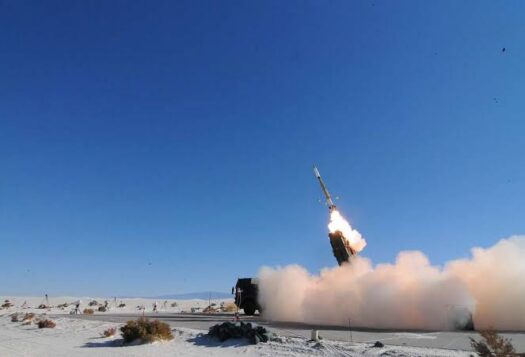
A central feature of the crisis was the simultaneous articulation of escalation and restraint. Indian official communications consistently emphasized that military operations remained “entirely in the conventional domain” and were “focused, measured, and non-escalatory” while simultaneously describing strikes of considerable destructive scope across Pakistani territory. Pakistani communications similarly invoked “exceptional restraint and maturity” and “measured, proportionate and responsible” in characterizing its response, even as its forces engaged in counter-strikes of significant scale.
Rather than being contradictory, simultaneous claims of escalation and restraint served clear strategic purposes. By demonstrating military capability, both sides signaled resolve and deterrence. At the same time, by emphasizing restraint and proportionality, they reassured international audiences and preserved room for further escalation if needed. These narratives also helped satisfy domestic political expectations without locking leaders into an escalatory path. Escalation was made possible by the discursive work of framing it as restrained and proportionate; restraint was made credible by the material evidence of significant but controlled military action.
India and Pakistan also justified their actions by referring to necessity and norm compliance. Simultaneously, they mitigated the perceived severity of those actions through minimization or contextualization. Strikes were justified by prior provocation; their severity was mitigated by emphasis on precision, restraint, and civilian protection. This discursive hedging simultaneously opened and closed escalatory pathways and kept the options open for either side as they managed risks.
Both sides avoided explicit nuclear threats, but nuclear signaling remained implicit. Indian official communications repeatedly emphasized the “conventional” and non-nuclear character of the conflict. Pakistani communications similarly emphasized the “responsible” character of Pakistani nuclear stewardship, a formulation that simultaneously reassured international audiences and obliquely reminded Indian decision-makers of the consequences of crossing certain thresholds. This ambiguity was briefly disrupted by reports of a meeting of Pakistan’s National Command Authority (NCA), which drew international attention and signaled potential escalation risks without open nuclear threats.
“The sequencing of the conflict—with early Pakistani successes followed by later Indian operations—made it possible for both sides to construct credible but selective narratives of victory. This suggests that such ‘mutual success’ outcomes may depend on the specific trajectory of a crisis and may not be replicable in all future conflicts.”
The Logic of Mutual Success
Victory is generally assumed to be a zero-sum concept: If one party has won, the other must have lost. Yet the May 2025 crisis produced a logical impossibility in which two states, having fought to an inconclusive close, each convinced its domestic audiences that it had prevailed.
This pattern of parallel victory narratives is not entirely unprecedented in India-Pakistan crises. In 2016, India publicly claimed success through surgical strikes while Pakistan denied their occurrence altogether, creating asymmetry in narrative claims. In 2019, both sides again asserted victory, but through distinct focal points: India through the Balakot strikes, and Pakistan through the capture and return of the Indian pilot. By contrast, the May 2025 crisis represented an evolution in how such narratives are constructed and sustained, with a more simultaneous and structurally reinforced form of mutual success, where both sides could point to distinct phases of the conflict to construct internally coherent victory narratives. This suggests that mutual success is contingent on the temporal sequencing and visibility of battlefield outcomes.
In the May 2025 case, Indian officials claimed that the “force of Indian arms” compelled Pakistan to cease hostilities, framing the outcome as evidence of military superiority and doctrinal success. Pakistan, however, declared that it had established a new “redline of strategic conventional deterrence,” asserting its ability to counter India effectively. Both states produced the outcome as victory for particular audiences by selectively emphasizing certain features of an ambiguous situation. For both states, victory narratives performed the political work through which de-escalation became possible. Pakistan highlighted early successes, particularly claims of downing Indian aircraft, including Rafale jets, as evidence of restored deterrence. India, in contrast, emphasized later strikes on Pakistani airbases and infrastructure, framing them as proof of escalation dominance. The sequencing of the conflict—with early Pakistani successes followed by later Indian operations—made it possible for both sides to construct credible but selective narratives of victory. This suggests that such “mutual success” outcomes may depend on the specific trajectory of a crisis and may not be replicable in all future conflicts.
Policy Implications
If narrative management is central to escalation control, then crisis stability depends not only on military capabilities, but also on discursive strategies.
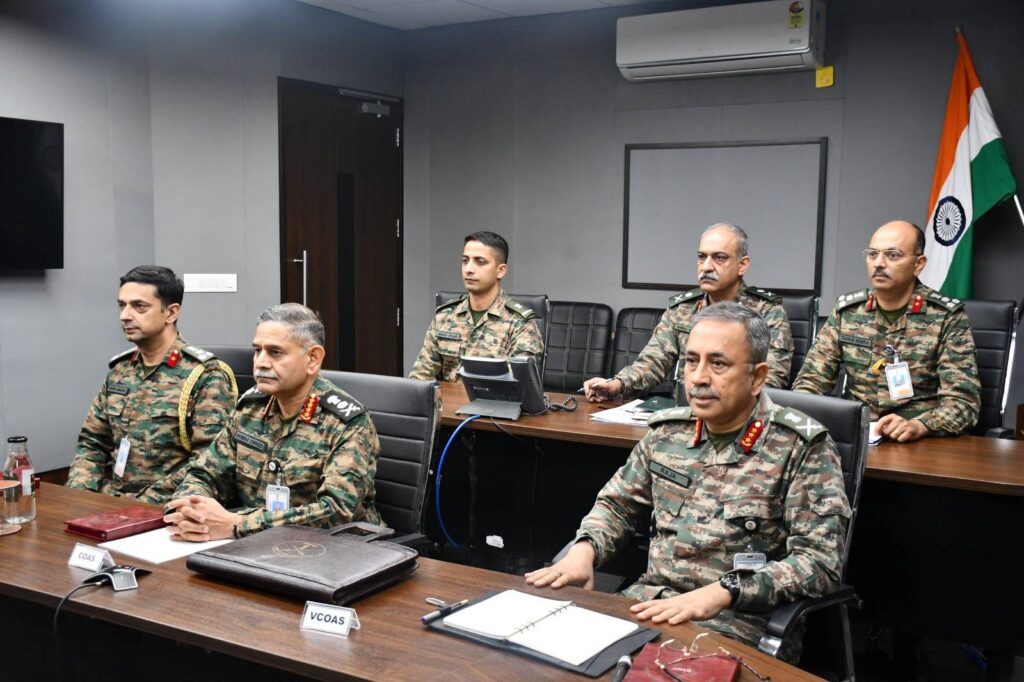
There is a need to extend the institutionalization of crisis communication beyond existing military-to-military mechanisms to cover the informational and narrative dimensions of crisis dynamics. The existing Director General of Military Operations (DGMO) hotline and related mechanisms were designed for a crisis environment in which military signaling was the primary mode of communication and in which the informational environment was relatively sparse. The May 2025 crisis demonstrated that military signaling now operates within, and is partially constituted by, a dense, high-speed informational environment in which competing narratives circulate faster than official communications can be formulated. Real-time fact-checking mechanisms and agreed protocols for the public communication of ceasefire terms deserve serious policy attention.
While there are incentives for cooperation in managing escalation risks, both sides also benefit from competing in the informational domain. Narrative dominance can shape international opinion and perceived deterrence credibility. It also helps in gaining domestic legitimacy for the ruling elite in each respective government. As a result, full cooperation on narrative control is unlikely. Instead, more limited forms of coordination, such as agreements on ceasefire communication or mechanisms to prevent misinformation during crises, may be more feasible.
The May 2025 crisis underscores the need to address the domestic audience dimension of crisis communication. Escalation thresholds in South Asian crises are shaped not only by the strategic calculations of leaders, but by the political constraints imposed by domestic publics whose expectations have been shaped by prior discursive constructions of the adversary and of national identity. Policymakers require pre-crisis planning for narrative exit strategies that preserve domestic political viability while enabling de-escalation. This requires, in turn, closer integration between military and political leadership in crisis communication planning.
“If narrative management is central to escalation control, then crisis stability depends not only on military capabilities, but also on discursive strategies.”
Lastly, the implicit nuclear signaling of the May 2025 crisis and its apparent stabilizing function suggests that the existing informal norms governing nuclear communication in South Asian crises have some efficacy and deserve reinforcement. There is, however, a parallel argument: Even in the absence of overt nuclear rhetoric, concerns about the convening of an NCA meeting and anxiety over dual-use systems also contributed to external pressure for restraint. This suggests that avoidance of explicit nuclear threats by both sides appears to have reduced the political pressures that might otherwise have accelerated escalation, yet nuclear signaling may continue to shape crisis dynamics. Efforts to strengthen the discursive practice of cautious nuclear communication deserve priority. This can be done through Track 1.5 and Track 2 dialogue processes, academic exchanges, and the cultivation of shared understanding among strategic communities on both sides.
Conclusion
Through narratives of legitimacy, restraint, and victory, both India and Pakistan were able to navigate the paradox of escalation under the nuclear shadow. These narratives constituted their respective strategic realities, with both states narrating in order to fight and fighting in ways that kept those narratives sustainable. Each side adjusted its language to expand its operational space while preserving the conditions for de-escalation. In this sense, a shared understanding of the limits of narrative escalation, even if unspoken, impacted crisis stability. This also showed that in an evolving landscape, deterrence is also a function of narrative control. Understanding this shift will be essential for managing future crises in South Asia and beyond, for as information environments become faster and more contested, the risks of misalignment between narrative and military signaling will only grow.
Views expressed are the author’s own and do not necessarily reflect the positions of South Asian Voices, the Stimson Center, or our supporters.
Also Read: Falsehoods in Conflict: Disinformation in India-Pakistan Crises and Lessons for the Future
***
Image 1: Prime Minister’s Office (Pakistan) via X
Image 2: ADG PI – Indian Army via X