The U.S. and Israeli attack against Iran starting on February 28, 2026, aimed to degrade Iranian air defense systems, achieve air superiority, and strategically target sites across Iran. Given its lack of air defense integration and outdated air force, Iran has thus far leaned on cheap drones and ballistic missiles to retaliate against regional U.S. military installations to surprising effect.
Due to its close military linkages with West Asian states and to its security imperatives given recent Indian military acquisitions, Pakistan is drawing doctrinal lessons of its own, particularly in the air domain. The conflict in Iran has laid bare the cost-exchange problem in air defense, which has substantial relevance for Pakistan’s resource-constrained defense planning. Further key learnings include the limitations of traditional air defenses, the disruptive role of drones, the importance of volume in saturation strikes, and the reorientation of existing military doctrines. Drawing from these lessons from the air war in West Asia, Pakistan ought to integrate low-altitude and mobile air defenses; invest in mass-produced, low-cost unmanned aerial systems (UAS); broaden its defense partnerships with China and Türkiye; and institutionalize new doctrinal learnings across organizations.
Lessons from the Air War
Cost-Exchange Challenge
Perhaps the most significant development highlighted by the conflict in West Asia is the disruptive role of UAS and stand-off munitions. Despite being outgunned in absolute terms by the United States and Israel, Iran has focused on drones, including the Shahed-136 and Arash, and its array of short- to medium-range ballistic missiles, striking targets across the region. Despite having a wide range of air defense options against UAVs, when faced with large saturation attacks combining drone and missile salvos, U.S. allies in the Gulf have had to rely on expensive interceptor missiles to counter relatively cheap Iranian munitions.
The cost ratio reveals a stark asymmetry: A Patriot PAC-3 interceptor costs around USD $4 million, whereas a Shahed drone reportedly costs between USD $20,000 and USD $50,000. A THAAD missile, used to intercept ballistic missiles that run between USD $250,000 and USD $2 million, costs around USD $12 million; interceptor protocols requiring two or more interceptors per incoming projectile further escalate costs.
Given this striking cost exchange, attrition has emerged as a critical challenge in the current conflict. Recent data shows that Iran launched over 3,000 drones and missiles in the first weeks of the conflict, and a RUSI analysis underscores the impending decline of interceptor numbers across the Gulf. Estimates suggest that nearly 75 percent of pre-war interceptor stockpiles have been utilized, leading the United States to redirect missile stockpiles from other regions to the Gulf. According to a JINSA assessment, Bahrain may have expended up to 87 percent of its Patriot missiles, while the UAE and Kuwait burned through roughly 75 and 40 percent of their air defense missiles, respectively. Israel’s position is the most alarming: The RUSI report estimated that 81.33 percent of Israel’s pre-war Arrow interceptor stocks had already been depleted by late March 2026.
“The conflict in Iran has laid bare the cost-exchange problem in air defense, which has substantial relevance for Pakistan’s resource-constrained defense planning. Further key learnings include the limitations of traditional air defenses, the disruptive role of drones, the importance of volume in saturation strikes, and the reorientation of existing military doctrines.”
Limitations of Traditional Air Defense (AD) Systems
The current war has highlighted two notable dimensions of AD in modern warfare. First, stationary, high-value systems appear increasingly vulnerable to precision saturation, reducing the effectiveness of long-range AD systems like Patriot, THAAD, or S-400. The Ukraine war provided the first case study of this phenomenon: Stationary radar sites and missile batteries can be overwhelmed by drones acting as first salvos that exhaust magazines, expose vulnerabilities, and impose serious fiscal costs. Long-range AD can be degraded not just by sophisticated anti-radiation missiles but also by cheap loitering drone salvos, paving the way for more lethal follow-on strikes using ballistic missiles. The war in West Asia has reinforced these emergent dynamics: Iran employed these tactics to strike critical radar sites in Qatar, Bahrain, Kuwait, Jordan, the UAE, and Saudi Arabia, which were the loci of U.S. regional missile defenses, while targeting other valuable assets like the E-3 Sentry AWACS.
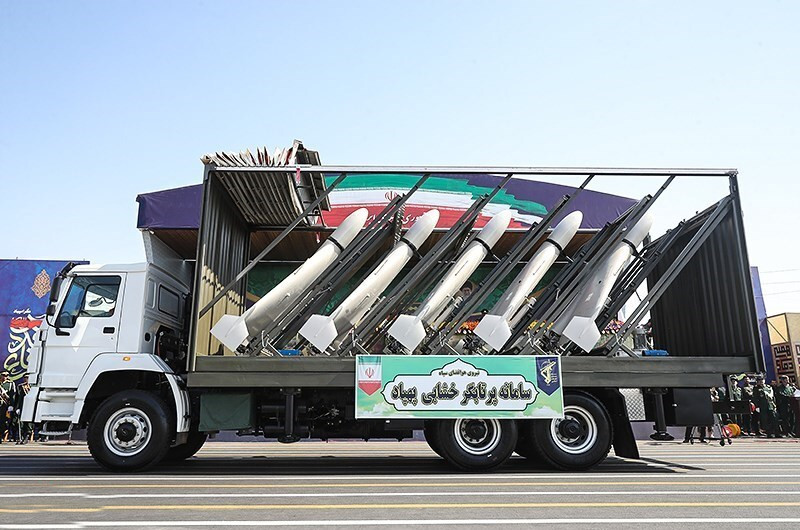
On the other hand, the conflict has also highlighted the utility of mobile, easily deployable, and decentralized systems. Despite losing medium- to long-range AD, Iran claimed to down multiple U.S.-Israeli drones (MQ-9 and Hermes) using short-range AD, ranging from truck-mounted infrared systems to MANPADS. Analysts estimate that the United States has lost as many as 16 MQ-9 Reapers since the beginning of the conflict. In early April, Iran also downed a U.S. F-15E and an A-10 Warthog. These limited successes, despite the intense degradation of air defenses by the United States and Israel, demonstrate that some level of air defense can still be achieved using small, mobile systems. As such, the conflict has highlighted that dispersed, short-range AD allows for residual capability even after the degradation of a country’s primary air defense architecture.
Emerging Technologies
The Iran conflict has also reinforced the growing role of emerging technologies in modern air war. For one, U.S. operations have utilized AI-enabled targeting systems, amalgamating satellite data, drone sensor feeds, and other intelligence sources. CENTCOM commander Admiral Brad Cooper confirmed that such advanced AI tools allow commanders to “sift through vast amounts of data in seconds” so that decisions could be made “faster than the enemy can react,” accelerating the tempo of targeting.
In addition, Iran has reportedly leveraged Chinese commercial satellite imagery and Russian military ISR data to target U.S. assets, likely contributing to successful strikes. More widespread availability of such imagery and near-real-time ISR means that crucial stationary assets like long-range radars, command centers, airbases, and more will likely be more vulnerable going forward. Drone-based ISR further augments targeting capabilities—in the current conflict, U.S. and Israeli drones have loitered over Iran, detecting Iranian missile and drone launchers and enabling neutralization of Iran’s offensive arm.
The continued evolution of electronic warfare (EW) represents another important development from the Iran air war. Such tactics include radar jamming, sensor derision, and GPS spoofing to counter incoming projectiles. Russia faced EW against Ukraine and consequently invested in upgraded resistance in its second-generation Geran drones. Now, Iran is apparently drawing directly on the Russian experience for the current conflict, which could explain the unexpected success of its drone tactics.
Institutional Adaptation
Lastly, the Iran conflict has underlined the importance of organizational adaptation. That U.S. and Gulf militaries did not sufficiently operationalize critical lessons from the Ukrainian theater, where Russia-Iran drone warfare became functional, has elicited surprise from observers. First-person view (FPV) drone warfare was normalized in Ukraine, yet U.S. assets at Camp Victory in Iraq were exposed to similar attacks from Iran’s non-state allies, while Israeli tanks faced similar threats in Lebanon. Ukraine also developed cheap interceptor drones to counter Russian drones, reducing reliance on expensive missiles and lowering interception costs. Though Ukrainian advisors were sent to the region in March to offer their expertise, Western nations and their Gulf allies could have more proactively translated four years of learning on drone and counter-drone warfare from the Russia-Ukraine war to the West Asian theater, especially given Iran’s coordination with Russia. As such, the conflict highlights the perennial challenge of turning strategic learning into organizational change, especially as emerging technologies disrupt past patterns of warfare.
Implications for Pakistan
The war in West Asia represents a real-time laboratory whose lessons will inform defense planning, procurement priorities, and doctrinal adjustments for countries around the world—including Pakistan—for years to come. Pakistan’s presence in Saudi Arabia as part of the Strategic Mutual Defense Agreement (SMDA) will likely make it even more attentive to the trends described above.
From the Pakistani perspective, the dynamics of the Iran war largely reinforce learnings from the May 2025 conflict with India and the Pakistan-Afghanistan war. In the May crisis, relatively similar tactics were employed by both India and Pakistan. Following the initial air skirmish on May 7, in which Indian aircraft were downed by the Pakistani Air Force, the Indian military resorted largely to tactical usage of drones and missiles. HEROP drones were used to target radar and AD sites across Pakistan, followed by cruise missile strikes. For its part, Pakistan reportedly employed YIHA-III drones in an attempt to exhaust Indian AD in order to attempt precision strikes against Indian AD sites and radar nodes through air launched CM-400 missiles. Furthermore, the Taliban’s drone forays earlier this year, as well as the use of drones by Taliban-backed militant groups, have also pushed Pakistani strategists to rethink air defense in light of counter-drone imperatives.
Despite these pressing threats, Pakistan, like other militaries around the globe, has been slow to adapt to the contours of emerging warfare trends. Pakistan urgently needs a hybrid air-defense and strike doctrine that addresses lacunas in short-range air defenses against UAVs and strengthens precision mass-strike capabilities.
“Pakistan urgently needs a hybrid air-defense and strike doctrine that addresses lacunas in short-range air defenses against UAVs and strengthens precision mass-strike capabilities.”
With the West Asia conflict proving that scale and mobility are increasingly important to modern air warfare, Pakistan should leverage its close defense partnerships for industrial cooperation, rather than just platform acquisition. For example, China has developed layered air defense that parallels Western systems and would be of interest to Pakistan, including SHORADS like the HQ-17, the FK-3000, and the Type-625, and long-range systems like the HQ-9 and even an equivalent of THAAD (the HQ-19), while Türkiye has made significant strides in its advanced drone technology. However, despite close partnerships, Pakistani defense acquisition still depends on factors like financial constraints, limited local technical capacity, complexities in evolving operational integration, and a fledgling domestic tech industry. While gradually growing, current industrial cooperation with China and Türkiye needs to accelerate in pace and scope to give Pakistan resupply capabilities in an attritional conflict.
Additionally, given the rapid shifts in modern warfare, a siloed command structure can pose problems. As such, Pakistan will necessarily have to reorganize its military structure to cater to drone and non-contact warfare. In late 2025, the Pakistani military announced the establishment of a UAV Command and showcased training of drone warfare units. This initiative represents a positive first step, but should be mainstreamed across the armed forces and perhaps even civil law enforcement, given the reality of asymmetric war and militancy in Pakistan’s security landscape.
Lastly, drawing on the survivability lesson from West Asia, Pakistan should consider adopting a decentralized, dispersed defense posture akin to Iran’s “Mosaic Defense,” distributing systems and launchers across varied locations rather than prolonged placements at stationary and exposed sites to preserve survivability and wartime operability, regardless of how adversaries degrade AD or strike arsenal.
Conclusion
The West Asian air war appears to confirm what recent conflicts, especially the Russia-Ukraine war, had already hinted at: The era of platform-centric air defense built around costly and stationary systems is transitioning to a new period defined by volume, mobility, EW, and near-real-time ISR. High-end air defenses remain vulnerable and expensive acquisitions may represent lucrative targets rather than establish deterrence.
For Pakistan, the implications are both urgent and tractable. Pakistan needs a comprehensive air-defense doctrine that incorporates strategic learnings and employs cost-effective options against both state and non-state threats in the coming years. The question is not whether West Asian lessons are relevant, but whether Islamabad can operationalize them before the next conflict makes the cost of doctrinal rigidity incontrovertible.
Views expressed are the author’s own and do not necessarily reflect the positions of South Asian Voices, the Stimson Center, or our supporters.
Also Read: Next Generation Air Warfare in South Asia: Risks and Way Forward
***
Image 1: VIRIN via Wikimedia Commons