On February 21, 2026, Pakistan conducted “intelligence based selective targeting of seven Terrorist camps and hideouts” in Afghanistan. The strikes killed at least 17 people in Nangarhar province, with the Taliban regime’s Ministry of Defence reporting that the attacks hit “a religious school and residential homes.” The following day, Pakistani President Asif Ali Zardari escalated the rhetoric, warning that “Pakistan’s tolerance for cross-border terrorism has reached its limit” and threatening that those responsible for violence “will not remain beyond reach.” The Taliban vowed retaliation, condemning the strikes as “a breach of international law” and promising “a measured and appropriate response.” As of mid-March, the ensuing conflict had displaced at least 115,000 people along the Afghanistan-Pakistan border, closed key border crossings, and suspended humanitarian aid operations in affected provinces. In total, Pakistan claimed on March 15 to have struck 73 locations by air across Afghanistan since the outbreak of hostilities.
These airstrikes, which continue a pattern that began in April 2022, generate a notable strategic dilemma for Pakistan. Islamabad faces genuine and mounting security threats from the Tehreek-i-Taliban Pakistan (TTP), which operates with relative impunity from Afghan territory according to recent UN Security Council monitoring reports. However, by conducting strikes that mirror those carried out by India against Pakistan in 2019 and 2025, Islamabad risks eroding the very legal framework that it invokes to condemn the cross-border operations of its conventionally superior neighbor. Navigating this dilemma requires not just tactical military responses but strategic consistency through multilateral frameworks, consent-based security agreements, and a realistic assessment of how precedents set in the conflict with Afghanistan will complicate Pakistani narratives when India next decides to strike.
The “Unwilling or Unable” Doctrine and International Law
The legal framework governing cross-border strikes begins with Article 2(4) of the UN Charter, which prohibits “the threat or use of force against the territorial integrity or political independence of any state.” This prohibition is foundational to the international system. Article 51 provides a narrow exception: “the inherent right of individual or collective self-defence if an armed attack occurs.”
The contested “unwilling or unable” doctrine attempts to expand this exception. Under this principle, if a state cannot or will not prevent non-state actors from launching attacks, the victim state may act in self-defense and use force in that state’s territory. Proponents argue this doctrine addresses the reality of weak or complicit states that harbor terrorists, while critics counter that it creates a dangerous loophole that powerful states can exploit to bypass the protections of the UN Charter.
The doctrine lacks consensus in international law. The International Court of Justice has not endorsed it, no treaty codifies it, and state practice is divided and inconsistent. The doctrine emerged primarily through U.S. invocations to justify its operations in various countries as part of the global war on terror. Pakistan historically stood firmly against the doctrine, with Islamabad routinely condemning U.S. drone strikes on Pakistani territory. The Pakistani Foreign Ministry described these operations as a clear violation of international law, as well as Pakistan’s sovereignty and territorial integrity. Now, however, the framework Pakistan helped defend looks increasingly fragile in light of Pakistani actions toward Afghanistan.
Pakistan’s Cross-Border Operations in Afghanistan
Pakistan first conducted airstrikes in Afghanistan in April 2022, targeting areas in Khost and Kunar provinces following TTP attacks. Two additional rounds of strikes followed in 2024, in March and December respectively, again targeting Paktika and border provinces. Both operations reportedly resulted in civilian casualties, though independent verification proved difficult. The strikes marked a significant policy shift for Islamabad, which had previously relied on ground-based border management and cooperation with Afghan authorities. The shift to airstrikes reflected Pakistan’s growing frustration with a dramatic surge in TTP-led violence: since the Taliban’s return to power in 2021, terrorist attacks in Pakistan have increased significantly, killing over 1,200 people in 2025 alone.
The pattern escalated dramatically in October 2025 as part of Operation Khyber Storm, the most aggressive Pakistani cross-border action to that point. Pakistani aircraft conducted strikes in Kabul, Kandahar, and Paktika provinces. A month later, Pakistan once again launched airstrikes, this time targeting Khost, Kunar, and Paktika provinces.
“The shift to airstrikes reflected Pakistan’s growing frustration with a dramatic surge in TTP-led violence: since the Taliban’s return to power in 2021, terrorist attacks in Pakistan have increased significantly, killing over 1,200 people in 2025 alone.”
The February 2026 operations followed an unprecedented wave of terrorist attacks on Pakistani soil: 32 killed in an Islamabad mosque bombing on February 6; 11 security personnel killed in Bajaur on February 17; and two soldiers, including a Lieutenant Colonel, killed in Bannu just hours before the airstrikes on February 21.
Pakistani justifications for these operations have been both explicit and implicit. The February 21 statement claimed Pakistan had “conclusive evidence” that attacks were “perpetrated by Khwarij on behest of their Afghanistan-based leadership and handlers.” The statement implicitly invoked the “unwilling or unable” framework by highlighting the Taliban regime’s failure to undertake substantive action against groups from within its territory. President Zardari’s February 22 statement went further, warning that if violence continues, “those responsible will not remain beyond reach,” explicitly threatening deeper strikes into Afghanistan.
India’s Cross-Border Doctrine and Pakistan’s Legal Objections
Pakistan is not alone in conducting cross-border strikes in South Asia under the “unwilling or unable” doctrine. India has invoked similar justifications since 2015, beginning with operations in Myanmar and subsequently applying this doctrine against Pakistan in 2016, 2019, and 2025.
Following the 2016 Uri attack, India claimed to carry out “surgical strikes” across the Line of Control, citing Pakistan’s 2004 commitment not to allow its territory to be used for terrorism. Similarly, in February 2019, India conducted the Balakot airstrikes following the Pulwama attack, arguing Pakistan had failed to take action against terrorism despite repeated warnings. Most recently, Operation Sindoor in May 2025 followed the Pahalgam attack, with India once again stressing that Pakistan had taken “no demonstrable step […] to take action against the terrorist infrastructure on its territory or on territory under its control.”
In each instance, India’s justification remained consistent: Pakistan failed to prevent its territory from being used for attacks against India. Crucially, Pakistan’s language justifying its February 2026 strikes mirrors this rhetoric almost exactly. Both invoked “conclusive evidence” linking attacks to cross-border sanctuaries, both claimed the host state had “failed to undertake any substantive action,” and both framed strikes as defensive measures when diplomatic efforts proved unsuccessful.
Herein lies the dilemma for Pakistan: India can now cite Pakistani precedent when Islamabad protests future strikes. This vulnerability carries profound implications for Pakistan’s ability to use normative frameworks to counter India’s increasing military advantage.
Strategic and Legal Implications for Pakistan
Pakistan’s Afghan strikes weaken its legal defenses against India in multiple ways. First, they erode Pakistan’s credibility internationally. New Delhi will argue that if Pakistan can strike TTP targets in Afghanistan based on security threats, India can strike targets in Pakistan based on similar logic. Pakistani diplomats will struggle to distinguish the two scenarios in ways international audiences find persuasive. The parallels are too clear: both countries face cross-border terrorism, and both claim the alleged host state is unable or unwilling to act. Moreover, Islamabad cannot credibly invoke sovereignty against India while violating Afghanistan’s sovereign territory. This inconsistency makes it harder to rally international opposition against Indian operations at the UN or in other global fora. States that might otherwise support Pakistan can now point to Islamabad’s own behavior when asked to condemn Indian actions.
Second, the strikes normalize cross-border operations in South Asia. Each operation lowers the threshold for the next, creating a cycle increasingly difficult to reverse. The May 2025 crisis demonstrated how rapidly such conflicts can escalate, with both sides using unprecedented weapons systems including cruise missiles, short-range ballistic missiles, and coordinated drone swarms. When states with nuclear arsenals normalize airspace violations and ballistic missile exchanges, the ladder of escalation becomes dangerously shorter. These implications compound over time, making each subsequent crisis more dangerous and Pakistan’s legal position progressively weaker.
“By conducting operations that mirror those Pakistan condemned when India struck Balakot and launched Operation Sindoor, Islamabad risks undermining its own legal and diplomatic defenses against a conventionally superior adversary.”
The Way Forward
Pakistan’s strikes in Afghanistan respond to genuine security threats that any state would find intolerable. The TTP has killed thousands of Pakistanis, with the February 2026 attacks following the most devastating sequence of terrorist incidents in recent memory. The Afghan Taliban has demonstrably failed to honor the Doha Agreement commitments to prevent Afghan territory from being used for violence against other countries. Pakistan’s airstrikes represent a policy response to a regime that has failed to prevent its territory from serving as a safe haven for groups launching attacks against Pakistan..
However, understandable responses are not necessarily strategically wise. By conducting operations that mirror those Pakistan condemned when India struck Balakot and launched Operation Sindoor, Islamabad risks undermining its own legal and diplomatic defenses against a conventionally superior adversary. Pakistan has every right to defend its citizens, but Pakistanis should wonder whether the chosen method serves the country’s long-term interests.
As such, Pakistan should pursue alternatives that address its security needs while preserving its legal position. Pakistan could pursue practical security cooperation with Afghanistan focused on intelligence-sharing and joint operations under Afghan oversight. While such mechanisms have been proposed in the past, the language has focused on broad “security dialogue mechanisms” and calls for deepening “law enforcement and security cooperation,” rather than codified agreements that would formalize intelligence-sharing protocols or joint operations. Concrete consent-based arrangements, while ambitious, would mirror consent-based security arrangements that other states have successfully employed. In Southeast Asia, the Philippines, Indonesia, and Malaysia established the Trilateral Cooperative Arrangement in 2017 to conduct coordinated maritime patrols and pursue militant groups and traffickers across their shared waters. Similarly, Germany and Poland signed a police cooperation treaty in 2014 allowing joint patrols and conferring limited sovereign powers on officers operating in the other’s territory. Both arrangements demonstrate how states can address genuine cross-border security threats through bilateral or multilateral frameworks that respect sovereignty while enabling operational cooperation. However, given current hostilities, Afghanistan’s governance challenges, and deep mutual mistrust, such cooperation would require immense political resolve from both sides.
Beyond bilateral mechanisms, regional and international actors can facilitate cooperation. The Qatar-and-Türkiye-brokered ceasefire from October 2025, while ultimately fragile, demonstrated that third-party mediation remains viable for managing Pakistan-Afghanistan tensions. Pakistan could also leverage China’s strategic interest in Afghanistan to encourage Taliban cooperation on counterterrorism. Despite the failure of recent trilaterals to improve the security situation and China’s recent economic setbacks in Afghanistan, Beijing’s desire to extend the China-Pakistan Economic Corridor into Afghanistan provides it with significant potential leverage to press Kabul on regional security.
Regardless of which path Pakistan pursues, the strategic calculation remains stark. As India’s conventional superiority increases each year, legal norms protecting sovereignty represent a valuable strategic tool for Pakistan. These norms enable Pakistan to rally international pressure when India strikes, whether from the United States, as in past crises, or through multilateral fora. By establishing its own precedent for the violation of sovereignty, Pakistan undermines the very framework that offers it cover in India-Pakistan scenarios.
Views expressed are the author’s own and do not necessarily reflect the positions of South Asian Voices, the Stimson Center, or our supporters.
Also Read: Pakistan’s Coercive Afghan Diplomacy: Doomed to Failure?
***
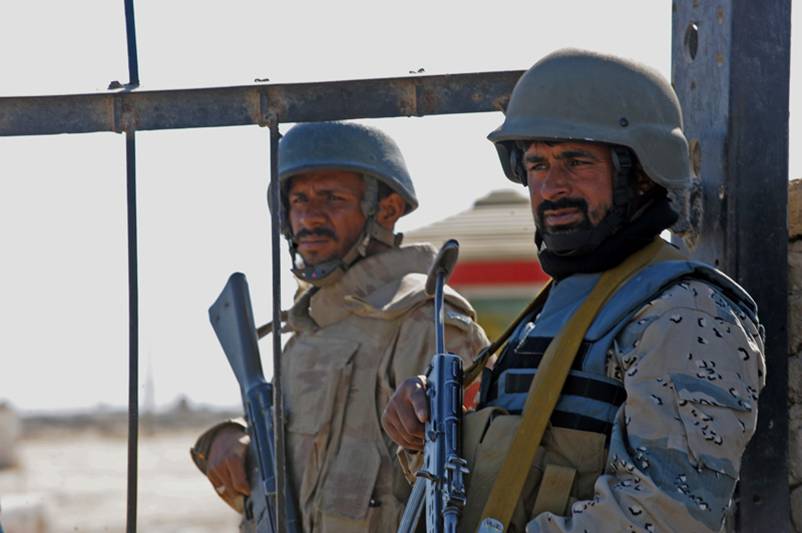
Image 1: Francesco V. Govea II via Wikimedia Commons
Image 2: Ryan Matson via Wikimedia Commons