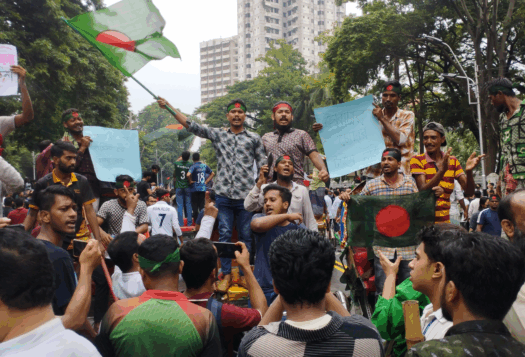
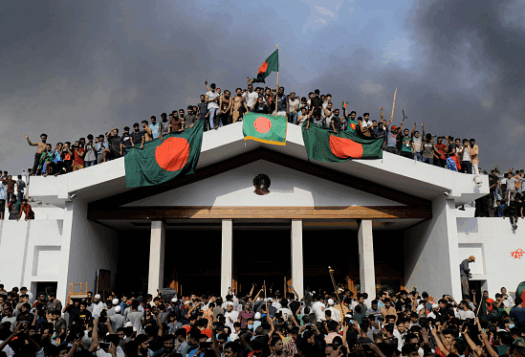
On August 5, 2024, Bangladesh witnessed the resignation of Prime Minister Sheikh Hasina following weeks of deadly student protests against what many viewed as her increasingly authoritarian rule. This uprising ended Hasina’s 15-year uninterrupted reign and her position as a dominant figure in Bangladeshi politics since the 1970s.
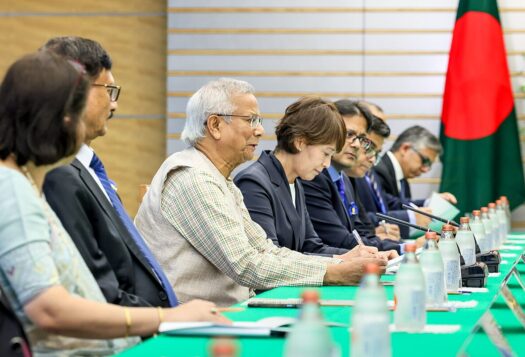
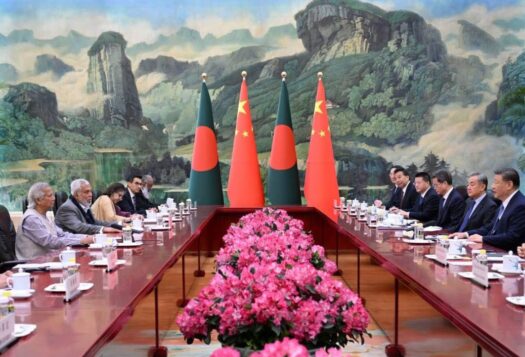
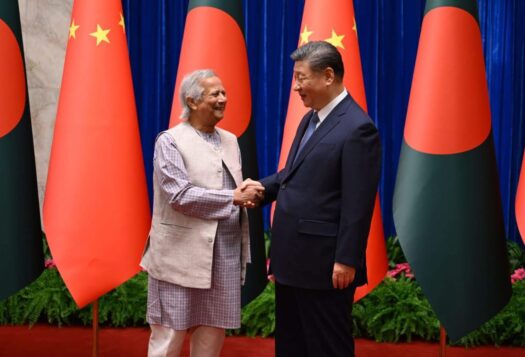
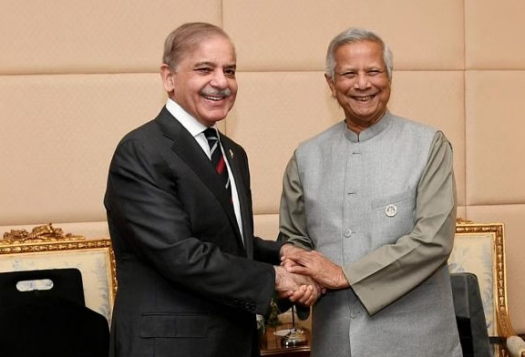
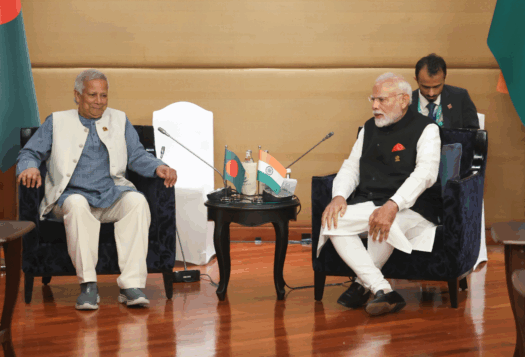
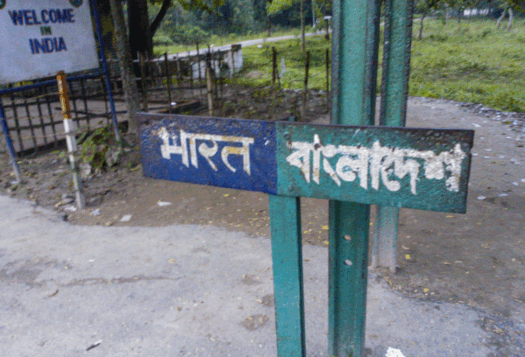
In the year since, an interim government, headed by Mohammad Yunus, has undertaken the formidable task of implementing sweeping institutional reform while trying to maintain macroeconomic stability. In addition, the interim government has instituted a dramatic restructuring of the country’s political landscape by placing a temporary ban on Hasina’s party, the Awami League, fundamentally altering Bangladesh’s political dynamics as the country looks toward elections in 2026. Yunus’ government has also reshaped Bangladesh’s regional and foreign policy alignments, breaking with the Hasina regime’s pro-India policy and drawing in China more while crafting a rapprochement with Pakistan.
In this collection, South Asian Voices’ editors compile analysis on Bangladesh’s political, economic, and foreign policy environment in the year since the student-led protests, chronicling the progress, setbacks, and ongoing challenges faced by the nation during this transition.
Image: Saqlain Rizve