




Space
Return to article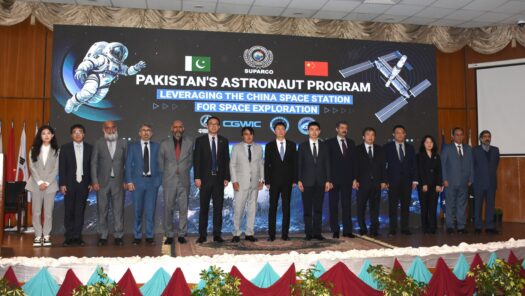
ہمہ موسمی سے ہمہ گیری تک: پاک-چین خلائی تعاون اور جنوبی ایشیائی سلامتی
پاک-چین تعلقات، جو’’نہ ٹوٹنے والے اورمضبوط‘‘ ہیں، اب زمین، سمندر اور ہوا کے دوائرِکار سے بڑھ کر خلائی مدار تک پھیلتے نظر آ رہے ہیں، جو اتحادوں کو مضبوط کرنے اور طاقت کے مظاہرے کے لیے ایک اہم میدان بنتا…
From All-Weather to All-Domain: China-Pakistan Space Cooperation and South Asian Security
The “unbreakable and rock-solid” China-Pakistan relationship appears to be extending beyond the land, sea, and air domains into orbital space, an increasingly critical arena for embedding alliances and projecting power. From the launch of Pakistan’s Badar-1 satellite in 1990, space…
The EU-India Partnership: Realigned and Re-imagined?
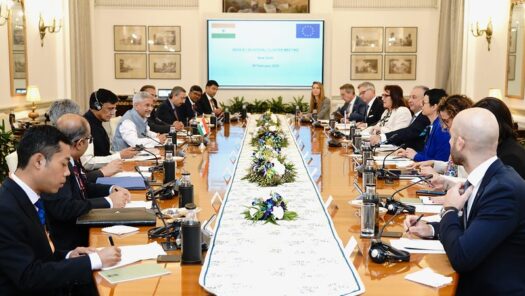
Last month, Ursula von der Leyen, President of the European Commission, and a team of European Union (EU) Commissioners was on an official visit to India. The delegation, comprising 22 out of the 27 members of the EU College of…
بھارت کی چاند یاترا: چندریان – 3 سے جڑی جغرافیائی سیاسیات
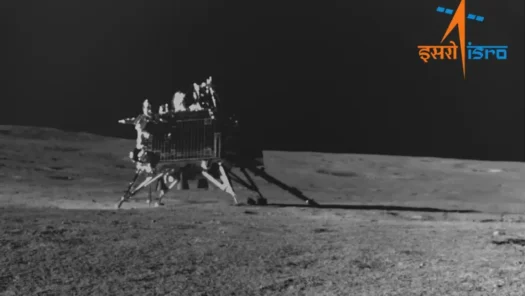
اگست۲۰۲۳ میں بھارت چاند کی سطح پر کامیابی کے ساتھ اترنے والا چوتھا ملک بنا اور اس فہرست میں پہلے سے موجود ممالک امریکہ، روس اور چین کے ساتھ شامل ہو گیا۔ بھارتی خلائی تحقیق کے ادارے (اسرو) کی جانب…
India’s Lunar Landing: The Geopolitics of Chandrayaan-3
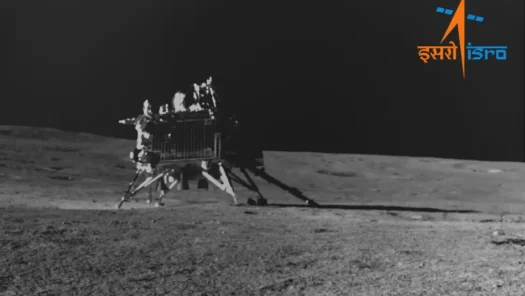
On August 23, India became the fourth country to successfully achieve a soft landing on the Moon, joining the United States, Russia, and China. The Indian Space Research Organization (ISRO) Vikram lander set off on the Launch Vehicle Mark-3 (LVM3)…
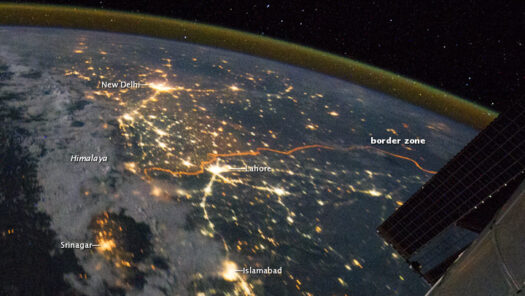
Collaboration between Indian Government and Private Space Companies: Challenges for Pakistan
The Indian Cabinet recently approved the Indian Space Policy, which institutionalized and clarified the private sector’s role in the space sector. Under the policy, private space companies now can perform end-to-end space activities, build spaceports and mobile launch platforms, and…