




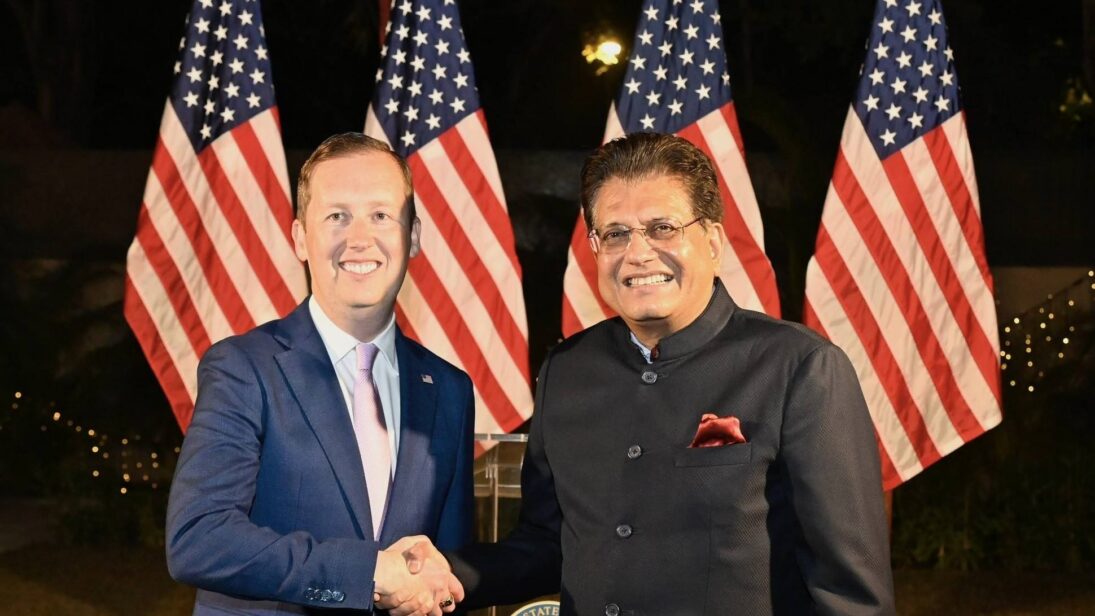
After months of speculation, debate, and concern, India and the United States announced a joint framework for a trade agreement in February 2026, putting an end to much of the tumult that has dogged the relationship since the summer of 2025. The core architecture of the deal is clear, with the joint statement framing the Interim Agreement as a preliminary mechanism as both sides commit to work “with a view to concluding” the wider U.S.–India Bilateral Trade Agreement (BTA).
However, while the trade negotiations leading up to the joint framework were expected to unfold as a conventional process centered on tariff schedules and market access, they have evolved into a test of strategic signaling and policy credibility. As analysts and policymakers look ahead to the broader BTA, the key question is whether this bargain turns headline tariff cuts into genuine market access. That will be decided less by rates and more by non-tariff barriers that shape day-to-day commerce, including standards and testing, licensing procedures, and digital compliance. The negotiation is also more geoeconomically entangled than a typical trade round, with supply-chain resilience and economic security framing expectations about technology and alignment. But as public claims run ahead of official joint statements and force constituencies to react to perceived outcomes, the credibility both sides need for durable implementation becomes weaker and weaker. In such a charged geoeconomic context, narrative drift between India and the United States could be strategically costly.
The Deal in Context
In this initial framework, the most visible element is the lowered U.S. reciprocal tariff rate of 18 percent on a defined set of Indian-origin goods, alongside a possibility of wider tariff removals tied to the successful conclusion of the Interim Agreement. On the other hand, India is described as reducing or eliminating tariffs across U.S. industrial goods and a range of agricultural and food products. The political significance is immediate since agriculture, standards, and technology-linked regulation are the most domestically sensitive.
Notably, the tariff-first environment is itself under legal and political churn in the United States: On February 20, 2026, the U.S. Supreme Court ruled that Trump lacked authority to impose sweeping tariffs under the International Emergency Economic Powers Act (IEEPA), after which Trump criticized the ruling and announced a global 15 percent tariff under another statutory power. India reportedly deferred a planned delegation visit to Washington to finalize the interim agreement, citing uncertainty over what tariff baseline would apply. The ruling also sharpened domestic criticism in India, with opposition parties urging that the interim pact be put on hold and revisited in light of the court decision and subsequent U.S. tariff announcements.
“Trade negotiations […] have evolved into a test of strategic signaling and policy credibility.”
For New Delhi, the U.S. deal sits within a broader trade liberalization and diversification push. For instance, in late January, India and the European Union announced the conclusion of negotiations on a landmark FTA: the EU presents it as deep tariff liberalization on its exports to India, while India’s public framing stresses preferential access for its top exports by value while safeguarding sensitive agriculture and dairy sectors. Together, these agreements suggest a trade-insurance strategy: tapping multiple large-market corridors to reduce vulnerability in a more protectionist global environment. But if the U.S. corridor remains unpredictable, this strategy could face headwinds.
Headline Tariffs versus Practical Access
Tariff numbers shape headlines, whereas the rules layer—including standards, testing, certification, licensing procedures, and digital compliance expectations—shape access in practice. To its credit, the joint statement is unusually direct on this point. Beyond tariffs, it sets out an agenda on rules of origin, commits to addressing non-tariff barriers, and singles out long-standing frictions in medical devices, restrictive import licensing for information and communications technology (ICT) goods, and timelines for accepting U.S. or international standards and testing requirements in identified sectors.
These items are critical components of any trade agreement. If standards acceptance is unclear, firms end up duplicating testing and certification; if licensing procedures are unpredictable, companies treat the market as higher risk even when tariff rates fall. Most importantly, because standards and digital compliance touch regulators and domestic politics, progress depends on both administrative capacity and public legitimacy, not just negotiator intent.
The soybean oil and Dried Distillers Grains (DDGs) episode shows how quickly these issues spill into domestic politics if mishandled. Reports suggested that the U.S.-India framework included duty-free treatment for some products, triggering immediate price reactions and protests from farm unions and opposition parties in India. In reality, soybean oil access would be channeled through a tariff-rate quota, limiting duty-free volumes. The broader lesson is that headline concessions can be misread if operational guardrails are not communicated; in a negotiation unfolding over multiple stages, the gap between headline and implementation becomes politically consequential.

Economic Security Alignment as Geopolitical Signal
This India–U.S. deal is also being framed in the language of economic security, not just market access. The two governments have signaled their intention to align more closely on supply chain resilience, including through cooperation on investment screening, export controls, and responses to non-market practices by third parties. This agenda situates the trade conversation firmly in what the International Monetary Fund describes as policy-driven “geoeconomic fragmentation,” in which trade, technology diffusion, and cross-border capital flows are increasingly shaped by national-security considerations and bloc dynamics, rather than by price and competitiveness.
In a constructive interpretation, this framing centers on building “trusted corridors” for technology and critical supply chains, making it easier to scale cooperation in areas of mutual priority, including trade in advanced technology products used in data centers and deeper collaboration on emerging technologies. This logic is reflected in India’s decision to join the U.S.-led Pax Silica initiative, which has been presented as a platform to deepen cooperation on AI ecosystems and critical supply chain resilience.
However, a more skeptical observer might argue that the same terms could evolve into expectations of tighter third-country constraints, with coordination on export controls and investment reviews ultimately limiting India’s flexibility in economic partnerships. This ambiguity invites domestic suspicion in India about constraints on autonomy, while simultaneously encouraging inflated expectations in Washington about the depth and speed of alignment.
The Russia oil purchases incident shows how quickly these interpretive gaps can widen. One White House publication links the removal of an additional tariff to India’s stated commitment to stop purchasing oil from the Russian Federation. By contrast, India’s Ministry of External Affairs has framed the issue in strictly economic terms, reiterating that the “energy security of 1.4 billion Indians is the supreme priority of the government” and that market conditions and evolving international dynamics guide diversification decisions. When public narratives diverge this sharply, the trade track can begin to carry geopolitical baggage that complicates implementation and erodes the trust needed for cooperation in the more sensitive “rules layer” domains.
“When expectations outpace drafting, governments spend political capital managing narratives rather than building coalitions for delivery.”
The Real Risk: Narrative Drift
Because the announcement is a framework rather than a final text, the pathway will necessarily be sequential. The Indian government has told the Lok Sabha that the agreement is undergoing technical and legal processes and will be signed after completion. However, a nationwide strike by trade unions and farmers’ groups protesting the interim deal signals how quickly trade policy can become a domestic governance issue, eclipsing narrower commercial considerations. In such conditions, communication is not a parallel exercise to negotiation, but rather shapes the space for negotiation and the legitimacy that leads to lasting implementation.
The fact-sheet episode captured this dynamic well. On February 9, the White House released a unilateral fact sheet describing key terms of the “historic” trade deal, including references that touched on India’s most sensitive domestic terrain. Within days, the document was revised: mentions of “certain pulses” were removed from the list of agricultural products facing tariff changes, and the language around India’s USD $500 billion purchases from the United States was softened from a binding “commits” to the more limited “intends.” As India’s Commerce and Industry Minister then clarified, the USD $500 billion figure is understood on the Indian side as non-binding intent shaped by commercial demand and pricing, not a contractual import obligation. In addition, references in the fact sheet to India removing digital services taxes were dropped in the updated version, bringing it closer to the wording of the joint statement.
This episode reinforced the sense that the public narrative was moving faster than the mutually-agreed text, forcing clarifications and hardening political interpretations. The strategic implication is that when expectations outpace drafting, governments spend political capital managing narratives rather than building coalitions for delivery.
At this stage, clarity is less about fleshing out details and more about preventing drift, requiring disciplined public signaling on scope and sequencing so that subsequent messaging does not expand beyond the joint framework. Success also requires aligning timelines with the realities of domestic processes, including legal and technical completion and sectoral coordination, so that markets and constituencies have a credible reference point rather than a moving target.
Finally, clarity must involve creating predictable pathways for standards, testing, licensing, and digital compliance to convert access into trade volume and reduce risk from uncertainty. If these elements are handled consistently, the India–U.S trade track can become strategically useful even before the signing of a final treaty by lowering policy risk, stabilizing expectations, and creating a more credible platform for cooperation in technology and supply chains.
Views expressed are the author’s own and do not necessarily reflect the positions of South Asian Voices, the Stimson Center, or our supporters.
Also Read: The India-EU Free Trade Agreement: Contours, Complications, and Regional Spillovers
***
Image 1: Piyush Goyal via X
Image 2: Randhir Jaiswal via X