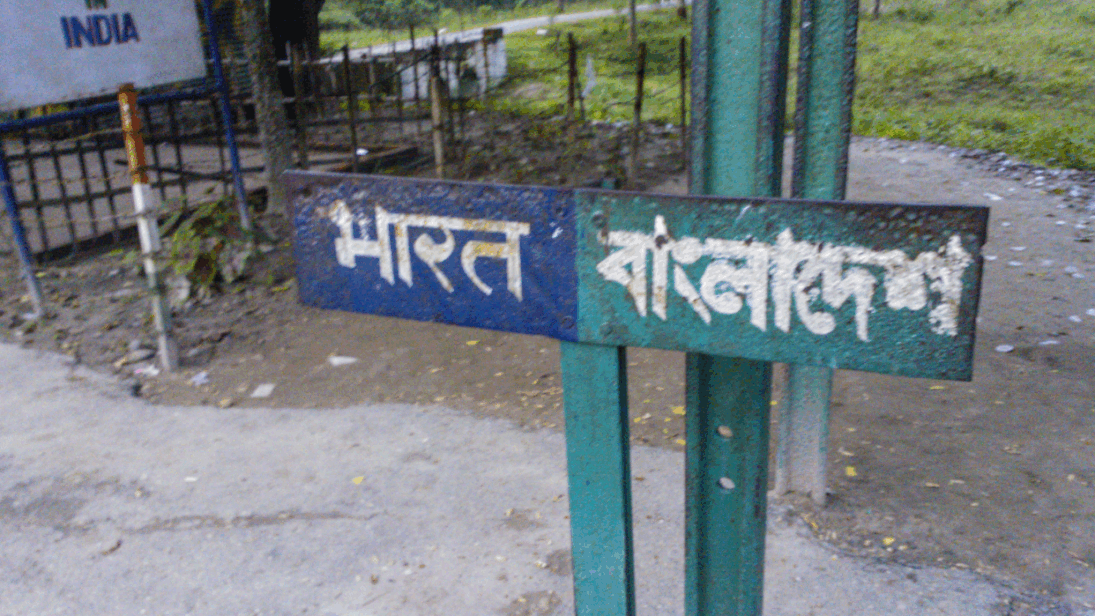
A year since the unceremonious ouster of Bangladeshi Prime Minister Sheikh Hasina, a long-time ally of India, all is not well along the India-Bangladesh border. Stretching over 4,000 kilometers, it is India’s longest land border, and among the ten longest land borders in the world. Most recently, tensions flared in June when Indian authorities rounded up alleged Bangladeshi migrants and forcibly deported them across the border, but activists said they were wrongly classified. While the border has historically experienced the vicissitudes typical of countries with such a complex shared history, recent geopolitical shifts have injected fresh volatility as India-Bangladesh relations strain.
The border often serves as a microcosm of broader New Delhi-Dhaka dynamics. The security situation at the border is not only defined by bilateral ties, but also actively exerts influence on how those ties evolve. Thus, the high-level border talks later this month provide an opportunity for both sides to take a pragmatic look at the border despite recent tensions and work with greater alacrity to preserve peace and stability.
Divergence over Fencing
The India-Bangladesh border is primarily manned by India’s Border Security Force (BSF) and Bangladesh’s Border Guards Bangladesh (BGB). Both these forces meet regularly to discuss key issues, coordinating to ensure peace and stability along the border. The highest institutional dialogue mechanism—the Director General-level talks between the BSF and BGB—has been a continuing tradition, with the latest iteration held in February 2025 in New Delhi.
Notably, this was the first such meeting since Hasina’s ouster, and came at a time when tensions were boiling over between the two countries over fencing of the international border. Just a month prior to the meeting, New Delhi and Dhaka had summoned each other’s envoys over the BGB’s obstruction of India’s attempts to construct a barbed wire fence along the border.
The border often serves as a microcosm of broader New Delhi-Dhaka dynamics. The security situation at the border is not only defined by bilateral ties, but also actively exerts influence on how those ties evolve.
India and Bangladesh have long disagreed over the issue of fencing. New Delhi’s push towards fencing is driven by longstanding security and political concerns, including anxiety over illegal immigration from Bangladesh, cattle smuggling, and drug trafficking. In addition to these concerns, New Delhi has long believed that insurgent groups from India’s Northeast find safe haven in Bangladesh, often with the support of intelligence agencies in both Pakistan and Bangladesh. This, in large part, explains New Delhi’s determined focus on fencing.
By contrast, Dhaka opposes India’s fencing efforts, citing the 1975 Joint India-Bangladesh Guidelines for Border Authorities, which prohibits defense structures within 150 yards of the international border. While Bangladesh considers wire fencing to be defense structures, India regards it as a salient border management measure to stave off a range of cross-border criminal activities. Bangladesh has also opposed fencing on the account that it causes inconvenience to its residents along the border. Indians and Bangladeshis who live in the border regions share deep-rooted kinship ties, and Dhaka argues that a fence would make it difficult for cross-border relatives to meet. For New Delhi, however, security considerations override this concern.
India began fencing in the 1980s following the anti-Bengali violence in Assam, but the process remains incomplete. According to the latest data provided by India’s Ministry of Home Affairs, more than a fifth of the total border remains unfenced. Fencing has been marred by persistent challenges, such as land acquisition along the border, which requires the cooperation of the states it traverses through. West Bengal, the Indian state through which most of the Indo-Bangladesh border runs, has been accused of non-cooperation with the central government. Nonetheless, New Delhi has taken several measures to increase surveillance along the border. To police riverine segments, India has deployed water boats and floating border outposts. New Delhi is also exploring the feasibility of advanced surveillance systems, including drones, radars, and satellites, to better monitor a critical stretch of the border even as Dhaka has opposed these smart fencing efforts.
Border Violence
Border issues have sometimes spiraled into episodic violence between Indian and Bangladeshi forces. A dark chapter in India-Bangladesh relations remains the April 2001 Rowmari incident, when the Bangladesh Rifles—predecessor to the BGB and the infamous paramilitary force that staged a failed mutiny in 2009—crossed into India’s Meghalaya state and killed 16 BSF personnel. Over the years, BSF personnel have been attacked both by the BGB and Bangladeshi locals.
The BSF has also been accused of similar violence. In 2010, a Human Rights Watch report documented abuses committed by the BSF against both Indian and Bangladeshi nationals while on duty. The Indian government, however, maintains that its forces open fire only in self-defense, when they suspect smugglers of crossing the border, or when their lives are endangered by armed miscreants.
These dynamics have become even more complicated in recent years by domestic politics and communal relations in India and Bangladesh. For instance, in India, political leaders aligned with the ruling Bharatiya Janata Party have passionately played up the issue of illegal immigration from Bangladesh in several states and accused opposition parties of facilitating their integration into India for electoral reasons. The attempts by the Indian government to forcibly repatriate people they consider to be foreigners has resulted in many Indian Bengali-speaking Muslims to be pushed to the other side and further soured ties with Dhaka.

The Way Forward
During periods of tension between Dhaka and New Delhi, the border has often been both a casualty of poor relations and an instrument of geopolitical signaling. Since his appointment as chief adviser in the aftermath of Hasina’s ouster, Muhammad Yunus has presided over a deterioration in relations with New Delhi over various issues, including Hasina’s extradition from India and the safety of Hindus in Bangladesh. Most recently, during his visit to China in March, Yunus depicted Northeast India as “landlocked” and positioned Bangladesh as the “only guardian of the ocean for this region.” India responded by cancelling the transshipment facility for Bangladesh’s export cargo, which could disrupt Dhaka’s trade with several countries and affect its economic mainstay—the ready-made garment sector.
Hasina’s fall has also contributed to concerns in New Delhi over border security. During her tenure, Hasina had taken concerted efforts to flush out extremist and rebel groups from Bangladesh, but her downfall has once again raised concerns among Indian observers that there may be an uptick in insurgency in the Northeast. This concern is further compounded by Bangladesh’s growing rapprochement with Pakistan under Yunus.
Continued border friction could snowball into larger diplomatic and security setbacks that both sides could ill afford at a time when each is wrestling with domestic political and economic challenges. Thus, as India and Bangladesh prepare for the DG-level border talks at the end of August, they would do well to advance certain border management measures to undergird their ties.
As India and Bangladesh prepare for the DG-level border talks at the end of August, they would do well to advance certain border management measures to undergird their ties.
One such measure is the resumption of all border haats, which were established through a 2010 agreement. Border haats are local markets that allow Indian and Bangladeshi nationals living in the border regions to trade locally-produced goods. Inaugurated in 2011, the haats have been disrupted many times—first due to COVID-19, and then following Hasina’s ouster. The haats had served as a significant source of livelihood for local businesses on both sides and reviving them could help reduce anti-India sentiment in Bangladesh and strengthen people-to-people ties at the grassroots level.
Second, both sides should consider a joint sensitivity training for the BSF and BGB, outlining best practices while guarding the border and without compromising their respective national security concerns. Though reported BSF killings have not yet escalated into a major issue, they can spark a diplomatic row if the interim government in Bangladesh chooses to rake it up bilaterally. This is especially likely since, under Yunus, Bangladesh has complained about past understandings and agreements dating from Hasina’s tenure. Training like this could serve as a bilateral confidence-building measure.
As a corollary, routine BSF-BGB meetings, at the top echelons as well as among mid- to lower-ranking officials, should continue. Greater coordination between the two border forces has contributed to improved relations between India and Bangladesh in the past—for instance, the inking of the Coordinated Border Management Plan in 2011. Their continuation could provide a critical touchpoint to reduce mistrust and misperceptions in times of crises.
Lastly, the onus lies with Bangladesh to create meaningful employment opportunities for its citizens under the new dispensation. As before, lack of economic growth in Bangladesh is likely to contribute to more illegal border crossings into India in search of a better future. For its part, India should make states bordering Bangladesh key stakeholders in bilateral discussions and allocate adequate funds to develop their infrastructure and connectivity with the rest of the country, reducing the risk of costly state-center feuds that could derail efforts to strengthen the relationship with Bangladesh. More broadly, while it’s true that good fences make good neighbors, New Delhi would have to recognize that fencing cannot preclude the need to respect the deep historical, cultural, linguistic, and familial ties that predate India’s partition.
Dhaka and New Delhi should work to protect their consequential land border from the effects of ongoing geopolitical tensions. Both India and Bangladesh would do well to remember that border security and bilateral ties are mutually reinforcing—the future of the relationship depends on it.
Views expressed are the author’s own and do not necessarily reflect the positions of South Asian Voices, the Stimson Center, or our supporters.
Also Read: Can India and Bangladesh Clear the Slate a Year after Hasina?
***
Image 1: Nahid Sultan via Wikimedia Commons
Image 2: Arupparia via Wikimedia Commons