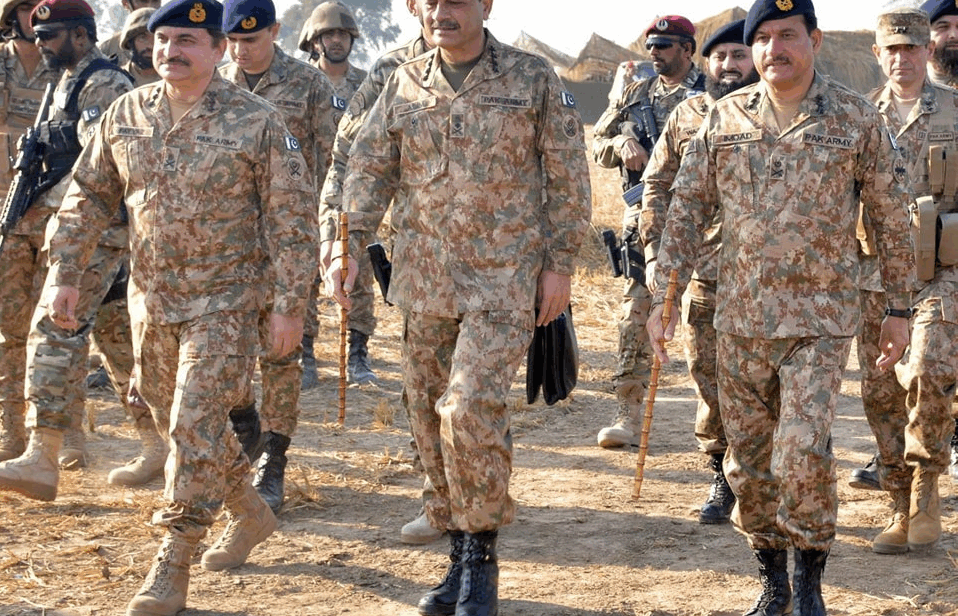
While debates around the 27th Constitutional Amendment have focused on its political motivations and civil-military implications, the more consequential shift lies in its strategic reorientation of Pakistan’s defense architecture. Elevating the chief of army staff (COAS) to chief of defense forces (CDF) and dissolving the chairman of the Joint Chiefs of Staff (CJCSC) post centralizes military authority, reshaping strategic planning, nuclear oversight, and defense resource management.
The COAS-CDF now leads all conventional and nuclear forces, which are more seamlessly integrated and strategically focused on India, while fighting terrorism emanating from Afghanistan, and also readying to play an enhanced role in Middle Eastern security. This reduces risks of inadvertent escalation due to bureaucratic divisions and reins in autonomous military programs driven by weak oversight. It also empowers the COAS-CDF to offer security assurances to partners like the United States, China, and Gulf states, without being constrained by multiple nodes, particularly the CJCSC and service chiefs. The restructuring streamlines budgets, eliminates duplication, and enhances oversight across services and strategic projects, which will potentially free up resources for urgent procurements and reinforcing Pakistan’s defense posture.
Evolution of Higher Defense Organization: C-in-C to CJCSC
After independence, Pakistan adopted the British colonial era’s defense command structure, where the commander-in-chief (C-in-C) of the Army held central authority over all services. Initially led by British officers, this model persisted until 1951, when General Ayub Khan became the first native C-in-C and granted autonomy to the Navy and Air Force. A Joint Chiefs Committee (JCC) was formed, later upgraded to a Joint Chiefs Secretariat (JCS), but failed to integrate strategic planning, joint operations, and force development. The 1965 and 1971 wars exposed the limitations of this structure. Despite periodic coordination efforts, services largely operated in silos, diluting joint effectiveness.
In 1973, C-in-C roles were redefined as chiefs of staff, and in 1976, the Bhutto government established the Joint Staff Headquarters (JSHQ) with a rotating CJCSC. However, General Zia-ul-Haq’s 1977 coup centralized authority under the COAS, undermining jointness. Despite formal adherence to the 1976 model, CJCSC appointments often favored the Army, reaffirming the service’s primacy in practice.
The CJCSC evolved to coordinate planning, lead military diplomacy, and oversee nuclear policy, with the latter role formalized under the 2010 National Command Authority Act. By 2022, the COAS had assumed de facto leadership of tri-service engagements, including defense cooperation with China, setting stage for an eventual shift to a single empowered defense chief.
“Elevating the chief of army staff (COAS) to chief of defense forces (CDF) and dissolving the chairman of the Joint Chiefs of Staff (CJCSC) post centralizes military authority, reshaping strategic planning, nuclear oversight, and defense resource management.”
COAS-CDF as Numero Uno
Following the mini-war with India in early May 2025, Pakistan proposed a major structural shift: abolishing the CJCSC and upgrading the COAS to a dual role as CDF. This move transfers CJCSC’s planning and coordination functions to the COAS-CDF, while a newly created commander of the National Strategic Command will oversee nuclear responsibilities.
The COAS-CDF will lead war strategy, operations, force development, procurement, and serve as principal military adviser to the prime minister. Centralization at CDF HQs streamlines war planning, operations and resource allocation across land, sea, air, and missile forces. To support this centralized role, the Joint Staff Headquarters (JSHQ) will be reorganized, integrating select elements from service HQs. Naval and Air chiefs, along with a possible vice COAS, will manage training and administration, while strategic planning and command will flow from COAS-CDF. Operational control remains unclear, but promotions will stay with service chiefs.
The New Nuclear Manager: Commander NSC
Under the new structure, Pakistan’s nuclear forces are unified under the National Strategic Command (NSC), transferring the CJCSC’s nuclear-manager role to a four-star army general appointed by the prime minister on the COAS-CDF’s recommendation. This marks the first major change in nuclear force organization since 2000, when each service maintained its own strategic command coordinated by the Strategic Plans Division (SPD).
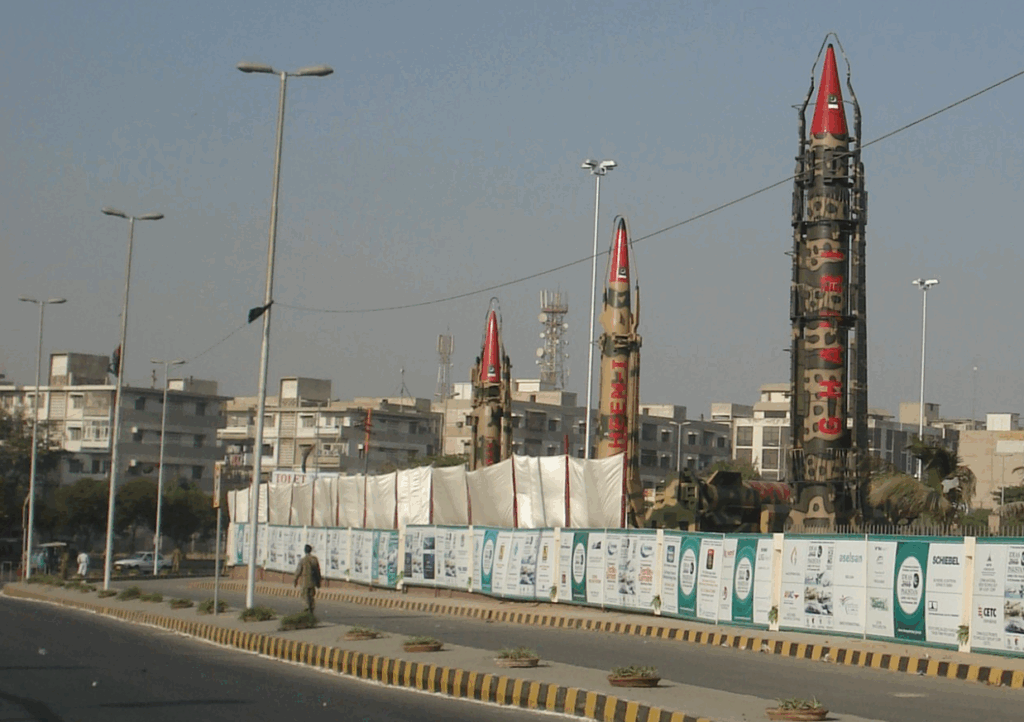
The commander NSC now consolidates these under a single command reporting directly to the COAS-CDF, who also oversees the newly created Army Rocket Force Command (ARFC). The ARFC, established after the May 2025 mini-war with India, will conduct conventional long-range precision strikes, expanding the battlespace without crossing nuclear thresholds.
With this centralization, the COAS-CDF asserts control over the SPD and initiates a review of nuclear policy and planning, potentially addressing long-standing irritants in relations with the United States. Pakistan’s military posture is shifting from reliance on tactical nuclear weapons to expanding conventional warfighting capacity and long-range missile firepower. As the nuclear threshold rises, codifying reporting lines for rocket and nuclear forces under a unified command becomes essential.
The SPD will now focus exclusively on maintaining strategic nuclear deterrence, while the ARFC, under COAS-CDF, will conduct conventional long-range strikes. This shift may also prioritize financial resources for ARFC’s missile capabilities over tactical nuclear weapons programs, aligning force development with evolving strategic needs.
Military Command Reform: Why Now?
Reforming Pakistan’s defense command structure, especially the CJCSC office, has long been debated, with proposals for an empowered chief of defense staff and earlier staff studies exploring reform options. Today, Pakistan’s military operates across a broad conflict spectrum: counterinsurgency, counterterrorism, conventional warfare, air power, and long-range strikes.
Take the past six months as an example. In May, Pakistan engaged India in air operations, artillery duels, loitering munitions, and air defense deployments. Later, it conducted aerial and drone strikes in Afghanistan. Internally, operations continue against Tehreek-e-Taliban Pakistan (TTP) in Khyber Pakhtunkhwa and insurgents in Balochistan, alongside border and internal security duties. Increasingly, Pakistan is also playing a more active security role in the Middle East, which demands coherent force coordination at the strategic level.
By consolidating operational planning, force development, and procurement under the COAS-CDF and CDF HQs, the new structure eliminates interservice delays and enables faster decision-making. Previously, each service operated its own planning and acquisition cycles, often leading to duplication, misalignment, and slow response to emerging threats. Now, with a centralized CDF HQs, joint requirements can be prioritized, resources reallocated swiftly, and procurement streamlined to meet urgent operational needs.
This is especially critical as Pakistan faces time-sensitive strategic pressures following two crises with India in during past six years, and particularly after the May 2025 mini war. The CDF-led model ensures that readiness gaps are identified and addressed across services in a coordinated manner, enabling faster integration of new capabilities and joint training cycles.
Politics of Reform: Synergy or Centralization?
Military reform is inherently political, even in Pakistan, where the army has long dominated governance. Fears of unintended consequences are natural. Proponents argue that restructuring it will create synergy and that without making the COAS the concurrent CDF, centralized defense staff would remain aspirational. Pakistan’s land-centric strategy gives the Army primacy, but the decisive role of air power in the 2019 crisis and 2025 confrontation with India underscores the need for deeper joint planning. A unified CDF HQ can also eliminate duplication in cyber, information, and air defense operations, freeing scarce resources for urgent procurements and integrated force development.
Critics warn that centralization under COAS-CDF risks marginalizing other services. Procurement and induction decisions will now rest with CDF HQs, reducing autonomy previously enjoyed by service HQs. Concerns persist that army priorities will dominate, even though naval ships and fighter aircraft require far greater capital investments. Outside the military, fears of reinforcing Pakistan’s hybrid political system remain strong, as the new structure consolidates the incumbent COAS’s position.
For sustainability, reforms must gain wider acceptance. Introducing vice CDFs from the Navy and Air Force and bifurcating the COAS and CDF roles – i.e., by appointing an outgoing COAS as the CDF – could mitigate concerns. Over time, Pakistan may evolve toward unified tri-service, cyber, aerospace, and special operations commands under the CDF HQs.
“Centralization under CDF HQs streamlines planning across land, sea, air, and the Rocket Force, while urgent procurements will upgrade capabilities.”
Emerging Military Posture
In a future India-Pakistan conflict, the revamped defense structure will enable faster, integrated decision-making. With the COAS-CDF synchronizing joint operations and engaging third parties on de-escalation, Pakistan will project a unified military and diplomatic posture. Centralization under CDF HQs streamlines planning across land, sea, air, and the Rocket Force, while urgent procurements will upgrade capabilities.
Oversight of nuclear forces through the NSC improves escalation control and resolves conventional-nuclear entanglement. Conventional long-range strikes can now target deep into Indian territory without crossing nuclear thresholds, in turn, expanding the warfighting space without triggering Washington’s nuclear escalation fears in South Asia.
As the new model takes hold, Pakistan will be better prepared to handle the next high-intensity conflict with India, efficiently contribute to Middle Eastern security, and manage persistent internal challenges with greater agility and coherence.
Editor’s Note: This piece originally appeared in The Diplomat and has been republished with permission from its editors.
Views expressed are the author’s own and do not necessarily reflect the positions of South Asian Voices, the Stimson Center, or our supporters.
Also Read: Firebreak or Fuse? Pakistan’s Rocket Force and the Deterrence Dilemma in South Asia
***
Image 1: ISPR via Facebook
Image 2: SyedNaqvi90 via Wikipedia