The Pakistan-India crisis of May 2025 has once again underscored the fragility of South Asia’s deterrence architecture. What began as a localized confrontation escalated rapidly, demonstrating how misperceptions, doctrinal ambiguities, and conventional imbalances can endanger regional peace. In the aftermath of such a significant crisis, it is useful to review the notion of strategic stability as it applies to South Asia, explore the future implications of a fragile deterrence relationship between India and Pakistan, and chart out options for restoring stability in the future.
Defining Strategic Stability
Strategic stability is typically understood through three interrelated dimensions: first-strike stability, crisis stability, and arms race stability. Thomas Schelling and Morton Halperin described it as a condition in which neither side has an incentive to strike first, even in moments of crisis. Building on this, James Acton expanded the concept to include the absence of incentives for nuclear first use, restraint in force buildup, and avoidance of armed conflict between nuclear powers.
Central to these frameworks is nuclear deterrence, which achieves maximal stability when both sides maintain secure second-strike capabilities and survivable arsenals of comparable size. Parity alone does not guarantee stability, but credible deterrence is indispensable for preventing miscalculation and inadvertent escalation.
“What began as a localized confrontation escalated rapidly, demonstrating how misperceptions, doctrinal ambiguities, and conventional imbalances can endanger regional peace.”
Threats to Strategic Stability Around the World
Globally, the architecture of strategic stability is under severe strain. The vision of a Middle East Nuclear Weapon Free Zone remains elusive, while the Gaza conflict has aggravated regional insecurities even as a potential ceasefire is in sight. The Russia-Ukraine war has disrupted a Washington-Moscow strategic dialogue, with prospects for reconciliation appearing limited. The extended New START treaty—the last remaining U.S.-Russia arms control arrangement—faces imminent uncertainty, despite Russian President Vladimir Putin’s offering to abide by the treaty for another year following its potential expiration in February 2026. The previous Trump administration had sought to include China in any future arms control agreement.
Meanwhile, great power rivalries are intensifying, marked more by unilateralism and competition than cooperation. Emerging technologies—including artificial intelligence (AI), anti-satellite (ASAT) weapons, hypersonic glide vehicles (HGVs), space forces, and lethal autonomous weapons systems (LAWS)—introduce new challenges, exacerbated by the absence of international norms. These innovations threaten to increase conflict lethality, accelerate escalation, and undermine deterrence stability in conflicts around the world. In few places are the risks as fraught as in South Asia today.
India-Pakistan in the Shadow of Great Power Competition
The two most recent crises between India and Pakistan have built a worrying precedent for deterrence stability in the region. In the February 2019 Pulwama-Balakot crisis, an Indian nuclear submarine was reportedly deployed to deter Pakistan; in the May 2025 standoff, nuclear signaling was muted but conventional escalation ratcheted quickly via new capabilities. The consequences of such crises reverberate deeply within and beyond South Asia.
But such moments do not occur in a vacuum—in the region or in the wider world. What some have called “cumulative emboldenment” over the course of the 2010s fostered in New Delhi a sense of escalation dominance, a perception that arguably contributed directly to the May 2025 crisis. Some scholars and analysts have attributed Pakistan’s growing military confidence to its expanding defense ties with China; however, the greater danger that the May crisis reveals is the overconfidence in limited-war strategies under a nuclear overhang. Pakistan’s calibrated response and effective operational performance challenged prevailing assumptions about deterrence asymmetry, highlighting the continuing dangers of misperception and brinkmanship in South Asia’s evolving strategic environment.
Rapid modernization efforts, including the nuclearization of the Indian Ocean and the weaponization of outer space, also pose potential threats to deterrence stability by incentivizing pre-emptive strategies and raising questions about the credibility of India’s “No First Use” pledge. The development of a sea-based deterrent paired with longer-range delivery systems—most notably, India’s INS Arighat submarine, which is reportedly equipped with K-4 submarine-launched ballistic missiles (SLBMs)—has introduced new risks of crisis instability at sea, where command-and-control vulnerabilities and ambiguous signaling could escalate rapidly. Similarly, India’s pursuit of counter-space and dual-use satellite capabilities has blurred the line between civilian and military domains, compounding uncertainty in a future conflict. While Pakistan, for its part, has moved cautiously to maintain credible second-strike capability at sea, the overall trajectory in the region remains one of growing complexity and reduced crisis predictability. The May 2025 confrontation, when doctrinal assertiveness and political compulsions pushed both sides alarmingly close to miscalculation, starkly illustrated these risks.

An American Re-think of South Asia Policy?
In recent years, Washington has courted India as a counterweight to an increasingly assertive China. New Delhi is a central member of the Quad—alongside the United States, Australia, and Japan—intended to manage Chinese influence in the Indo-Pacific. Foundational agreements such as LEMOA, COMCASA, and BECA have institutionalized unprecedented levels of Indo-U.S. military cooperation. While primarily aimed at balancing China, these alignments risk emboldening India to adopt more assertive postures toward regional neighbors. Indian officials often frame such behavior as a response to the growing China-Pakistan partnership, yet this perception does little to reduce the destabilizing potential of India’s expanding military reach.
Critics argue that the “Trump doctrine,” or a foreign policy rooted in realism-guided restraint, has redefined U.S. relations with Pakistan and India during and after the crisis. However, despite the seeming elevation of Islamabad and sudden decline of New Delhi, respectively, in Washington’s esteem, India remains firmly engaged in multiple foundational agreements with the United States, aligned with the broader, if potentially lower-priority, U.S. objective of containing China. According to SIPRI (April 2025), India ranks as the world’s fifth-largest military spender, after the United States, China, Russia, and Germany.
Even as it leverages Western military support, New Delhi has also maintained cooperative economic ties with Beijing: bilateral trade with China reached USD $136.2 billion in 2023-24—nearly doubling from USD $73.3 billion in 2021-22. The degree of India’s economic entanglement with China casts doubt on India’s ability and willingness to join the United States in any future offensive campaign to counter China. Similarly, President Trump’s repeated insistence that India cease its imports of crude oil from Russia, which have surged since February 2022—itself an action India undertook at the implicit behest of the Biden administration—represents a new divergence between U.S. expectations and Indian strategic choices.
Washington’s recent decision to impose tariffs on Indian goods reflects an effort on the United States’ part to recalibrate its approach to South Asia; if sustained, this recalibration could help temper the last several years of New Delhi’s emboldenment at the hands of U.S. policymakers, which could contribute modestly to restoring deterrence stability in South Asia. However, beyond the vicissitudes of trade disputes, there remains a significant amount of work to be done to slow the march to another conflict in this volatile region.
“Absent renewed political dialogue, regional arms control initiatives, and greater external restraint by major powers, the region risks perpetuating cycles of confrontation that repeatedly test nuclear thresholds.”
Moving Forward: Ensuring Peace in South Asia
Durable peace in South Asia requires a threefold approach: conflict resolution, arms control, and a reinforced framework for strategic stability. Such measures reduce the risk of war by fostering mutual understanding, reinforcing recognition of the catastrophic consequences of nuclear use, and promoting restraint through agreed limitations on capabilities. Strengthening global norms and extending them regionally is essential for building a cooperative security environment.
The May 2025 crisis offers a sobering reminder that deterrence alone is insufficient to sustain stability in South Asia. Absent renewed political dialogue, regional arms control initiatives, and greater external restraint by major powers, the region risks perpetuating cycles of confrontation that repeatedly test nuclear thresholds. Ultimately, peaceful coexistence must serve as the cornerstone for sustainable prosperity, socio-economic development, and long-term security in South Asia. Within this context, even rare gestures of third-party engagement—such as the mediation offer made by President Donald Trump on the Kashmir dispute—illustrate opportunities that, while politically sensitive, deserve careful consideration as part of broader efforts to reduce regional tensions and avert the risks of nuclear escalation in South Asia.
For both sides, the most practical entry points lie in restoring confidence-building measures that have previously worked with modest success. Reinstating military-to-military communication channels, reviving the 2003 Line of Control ceasefire understanding, and resuming humanitarian exchanges—such as prisoner repatriation and cross-border medical assistance, the former of which occurred in September 2025 for the first time since the recent crisis—could create limited but valuable momentum. Incremental progress on these fronts would help rebuild trust and demonstrate that sustained dialogue remains both possible and beneficial, even in a constrained political environment.
Views expressed are the author’s own and do not necessarily reflect the positions of South Asian Voices, the Stimson Center, or our supporters.
Also Read: Pakistan’s New Rocket Force: Strategic Deterrence and Escalation Risks
***
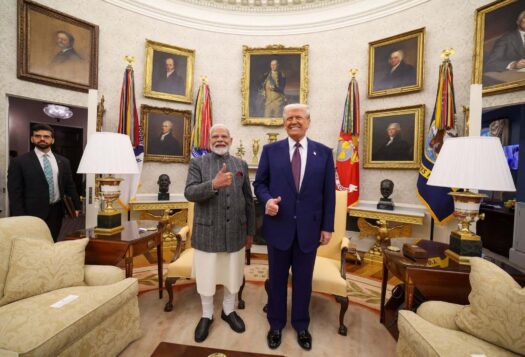
Image 1: Koshy Koshy via Wikimedia Commons
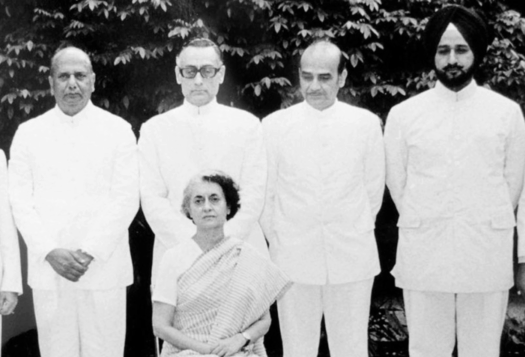
Image 2: The White House