




Strategic Autonomy
Return to article
Quo Vadis, Indian Foreign Policy? The Perks and Perils of Multialignment
For more than a decade, a strategic consensus had taken shape in both New Delhi and Washington—that their partnership was the best bet to manage a rising China. The United States saw India as a bulwark to prevent Chinese hegemony…

श्रीलंका की विदेश नीति का पुनर्मूल्यांकन? दिसानायके का युग
सितंबर 2024 में, गंभीर राष्ट्रीय आर्थिक संकट प्रारम्भ होने के दो वर्ष के उपरान्त, श्रीलंका में राष्ट्रपति के रूप में अनुरा कुमारा दिसानायके के चुनाव के साथ राजनीतिक परिदृश्य में एक महत्त्वपूर्ण परिवर्तन देखने को मिला| पारदर्शिता और सुशासन की…

India’s Domestic Outlook in 2024: Modi Era Powers On but Economic Concerns Continue
As 2024 comes to an end, India finds itself out of step with global trends. Prime Minister Narendra Modi’s government was not swept away by the global anti-incumbency wave. Conflicts in Europe and West Asia did not pose fundamental threats,…
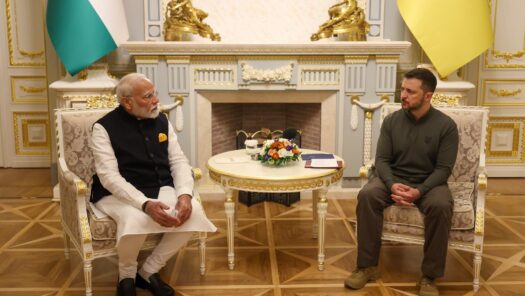
The Compulsions and Challenges of Indian Strategic Autonomy Amid the Russia-Ukraine War
Prime Minister Narendra Modi and President Volodymyr Zelenskyy meeting thrice in the past three months has generated a lot of debate about India’s relationship with Ukraine and its potential role in negotiating for peace between Kyiv and Moscow. As the…

Modi’s Visit to Ukraine: A Step in Forward Diplomacy and “De-Hyphenation”
The recent escalation of tensions between Russia and Ukraine has yet again underscored the urgent need for international diplomatic efforts to ease the situation. In this context, Indian Prime Minister Narendra Modi's visit to Kyiv last month has sparked a…

Strategic Ambiguity in Indian Outer Space Policy
On December 9, the UN General Assembly overwhelmingly endorsed a United States resolution that sought to prohibit direct-ascent anti-satellite tests (DA-ASATs), following a moratorium endorsed by the UN First Committee on Disarmament and International Security in early November. The moratorium…