Soon after taking office in 2014, Indian Prime Minister Narendra Modi articulated two new visions for cross-border relations: the Neighborhood First and Act East policies. Both initiatives aimed at improving relations with the immediate neighborhood and building bridges of connectivity, commerce, and contact. A decade later, the policies have delivered mixed results. New Delhi is building land ports, but trade figures have not increased and economic integration remains low; India is attracting a greater number of visitors from the neighborhood, yet visa regimes remain restricted; and though new connectivity initiatives are moving ahead, some legacy projects remain stalled. If the Neighborhood First and Act East policies are a priority for the Modi government, what explains these limitations?
This article examines India’s connectivity initiatives in the subcontinent, arguing that the very policies that New Delhi designed to deepen relations are being challenged by high political and security calculations. Overcoming these will require resilient, technically strong interventions that advance connectivity, maintain security, and can sustain progress even when politics become difficult.
Progress and Constraints
In the last decade, India has moved faster than ever on connectivity initiatives within its immediate neighborhood. New Delhi has increased its operationalized Integrated Check Posts (ICPs) from 2 to 15 in the past ten years, including some multimodal land ports with Bangladesh, Myanmar, Nepal, and Pakistan, and is witnessing an incremental increase in cargo movement through inland waterways after their revival. With regard to railways, New Delhi revived several pre-Partition lines with Bangladesh, and operationalized the first passenger railway link with Nepal after a recent amendment of the Protocol to the Treaty of Trade and Transit. Ferry services with Sri Lanka have also been reinvigorated, while a new port terminal is now operational at Sittwe in Myanmar. The region has also seen development in digital connectivity, with India’s Unified Payments Interface (UPI) already in use in Nepal and Sri Lanka. Nepal, India, and Bangladesh have also implemented the first sub-regional power transaction project in recent years. These developments reflect significant momentum in cross-border connectivity.
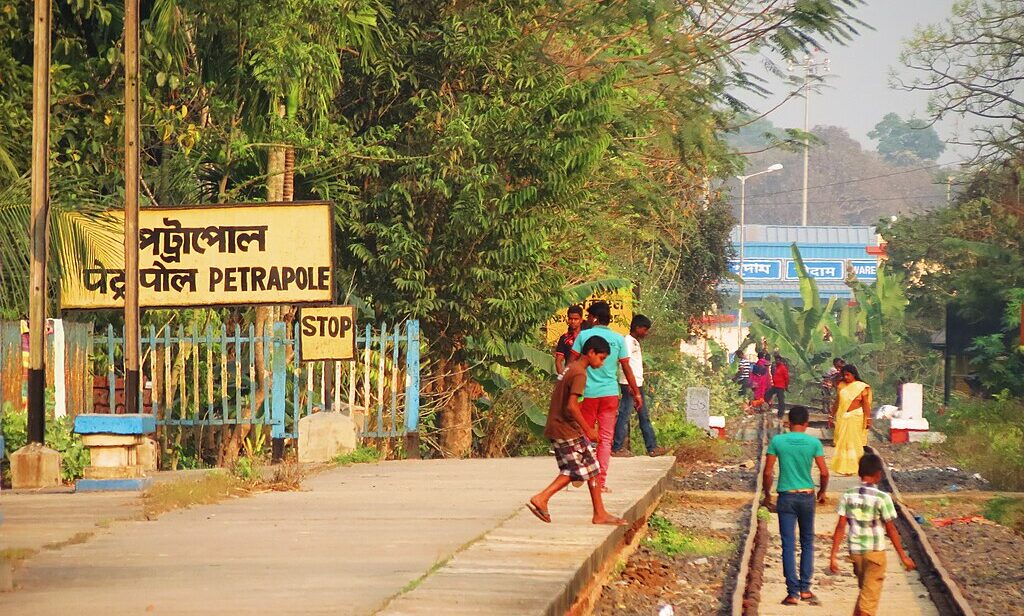
However, progress has not been uniform. Even though rail links are increasing, cross-border freight movement by rail accounts for only about 4 percent of total trade. The Raxaul-Kathmandu railway link, first discussed as far back as 1990, has seen delays. Even with new ICPs, commodity restrictions affect what can actually move through each land port. India and Bangladesh concluded a Coastal Shipping Agreement in 2015, yet cross-border movement continues to be dominated by land through the overloaded Petrapole-Benapole border. While the Sittwe Terminal is operational, the larger Kaladan Multimodal Transit Transport Project remains unfinished. Additionally, Bangladesh granted India transit access to Chattogram and Mongla ports under a 2018 agreement, to ease freight movements to India’s Northeast. Dhaka also extended similar access to Nepal, adding the Rohanpur-Singhabad rail link (via India) in 2021 and Payra port in 2023. However, full operationalization remains pending, in part due to logistical hurdles. India has also witnessed slower uptake of its Lines of Credit extended to the neighborhood for development projects, accounting for a mere USD $13.7 billon.
Sub-regional and regional frameworks present a similar story: the 2015 Bangladesh-Bhutan-India-Nepal Motor Vehicles Agreement (BBIN-MVA) has faced repeated setbacks, first with Bhutan declining to ratifying the MVA, and the decade taken afterwards to finalize the protocol earlier this year. The India-Myanmar-Thailand Trilateral Highway has seen little progress in the last few years. The regional Bay of Bengal Initiative for Multi-Sectoral Technical and Economic Cooperation (BIMSTEC) Free Trade Agreement awaits adoption despite a framework agreed in 2004. Similarly, the South Asian Association for Regional Cooperation (SAARC) remains defunct since 2016, with no indication of its revival due to deteriorating India-Pakistan relations.
Given the mixed bag of sporadic progress and persistent bottlenecks, a closer look is necessary to understand why many connectivity projects have not lived up to their potential. The reasoning lies in how connectivity in South Asia continues to be deeply shaped by internal and external political and security considerations.
“Sustained cross-border connectivity requires political stability and predictable policy, conditions that remain elusive across South Asia.”
Navigating Politics and Security
Sustained cross-border connectivity requires political stability and predictable policy, conditions that remain elusive across South Asia. Shifts in domestic and regional politics have had immediate consequences for New Delhi’s connectivity cooperation with neighbors. While some of these dynamics have resulted from New Delhi’s parochial view of seeing connectivity solely through the view of politics and national security, other instances have simply been India dealing with the tumultuous regional environment it finds itself in. This has been exacerbated by China emerging as a strong player in the region through its Belt and Road Initiative, though Beijing is only filling a gap left by regional political uncertainty.
Terrorism and ensuing kinetic crises have both derailed the bilateral relationship with Pakistan as well as complicated India’s efforts in regional arrangements, with SAARC emerging as the biggest casualty of India-Pakistan tensions. With Nepal, periodic political battles, including the constitutional crisis and perceived India-backed blockade in 2015, followed by the rise of the leftist alliance in Kathmandu politics paving way for greater engagement with China (exemplified by former Prime Minister KP Oli’s visiting China instead of India for his first overseas trip), generated mistrust and made India more cautious. While India currently enjoys warmer bilateral relations with Sri Lanka and the Maldives, this has also come after a period of turmoil, such as New Delhi’s concerns over increasing Chinese investments in Sri Lanka, including Colombo leasing the Hambantota Port to China for 99 years, and the India Out campaign in the Maldives.
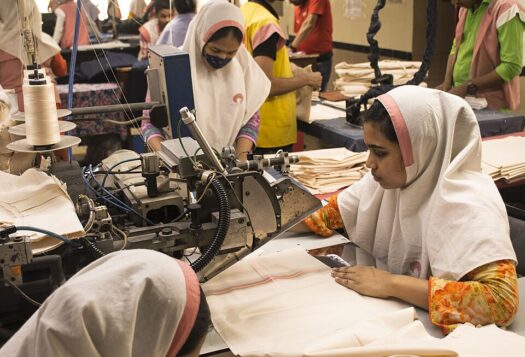
With Bangladesh, former Prime Minister Sheikh Hasina’s regime saw several connectivity initiatives with New Delhi operationalized and strengthened, helping it emerge among the top 5 export destinations for India. However, the 2024 regime change strained bilateral ties, as remarks by Chief Adviser Muhammad Yunus about India’s Northeast coupled with reports of Chinese support for an airbase close to India’s Siliguri Corridor, soured the relationship. This led to India imposing trade and transit restrictions on key Bangladeshi exports like readymade garments.
Alongside these changing political dynamics, the focus on securitizing connectivity has made India’s approach cautious rather than facilitative. While noting in 2023 that the Neighborhood First policy was “conceived to bolster relations with certain priority countries such as Afghanistan, Bangladesh, Maldives, Myanmar, Nepal, Pakistan and Sri Lanka,” India’s Parliamentary Standing Committee on External Affairs focused on the challenges of terrorism and illegal migration that require improved security infrastructure at the border, recommending better coordination between the Ministry of External Affairs (MEA) and the Ministry of Home Affairs. This framing echoes the mindset that has persisted since the 2000s after the Kargil Review Committee Report, which treats cross-border movement as something to regulate rather than enable. The recent push towards border fencing, particularly with Myanmar and Bangladesh, is also a manifestation of this approach.

Rewiring the Approach
The empirical record offers one clear lesson: South Asia’s connectivity landscape will not change simply by waiting for legacy projects to materialize, or for the political landscape to be conducive. Political and security concerns will largely remain constant in the region, and initiatives that hinge on good political relations alone will continue to stall with every shift. To break this cycle, New Delhi would have to focus on smaller but stronger technical design, while also creating novel structures that insulate connectivity efforts from politics. This will also enable the countries in the region to move beyond projects that absorb more attention but deliver little.
First, New Delhi should focus on pursuing new projects and with emerging partners, leveraging their technical expertise and their perception as more neutral stakeholders to realize its ambitions in the region. Japan is already leading by example in coordinating infrastructure development in the region, and the India-Sri Lanka-UAE collaboration in joint development of the Trincomalee energy hub is an excellent example of a creative partnership. The Gulf States, the European Union, and other like-minded partners are willing to invest in South Asia’s infrastructure, offering avenues to break the political logjam of the past and broaden multilateral engagement in the subcontinent in meaningful and effective ways. This will also open doors in sectors where demand is high. For instance, Colombo Port aims to minimize its carbon footprint by 2030 and Bangladesh’s 2024 Climate and Gender Action Plan also seeks to reduce emissions from its port-hinterland transportation system while focusing on inclusive development. The UAE and Australia’s expertise in port decarbonization is relevant here and has the potential to strengthen new alignments.
Second, India should shift from a project-specific to a corridor-specific approach, with regional countries developing end-to-end corridors with integrated multi-modal infrastructure and streamlined customs procedures. This predictable, facilitated network would help safeguard against developments that disrupt links, and lower the time and cost of doing trade. For example, a “Southern Corridor” connecting India’s western seaports, such as Jawaharlal Nehru Port (Mumbai) and Mundra, with dedicated highways, rail links, and streamlined customs procedures, could dramatically cut transit time and cost for Nepal by ensuring freight moves on an uninterrupted path and avoiding the congested ports of eastern India. Under a corridor plan, customs and inspection would be pre-arranged at origin or the border, and human interventions can be minimized. Domestic templates for this, such as the Dedicated Freight Corridor, already exist, and development planning and monitoring is possible through India’s Gati Shakti Platform. The next step would be to formalize these through political amendments in trade and transit treaties.
“To break this cycle, New Delhi would have to focus on smaller but stronger technical design, while also creating novel structures that insulate connectivity efforts from politics.”
Third, New Delhi should rethink how regional projects are financed. The slow uptake of India’s LoC is evidence that reliance on state-led funds, with their tight conditions, are no longer sufficient. There is demand for opening cross-border connectivity opportunities to private investors, paving the way for public-private partnerships. However, in the South Asian context, with volatile political relations, the risk appetite of the private sector is low. To overcome this, New Delhi and other partner countries, in the region or externally, could create a safety corpus for the private sector as a safeguard to promote investments in the neighboring countries. For instance, Australia offers a safety corpus to the private sector of AUD $2 billion for projects in Southeast Asia. This could be done through the Export Import Bank of India or through the MEA. Along with a clear legal framework, such risk-sharing guarantees would unlock capital and break the logjam of purely state-driven projects.
Fourth, and finally, deeper coordination at the sub-regional level is essential. The role of border states in connectivity is underexplored, even though they absorb both economic gains and political risks. Recent developments show that there is a demand for sub-regional cross-border engagements to benefit from new linkages. For instance, the government of Uttar Pradesh showed a keen interest in becoming a gateway for economic engagement with Nepal. Bhutan’s participation in the Advantage Assam Summit signaled a demand for state-level cooperation. Streamlined cross-border movement from rail and road connectivity also leads to closer integration in other areas such as healthcare and education. Equally, investing in people-to-people ties at the sub-regional level (e.g., cultural exchanges, tourism, academic partnerships) creates goodwill that can sustain infrastructure projects through political cycles.
Indian Foreign Minister S. Jaishankar rightly observed in a recent speech that “in our own region, we have to ourselves underwrite the infrastructure for cooperation if it is to be proofed against political volatility.” New Delhi should recognize that cross-border connectivity will depend on a combination of political and economic realism and progress will come from new approaches that demonstrate resilience.
Views expressed are the author’s own and do not necessarily reflect the positions of South Asian Voices, the Stimson Center, or our supporters.
Also Read: India’s Great Nicobar Project Faces Uphill Climb
***
Image 1: Partho72 via Wikimedia Commons
Image 2: Partho72 via Wikimedia Commons