Indian policymakers and analysts often tout the critical role the Andaman and Nicobar Islands (ANI) can play in safeguarding national security and operationalizing New Delhi’s Indo-Pacific strategy. Considering their close proximity to the Malacca Strait, through which roughly one-third of global shipping passes, the islands act as a connecting point between South and Southeast Asia, offering New Delhi significant economic, strategic, and military benefits. In recent years, India has sought to maximize this advantage through a series of planned development projects on remote and relatively less populated islands in the archipelago. Among these is an ambitious port project on the island of Great Nicobar, which New Delhi hopes will one day rival the likes of Singapore and Hong Kong. However, given the unique ecological, cultural, and geographical character of the island, such a project faces significant logistical challenges and public opposition. New Delhi may be able to better balance its competing priorities if it follows a more realistic, collaborative approach to development on the islands.
Strategic Role of the Andaman and Nicobar Islands
The ANI are a chain of 572 islands, islets, and rocks in the Bay of Bengal and the Andaman Sea. Only 37 of those islands are inhabited, of which South Andaman is the most developed, hosting the islands’ administrative capital, Port Blair (officially renamed Sri Vijaya Puram in September 2024).
For New Delhi, the strategic importance of these islands is unparalleled, given that they lie only some 90 miles from the Malacca Strait. The islands also straddle major global trade routes such as the Six Degree and Ten Degree Channels, which carry several thousand commercial vessels each year. Owing to their geographical location, the islands serve important military functions for India: they are home to the country’s only tri-service theater command and a number of supporting installations, including naval air stations and strategic listening posts.
“Owing to their geographical location, the islands serve important military functions for India: they are home to the country’s only tri-service theater command and a number of supporting installations, including naval air stations and strategic listening posts.”
In recent years, Prime Minister Narendra Modi has acknowledged the strategic role played by the ANI in driving India’s relations with Southeast Asia. India conducts several joint projects with Southeast Asian partners linked to the archipelago, including collaborations with Indonesia on the Aceh-Andaman connectivity initiative and the Sabang port. New Delhi also hosts critical multilateral exercises on the islands, including the MILAN initiative.
Developing Great Nicobar
To truly realize the strategic potential of the archipelago, New Delhi believes that it has to undertake large-scale infrastructural development on relatively underdeveloped and remote islands. The Exclusive Economic Zone (EEZ) of the islands is enormous, accounting for about 30 percent of India’s EEZ. But while South Andaman and its capital Port Blair boast relatively well-developed infrastructure—including the regional airport—most other inhabited islands in the archipelago only have limited facilities and small settlements.
In 2020-21, the government-run policy organization NITI Aayog commissioned a masterplan for the holistic development of Great Nicobar Island, including an international transshipment port at Galathea Bay, a greenfield international airport, a new township, and various large-scale renewable and conventional power projects. Portions of that plan (e.g., the port component) appear to have been taken up by the government a few years ago, though final clearance for the project as a whole is awaited this year.
The port at Galathea Bay is expected to be especially critical to India’s ambitions. Official reports say that 75 percent of India’s transshipment cargo is currently handled at ports beyond its borders, in locations like Colombo and Singapore. Galathea Bay’s location and its natural draft are expected to position India to capture a substantial market share of this business. In the long run, some official estimates suggest that the port and projects associated with it will create 50,000 jobs and billions of dollars in annual revenue.
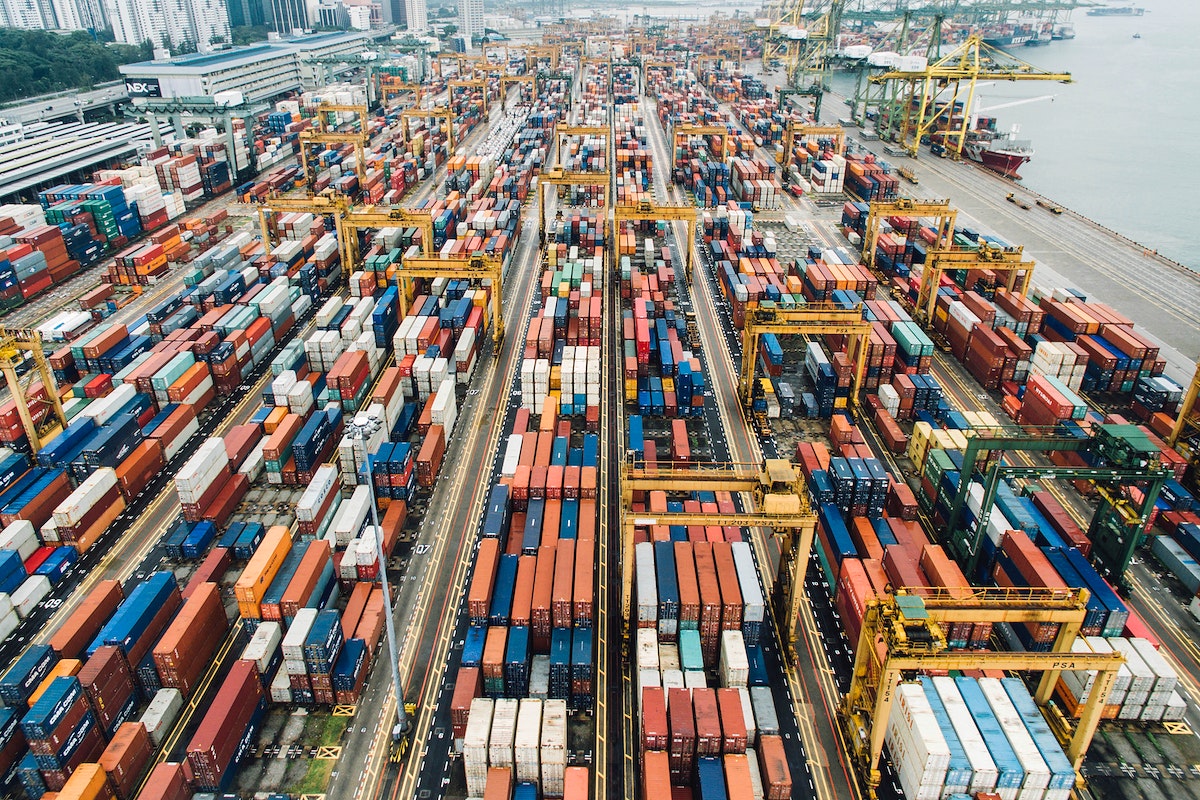
But the ambitious nature of these projects cannot be understated. New Delhi hopes that the new port will achieve container throughput on par with Singapore and bolster India’s position as a key node in regional and extra-regional shipping. However, while Singapore handled about 39 million TEUs in 2023—making it the world’s second-busiest port—India’s largest port, Mundra, only handled around 7 million TEUs. At full capacity, the Galathea port is projected to handle 16 million TEUs annually—much more than Mundra but still significantly under Singapore’s capacity. To add to the challenge, at present, the area designated for the Great Nicobar projects is sparsely developed, consisting largely of dense rainforests, tribal reserves, and protected ecosystems with minimal existing infrastructure. In that sense, New Delhi is attempting to build almost entirely new infrastructure on essentially untouched terrain, rather than simply expanding or upgrading existing facilities.

Challenges and Opposition
Despite its touted benefits, critics of the Great Nicobar development plan point to serious downsides and have cast doubt on its sustainability across multiple dimensions.
One major concern is the environmental impact. Great Nicobar is one of the world’s most biodiverse wildernesses, home to endemic rainforests, mangroves, coral reefs, and threatened species such as the leatherback turtle. Conservationists warn that dredging Galathea Bay for port access—and clearing tens of thousands of acres of rainforest for runways, harbors, and housing—will destroy nesting beaches and habitats. Residents also highlight that the region is seismically active, further contributing to the fragility of the natural and built environment; the 2004 earthquake and tsunami devastated local communities. Estimates of the potential ecological damage from the Great Nicobar project vary widely: government figures initially said that nearly 1 million trees will be cut, but ecologists warn that the deforestation could be on a bigger order of magnitude. Protected areas like the Galathea Bay Wildlife Sanctuary have already been controversially denotified to accommodate the project. Environmental advocates argue that short-term economic gains may come at the cost of long-term ecological disaster. Some have already petitioned courts to halt the project.
“Environmental advocates argue that short-term economic gains may come at the cost of long-term ecological disaster.”
Cultural and social sustainability is another common concern. Great Nicobar is one of India’s last remaining sanctuaries of indigenous people such as the Shompen and the Nicobarese. Little Andaman is the homeland of the Onge tribe. The planned projects are likely to encroach on these tribal lands. Reports suggest that the government has attempted to denotify the majority of the Onge Reserve on Little Andaman—which makes up about 57 percent of their territory—for the purposes of establishing an Aerocity, along with other tourism-oriented developments. Separately, tribal rights advocates also argue that the planned migration of people from the Indian mainland could prove additionally disastrous for local tribes who lack immunity to novel pathogens.
Concerns have also arisen around the project’s financial and commercial feasibility. Development of the port alone is estimated to cost around USD $5 billion across four phases. Although proponents of the Great Nicobar port see it as the Bay of Bengal’s answer to Singapore and Hong Kong, shipping experts say that it will take many years for the port to develop its capacity to any such extent. As per current plans, the first phase of the port’s construction is pegged for completion by 2028, with its full development only slated for the year 2058. The costs of development have been planned under a public-private partnership, with the first phase to be government-funded and later phases seeking private investors. Yet, so far, no major operator has formally committed any investment. Additionally, several logistical challenges await the project. The islands themselves are relatively remote, and fuel and materials will need to be flown in at significant cost. In view of these challenges, expectations about job creation and GDP growth should be tempered.
Balancing Competing Priorities
In the coming years, India would be better served by syncing the strategic development of the Andaman and Nicobar Islands with the archipelago’s ecological and social realities. A more calibrated alternative approach would be to generate investor confidence through transparent regulations, tax breaks, and phased public-private partnerships, while ensuring large infrastructure is concentrated in designated zones and balanced by stringent protections of ecologically sensitive areas and tribal areas. Instead of aiming for a major port modeled on Singapore, a phased approach via medium-sized transshipment facilities, backed up by smaller-scale tourism, fisheries, and renewable energy, may be more feasible and sustainable. Environmental and social audits from independent experts, along with structured engagement with indigenous people, would mitigate the risks—as seen in projects like Kerala’s Vizhinjam deep-sea port, where external reviews and local consultations helped address early opposition.
Additionally, inviting ASEAN and Quad partners to participate in the islands’ development can help spread costs and build confidence among developing countries that global best practices are being followed. Partners such as Japan and Australia could assist with sustainable infrastructure and renewable-energy systems, while Singapore’s expertise in port and urban planning could guide environmentally sensitive design. The United States, through capacity-building and environmental monitoring, could help ensure adherence to international standards. This collaborative approach will also strengthen India’s role as a regional leader and enable New Delhi to achieve its developmental and strategic objectives while preserving the distinctive ecological and cultural character of the islands.
New Delhi faces an uphill climb in achieving its Great Nicobar ambitions. Whether India can balance its strategic imperatives with ecological conservation and tribal rights—and find investors willing to finance the remote mega-project—will determine the viability of the Andaman projects as a pillar of its Indo-Pacific strategy.
Views expressed are the author’s own and do not necessarily reflect the positions of South Asian Voices, the Stimson Center, or our supporters.
Also Read: India Must Level Up to Compete with China in the Western Indian Ocean
***