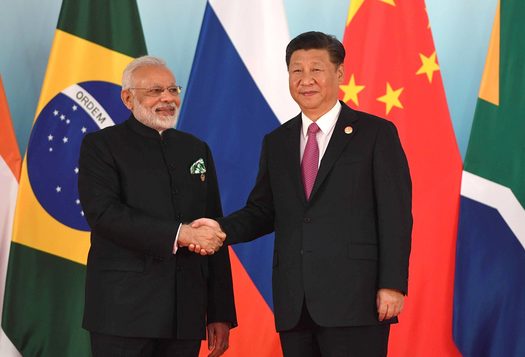
In 2021, External Affairs Minister S. Jaishankar stressed that one pillar of India’s multi-alignment strategy was to “cultivate Europe.” That objective has become increasingly imperative as New Delhi recognizes the risks of dependence on Moscow in defense and energy, Beijing in manufacturing and technology, and increasingly even Washington economically and technologically.
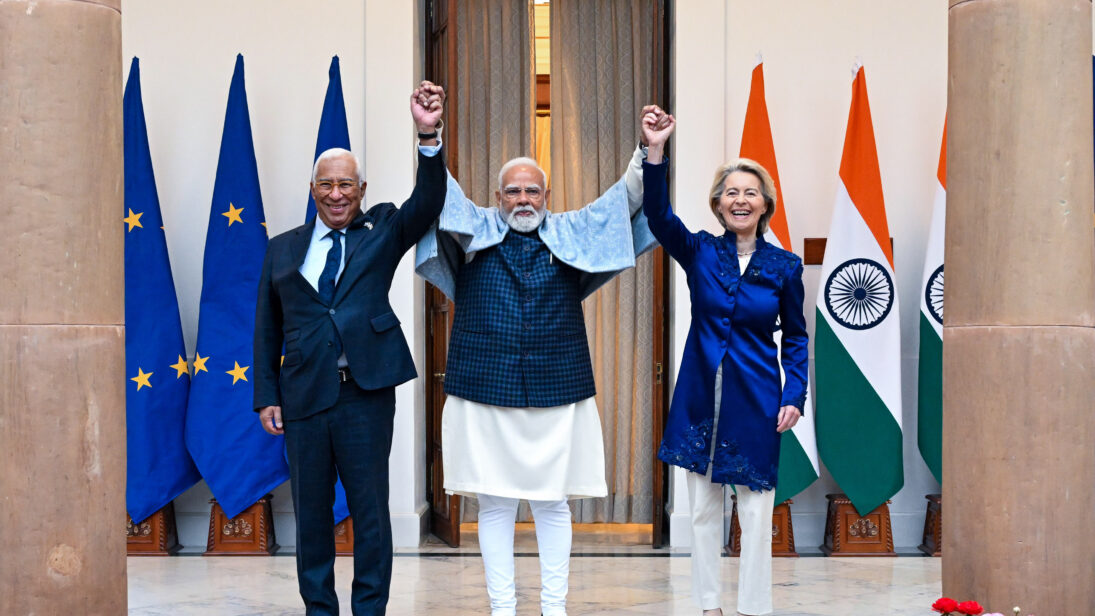
To that end, Jaishankar participated in the first-ever summit between India and the Visegárd Group—a cultural and political alliance of Central European nations Slovakia, Czechia, Hungary, and Poland—on the sidelines of the September 2026 United Nations General Assembly. The meeting focused on expanding cooperation in defense and security, migration and mobility, and trade and investment between India and the four Central European nations. More broadly, it illustrates that New Delhi is engaging more frequently and deeply with the European Union (EU) beyond its already robust relationships with traditional partners in Paris and Berlin.
This expanded European engagement has been driven by two objectives: diversifying defense partners and supply chains in technology and energy. In defense, New Delhi has sought to reduce its dependence on Russian arms while avoiding overreliance on France through deeper partnerships with countries such as Poland and Italy. In technology and energy, it has expanded cooperation with states including the Netherlands and Denmark to diversify critical supply chains and reduce strategic vulnerabilities.
These expanding partnerships illustrate that the India-EU relationship is not a single relationship with Brussels, but rather a patchwork of multiple partnerships with various European powers. This distributed, diversified approach to engagement with Europe has become even more important for India amidst an evolving global geopolitical landscape.
“These varied European partners each offer distinct advantages in areas such as defense industrial cooperation, semiconductors, digital innovation, and renewable energy that are of great importance for India.“
Expansion of Diplomatic Engagements
India’s relations with the EU were heavily concentrated with the United Kingdom (pre-Brexit), France, and Germany. However, within the past decade, India has substantially expanded its engagement with the Nordic nations, the Baltics, Central and Eastern Europe, and Southern Europe. These varied European partners each offer distinct advantages in areas such as defense industrial cooperation, semiconductors, digital innovation, and renewable energy that are of great importance for India.
The importance with which India is increasingly according these relationships is clear in the multiple historic state visits and summits that Prime Minister Narendra Modi has participated in throughout the last several years. For example, Modi’s 2017 trip to Spain and 2024 trip to Poland and Austria were the first such visits by an Indian Prime Minister in 30 and 40 years, respectively. In 2018, Modi participated in the first-ever India-Nordic summit in Sweden. More recently, Modi became the first Indian prime minister in over two decades to visit Cyprus, Italy, and Slovakia within the past year. India has also recently established embassies in Lithuania, Estonia, and Latvia for the first time.
Diversify Defense Cooperation Beyond Paris
Following the end of the Cold War, India has sought to reduce reliance on Russian arms through policies such as greater indigenization and diversifying its arms import supply chains.
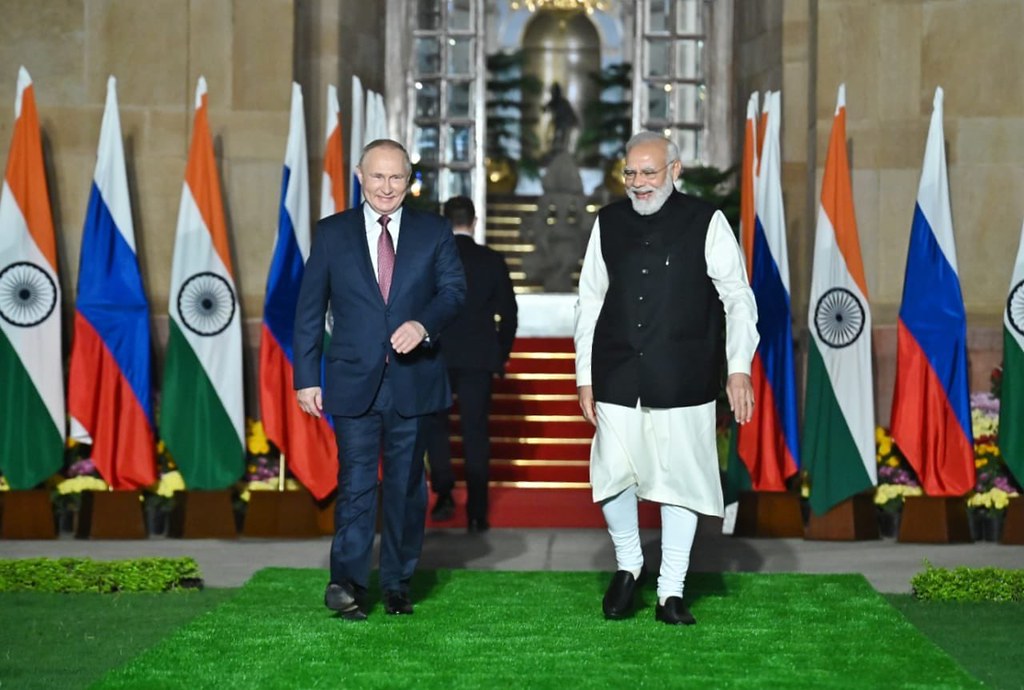
Russia’s invasion of Ukraine in February 2022 only reinforced India’s diversification push over delayed arms deliveries, including that of the S-400s, and Moscow’s growing dependency on Beijing. Indeed, from 2016-2020, India imported 50 percent of its arms from Russia, but from 2021-2025, India imported about 40 percent, demonstrating the slow but steady progress in its efforts to diversify.
As part of this push, India has also deepened its defense industrial partnership with France, which has supplied arms to India since the 1950s. Today, France is India’s second largest arms supplier after Russia, accounting for about 29 percent of New Delhi’s imports. One of the key reasons India has deepened arms cooperation with France is that Paris has been more willing than Washington or even Moscow to coproduce arms with New Delhi.
However, while India seeks to reduce reliance on Russian arms, it is reluctant to replace one dependency with another. For example, one major dispute between New Delhi and Paris is over the sale of 114 Rafale fighter jets, with the French unwilling to transfer the source code for the RBE2 AESA radar, the MDPU mission computer, and the SPECTRA electronic-warfare suite. Without the technology transfer, India would not be able to integrate or customize the aircraft’s software independently without France’s approval, making it dependent on French systems in the long run. With this in mind, India has sought to expand its defense relations with other European powers.
The avenues for greater India-Europe defense cooperation beyond Paris have only increased after the Russian invasion of Ukraine and the subsequent revitalization of Europe’s defense industrial rearmament and investment. For instance, in 2024, New Delhi and Warsaw upgraded their relations to a strategic partnership and amid their policy goals for 2024-2028, deepening bilateral defense industrial cooperation was one of them. More recently, in August 2026, Polish Deputy Foreign Minister Władysław Bartoszewski said the two countries are seeking to produce drones and reconnaissance satellites jointly and are interested in aligning with the Make in India initiative through greater local manufacturing.
The growing defense industrial relationship between India and Italy is another such example. In May 2026, Rome and New Delhi announced a Joint Declaration of Intent and Defense Industrial Roadmap, which will promote greater co-production and manufacturing of helicopters, marine armament, naval platforms, and other defense equipment. To that end, the Indian firm Adani announced that it would be co-manufacturing helicopters with the Italian firm Leonardo. India is similarly deepening defense ties with Belgium, Finland, and Greece.
Taken together, these partnerships illustrate that rather than merely replacing dependence on Russian arms with dependence on French systems, New Delhi is cultivating a wider network of European defense partners. This diversification provides India greater access to technology transfer, coproduction, and local manufacturing opportunities, which in turn reinforces its broader objective of preserving its strategic autonomy.
Technology and Energy Supply Chain Diversification
Another motivation driving India’s interest in expanding its partnerships within the EU is diversifying its technology and energy supply chains.
Even as India considers China one of its principal geopolitical rivals and a security challenge in its neighborhood, its extensive dependence on Chinese technology has constrained New Delhi’s ability to counter Beijing; take for example India’s dependency on China for semiconductors, where India imports about 60 percent of the components from its neighbor.
At the same time, New Delhi is increasingly concerned about dependency on American technology. In September 2025, a report by the India-based think tank Global Trade Research Initiative warned about the risks of a possible “kill switch,” essentially cutting India off from American software. This reflects a growing concern within India about the reliability of the United States, especially amid tensions between Washington and New Delhi over policies such as the Trump administration’s imposition of a secondary tariff of 25 percent on India for buying Russian oil.
“It is not realistic, nor is it India’s goal, to decouple entirely from Russia, the United States, or China, for these countries will remain embedded in India’s defense, security, and technological supply chains for the foreseeable future.“
Within this context, India has increasingly looked to Europe as a partner in diversifying its critical supply chains. In May 2026, India and the Netherlands announced an initiative to deepen cooperation in semiconductors and emerging technologies. In that same month, the Indian firm Tata and the Dutch firm AMSL announced an initiative to deepen cooperation to advance semiconductor manufacturing in India. Similarly, New Delhi and Tallinn have announced plans to deepen cooperation in the digital economy, seeking to combine Estonia’s strengths in digital public infrastructure with India’s immense talent and scale.
In addition, New Delhi is eager to diversify its energy supply chains, especially in the wake of conflicts in the Middle East and the ongoing Russia–Ukraine War. After all, India is the third-largest importer of oil and the fourth-largest importer of liquefied natural gas (LNG) in the world, and 45 percent of its oil and 90 percent of its LNG come from the Strait of Hormuz. Following the outbreak of the U.S.-Iran war, India has faced rising energy prices and a shortage of gas cylinders for cooking. At the same time, supply from Russia is also under pressure, primarily due to the growing Ukrainian attacks on Russian energy facilities. Notably, in July 2026, the Financial Times reported that Russia needed to import energy from India, as Ukrainian attacks cut its own domestic refining capacity by about 40 percent. This illustrates that it is unsustainable in the long run for India to switch from Middle Eastern oil to Russian oil.
To that end, New Delhi and Copenhagen formally established a green energy partnership in 2020, seeking to promote cooperation in green energy and sustainable urban development given Denmark’s strengths in renewable energy production and consumption. More recently, in May 2026, India and the five Nordic countries established a Green Technology and Innovation Strategic Partnership, which would pool the combined strengths of the five Nordic countries in renewable energy, sustainable development, and green innovation. India has also deepened similar renewable energy cooperation with Lisbon, Madrid, and Vienna.
India’s Cultivation of the Europe’s Collective Strengths
The India-Europe partnership has been a long time in the making. However, the relative urgency in deepening the partnership within the past two years has been facilitated by India’s concerns of being over reliant on Russia, the United States, and China in defense, energy, and technology.
However, India’s engagement with Europe is not one of substitution. It is not realistic, nor is it India’s goal, to decouple entirely from Russia, the United States, or China, for these countries will remain embedded in India’s defense, security, and technological supply chains for the foreseeable future. Rather, India’s strategy is one of diversification, as it seeks to ensure that no single external actor can exercise disproportionate leverage in defense, technology, or energy supply chains.
Within this context, the value of Europe for New Delhi lies with the collective strengths of all 27 EU member-states. By leveraging the entirety of the bloc’s specialized strengths in defense, technology, and energy, India can reduce those external dependencies that partnerships with Paris or Berlin alone cannot. As India pursues greater strategic autonomy, India’s cultivation of Europe’s collective strengths will become increasingly important to its diversification strategy.
Views expressed are the author’s own and do not necessarily reflect the positions of South Asian Voices, the Stimson Center, or our supporters.
Also read: Fracture in Transatlantic Ties: Charting Possibilities for India
***
Image 1: Frédéric Sierakowski via Wikimedia Commons
Image 2: Ministry of External Affairs via Flickr