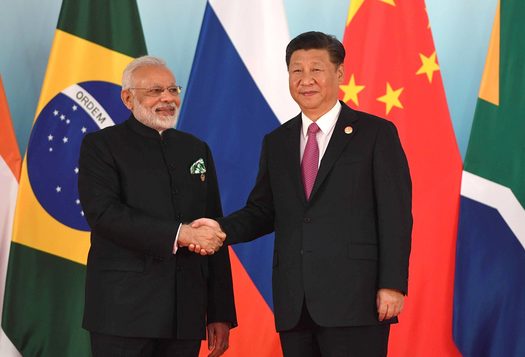
The May 2026 Quadrilateral Security Dialogue (Quad) Foreign Ministers’ Meeting (FMM) reflected a concerted effort by the four member countries—Australia, India, Japan, and the United States—to reaffirm the grouping’s relevance and durability at a time when questions persist about its momentum. Recent optics surrounding the Quad have been far from ideal, given that the much-anticipated Quad Leaders’ Summit in India did not materialize while India chaired the grouping. Moreover, differences between Washington and New Delhi on a range of issues, coupled with global attention being diverted by simultaneous crises in Europe and West Asia, have fueled skepticism about both the Quad’s future and the broader U.S. commitment to the Indo-Pacific.
While these concerns are not unfounded, an excessive focus on summit schedules as a measure of the Quad’s effectiveness risks overlooking the bigger picture of the grouping’s trajectory. The logic of contemporary geopolitics demands recognizing the Quad for what it is: an informal and flexible grouping capable of advancing regional coordination, balancing, and the distribution of public goods in an increasingly uncertain Indo-Pacific. In fact, the insulation of working-level action from political challenges has been impressive: Each working group, naval exercise, and joint initiative reinforces the Quad as a living framework rather than a one-off summit mechanism.
The new language of the Quad, as evident in the latest iteration of its Foreign Ministers’ Meeting, reflects a grouping whose durability lies not in maintaining every initiative it has ever launched, but rather, in its ability to adapt to changing geopolitical realities. In place of an expansive agenda, the grouping seems to be finding strategic logic in making the most of those domains where geopolitical tides are converging to achieve tangible outcomes in the future. As such, maritime security, economic security, critical technologies, and supply-chain resilience now take the greatest strategic prominence in Quad priorities, but earlier focal points, such as climate, health, and development cooperation, still remain part of the broader framework.
“[T]he insulation of working-level action from political challenges has been impressive: Each working group, naval exercise, and joint initiative reinforces the Quad as a living framework rather than a one-off summit mechanism.”
Continued Engagement and Strategic Adaptation
Since its revival in 2017 during the first term of President Trump, the Quad has sustained layered engagements and dialogues beyond leadership summits. Through their regular engagements, even amid geopolitical turbulence, Quad foreign ministers have remained instrumental in reinforcing shared priorities and advancing new initiatives.
Government-to-government coordination and cooperation centered around four key pillars: “maritime and transnational security, economic prosperity and security, critical and emerging technologies, and humanitarian assistance and emergency response.” The 2024 leadership summit reaffirmed that each government was “committed to work through their respective budgetary processes to secure robust funding for Quad priorities,” while a bipartisan Congressional Quad Caucus was formed in the U.S. Congress. Accordingly, in the joint statement of the May 2026 Quad Foreign Ministers’ Meeting, the partners agreed “on further enhancing cooperation and advancing concrete initiatives to deliver tangible benefits” across the Indo-Pacific.
To be sure, the grouping has seen relative retrenchment from areas of cooperation that were visible earlier, including climate, health, and development. But rather than a retreat, this evolution should be seen as a process of refocusing given current geopolitical realities. As such, the effectiveness of the Quad should not be measured in the continuity of every initiative announced earlier, but in the grouping’s ability to withstand internal and external pressures and adapt its agenda with the aim of delivering feasible outcomes.
For instance, the health security pillar has evolved from the times of pandemic preparedness, when it included concrete initiatives like the Quad Vaccine Partnership, to the present, when it has been folded into a broader framework of regional resilience. The May Quad FMM emphasized that the grouping would collaborate “to better prepare for and respond to future health emergencies” and “will work together with regional partners to advance resilient health infrastructure” in the Indo-Pacific region. This example demonstrates that, while the Quad has certainly become more narrow and strategic, its earlier, broader, and more development-oriented avatar has not entirely dissipated.
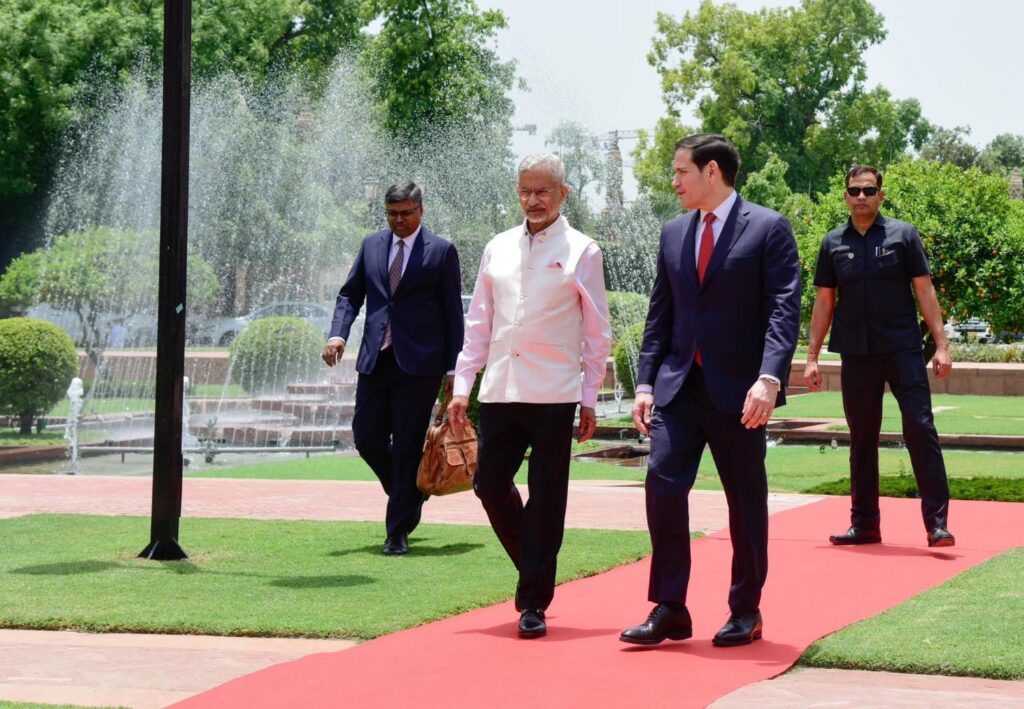
Continued Engagement: Security and Maritime Cooperation
Securing the maritime lanes of the Indo-Pacific remains a core Quad priority. Beyond jointly calling out aggressive and coercive actions in the South and East China Seas, the Quad has launched practical initiatives to strengthen regional security cooperation. One of the flagship initiatives launched at the 2022 Tokyo Summit was Indo-Pacific Maritime Domain Awareness (IPMDA), which “harnesses innovative technology, such as commercial satellite radio frequency data collection, to provide partners across Southeast Asia, the Indian Ocean region, and the Pacific with near real-time information on activities occurring in their maritime zones.” The latest Quad foreign ministers’ joint statement welcomed “India’s operationalization of the Indian Ocean region program” of the IPMDA through the Information Fusion Centre-Indian Ocean Region in Gurugram and emphasized efforts to develop a “Common Operational Picture (COP)” across the Indo-Pacific. Such efforts improve interoperability, help smaller countries monitor maritime grey-zone activities, and reinforce the Quad priority of security and stability in the Indo-Pacific. In a significant elevation of IPMDA, the foreign ministers’ meeting also saw the launch of the Indo-Pacific Maritime Surveillance Collaboration (IPMSC) that will enable “Quad partners to share real-time information and provide an enhanced picture of vessels in support of a free and open Indo-Pacific region.”
The May FMM announced that India will be hosting the next edition of the “QUAD at Sea Ship Observer Mission,” first launched in 2025 to strengthen maritime security and interoperability in the Indo-Pacific. For India, the initiative reinforces its Mutual and Holistic Advancement for Security and Growth Across Regions (MAHASAGAR) vision, complements its role under the Indo-Pacific Oceans Initiative (IPOI), and advances the “Quad Coast Guard Handshake” focused on capacity-building, humanitarian outreach, and maritime rule of law. These frameworks emphasize India’s efforts to augment its role as a provider of maritime security and public goods in the Indian Ocean region. Therefore, the growing maritime focus within the Quad aligns with India’s broader vision and aspiration to become a pivotal stakeholder in the Indo-Pacific regional security architecture.
The Quad also continues to prioritize counterterrorism cooperation through the Quad Counterterrorism Working Group (CTWG), which held its third meeting in New Delhi in December 2025 alongside a Tabletop Exercise (TTX) on “Counter Terrorism Operations in the Urban Environment.” Earlier, in September 2025, India also hosted two CTWG workshops on countering terrorist use of unmanned aerial vehicles (UAVs) and preventing the exploitation of emerging technologies for terror financing. Collectively, these initiatives demonstrate how the Quad is regularizing practical habits of cooperation across multiple domains that extend beyond summit-level engagements.
Renewed Focus: Economic Security, Infrastructure, and Critical Technologies
Economic security and supply-chain resilience have become central pillars of Quad cooperation. Reflecting the growing strategic importance of critical minerals for energy security and economic growth, the Quad’s Critical Minerals Initiative, launched in July 2025, has progressed into the Quad Critical Minerals Framework aimed at promoting “fair and diversified critical minerals markets” in partnership with the private sector. The framework recognizes that economic security is linked to national security, and positions the Quad as a response to the over-concentration of critical minerals processing in a single source country.
The Quad has also advanced the Ports of the Future Partnership to strengthen sustainable and resilient port infrastructure across the Indo-Pacific. In October 2024, India hosted the first Quad “Ports of the Future” conference, “bringing together 120 delegates from 24 countries to exchange best practices on port digitalization, financing, and security.” Reflecting the growing centrality of island nations in the Indo-Pacific, the Quad partners announced a coordinated effort with Fiji, to advance port infrastructure and associated activities in the country. The grouping is also invested in building a “trusted undersea cable systems” to ensure a “secure, reliable, and resilient connectivity across the Indo-Pacific.” In this regard, a notable outcome is the May announcement that Quad partners would provide “tangible support to ensure that all Pacific Island Forum countries are connected via undersea cables by 2026 to secure their digital futures.”
Moreover, the Quad has launched initiatives on Indo-Pacific energy security and resilience, including the Quad Clean Energy Supply Chain Diversification Program, to align policies and investments in renewables and batteries. The grouping also welcomed the U.S.-led Pax Silica initiative as part of its shared economic agenda to build secure, resilient, and innovation-driven supply chains for critical technologies, particularly silicon and critical minerals underpinning AI, semiconductors, and advanced computing systems.
The growing focus on critical minerals, ports, undersea cables, and supply-chain resilience is symptomatic of the escalating concerns over economic vulnerabilities because of disruptions in the Red Sea, growing instability in West Asia, and broader global geopolitical volatility. As such, the Quad’s economic agenda reflects the shift from the era of economic integration to that of strategic resilience. When seen as individual initiatives, they may seem to lack scale, but when considered together, they reveal the Quad’s agenda adapting and recalibrating to navigate global economic uncertainties.
“The May 2026 FMM marked an important inflection point in the journey of the Quad as pillars such as maritime security, economic security, supply chains, critical technologies, and building strategic resilience became central priorities.”
Weathering Geopolitical Storms: The Long Game
There are many variables that lend uncertainty to the Indo-Pacific, including growing inter-state competition, supply chain fragmentation, maritime contests across the Pacific and Indian Oceans, climate vulnerabilities and technological races, and shifting U.S. bandwidth due to simultaneous regional crises. In these contexts, a grouping such as the Quad becomes relevant to help manage such uncertainties. The May 2026 FMM marked an important inflection point in the journey of the Quad as pillars such as maritime security, economic security, supply chains, critical technologies, and building strategic resilience became central priorities. The uncertainty evident in the Indo-Pacific is unlikely to decrease anytime soon. In such an environment, the Quad’s flexible and issue-based functional cooperation will be its strength in delivering tangible outcomes.
As Australia prepares to take over from India in convening the next leaders’ summit, the Quad’s effectiveness should be judged not by summit schedules alone, but by the progress achieved across its pillars of functional cooperation. As such, the next steps for the Quad could focus more on deepening implementation of ongoing and new launched initiatives. A sober mapping of capabilities and intentions will allow the Quad to walk the talk. For instance, operationalizing the freshly launched IPMSC, strengthening the critical minerals partnerships, building out digital and maritime infrastructure, and translating its vision to deliverables for regional partners across the Indo-Pacific could become prime areas of cooperation and collaboration. The logic lies in neither over- nor under-estimating the value of the Quad and instead recognizing its pragmatic contribution to shaping the security and economic future of the Indo-Pacific.
Views expressed are the author’s own and do not necessarily reflect the positions of South Asian Voices, the Stimson Center, or our supporters.
Also Read: The Quad Is Quietly Adapting Methods of Security Cooperation
***
Image 1: S. Jaishankar via X
Image 2: S. Jaishankar via X