




For decades, nuclear energy in India functioned as a tightly state-controlled domain, with a regulatory regime justified by national security imperatives, safety concerns, and liability risks. Today, that model is being recalibrated with India’s decision to allow private sector participation in civil nuclear power—not because nuclear risks have disappeared, but because India’s energy demand profile has fundamentally changed. As industrial electrification, digital infrastructure, and climate commitments accelerate, nuclear power is re-emerging as a strategic complement to renewable energy. The success of the reform, however, depends on regulatory reinvention to ease enduring roadblocks to private participation.
Nuclear Returns to India’s Energy Calculus
India’s electricity demand is projected to grow faster than that of any other major economy through the 2030s, driven primarily by industrial expansion and service-sector growth, according to the International Energy Agency’s (IEA) 2024 outlook. The IEA highlights that demand growth will increasingly be shaped by electrified industrial processes, green hydrogen production, electric mobility, and the rapid expansion of energy-intensive data centers. These demand sources require high reliability and power quality, which, as India transitions toward a power system dominated by variable renewable generation in the coming decades, would create structural pressure on grid stability.
Simultaneously, at the COP26 climate summit in 2021, India committed to achieving net zero by 2070 and installing 500 gigawatts of non-fossil capacity by 2030. While these targets underscore India’s climate ambitions, a higher reliance on variable sources of renewable energy—such as wind and solar—would likely introduce challenges related to intermittency, seasonal mismatch, and system balancing.
Nuclear power directly addresses these constraints by providing near-continuous, low-carbon electricity with high output density and relatively low land requirements per unit of electricity generated, particularly compared to other large-scale power sources. The IEA identifies nuclear as an important source of clean dispatchable power in energy systems pursuing deep decarbonization while maintaining grid stability. In renewable-heavy systems, nuclear generation can reduce reliance on fossil-based capacity for system balancing and reliability, particularly coal-fired generation that is otherwise required to provide flexibility and reserves, while also limiting the scale of energy storage needed to preserve stability.
Despite its strategic value for system reliability, nuclear power continues to account for only a small share of India’s electricity generation. According to official generation data compiled by NITI Aayog’s India Climate & Energy Dashboard (ICED), which draws on Central Electricity Authority statistics, coal remained the dominant source of electricity generation in FY 2024–25, while nuclear contributed a modest but stable share despite its high capacity factor. This gap between strategic value and actual deployment explains why nuclear has re-entered India’s energy policy debate.

New Technology: Small Modular Reactors
Technological developments strengthen the case for reform. Large conventional reactors have faced cost overruns and construction delays worldwide. In contrast, Small Modular Reactors (SMRs) offer modular construction, lower upfront capital requirements, and enhanced passive safety systems.
According to the World Nuclear Association, SMRs can reduce construction risk and improve deployment flexibility. For India, SMRs create the possibility of supplying clean, continuous power to industrial corridors, hydrogen hubs, and large data centers that require uninterrupted electricity; the International Atomic Energy Agency has also emphasized SMRs’ suitability for industrial and non-traditional applications.
However, India’s current regulatory framework was designed for large, centralized reactors. Licensing, siting, and liability provisions have not yet adapted to modular or distributed nuclear deployment. Most advanced commercial SMRs remain in design and development phases globally, requiring regulatory groundwork to enable future deployment; without greater clarity and institutional preparedness, SMRs risk remaining aspirational rather than operational.
The SHANTI Bill and the Impact of Private Participation
With these technological advances and the push for a more diverse energy mix, the Indian government introduced the SHANTI Bill, 2025, to modernize the nuclear framework while retaining robust safety, security, and regulatory controls. The proposed legislation consolidates existing laws and upgrades the regulatory architecture by granting statutory status to the Atomic Energy Regulatory Board, which previously operated through executive orders. It also explicitly recognizes the need to encourage newer reactor technologies, including SMRs, by rationalizing operator liability through graded caps linked to reactor size, while ensuring full compensation to victims through a multi-layered mechanism comprising operator liability, a proposed Nuclear Liability Fund, and international compensation under the Convention on Supplementary Compensation. Crucially, the minister clarified that sensitive materials, spent fuel management, and security oversight will remain firmly under government control, irrespective of private participation.
Allowing private participation does not imply wholesale privatization of nuclear power. Instead, it opens space for private capital, engineering expertise, and joint venture participation under continued public sector oversight. Indeed, nuclear power rarely operates as a purely state-owned enterprise globally. Mixed public-private models dominate reactor construction, fuel services, and financing across most nuclear-operating countries. The new legislation thus aligns India more closely with global nuclear practice.
Nuclear projects pose inherent challenges for private investors: high upfront capital costs, multi-decade time horizons, and risks from technical complexity, regulatory uncertainty, and waste liabilities all discourage private participation. Globally, governments overcome these barriers through clear long-term commitments, loan guarantees (as for the Vogtle plant in the United States), power purchase agreements (as for the Akkuyu plant in Turkey), and contracts for difference (as for the Hinkley Point C plant in the United Kingdom). With India’s public sector balance sheets already under strain by parallel investments in renewables, transmission expansion (USD $142.78 billion by 2035), and distribution reforms (USD $14.28 billion), the SHANTI Bill reforms are essential to facilitate such mechanisms and unlock private capital without compromising safety or security oversight.
“As electricity demand grows and decarbonization deepens, India needs clean, reliable baseload power alongside renewables. Nuclear energy can provide this, but private participation is likely necessary to achieve scale.”
Regulation as the Binding Constraint
Despite the difficult economics, private sector interest in India’s nuclear sector is evident; thus, the central challenge facing nuclear expansion remains regulatory. India’s independent fuel cycle limits scaled production benefits, contributing to high upfront costs (around USD $1 – 1.4 million per megawatt for pressurized heavy-water reactors) and uncompetitive tariffs compared to solar and wind (around USD $220 – 330 thousand per megawatt). As such, the viability of nuclear power hinges on regulatory reforms like standardized licensing and liability caps under the SHANTI Bill that help tap private capital and lower costs.
Opposition leaders like Congress MP Shashi Tharoor have slammed the SHANTI Bill as a “dangerous […] backdoor” for lax oversight via insignificant risk exemptions, while Manish Tewari warned that removing supplier liability exposes victims in a foreign-supply dependent sector and others decried fixed compensation caps as inadequate for Bhopal-scale disasters. These pointed critiques underscore genuine concerns about licensing, liability, and compensation; however, these precise areas require regulatory reinvention to induce private participation.
First, nuclear licensing remains sequential and opaque. Predictable timelines are essential for private investment, particularly in a sector where multi-decade construction periods and high upfront capital amplify financial risks beyond conventional infrastructure projects.
Second, nuclear liability has historically deterred participation. India’s earlier liability framework diverged from international conventions, complicating insurance availability and risk pricing. The government argues that the SHANTI Bill ameliorates these problems by reducing supplier liability while retaining negligence and penal provisions, aligning India’s regime more closely with global practice.
Third, institutional role clarity is essential. As private actors enter the sector, the separation between operator, regulator, and promoter must remain unequivocal. Regulatory independence underpins safety credibility and investor confidence in the civil nuclear industry.
Finally, regulatory preparedness must extend to long-term system planning. Nuclear power’s value lies not only in energy generation, but in providing firm, dispatchable capacity that supports reliability amid high renewable penetration. The Central Electricity Authority’s “Report on Optimal Generation Capacity Mix for 2029–30” demonstrates through hourly dispatch and adequacy modelling that, even as non-fossil sources account for around 64 percent of installed capacity, system reliability continues to depend on the availability of firm capacity alongside storage. This reinforces the need to integrate nuclear power into long-term generation planning frameworks as a reliability-supporting resource, rather than treating it solely as an energy source.

Strategic Stakes
The implications of nuclear reform extend beyond power supply. Reliable clean baseload electricity supports industrial competitiveness, reduces fossil fuel import dependence, and underpins digital infrastructure growth. It also creates opportunities for domestic manufacturing and skilled employment within the nuclear supply chain. The government has also emphasized nuclear energy’s non-power applications, including cancer care, agriculture, and industrial use, which are explicitly recognized under the new legislative framework.
In geopolitical terms, expanded civil nuclear activity—operating under India’s INFCIRC/66 safeguards regime—reinforces its standing as a responsible nuclear power and deepens cooperation through international supply networks and supplier partnerships with countries like the United States, France, and Russia.
At the same time, risks remain high: any safety incident or regulatory failure would erode public trust and slow the broader energy transition. Nuclear expansion therefore demands institutional discipline, transparency, and public accountability.
Necessary but Incomplete Reform
Opening India’s nuclear sector to private participation reflects a pragmatic energy security strategy. As electricity demand grows and decarbonization deepens, India needs clean, reliable baseload power alongside renewables. Nuclear energy can provide this, but private participation is likely necessary to achieve scale.
Policy intent alone will not deliver outcomes. The success of this reform will depend on whether India can modernize its regulatory architecture, clarify institutional roles, and integrate nuclear power into its evolving electricity markets. Nuclear’s return to the policy forefront does not signal a retreat from renewables; it acknowledges the complexity of managing a large, rapidly growing power system. Handled well, the SHANTI Bill could anchor India’s ambitious transition to reliable, carbon-free energy. Handled poorly, however, it risks becoming another stalled promise in a sector where every delay carries high costs.
Views expressed are the author’s own and do not necessarily reflect the positions of: South Asian Voices, the Stimson Center, or our supporters; the Power Foundation of India, the Ministry of Power, or the Government of India.
Also Read: India’s Nuclear Bet: Liberalization, Small Reactors, and Big Ambitions
***
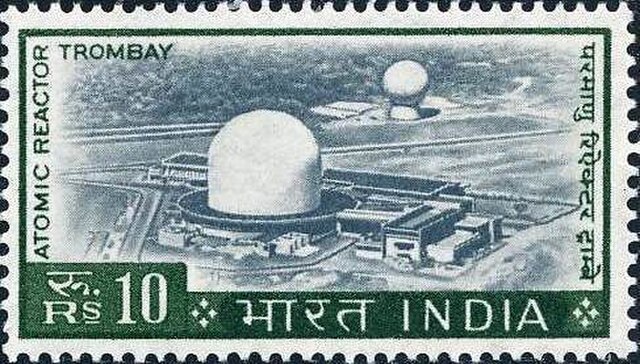
Image 1: Stamp of India’s Atomic Reactor Trombay via WikiMedia
Image 2: Narora Power Plant via WikiMedia


