Recent remarks by U.S. President Donald Trump about the necessity to resume explosive nuclear testing have sparked a global debate on the legacy of Cold War-era nuclear testing and the crumbling global nuclear order. Trump’s claim that several countries—including Pakistan—have been conducting clandestine low-yield nuclear tests underground while miraculously evading the international monitoring and detection regime has, in turn, reopened an old debate in India about the need to revisit its self-imposed moratorium on nuclear testing, a restraint announced by former Prime Minister Atal Bihari Vajpayee soon after the May 1998 Pokhran-II tests. China’s unprecedented nuclear expansion and modernization, and the lingering doubts within sections of India’s scientific community over the yield and reliability of the thermonuclear weapon provides additional context to the ongoing discussions in India. The debate over India’s thermonuclear capability centers on the long-standing uncertainty surrounding the country’s sole claimed two-stage thermonuclear test in 1998, whose yield and performance remain contested among scientists and independent analysts. However, such proposals to revisit the unilateral moratorium and appeals for renewed nuclear testing lack scholarly responsibility and overlook the disastrous humanitarian and environmental consequences of past nuclear tests, potentially compromise India’s reputation as a responsible nuclear power, and jeopardize a hard-earned international restraint on nuclear testing in pursuit of limited improvements to deterrence credibility.
Elusive Deterrence and Opportunity for Explosive Testing
Many Indian strategic experts and academics view the renewed global debate on explosive nuclear testing as a potential strategic opportunity for India. They contend that if the United States were to resume testing, it would provide a diplomatic window for India to revisit its own testing policy and validate the design and reliability of its nuclear warheads. According to academic and think-tanker Happymon Jacob, “Should the U.S. resume nuclear testing, India must seize the opportunity to conduct its own thermonuclear tests, thus validating its deterrent and putting an end to lingering doubts about the success of the 1998 thermonuclear tests.” Likewise, strategic commentator Sushant Sareen remarked during a television discussion that “if an opportunity opens up—if Trump decides to do open testing—then certainly, that is an opportunity that we should not give up.” Strategic expert Manoj Joshi has also argued that “a resumption of nuclear tests could be a huge opportunity for India, if it can seize the moment.”
The pitch of these analysts is simple: without a reliable and operational thermonuclear weapon—whose performance has been verified through a physical explosion, an objective that allegedly remained unfulfilled in the 1998 series of tests—India’s nuclear deterrence would lack credibility. To effectively deter its adversaries, they argue, India should feel confident about the nuclear capabilities it claims to possess and threatens to employ should deterrence fail. Since India cannot undertake explosive testing without risking international sanctions and reneging on commitments made under the United States-India Civil Nuclear Agreement, it would have to exploit any breakdown in the global moratorium on testing to assuage both internal and external doubts about its nuclear capabilities. As Amitabh Mattoo of Jawaharlal Nehru University has recently argued, “Deterrence depends not only on the existence of weapons but on confidence in their performance,” suggesting that testing can be undertaken in a “scientific, limited, and responsible manner.”
Humanitarian and Environmental Consequences
However, such ill-considered and myopic claims in the name of deterrence credibility ignore the toxic legacy of global nuclear testing and the hard-earned political and diplomatic restraint that has largely sustained the moratorium on testing for decades. Recent academic scholarship has illuminated the gruesome and enduring consequences of Cold War–era nuclear testing on the health and well-being of communities exposed to radioactive fallout. Works by scholars such as Sébastien Philippe, Robert Jacobs, Togzhan Kassanova, Magdalena Stawkowski, Jessica A. Schwartz, and Sarah Alisabeth Fox, among others, have significantly enriched our understanding of the long-term impact of nuclear radiation and the lived experiences of people in irradiated environments.
“Recent academic scholarship has illuminated the gruesome and enduring consequences of Cold War–era nuclear testing on the health and well-being of communities exposed to radioactive fallout.”
The humanitarian dimensions of this legacy are now reflected in the 2021 Treaty on the Prohibition of Nuclear Weapons (TPNW), which establishes a new normative baseline by formally recognizing the rights of nuclear-test victims and reflects the global majority’s desire to see a nuclear-weapons-free world. The treaty explicitly recognizes the need for “victim assistance and environmental remediation” for indigenous and local communities affected by nuclear testing. Articles 6 and 7 of the treaty call upon states to provide medical care, offer psychological and financial support to victims of nuclear tests, and undertake environmental remediation of contaminated areas. These efforts have been further underscored by recent United Nations initiatives. While nuclear-armed states have not signed the TPNW, the treaty’s reframing of nuclear weapons not merely as strategic instruments but as sources of long-term human suffering and ecological devastation should matter to those seeking global leadership on issues and especially to India, which seeks to be the voice of the Global South.
While the humanitarian consequences of nuclear weapons tests conducted by the principal nuclear powers such as the United States, France, the United Kingdom, and Russia are well-known, far less attention has been paid by global institutions and actors to the localized effects of nuclear testing in South Asia. Although the scale of testing in the region is minuscule compared to the hundreds of tests carried out elsewhere, the human and environmental toll remains significant. In India, for instance, there is little public awareness or academic engagement with the everyday consequences of underground nuclear tests in Pokhran on residents of nearby villages such as Khetolai, Loharki, and Chacha. Many of these communities and their livestock continue to endure the health and environmental consequences of the lingering radiation.
Such neglect is exacerbated by the official claims of no radioactive contamination caused by nuclear tests, the widespread perception that underground tests are ostensibly safe, and dominance of a strategic discourse that privileges questions of deterrence and national security over the everyday consequences of nuclear testing. Like the shimmer of water in a desert, the quest for a safe and responsible underground nuclear test is a mirage. Further testing would only deepen the radioactive scars of the planet, even as we continue to fail to bring justice to the victims of past nuclear tests.
Remembering India’s Moral Leadership
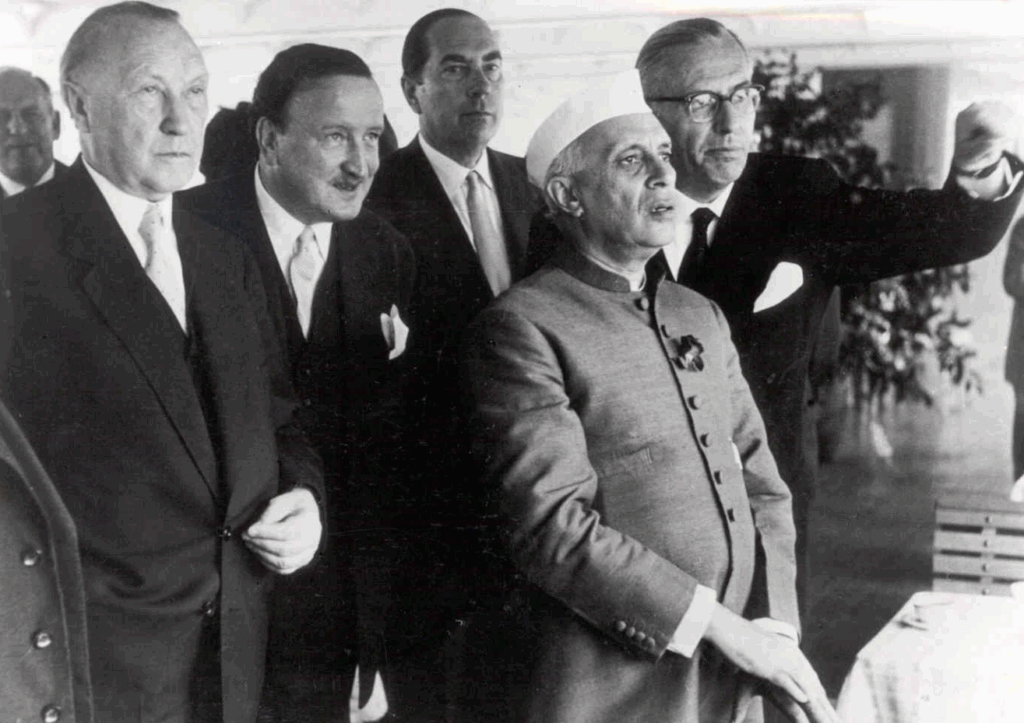
Arguments in support of resumption of nuclear testing, especially those in the Indian context, overlook not just the legacy of past nuclear tests, but also New Delhi’s historical normative role in the disarmament movement. While India did not sign the Comprehensive Nuclear-Test-Ban Treaty (CTBT), Indian leaders played a key role in forging international consensus on ending atmospheric nuclear tests and in bringing about the Partial Test Ban Treaty (PTBT). Prime Minister Jawaharlal Nehru’s April 1954 appeal urging the major powers to adopt a standstill agreement on nuclear test explosions is well-known. Other Indian leaders and political thinkers such as Rameshwari Nehru, C. Rajagopalachari, Rajendra Prasad, and S. Radhakrishnan also made significant efforts to highlight the dangers of nuclear testing and advocating for its cessation. For instance, the Gandhi Peace Foundation (GPF) organized an Anti-Nuclear-Arms Convention in June 1962 to oppose the resumption of nuclear tests by the great powers in September 1961, following a three-year de facto global moratorium on nuclear testing. Moreover, a few months before the PTBT was signed, two delegations from the GPF visited the capitals of nuclear-armed states, urging their leaders to sign an agreement banning nuclear tests in the atmosphere, underwater, and outer space, until the deadlock over the detection and verification of underground tests was resolved. Given India’s past legacy of seeking a peaceful and stable world and its perception of being a responsible nuclear power despite being nuclear-armed, it would be prudent to preserve the hard-won fruits of these efforts—and those of the global anti-nuclear movements—rather than upend the moratorium on nuclear testing in pursuit of an elusive notion of credible deterrence.
Limits of Moral Neutrality in the Nuclear Age
The historical memory of the devastating legacy of nuclear testing, and the contributions of Indian and global anti-nuclear movements, should serve as a moral warning to those now advocating a return to explosive testing. Moreover, as nuclear expert Manpreet Sethi notes, “while more tests may be desirable if international circumstances make them possible, they are not essential for the credibility of nuclear deterrence.” There are, in fact, innumerable ways to strengthen national security and enhance the credibility of nuclear deterrence, including the testing of critical subsystems, the modernization of delivery systems, and sub-critical tests.
“Collective security interests in maintaining the global moratorium on nuclear testing constitute a stronger and more credible foundation for national security than destabilizing unilateral efforts to resume testing.”
Even though senior officials within the Trump administration have ruled out plans to conduct explosive tests, such calls nonetheless reflect a persistent tendency to privilege narrow national interests over broader global stability and progressively reducing nuclear dangers. While national security and the credibility of deterrence are legitimate concerns for a country like India facing two nuclear-armed opponents, security and survival need not become the sole ideals of political thinking. Indian policymakers should also reckon with the lived realities of locals around testing sites, whose plight has disappeared from public and policy discourse, and reflect on the legacy of India’s disarmament roots.
On issues as consequential as nuclear weapons and explosive testing, ethical imperatives and collective security interests should take precedence over narrow strategic calculations. To persist with a morally neutral approach to international politics is untenable, given that the very founders of the international relations discipline acknowledged the “inescapably normative problem of nuclear war.” Collective security interests in maintaining the global moratorium on nuclear testing constitute a stronger and more credible foundation for national security than destabilizing unilateral efforts to resume testing.
Views expressed are the author’s own and do not necessarily reflect the positions of South Asian Voices, the Stimson Center, or our supporters.
Also Read: What Will a Breakdown in the Global Moratorium on Nuclear Testing Mean for South Asia?
***
Image 1: National Parks Gallery via Picryl
Image 2: Wikimedia Commons