The recent U.S.-Israel attack on Iran’s Natanz uranium-enrichment facility and the Iranian attack targeting Israel’s own nuclear enrichment facility near Dimona reflect an accelerating and dangerous shift in global nuclear politics: the erosion of the international norm against attacking critical infrastructure during a conflict. In the June 2025 war as well as the current conflict, the United States and Israel have targeted Iranian nuclear infrastructure including Natanz, the Isfahan Nuclear Technology/Research Center, and Bushehr; in retaliation for the March 2026 strike on Natanz, Iran in turn targeted the Shimon Peres Negev Nuclear Research Center in southern Israel, striking 8 miles from the site. Thankfully, neither of the recent attacks resulted in casualties or the release of radioactive materials.
While these initial strikes have been justified as preventive self-defense or as part of a counterproliferation campaign, they nonetheless could set a precedent for making nuclear facilities and infrastructure legitimate targets during a conflict. The recurrence of these strikes across multiple crises signals a gradual lowering of the threshold for targeting nuclear infrastructure, thereby shrinking the strategic and political barriers to such actions in future conflicts.
This development is especially alarming for other regions with nuclear flashpoints, including South Asia. Nuclear deterrence in South Asia is already fragile, shaped by close proximity, compressed missile flight times, mutual mistrust, and possible doctrinal shifts. If nuclear restraint becomes conditional rather than absolute, the next India-Pakistan crisis could unfold with either side perceiving the other’s nuclear infrastructure as newly vulnerable.
From the Iran War to a Broader Pattern: Pathways to Norm Erosion
The recent strikes targeting nuclear infrastructure in the U.S.-Israel-Iran war are not the only recent such examples. The most infamous incident occurred in 2022, when the Zaporizhzhia Nuclear Power Plant came under direct Russian military fire and was seized by Russian forces. The occupation of Zaporizhzhia, the largest such plant in Europe, was the first incident of an operational nuclear facility being taken over by an adversary during active interstate conflict, prompting pressing warnings from the IAEA regarding nuclear safety and security risks and international calls to establish security protection zones around nuclear facilities during conflicts. When considered alongside alleged past instances of cyber and sabotage operations against Iran’s nuclear sites attributed to the United States and Israel, these incidents may together form a precedent normalizing the targeting of nuclear facilities.
This precedent is made possible in part by the lacuna between international legal restrictions and strategic objectives. International humanitarian law restricts attacks on civilian infrastructure, but does not impose an absolute exclusion of nuclear facilities as attack targets. States may justify the use of force against such facilities if their actions provide anticipated military advantage outweighing civilian harm. Such determinations usually rely on a given state’s interpretation; in effect, this ambiguity allows states to selectively interpret legal limits in accordance with their strategic objectives. Similarly, the Geneva framework (Article 56 of Protocol I and Article 15 of Protocol I of the Geneva Conventions) is limited in scope and conditional in nature, not least because the United States, Israel, India, Pakistan, and Iran have yet to ratify it.
There are also multiple International Atomic Energy Agency (IAEA) General Conference resolutions (1983, 1984, 1985, 2009) prohibiting attacks on peaceful nuclear facilities, but these frameworks only focus on nuclear power plants. The Amendment to the Convention on the Physical Protection of Nuclear Material (CPPNM/A), however, legally binds states to protect nuclear material and facilities for civilian domestic uses during their use, storage, and transport. These include fuel fabrication plants, research reactors, and spent fuel pools and uranium enrichment facilities. CPPNM/A centers around physical protection rather than prohibition of attacks, leaving a critical gap. But while India, Pakistan, and the United States are parties to the CPPNM/A, Iran and Israel are not.
In addition, the use of force against Iran’s nuclear infrastructure has been normatively described as a legitimate counterproliferation or preventive strategy. Such rationale risks undermining the legitimacy of not only the Nuclear Non-Proliferation Treaty (NPT) but also the IAEA by setting the precedent that military operations are valid alternatives to diplomacy and treaty-based mechanisms to manage nuclear proliferation concerns. After all, Iran is still an NPT signatory state. Iran had already restricted access to its nuclear facilities following the 2025 strikes; further such targeting could well push Iran toward the path of uranium enrichment for building nuclear weapons and a possible simultaneous exit from the NPT.
“The recurrence of these strikes across multiple crises signals a gradual lowering of the threshold for targeting nuclear infrastructure, thereby shrinking the strategic and political barriers to such actions in future conflicts.”
Implications for South Asia
These developments in West Asia could further stress the already fragile deterrence relationship between India and Pakistan. The two countries have fought four wars and experienced conventional crises under the nuclear umbrella, including the complex May 2025 crisis. This complexity stemmed from the concurrent use of disinformation campaigns, cyber operations, and heightened conventional signaling, each of which compressed decision-making timelines and increased uncertainty. In such a fraught context, changes in targeting strategy can have disproportionate consequences.
Given this history, it is all the more remarkable that South Asia already possesses a nuclear confidence-building measure (CBM) in the Agreement on Prohibition of Attacks against Nuclear Installations and Facilities (NAA). Under the auspices of this agreement, both India and Pakistan have exchanged the lists of nuclear installations for more than three decades. Its continued implementation even during periods of heightened tension underscores its resilience as a CBM, making any potential erosion particularly highly concerning and consequential. The NAA reflects a shared understanding of the associated risks from targeting nuclear facilities and infrastructure, born out of a historical moment in the 1980s when Pakistan and India both perceived themselves as vulnerable to possible attacks on their nuclear installations. Indeed, in the 1970s and 1980s, India, along with Israel, reportedly explored contingency plans to target Pakistan’s enrichment facility in Kahuta. These plans were ultimately not executed due to international pressure, with the CIA reportedly tipping off President General Zia-ul Haq and the United States cautioning India that it would “be responsive if India persist[ed].” India, for its part, feared the possibility that Pakistan’s warplanes, mainly its U.S.-supplied F-16s, could be used to attack Indian nuclear infrastructure or strategic targets.
It is possible, however, that the agreement could come under strain in the next crisis. Dual-use ambiguities, evolving targeting doctrines, and increasing confidence in precision and non-kinetic capabilities may incentivize review of previously off-limits targets in South Asia. The last strategic dialogue between India and Pakistan was held in 2011, and the broader closure of India-Pakistan dialogue further constrains avenues for risk reduction and conflict resolution. There are also signs that critical infrastructure may increasingly be seen as legitimate targets in future South Asian crises. For instance, during the May 2025 conflict, Pakistan blamed India for attacking its Neelum-Jhelum hydropower project, which India denied.
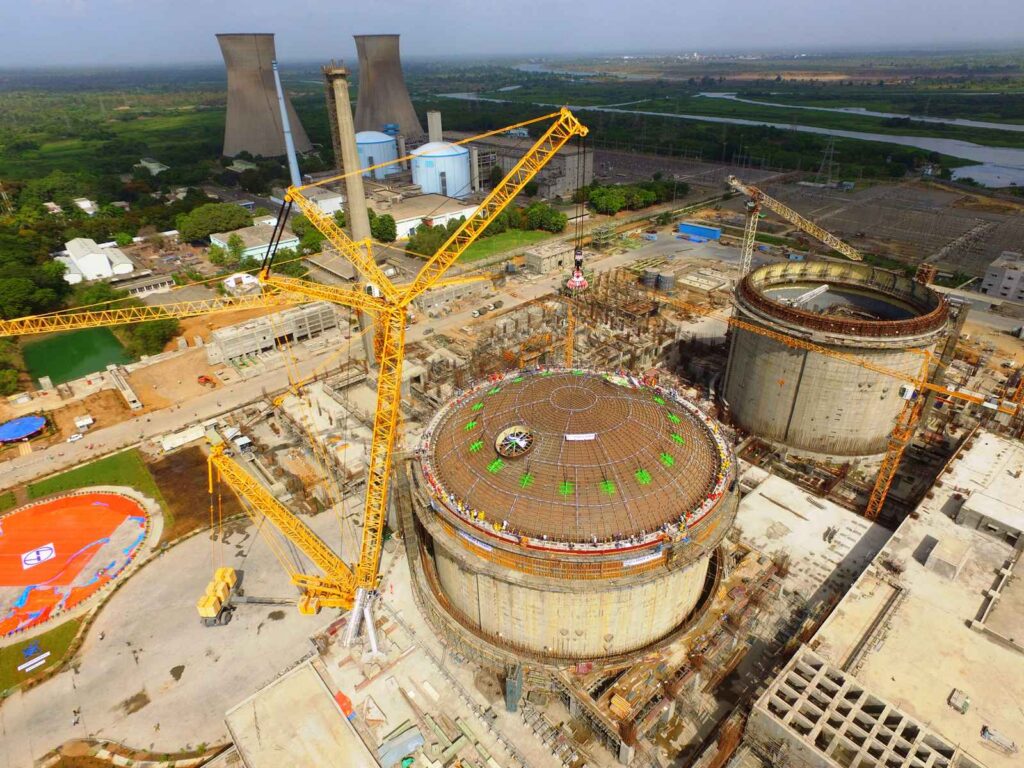
Pakistan and India also categorize their respective nuclear facilities differently, which could further add to the ambiguity of targeting such infrastructure. Pakistan clearly delineates its civilian nuclear reactors from its military nuclear facilities, with the former under IAEA safeguards. India, on the other hand, does have civilian facilities that are not subject to IAEA safeguards, including its heavy water production plants and its fast breeder reactor; such facilities could be construed as dual-use infrastructure because these civilian and commercial facilities could be capable of producing weapons-usable material. Thus, although Pakistan and India exchange lists of their nuclear installations per the NAA, ambiguity still lies in how nuclear facilities are categorized and how they could be perceived during a conflict.
In addition, contemporary trends in the regional and global geostrategic landscape could push South Asian states to expand their ranges of potential targets. The evolution of emerging disruptive technologies (EDTs)—including advances in intelligence, surveillance, and reconnaissance (ISR), precision strike capabilities, artificial intelligence, and cyber warfare including possible cyberattacks against command, control and communication systems (NC3)—are reshaping how nuclear weapons states perceive nuclear vulnerability. EDTs enhance states’ ability to track, detect, and target previously concealed assets, including elements of nuclear infrastructure and mobile delivery systems. This can create a perception of advanced counterforce feasibility, leading decision-makers to believe that selective or pre-emptive strikes against an adversary’s nuclear assets are operationally viable. Furthermore, EDTs can blur the line between conventional and nuclear systems, increasing the incentives for targeting critical infrastructure during crises. Despite the extant inefficacies of tools like AI-assisted targeting systems, EDTs can contribute to a false sense of supremacy that influences strategic decision-making, especially in the run-up to a conflict.
The May 2025 crisis also reflected the ways in which perceptions may trigger escalation. For instance, there was unverified disinformation on social media at the time that India had targeted a Pakistani nuclear storage site near Kirana Hills, which was later refuted by the Indian government, further muddying the waters of the contested information domain. Attribution challenges in the case of cyberattacks add another layer of complexity to the geostrategic landscape of South Asia. In a context where dialogue is limited and existing hotlines are not always utilized in the heat of the moment, unverified accusations or competing narratives could incentivize further escalation.
“[W]hile the nuclear non-attack agreement has withstood past crises, it needs to be expanded to address the challenges posed by EDTs, misinformation, dual-use infrastructure, and the inadequate use of hotlines between India and Pakistan.”
Revisiting Risk Reduction in South Asia
The risks of attacking nuclear facilities have moved from hypothetical scenarios to real-world war planning. The developments in Iran are not isolated incidents, but are rather part of a broader shift that could reshape how states perceive the legitimacy of targeting nuclear infrastructure. The apparent normalization of such military actions in the Iran context underscores the urgency of reinforcing restraint in South Asia before similar dynamics can emerge. Therefore, South Asia must revisit and update its existing risk reduction frameworks.
For example, while the nuclear non-attack agreement has withstood past crises, it needs to be expanded to address the challenges posed by EDTs, misinformation, dual-use infrastructure, and the inadequate use of hotlines between India and Pakistan. One pathway could be to expand the scope of the agreement to not only explicitly cover emerging non-kinetic threats, including cyber operations, targeting NC2 systems, but also dual-use nuclear facilities. Moreover, greater emphasis must be placed on ensuring testing, credibility, and regular use of crisis communication mechanisms to prevent misperceptions and inadvertent escalation. In a relationship dogged by mistrust and diplomatic deadlock, it may be difficult to strengthen even trusted crisis communication mechanisms, but regional CBMs and dialogue can help build consensus where formal diplomacy continues to remain constrained.
Efforts to strengthen legal and normative protections for nuclear facilities must also be revitalized at the global level. This could be done through concrete regional and multilateral channels, including in the NPT review process, UN disarmament forums, and the IAEA General Conference. At the global level, this should include broadening existing normative frameworks to cover all categories of nuclear infrastructure – not only NPPs – while reducing legal ambiguities that allow for flexible interpretations of protection thresholds. Track 1.5 and Track II dialogues at both regional levels – particularly in South Asia – and the international level can further strengthen norms by operationalizing such commitments.
As the Director General of the IAEA has argued, “Nuclear facilities must never be attacked, regardless of the context or circumstances.” In the absence of such measures, the normalization of attacks on nuclear infrastructure risks becoming rooted in strategic practice, with potentially irreparable consequences for crisis stability. In the absence of clear, enforceable frameworks, existing ambiguities and gray areas may be replicated in other regional nuclear flashpoints with significant global consequences.
Views expressed are the author’s own and do not necessarily reflect the positions of South Asian Voices, the Stimson Center, or our supporters.
Also Read: After New START: What the End of U.S.-Russia Arms Control Means for South Asia
***
Image 1: Hamed Saber via Wikimedia Commons