Editor’s Note: This article is the second part of a two-part series on India’s Prototype Fast Breeder Reactor. Read the first part here.
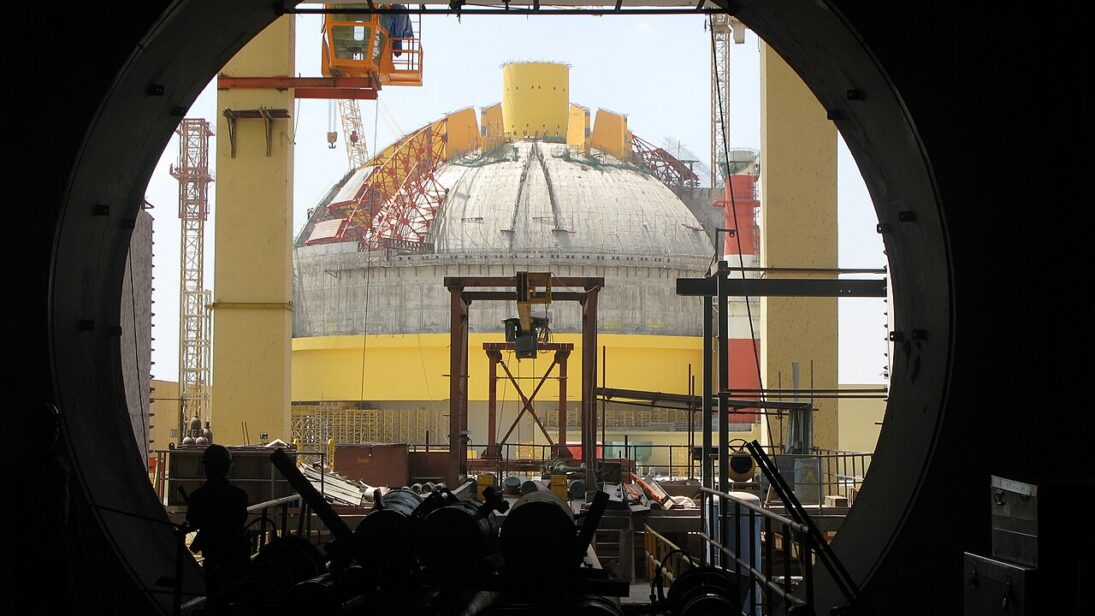
On April 6, 2026, India’s Prototype Fast Breeder Reactor (PFBR) reached criticality. Initially scheduled for 2010, the PFBR’s criticality marks a significant milestone in India’s pursuit of a three-stage nuclear fuel cycle. First conceived in the 1950s, this fuel cycle was considered the most sustainable way for India to realize the ultimate potential of nuclear materials and technology for an unlimited energy at a time when India was believed to have limited resources of uranium.
The program conceived the use of spent fuel from the first stage as fuel for the second stage, the Fast Breeders, to produce fuel for the third and final stage, which envisions reactors using thorium, an element that has physical properties similar to uranium and is abundant in India. However, thorium is not widely used commercially in nuclear reactors. Through achieving a three-stage nuclear fuel cycle, India frames the PFBR as a success of “Atmanirbhar Bharat,” or self-reliant India, and an important step toward its clean energy goals of net zero emissions by 2070 while reducing nuclear waste.
The sustainable nuclear energy dimension aside, there are two aspects that worry non-proliferation advocates in general and Pakistan in particular. The first is the reactor’s ability to produce weapons-grade plutonium on a large scale and the second is its operations outside IAEA safeguards, which makes it impossible for outsiders to verify non-military use of the reactor. Together, these two aspects signal to Pakistan that the PFBR may be less of a bridge to a thorium-fueled future and more of a deliberate expansion of India’s weapons-usable fissile material stockpile that can undermine South Asian strategic stability.
The Context and Promise of Three-Stage Nuclear Fuel Cycle
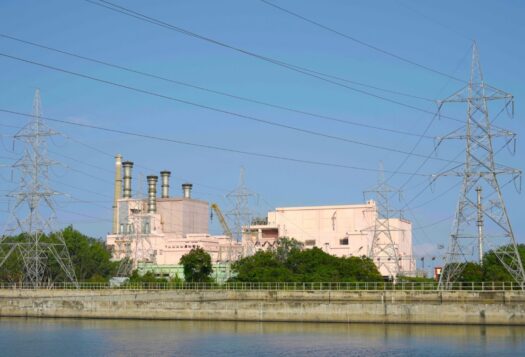
Other than providing a low-carbon base load power and capitalizing on vast Indian thorium reserves, the three-stage fuel cycle promises to close the nuclear fuel cycle by using spent fuel from one stage as fuel for the next; this reduces nuclear waste and makes for a highly sustainable approach to nuclear energy. Since the 1960s, India has been operating a mix of foreign-supplied and indigenous Pressurized Heavy Water Reactors (PHWRs) running on natural uranium. Several of these reactors remain unsafeguarded, with their spent fuel piling up. After reprocessing, this stockpile remained weapons-usable, but India insisted that it would fuel the second stage of its nuclear fuel cycle. With India’s PFBR attaining criticality, the use of this weapon-usable reactor-grade plutonium as fuel could finally start.
However, the third stage is still a long-term aspiration. The timeframe for large scale deployment of thorium-based reactors is expected to be three to four decades after the commercial operations of Indian Fast Breeder Reactors (FBRs). Therefore the third stage is unlikely to materialize at least until the 2050s or 2060s, provided there are no further delays. While these FBRs can transmute thorium-232 into thorium-233 for use in the third stage, for now, these reactors will transmute uranium-238 (natural uranium) into plutonium-239—the fissile material that can be used for nuclear weapons or as FBR fuel.
“Pakistan [worries] that the PFBR may be less of a bridge to a thorium-fueled future and more of a deliberate expansion of India’s weapons-usable fissile material stockpile that can undermine South Asian strategic stability.”
The Uranium Reserves Question: Contested Narratives of Scarcity and Discovery
The logical foundation of India’s three-stage nuclear fuel cycle comes from the belief that India has limited uranium reserves. The argument that India was facing extreme uranium shortages compared to its demand for nuclear power helped shape conversations leading up to, and during, the negotiation of the 2005 U.S-India civil nuclear cooperation agreement. The reported nuclear fuel shortages in India created additional urgency for the U.S.-India deal, particularly in efforts to lobby for an exceptional exemption from the Nuclear Suppliers Group in 2008. Unrealistically high estimates for uranium needs also made the deal more attractive for environmental reasons, as it would have made substantially more sustainable energy available for India’s massive population.
However, in 2011, India discovered one of the world’s largest uranium reserves. As of December 2024, India reported a fivefold increase in available reserves: 425,570 tonnes of Uranium oxide, up from 84,600 tonnes in 2005. A detailed Pakistani assessment of India’s unsafeguarded program in 2016 assessed that India’s then-known 194,985 tonnes of uranium reserves were adequate to fuel its fleet of indigenous unsafeguarded nuclear reactors for over a century. However, India’s uranium reserves are also quite poor in quality, which has led India to rely on imported fuels. Experts have also argued that the issue is less the availability of Indian uranium reserves and rather the bottlenecks in refinement that result from cost-saving government policies; the availability of domestic uranium exponentially increases if India is willing to pay higher extraction costs. Additionally, this FBR will produce electricity that will be 80 percent more expensive than that generated from Indian PHWRs, and the FBR alone will not have a meaningful impact on India’s broader fuel cycle costs.
India’s domestic uranium constraints may have been a genuine factor when the breeder program was originally conceived. However, the continued justification of the PFBR’s on these grounds overlooks more recent uranium discoveries and economic realities. For Pakistan, India’s willingness to pursue a reactor that produces electricity at an 80 percent higher cost suggests that the PFBR is now driven by strategic, rather than purely developmental, objectives.

Safeguards Question
For Pakistan, the operationalization of PFBR drastically accelerates existing strategic asymmetries. At the heart of Pakistani anxieties lies the fact that this reactor will operate outside the IAEA safeguards. Even absent a declaration of strategic intent, IAEA safeguards are the only instrument that can verify a nuclear facility’s civilian role.
Indian experts underplay this as a measure by the Indian Department of Atomic Energy (DAE) “to retain freedom of management of the reactor and [safeguard] the homegrown design.” However, in Pakistan’s perspective, this justification does not hold, given that India’s Additional Protocol—which allows the IAEA to verify the civilian use of nuclear facilities and materials—obliges the IAEA to “maintain a stringent regime to ensure effective protection against disclosure of commercial, technological and industrial secrets … in the implementation of this Protocol.” The Indian DAE’s former chairman, Anil Kakodkar, was much more candid when he acknowledged that the reactor, meaning the PFBR, could not be put on safeguards in order to “maintain [India’s] minimum credible deterrent.” This is also reflected in the language of India’s separation plan document, which commits India to place only civilian facilities under safeguards which would not “impact adversely on India’s national security.”
Operating outside IAEA safeguards, the PFBR can produce 140 kilograms of weapons-grade plutonium every year—enough for 35 additional nuclear warheads each year. Taken from the worse-case net assessment of fissile material production, Pakistan worries that eventually, when India operates five fast breeder reactors outside IAEA safeguards, it could increase the cumulative output to 700 kilograms of weapons-grade plutonium, enough for 175 nuclear warheads a year.
Situating Pakistani Concerns
Most past discussions over vertical nuclear proliferation in South Asia have placed Pakistan at the center of the South Asian proliferation problem as the country possessing the fastest growing nuclear arsenal. Mainstream assessments now put India’s nuclear warhead count a little ahead of Pakistan’s, yet a similar alarmist narrative about India’s nuclear program does not follow. While international observers may be willing to overlook India’s military nuclear potential given their political expediencies vis-à-vis counter-balancing China, Pakistan cannot afford to do so.
To understand this anxiety, one must examine the comparative data. Prior to the PFBR reaching criticality, India already possessed an unsafeguarded reactor capacity of 2446 MWe. In stark contrast, Pakistan’s total dedicated unsafeguarded capacity stood at just 62 MWe (or 186 MW thermal). In terms of installed unsafeguarded capacity, India operates 39 times that of Pakistan, and its accumulated output over time is more than seventy times higher. A counter-argument could be made that grid-connected power generation (MWe) does not translate to military fissile material production at the exact rate as dedicated military reactors. Even though grid-connected reactors operate at higher burn-up rates, the resulting “reactor-grade” spent fuel remains weapon-usable, as demonstrated by India’s use of reactor-grade plutonium in a 1998 nuclear test. In any case, India’s own communication to the IAEA over the separation plan states that “grid connectivity [does not determine] whether the reactor concerned is civilian or not civilian.” In a situation where grid-connection of nuclear reactors does not determine their civilian or military role, IAEA safeguards appear to be only viable approach to make this much needed distinction.
“India’s justifications for its fast breeder program do not conform to the ample availability of uranium reserves according to its government’s own figures. Moreover, generating electricity at 80 percent higher cost strongly indicates that the reactor’s real value is strategic rather than civilian.”
The addition of the 500 MWe PFBR to this unsafeguarded fleet of nuclear facilities radically exacerbates the vertical proliferation problem. Pakistan’s dedicated military fissile material production facilities are a fraction of those operated by India under the label of “civilian unsafeguarded facilities.” This imbalance is deliberate: During the 2006 Separation Plan negotiations, the Indian government explicitly retained the sole right to determine such reactors as civilian and refused safeguards on the fast breeder program because it did not wish to place any restrictions on its strategic spin-offs.
Following its civil nuclear cooperation agreement with the U.S. and others, and the exceptional NSG waiver, India has operationalized unsafeguarded uranium enrichment facilities and now the PFBR, exponentially increasing its weapons-making potential. This staggering numerical disparity lies at the heart of Pakistani concerns, increases its discontent with India’s exceptional accommodation in the global nuclear order, and could potentially nudge Pakistan to rethink its current pace of fissile material production to maintain strategic stability.
Conclusion
Ultimately, the international community ought to resist the temptation to celebrate India’s PFBR reaching criticality solely as a milestone for sustainable development and self-reliance. Doing so would be at the cost of ignoring South Asia’s strategic realities. India’s justifications for its fast breeder program do not conform to the ample availability of uranium reserves according to its government’s own figures. Moreover, generating electricity at 80 percent higher cost strongly indicates that the reactor’s real value is strategic rather than civilian. The addition of an unsafeguarded 500 MWe reactor dramatically exacerbates an already staggering 39-to-1 asymmetry in unsafeguarded nuclear capacity between India and Pakistan. As long as international assessments about India’s nuclear arsenal size continues to take “civilian unsafeguarded” declarations at face value—an approach that ignores the role that reactor-grade plutonium has played in India’s strategic programs—they will dangerously underestimate India’s true weapon-making potential. Admittedly, these assessments are intentionally conservative, often using the number of available launchers to determine how much of the fissile material may have been used to produce nuclear warheads; however, this approach is informed by the Cold War instruments of arms control, where launch vehicles were verified through each side’s national technical means. Such an option remains unavailable in South Asia. Until facilities like the PFBR are brought under the IAEA safeguards, they cannot be viewed merely as instrumental bridges to a thorium-powered future. Instead, they must be recognized for what they functionally are: potential contributors to vertical proliferation, by virtue of increasing fissile material available for weapons-use, that fundamentally undermine the strategic stability of South Asia.
Views expressed are the author’s own and do not necessarily reflect the positions of South Asian Voices, the Stimson Center, or our supporters.
Also Read: Breeding Power: India’s Nuclear Energy Breakthrough
***
Image 1: IAEA via Wikimedia Commons
Image 2: IAEA via Wikimedia Commons