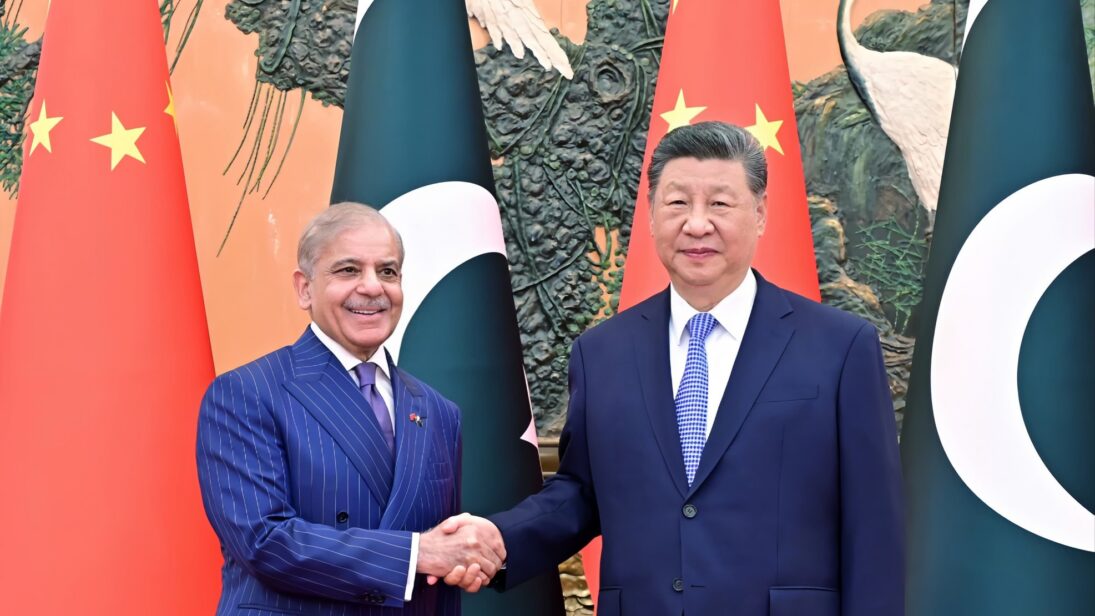
On April 30, Pakistan commissioned the first of eight Hangor-class submarines during an official visit to China, an occasion that Pakistani President Asif Ali Zardari called a “historic milestone” for the navy. Pakistan inducted the submarine, which is jointly produced by China and Pakistan, just before the first anniversary of the May 2025 crisis between New Delhi and Islamabad, a confrontation that involved reciprocal missile strikes and highlighted Beijing’s growing role in conflicts in South Asia. More than a capability upgrade, the Hangor submarine marks a key step in Pakistan’s naval modernization and expanding defense cooperation with Beijing.
Pakistan’s acquisition of the Hangor submarine signals three shifts for deterrence in South Asia: deepening China-Pakistan cooperation, Islamabad’s move toward a submarine-launched nuclear cruise missile to strengthen its second-strike capability, and intensified India-Pakistan competition in the maritime domain. Together, these shifts could raise the risk of inadvertent escalation, undermine crisis stability in the absence of maritime confidence-building measures (CBMs), and create conventional-nuclear ambiguity as undersea deployments evolve. Addressing these risks will require India and Pakistan to develop frameworks for managing escalation at sea—a challenge made harder by the breakdown of bilateral dialogue.
Pakistan’s Commissioning of Hangor: Why Now?
The Hangor submarine is a diesel-electric variant of China’s Type 039A Yuan-class submarine, which Pakistan announced it would acquire in 2015. The commissioning took nearly a decade due to export licensing restrictions on the submarine engine and difficulties in integrating a completely new submarine design. The Hangor carries advanced sensors, torpedoes, and anti-ship cruise missiles capable of striking surface warships, submarines, and land-based facilities. The submarine has air-independent propulsion (AIP), allowing it to remain submerged for extended periods, enhancing Pakistan’s submarine fleet with sustained underwater presence and Anti-Access/Area Denial (A2/AD) capabilities. Pakistan’s navy chief highlighted that the Hangor submarines will play a role in “deterring aggression and ensuring security of vital Sea Lines of Communications (SLOCs) across the Arabian Sea and wider Indian Ocean region.”
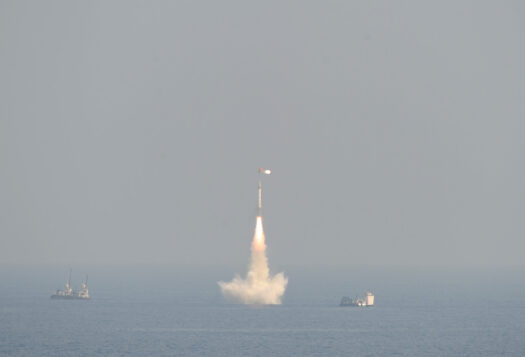
Beyond conventional capabilities, recent analysis from the Federation of American Scientists suggests that Pakistan may seek to integrate the dual-capable Babur-3 Sea-Launched Cruise Missile (SLCM) onto the Hangor submarine. Pakistani authorities say that the Babur-3 can “provide Pakistan with a credible second-strike capability,” giving the Hangor a nuclear mission. In addition to the SLCM, Pakistan is developing a Babur variant for surface vessels. Pakistan’s broader fleet includes the French-built Agosta-class submarines, which the Hangor will replace. The new submarine, paired with the Babur variants, would augment Pakistan’s strike capabilities and signal a shift toward a more robust A2/AD strategy. AIP-enabled endurance allows sustained presence while anti-ship cruise missiles and torpedoes provide standoff capabilities and complicate India’s anti-submarine warfare efforts.
Pakistan’s acquisition of the Hangor submarine signals three shifts for deterrence in South Asia: deepening China-Pakistan cooperation, Islamabad’s move toward a submarine-launched nuclear cruise missile to strengthen its second-strike capability, and intensified India-Pakistan competition in the maritime domain.
Even with this expansion, Pakistan currently lacks the means to develop its own nuclear-powered ballistic missile submarine (SSBN). Such programs require sustained funding for development and maintenance—investments that compete with a defense budget that prioritizes land and air domains. Beyond budget priorities, Pakistan lacks the indigenous technological base to build SSBN reactors. A diesel-electric attack submarine like the Hangor is cheaper, can carry a cruise missile, and avoids the nuclear reactor requirement of an SSBN. The submarine enables Pakistan to pursue a sea-denial strategy, allowing it to focus on a specific area rather than on deep-sea global operations that SSBNs typically support. Islamabad’s focus stems from the need to protect territorial borders and neutralize advanced aerial threats, but its conventional fleet is aging; for example, the Agosta submarines, acquired in the 1970s, need replacement. Accordingly, Pakistan’s Chief of Naval Staff called the commissioning of the Hangor an “important milestone to bolster maritime defense and modernize our fleet with cutting-edge technology.”
Beyond modernization, the Pakistani military frames its sea-based deterrent as an effort to “match India’s nuclear triad and the ‘nuclearization of [the] Indian Ocean Region.’” India is indeed modernizing its own sea-based deterrent to enhance its second-strike capability against two competing threats—China’s expanding naval presence in the Indian Ocean and Pakistan’s growing maritime capabilities. In April 2026, India commissioned a third SSBN, the INS Aridhaman, which can carry the K-4 and K-15 submarine-launched ballistic missiles (SLBMs). With a range of 750 km, the K-15 gives India a shorter-range strike option against Pakistan, while the K-4’s 3,500 km range gives India greater standoff capability. Pakistan’s commissioning of the Hangor submarines reflects both its modernization needs and points to an emerging maritime arms race in South Asia.
A Strategic Inflection Point in South Asia
Pakistan’s acquisition of the Hangor submarine signals three developments that impact deterrence in South Asia. First, the deal underscores the deepening cooperation between China and Pakistan. Beijing and Islamabad already view each other as all-weather partners and maintain a “threshold alliance” that includes arms sales, defense co-production, and joint preparation by their armed forces. The May 2025 crisis was the most recent indicator of how deep this relationship has become, with Pakistan using Chinese J-10C fighters and PL-15 missiles and Beijing providing Islamabad with on-site technical support during the missile strikes.
China’s investment in Pakistan’s naval modernization also advances Beijing’s broader objectives in the Indian Ocean and serves as a building block of its regional strategy. China could leverage these capabilities to expand its influence in the Indian Ocean, constrain India regionally, and sustain a naval presence. The investment could also signal a change in how China approaches India-Pakistan crises. While China has traditionally maintained a diplomatic stance offering mediation, Beijing could expand its role beyond diplomacy to include operational support as future crises between New Delhi and Islamabad intensify.

Second, the commissioning of the Hangor signals Pakistan’s growing second-strike capability. Pakistan is moving from a primarily land-based deterrent to a more diversified posture, enhancing its credible second-strike capability and reducing pressure on its land-based forces. This diversified posture seeks to bolster deterrence against New Delhi, which is modernizing its own second-strike capability with a growing fleet of SSBNs carrying expanded missile payloads. India plans to commission a fourth SSBN in 2027, along with two nuclear attack submarines (SSNs) in the 2030s. Both states are locking into a maturing nuclear competition at sea, creating nuclear risks that neither has experience managing.
Third, these capability changes widen the domain of an India-Pakistan conflict. Although India and Pakistan have competed in the maritime domain—including through naval combat during the 1971 war—the growing submarine dimension of their maritime competition introduces new risks that neither side has navigated before. As both countries strengthen their sea-based capabilities without appropriate confidence-building measures, the potential conflict zone between them expands. Submarines are hard to detect, and the absence of a clear maritime escalation ladder complicates situational awareness. The May 2025 crisis showed how quickly an India-Pakistan confrontation can escalate even in the land domain, where both countries have operational experience. Extending competition to the maritime domain compounds escalation dynamics, reducing time to detect, verify, or de-escalate.
Managing Nuclear Risk
Pakistan’s sea-based deterrent enters a strategic environment in which geographic proximity and the absence of maritime CBMs already compress decision-making time, weakening crisis stability. Assured retaliation—the survivable capacity to inflict unacceptable damage after absorbing a first strike—aims to stabilize deterrence dynamics by reducing incentives for preemption. But its stabilizing effect depends on states having time to verify an attack and respond deliberately. Short missile flight times collapse that decision window, raising the risk of preemptive launches. Submarines further complicate command and control: Limited verification with shore command creates ambiguity around launch authorization with a compressed decision window.
Increased maritime domain activity by India, Pakistan, and China raises the risk of misidentification and crowding in the region, heightening the potential for inadvertent escalation. In 2016, after India’s “surgical strikes” in Pakistan, the latter claimed it detected and stopped an Indian submarine from entering its waters, which India denied. In 2019, after the Pulwama attack and Indian airstrikes in Balakot, Pakistan again claimed it detected an Indian submarine, which India termed “propaganda.” India, Pakistan, and China are all expanding their submarine deployments, making the region increasingly crowded. For India, this poses a specific problem: The 2016 and 2019 incidents involved bilateral detection ambiguity, but with Pakistan now operating Chinese-built submarines and China expanding its own presence in the Indian Ocean, attribution becomes harder, and the risk of escalation rises.
Finally, Pakistan’s potential deployment of the Babur SLCM on the Hangor would make it difficult to distinguish between conventional and nuclear deployments at sea. The Hangor launches Babur-3 from the same tubes as conventional missiles, making it indistinguishable during flight. Islamabad has not publicly clarified its posture on sea-based nuclear deployment. This complicates New Delhi’s response, given its policy of massive retaliation after a first strike, such that even a single ambiguous launch carries escalation risks. The 2022 accidental launch of an unarmed BrahMos cruise missile illustrates this discrimination challenge: Pakistani radars detected the Indian projectile, but Pakistani leadership could not determine whether it carried a conventional or nuclear payload. The BrahMos incident occurred in peacetime, reducing pressure on Pakistan to respond kinetically or escalate. In a crisis at sea, a heightened alert posture would compress verification time, submarine attribution would complicate responses, and the discrimination problem would push toward the retaliation threshold.
As both states pursue sea-based deterrence without appropriate guardrails, the next India-Pakistan crisis could escalate undersea and spill over into the bilateral relationship, which lacks dialogue mechanisms.
India and Pakistan currently have no maritime CBMs, leaving maritime activity unregulated. New Delhi and Islamabad maintain the Non-Attack Agreement on nuclear facilities and the Ballistic Missile Pre-Launch Agreement, but neither covers submarines or cruise missiles, and most communication channels remain at a standstill. Despite the pre-launch agreement, Pakistan accused India of delayed notification regarding the Agni V ICBM test launch in 2024, an incident that revealed eroding trust in existing transparency mechanisms. Several proposals call for India and Pakistan to develop an Incidents at Sea Agreement (INCSEA), modeled on the 1972 U.S.-Soviet INCSEA, to prevent collisions and conduct annual review meetings. Such an agreement could establish maritime CBMs between Islamabad and New Delhi, but neither has engaged in Track I dialogues since 2019. The May 2025 crisis signaled a breakdown in the bilateral relationship that remains unresolved, including the suspension of key treaties and agreements.
A phased approach offers a path forward. In the near term, Track II dialogues can serve as opportunities for engagement. Since May 2025, Track II participants from India and Pakistan have met several times to address broader geopolitical issues, with more meetings planned later this year. These meetings should include naval developments in the IOR on their agendas in order to develop elements of an INCSEA-type framework, including collision-prevention measures and a navy-to-navy communication line that New Delhi and Islamabad currently lack. In the medium term, India and Pakistan can engage on maritime security issues through the Indian Ocean Naval Symposium (IONS), a voluntary multilateral organization that fosters dialogue between regional navies. While the IONS does not engage in nuclear issues, it could serve as a platform for low-stakes maritime dialogues. If Track I engagement resumes, the Track II and IONS groundwork could support a bilateral INCSEA framework.
Pakistan’s acquisition of the Hangor submarine highlights the expanding domain of future conflict between India and Pakistan and exposes the lack of frameworks for managing maritime crises in the IOR. As both states pursue sea-based deterrence without appropriate guardrails, the next India-Pakistan crisis could escalate undersea and spill over into the bilateral relationship, which lacks dialogue mechanisms. Closing the gap and preventing inadvertent escalation at sea are crucial for strategic stability in South Asia.
Views expressed are the author’s own and do not necessarily reflect the positions of South Asian Voices, the Stimson Center, or our supporters.
Also Read: SAV Q&A: Understanding Naval Competition in the Indian Ocean Region
***
Image 1: Shehbaz Sharif on X
Image 2: Wikimedia Commons