The U.S. midterm elections on November 3, 2026 have already proven historic, delivering the Democratic Party a sweeping victory of a scale not seen in nearly 50 years. While foreign policy has typically not played a significant role in U.S. domestic elections, in this cycle, the economic impact of the Iran war and of foreign tariffs were top of mind for voters across the country. As Washington prepares for the swearing-in of the 120th Congress in January, SAV asked analysts Vivek Mishra (Observer Research Foundation), Usama Nizamani (Pakistan Industrial Development Corporation), and Anshi Pacha (Georgetown University and Stimson Center) to assess the impact that this major U.S. political development could have on South Asia.
The Change of Tempo in Washington
By: Vivek Mishra
The U.S. midterm elections were, at their core, a verdict on domestic issues: affordability, tariffs, and the cost of living. Yet the outcome acquired an unmistakably international dimension because of the Iran war, which American voters felt chiefly in their pockets. With the Democrats wresting both chambers of Congress from the Republicans, the President’s room for maneuver will narrow, with at least four consequences for South Asia.
South Asia’s energy dependence on Gulf hydrocarbons is high, and the region has absorbed the war’s direct and indirect costs through import bills, freight rates, and remittance slacks. Much now hinges on the next chapter of the stalemated conflict, particularly a possible deal with Tehran to reopen the Strait of Hormuz. Qatari-mediated exchanges continue, though Tehran still reportedly ties any reopening to its seven conditions. Congress’s capacity to restrain a combative executive should not be exaggerated, however: The veto power remains to be tested, as does Mr. Trump’s propensity to unexpectedly change direction.
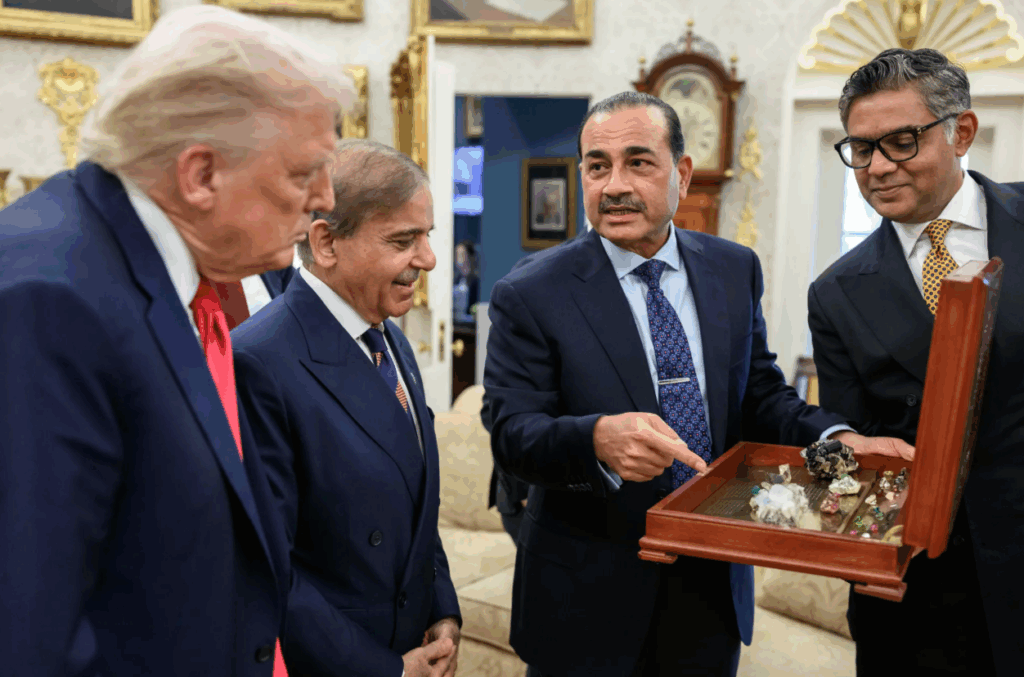
A Democratic Congress will be more able and more willing to probe the administration’s economic dealings abroad. That includes what critics regard as a Faustian bargain with Pakistan, where strategic indulgence has appeared to lead to crypto and other investments linked to the president’s family. While a Senate inquiry under Richard Blumenthal has examined possible conflicts of interest in these overseas crypto ventures since 2025, committee-level scrutiny will give such efforts teeth.
Now on the wrong side of his second term, and with legislative avenues closing, Trump is likely to expedite those ventures he regards as bearing his personal imprint. Trade deals are foremost among them, and India stands at the head of the queue with most sectors reportedly settled and only a last-mile hiccup remaining. The next two months could be crucial for the first tranche of the U.S.-India trade deal, which could in turn significantly expand the scope of trade between the two countries.
“For South Asia, then, the midterms signal less a change in American direction than a change in tempo—a president with less time, more oversight, and a sharper incentive to race toward signature outcomes.”
The Indo-Pacific continues to be important for the U.S., despite Washington’s shifting regional approach. As such, Trump’s turn toward the Western Hemisphere instead, along with its depleting appetite to play global policeman, will also be tested. One low-cost way to redirect energy is to impart momentum to the Indian Ocean Strategic Venture (IOSV), which India and the U.S. launched in February 2025 and whose reported agenda now spans capacity building, ports, and telecommunications in third countries in the Indian Ocean.
For South Asia, then, the midterms signal less a change in American direction than a change in tempo—a president with less time, more oversight, and a sharper incentive to race toward signature outcomes.
At Home or in the World?
By: Usama Nizamani
The U.S. midterm elections have flipped the political landscape of the last two years, and the ripple effects of the “blue tsunami” that has now delivered the Democrats an overwhelming mandate could reach far beyond Washington. At the center of this wave is the demographic shift of young voters prioritizing the concerns of the working class, including the economy, affordability and healthcare. South Asia will closely follow the outcomes that come of this political development.
First, the tariffs: Under President Trump, Pakistan, India, and other South Asian countries saw significant spikes in U.S. tariffs for their exports. Though many of the initial “Liberation Day” tariffs have since been changed, if not all immediately lowered, observers across South Asia will watch closely to see whether a Democrat-led Congress pushes back against the White House to reclaim its constitutional power and regulate tariff policy.
Secondly, the enduring domestic political contest between Democrats and President Trump could spill into attempts to investigate the administration’s overseas agreements for alleged corruption. These could include deals that Pakistan has struck with companies with ties to the Trump administration and family.
Thirdly, a Democrat-led Congress could more vociferously assert the importance of global democratic norms, which has been a less prominent diplomatic focus during the second Trump administration amid a global democratic decline. It will be worth watching whether Congress uses its significant political capital to shine a spotlight on democratic values or human rights issues in Pakistan and India, especially given American voters’ increasing ambivalence about U.S. engagement around the world.
Finally, Congress may have to grapple with India-Pakistan strategic stability dynamics, especially after the May 2025 crisis, and balance its outreach and engagement with Islamabad and New Delhi. Concerns around standoff capabilities and escalation risks, especially those in the nuclear domain, may lead Congress to seek a briefing from the Trump administration on crisis management and efforts to resuscitate dialogue between the two South Asian nuclear rivals. On the other hand, India and Pakistan could double down on their respective positions to try to build relationships in the new Congress: Islamabad may seek to amplify the role it has played in mediating between Tehran and Washington and its collective security responsibilities under the Mecca Defense Alliance; whereas New Delhi could seek to recenter the strategic conversation in Washington around the deepening of Beijing’s security cooperation with Islamabad and a possible refocusing on the Indo-Pacific.
More importantly, the larger question for South Asia will be about the balance that the incoming Congress will strike between addressing the pressing domestic issues that brought them to power and the foreign policy issues that impact people at home and abroad.
Filling in the Gap: India and Pakistan’s Place in Washington Post-Midterms
By: Anshi Pacha
On November 4, the day after the U.S. midterms, when asked about Israel, Senator-elect Abdul El-Sayed brought up Pakistan, telling NPR that in either case, he does not think Americans “pay our tax dollars to subsidize foreign militaries.” His skepticism reflects the mood of the incoming Democratic Congress, which might be far less willing to deal with Islamabad than the White House has been. The threat to Pakistan, though, is less about aid, which has been minimal since the first Trump administration froze all security assistance in 2018, than about access to the levers of government—an opening India is well-placed to exploit.
“Congress may not be able to set foreign policy priorities in the way that the White House can, but it can keep the partnership with India alive until the next president takes it up.”
After all, Pakistan did not just court the administration: It tied itself to Trump personally. Most notably, Islamabad formally recommended him for the Nobel Peace Prize for his efforts in bringing the May 2025 crisis with India to a close. But under the new Congress, efforts to receive greater U.S. support via deepening personal relationships with a now lame duck president may be coming to an end. Pakistan already has vocal critics within the Democratic caucus: Last December, 42 House Democrats sent a letter to Secretary of State Marco Rubio, urging him to impose visa bans and asset freezes on Pakistani officials over transnational repression.
When the 120th Congress convenes in January, Democrats will chair the committees that oversee foreign policy and appropriations. Among concerns about alleged corruption, the Democrats have vowed to investigate the Trump family’s business dealings. This means that several of Pakistan’s agreements involving Trump-linked businesses, such as a drone deal with Powerus, may get caught in the crossfire.
The same Nobel Prize logic that rewarded Islamabad under Trump cost New Delhi. Trump raised Pakistan’s nomination in a call with Prime Minister Modi and hinted that India should follow suit. Modi pushed back, and his refusal left a lasting strain on bilateral ties. The increasingly fraught U.S.-India relationship and tariffs regime targeting India have been unpopular among Democrats. However, because the current India tariff rates are set under an executive order, they cannot be easily overridden by a Democratic Congress. The Democrats’ plan to claw back Congress’s trade powers requires Trump’s signature, which they are unlikely to get.
While a Democratic Congress might not be able to hand India tariff relief, it could offer a friendlier ear. Notably, Eileen Laubacher, a former Defense Attaché at the U.S. Embassy in New Delhi, has won her race against Incumbent Representative Lauren Boebert in Colorado-4, and would be well-placed for a seat on the House Foreign Affairs Committee. Congress may not be able to set foreign policy priorities in the way that the White House can, but it can keep the partnership with India alive until the next president takes it up.
Views expressed are the author’s own and do not necessarily reflect the positions of South Asian Voices, the Stimson Center, or our supporters.
Also Read: Not a Reset, But a Pragmatic Refashioning of U.S.-Pakistan Ties
***
Image 1: Ted Eytan via Wikimedia