Editor’s Note: This article is part of South Asian Voices’ annual Year in Review series. Browse the full series page here.
What began as a year of presumed caution for Pakistan became an extraordinarily eventful one. Internationally, Pakistan found itself unexpectedly ascendant: ties with the United States warmed, the crisis with India was well-managed, and Islamabad assumed a growing role in Middle East security. Yet this geopolitical dynamism contrasted sharply with a troubled domestic landscape marked by an uptick in terrorism, deterioration in relations with Afghanistan, and worsening conditions for democracy and human rights.
Unlikely Upswing: Pakistan and Trump 2.0
With President Donald Trump’s return to the White House, many analysts assumed Pakistan would not rank high on Trump’s priority list in 2025. Yet as governments struggled to position themselves for Trump 2.0, Pakistan moved with unusual deftness. Islamabad recognized the fluidity and transactional nature of the new administration and sought to align with Trump’s personal and political interests; whether through cooperation against IS-K, critical minerals and oil exploration, or investments linked to the family-owned crypto exchange, Pakistan created convergences that few others moved to exploit, leading to broader economic and strategic deals, including the lowest trade tariffs in South Asia. Pakistan also leveraged Iran-Israel escalation and the Gaza war to position itself as an important international interlocutor. Islamabad publicly amplified Trump’s role in the India-Pakistan Crisis and Gaza Peace Agreement, nominating him for the Nobel Peace Prize in 2025 and 2026. This resulting upswing has yielded strategic dividends for Pakistan, most clearly in U.S. support on the India-Pakistan issue and in its widening political footprint in the Middle East.
May Crisis: Missiles, Mediation and Field Marshal
The year also witnessed one of the most intense military conflicts between India and Pakistan since the 1965 War. While the crisis trigger followed a familiar pattern, the methods employed and the outcomes defied expectation. On 22 April, militants attacked and killed 26 tourists in Pahalgam, in Indian-administered Kashmir. India accused Pakistan of involvement, which Pakistan denied. What followed was a brief but intense four-day (7-10 May) military conflict, with both sides employing cruise and ballistic missiles, drones, fighter jets, and information and electronic warfare. The U.S. reportedly helped secure a ceasefire on 10 May, a role for which President Trump claimed credit; while India vehemently denied this narrative, Pakistan welcomed it.
Within Pakistan, the Air Force’s shooting down of Indian planes, including Rafales, and broader, widely-circulated perceptions of a strong performance in the conflict galvanized public support for the hybrid political setup. Shortly afterward, General Munir was elevated to the rank of Field Marshal, becoming only the second officer to hold that rank since the President and Commander-in-Chief General Ayub Khan promoted himself in 1959.
Whether through cooperation against IS-K, critical minerals and oil exploration, or investments linked to the family-owned crypto exchange, Pakistan created convergences that few others moved to exploit, leading to broader economic and strategic deals, including the lowest trade tariffs in South Asia.
India and Pakistan both claimed victory in the conflict, and both governments gained domestic political capital. However, they have each drawn dissimilar lessons: India claims to have called Pakistan’s “nuclear bluff,” while Pakistan argues it restored deterrence. India’s unilateral abeyance of the Indus Water Treaty—a red line for Pakistan given its dependance on Indus Basin for agriculture and economic survival—and Pakistan’s expression of holding all bilateral agreements in abeyance, including the Shimla Agreement, further complicate South Asia’s fragile security environment. At the same time, increasing brinkmanship and signals from the Indian leadership that Operation Sindoor is not over present an ominous sign for Pakistan; in a future conflict scenario, faster escalation cycles, expanded target sets, and willingness to employ more advanced stand-off precision could push Pakistan toward riskier escalation options.
Between Gaza and the Gulf: Pakistan’s Rise in Middle Eastern Security
The volatility of 2025 in the Middle East was particularly relevant for Pakistan. Through carefully navigating its relations with Saudi Arabia and Iran in particular, Pakistan has secured itself a diplomatic and military role in Middle Eastern security.
Pakistan balanced a fine line as it strongly condemned the Israeli and U.S. strikes on Iranian safeguarded nuclear facilities and diplomatically stood by Iran, acting as an intermediary between Tehran and Washington. Recent high-level visits to Islamabad by Iranian leadership—including the the Secretary of the Iranian Supreme National Security Council, which formulates Iranian nuclear policy—as well as the Egyptian Foreign Minister, with the Iranian nuclear issue on his agenda, indicate a potential Pakistani role in addressing regional nuclear proliferation. Perhaps as a result of this careful diplomacy, Iran welcomed the Pakistan-Saudi Arabia Strategic Mutual Defense Agreement and recognized the agreement as “the beginning of a comprehensive regional security system.”
The agreement itself was signed following Israeli military strikes in Doha. For all that there have been both confirmations (public and anonymous) and denials around the question of whether this agreement entails extended nuclear deterrence for Saudi Arabia, the operationalization of such mutual defense guarantees will be an onerous task at odds with Pakistan’s policy of credible minimum deterrence. However, the agreement provides Pakistan with an important defense collaborator with the necessary financial resources. In addition, the signing of this agreement as well as its performance in the May 2025 crisis have increased Pakistan’s stature in the Middle East, with Iran and others reportedly expressing interest in similar collective security arrangements. There are also discussions of a multilateral, NATO-like collective security arrangement among the Gulf Cooperation Council, with other Muslim states as its members. Pakistan could be well-placed to provide the necessary muscle for such an arrangement, but such an alliance would be challenged by differing threat perceptions across the member states.
Lastly, Pakistan played an active role in the diplomacy leading up to the U.S.-brokered Gaza Peace Agreement. Though there have been many reports of repeated Israeli violations of the agreement in the months since it was signed, questions remain over the role Pakistan and its military would play in the International Stabilization Force. While Pakistan’s involvement may be an acknowledgement of its political and military stature within the Muslim world, it could also put unnecessary diplomatic pressure on Pakistan in case of any untoward incident.
Pakistan’s role in Middle Eastern security is likely to take center stage in 2026. However, it will have to balance between U.S. and Chinese interests in the region, where the former has been the traditional security provider and the latter is seen as deepening its influence. Furthermore, it remains to be seen how this will affect India’s longstanding economic relationships with Middle Eastern countries and its plans for an India-Middle East Economic Corridor.
In many ways, 2025 proved to be the death knell for Pakistan’s policy of strategic depth in Afghanistan.
Proxy Wars, Border Strikes, and the Afghan Reckoning
The TTP continued its attacks in 2025, targeting security forces, government officials, and infrastructure, including a suicide attack on the Federal Constabulary headquarters in Peshawar and the hijacking of Cadet College in Wana. In Balochistan, in its most brazen attack of the year, the BLA hijacked the Jaffar Express train in March with 400 passengers on board, which led to the death of 23 passengers and 33 militants. Since then, the Jaffar Express has been attacked multiple times, though unsuccessfully.
These attacks have not been limited to the border areas: In November, a TTP suicide attack rocked Islamabad’s district court, leading to the death of 12 people—the first attack in Islamabad in a decade. Pakistan argues that these attacks form part of India’s proxy war, accusing its eastern neighbor of providing material, logistics, and intelligence support to groups that largely operate from Afghanistan. India denies these allegations.
In an attempt to meet this challenge, the Pakistani government, under Operation Azm-e-Istehkam (2024), has continued employing both kinetic and non-kinetic actions, along with pressing the Taliban government to rein in these groups. However, Pakistan’s long-simmering frustration with the inability or unwillingness of the Taliban government to control cross-border militancy finally came to an end in 2025: On 9 October, Pakistan carried out cross-border strikes targeting TTP leadership and fighters in the cities of Kabul, Khost, Jalalabad, and Paktika. The Afghan Taliban retaliated two days later, striking Pakistani forces on the border. This led to a sequence of heavy strikes and counter-strikes that lasted until 19 October, when Qatar mediated a ceasefire.
Since then, Pakistan has downgraded diplomatic ties, referring to the Taliban as “the regime in Afghanistan.” There has been a suspension of trade, frequent and indefinite border closures, and a ramp-up in rhetoric against the Taliban, with the forced expulsion of Afghan refugees becoming the casualty of cross-border tensions. The two rounds of Qatar-Turkey mediated dialogue remained inconclusive because of Pakistan’s view of growing factionalism within the Taliban, particularly competing centers of authority between Kandahari hardliners and Haqqani aligned elements; the Saudi-facilitated dialogue in December also has not borne much fruit. In many ways, then, 2025 proved to be the death knell for Pakistan’s policy of strategic depth in Afghanistan.
As the year comes to an end, the Taliban-militancy nexus will remain an enduring policy issue for Pakistan, where future cross-border kinetic operations are likely even if their utility will be limited. Pakistan’s remaining economic or diplomatic leverage may not be enough to compel a change in the Taliban’s ideological stance on the TTP. Without a negotiated solution, Pakistan will continue to face a severe threat to its internal security.
Pakistan’s Domestic Turbulence in 2025
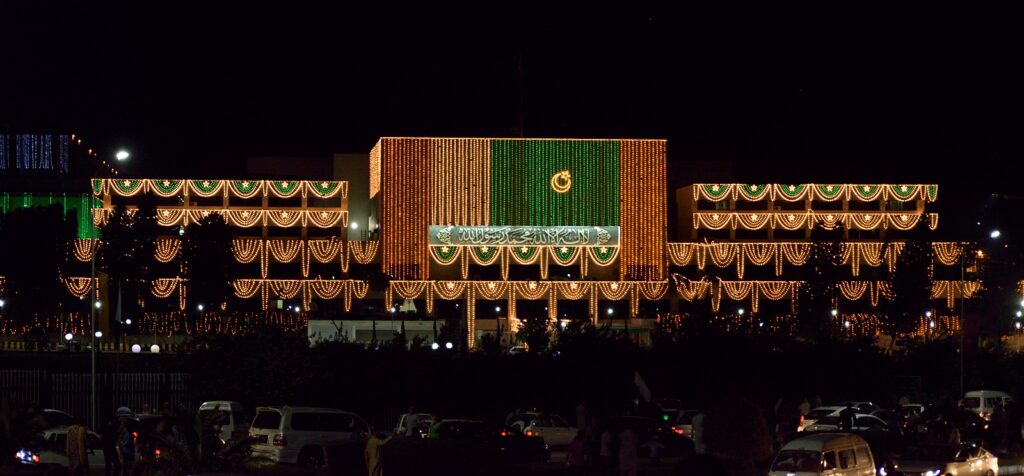
2025 was a difficult year at home across multiple fronts—constitutional changes, civil liberties, electoral legitimacy and mounting economic and environmental pressures.
The 27th Amendment: Reshaping the State
While the controversy of the 26th Constitutional Amendment—which moved the Chief Justice’s appointment to Parliament and raised alarms about judicial independence—had not yet subsided, the 27th Amendment made further modifications to the 1973 Constitution. The new amendment brings sweeping changes to the judicial structure that affect the separation of powers. It establishes a Federal Constitutional Court (FCC) which takes over the role of the Supreme Court (SC) in constitutional interpretations, thereby limiting the SC’s powers. Controversially, the Chief Justice of the new FCC will be appointed by the President on advice of the Prime Minister. Further, under the amendment, judges of the High Courts can now be transferred to other provinces without their consent, thus increasing executive control over the judiciary. The lifelong immunity provided to both the President and Field Marshal of Pakistan further entrenches elite control over the state. The manner of the amendment’s approval and its contents have drawn criticism from within Pakistan and the international community, with even the UN Human Rights Commissioner expressing concerns about “the principles of democracy and rule of law.”
Press Freedom and Electoral Legitimacy Under Strain
Pakistan has fallen further down the Press Freedom Ranking. Reporters Without Borders’ annual report downgrades Pakistan from 152 in ranking in 2024 to 158, owing to political-military influence over the media and politics and the increasingly draconian amendment to the Prevention of Electronic Crimes Act 2016, which grants government sweeping controls over social media and online content. By-elections in November were marred by “by recurring violations of campaigning restrictions [and] gaps in results transparency,” according to the Free and Fair Election Network. There has also been a further crackdown on opposition political parties like PTI, with the government reportedly contemplating enforcing governor’s rule in the PTI-led province of Khyber Pakhtunkhwa. This would strip the provincial government of its powers and place the province under direct federal control, thereby weakening PTI’s authority over the region.
Floods, Fiscal Pressures, and the 2025 Economic Snapshot
Pakistan’s economy reported a modest rebound compared to 2024, with a growth estimate of 3.0%. However, the government’s own figures suggest that devastating floods in 2025 wiped 0.5% off the GDP and pushed inflation from 0.3% in April to 6.1% by year’s end, driven by food shortages and supply chain disruptions. Efforts to stabilize the economy were further challenged by a return of the current account deficit and the IMF’s report highlighting corruption in state-dominated enterprises. The rapid expansion of small and utility scale solar adoption offered some energy relief, but legacy independent power producers’ contracts and circular debt continued to limit these fiscal gains. While the government has undertaken serious reform attempts, 2026 is likely to see stable but low growth, with persistent economic and environmental pressures continuing to constrain performance.
What Does 2026 Have in Store for Pakistan?
Despite shaky domestic foundations, Pakistan projected unexpected strengths abroad in 2025. It demonstrated diplomatic agility by turning Trump 2.0 into a strategic opening, expanding cooperation from counterterrorism to minerals, energy, and trade. The May Crisis with India, despite regional deterrence risks, reinforced perceptions of Pakistan’s military competence. Pakistan’s geopolitical profile increased as a result of its growing involvement in Middle Eastern security, but it also linked the nation to unstable regional rivalries and great-power competition.
These external gains, however, are tempered by domestic fragilities. Pakistan faces a hostile Taliban regime and a persistent TTP threat, a decline in democratic norms and institutional balance, and economic pressures from floods, inflation, and corruption. These challenges will continue to constrain Pakistan in 2026.
The unpredictability of 2025 discourages confident forecasts for the year ahead. Still, two expectations are safe bets: It would be shortsighted to write off Pakistan’s ingenuity at navigating unexpected developments internationally, but by that same token, any gains abroad will likely remain limited by domestic, political, economic and security constraints.
Views expressed are the authors’ own and do not necessarily reflect the positions of South Asian Voices, the Stimson Center, or our supporters.
Also Read: Firebreak or Fuse? Pakistan’s Rocket Force and the Deterrence Dilemma in South Asia
***
Image 1: The White House via Whitehouse.gov
Image 2: TahirSultanBhutta via Wikimedia