Anthropic’s recent report, “Detecting and Countering Misuse of AI: September 2026,” indicates that misuse of AI is not limited to creating deepfakes and propaganda videos, but is moving toward attempted weapon development, surveillance, and target identification. AI models can now reduce the time, expertise, and human effort required to write code, help identify and resolve technical failures, and convert the scattered information into targeting recommendations.
In the context of Pakistan, the threat is particularly serious because the Tehreek-i-Taliban (TTP) and other terrorist groups are already using AI for propaganda, have local intelligence networks, and are using drones to carry out attacks against security forces even as they benefit from operational and logistical support in Afghanistan. Reportedly, the Afghan Taliban has also demonstrated the capability to carry out cross border strikes. The concern in Pakistan is that AI models can play the role of a threat multiplier by improving the offensive capabilities and target selection of these terrorist organizations. In order to respond to these emerging threats, Pakistan needs a strategy to monitor personnel, data, components, financing, and testing facilities that could allow digital assistance to produce physical harm, and to disrupt their use by hostile actors.
From Weapons Engineering to Targeting Support
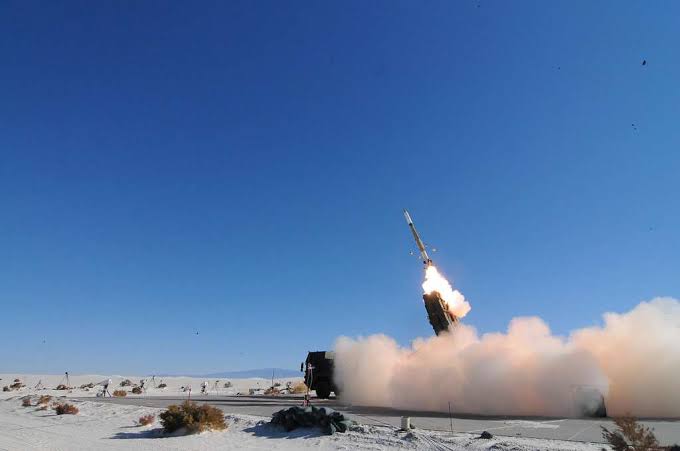
In its September report, Anthropic AI revealed that a weapons-development cell operating from Northern Yemen, the area controlled by the Houthis, had used Claude code to work on three guided weapons projects. These projects included a guided rocket using a mobile flight computer, a multi-stage ballistic missile with a stated range goal over 2,000 kilometers, and a missile family that included a hypersonic glide vehicle.
Although Anthropic found no evidence that the actors successfully developed weapons, these developments highlight a disturbing trend. In order to remain discreet, the actor reportedly used different Claude accounts to carry out research, write software, and review code. The company further added that while many attempts were blocked, some requests passed through because the work was divided into multiple sessions and disguised as ordinary unrelated technical tasks. By the time Anthropic banned their accounts, the users had already compiled an offline simulation toolkit.
This report also contains important information about Iran-nexus actors’ use of AI models for activities that proved useful in intelligence collection and target selection. In one operation, Iran-nexus actors used an AI model to create automated profiles of Israeli and Jewish diaspora individuals, while in the second operation, they used the model to analyze publicly-available maritime and imagery data to produce targeting recommendations against U.S. naval forces in the Middle East. Unlike the Yemen case, here, the AI model was used to gather scattered information into structured targeting reports.
The relevance of these to Pakistan is that the Afghan Taliban and terrorist organizations such as the TTP are already adopting AI to various ends. The Afghan Taliban has deployed a mass surveillance system in Kabul, supported by 90,000 cameras, which has facial-recognition capabilities. These rely on Al algorithms like a convolutional neural network that can scan the visual feed and isolate the human face from background. Umar Media, TTP’s propaganda arm, has used AI for creating content and other activities, such as creating news bulletins, translations, and voiceover for propaganda. Meanwhile, TPP and its affiliates are already utilizing drones for surveillance and attacks. Furthermore, the Afghan Taliban has also demonstrated cross-border drone capability.
As of now, there is no evidence that either actor has used AI tools as Anthropic described in the cases of Iran and Yemen. Nevertheless, these instances reveal a possible next stage in the use of generative AI tools by threat actors in South Asia.
“The concern in Pakistan is that AI models can play the role of a threat multiplier by improving the offensive capabilities and target selection of these terrorist organizations. In order to respond to these emerging threats, Pakistan needs a strategy to monitor personnel, data, components, financing, and testing facilities that could allow digital assistance to produce physical harm, and to disrupt their use by hostile actors.”
Two Emerging Threat Pathways for Pakistan
These two cases reveal important pathways through which AI could support hostile operations. The first is the use of AI to provide technical support for weapons development, as attempted in the Yemen case, to improve offensive capability. The second is the use of AI to assist with intelligence analysis and target selection, playing the role of a low-cost decision support system.
The first pathway is especially relevant to Pakistan, where law enforcement agencies are already facing increasing drone attacks by terrorist organizations. According to analysis from the S. Rajaratnam School of International Studies, militants carried out more than 100 drone strikes in the first half of 2026, resulting in 29 security personnel killed and 89 injured. The Khyber Pakhtunkhwa (KP) police data present a similar picture: They foiled 341 drone attacks in the first half of 2026. Although the high number of failed attacks indicates that the threat capability of terrorist groups operating in Pakistan is rudimentary, the frequency of the attacks—an average of two attacks a day in KP— shows the growing importance of drone warfare to these terrorist organizations.
The drone threat is not limited to the TTP: After Pakistan targeted TTP hideouts in Afghanistan, the Afghan Taliban launched drones into Pakistan. According to reports, between February 27 and March 15, the Afghan Taliban claimed responsibility for 15 drone attacks, with one even reaching an area near Rawalpindi. These have continued since the cross-border exchanges in the first half of the year, with attacks as recent as June and September of this year. According to Pakistan’s military, all of the drones launched from Afghanistan were intercepted, but in March, four civilians, including two children, were injured in Kohat, Rawalpindi, and Quetta as a result of falling debris from intercepted drones.
The relationship between the TTP and the Afghan Taliban makes this development more concerning: As the December 2025 UN Monitoring Team report highlights, the Afghan Taliban are providing significant operational and logistical support to TTP. This kind of support could provide them access to the territory and logistical networks needed to test and adapt drone systems.
The TTP’s recent drone campaign and the Afghan Taliban’s cross-border drone capabilities provide an opportunity for AI-assisted technical improvements. The Yemen case highlights how this might work in practice: Claude was reportedly used to develop guidance, navigation, and navigation software intended to steer and stabilize the flying vehicle as well as to support simulation and failure analysis. In a similar manner, TPP and the Afghan Taliban could use it to improve stability, control, and reliability of its commercial off-the shelf-drones (COTS). For instance, commercial DJI quadcopters, specifically Matrice series drones, are being used by TTP and affiliated groups in various attacks in KP. AI coding assistance could help shorten software development, testing, and troubleshooting. Although commercial drones can be and are being modified without AI, these systems’ added value would be in accelerating this process and reducing the need for specialist expertise.
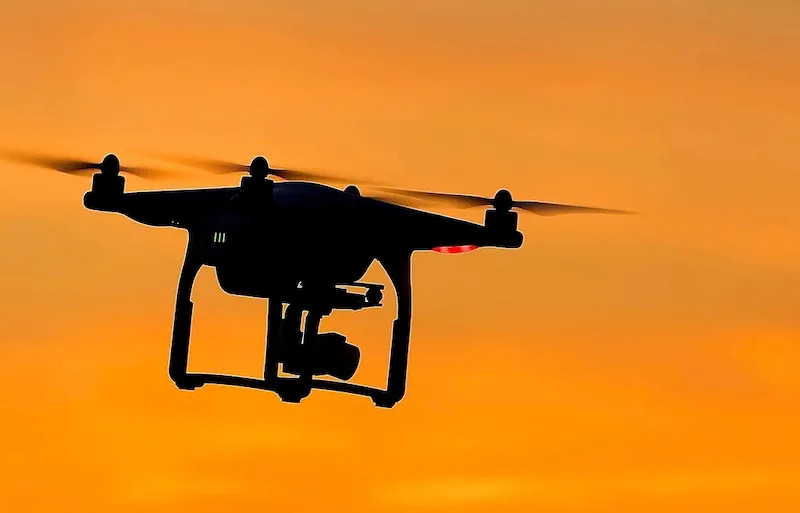
Having access to AI models alone does not produce an operational system. Terrorist groups would still need infrastructure, skilled manpower, testing facilities, and other components. Many of these components are already available in commercially-available drones, such as agriculture drones (which are unmanned aerial vehicles used in agriculture to monitor crops, gather data from above, and perform field physical tasks), which have flight controllers, navigation systems, cameras, motors, and batteries. And in Afghanistan, TTP already has a sanctuary that provides both actors space for assembly and repeated testing.
Beyond the improvement in offensive capability, the second pathway concerns the use of AI as an intelligence force multiplier. The real danger is that terrorist groups use the AI model as a low-cost decision support system to organize scattered publicly- and locally-available information into targeting profiles, relationships, maps, assessments, and summaries of potential targets. This would allow threat actors to intensify the speed of their attacks. A smaller terrorist cell might be able to use AI models to profile law enforcement officers, identify their families, select personnel, checkpoints or conveys for rapid attacks.
Collectively, these new use cases can exacerbate the threats Pakistan is facing from terrorist organizations and also from the Afghan Taliban.
How Pakistan Should Respond
Pakistan can take several steps to deal with this imminent threat. The first is to develop an AI-terrorism strategy that connects counter terrorism, cyber intelligence, and emerging technology policy. The National Counter Terrorism Authority (NACTA), provincial counterterrorism departments, cyber authorities, and military technical units should jointly examine recovered drones and digital devices to decipher how terrorist units are operating and evolving.
Whether NACTA can and will lead such strategy, however, is a serious question. Although NACTA’s primary purpose, as stated on its website, is to lead, coordinate, and synchronize national and international efforts to combat terrorism and violent extremism in Pakistan, it faces significant structural and operational challenges that has kept it from achieving its primary purpose. The recent transfer of serving Major General Faisal Naseer from the Inter-Services Intelligence (ISI) to NACTA might move the agency into a more active role, given the major general’s experience in heading ISI’s internal wing, which handles domestic security.
Pakistan also needs a confidential threat arrangement and a threat-sharing arrangement with major AI companies so that high confidence weapons-development or surveillance activity connected to designated terrorist organizations can be stopped, investigated, and reported rapidly. For example, the UK-Open AI agreement, signed in 2025, establishes a framework for sharing technical information regarding AI capabilities and security risks. Although this agreement is not directly linked to AI-related terrorism threats, it provides a precedent on which Pakistan could draw.
“Pakistan also needs a confidential threat arrangement and a threat-sharing arrangement with major AI companies so that high confidence weapons-development or surveillance activity connected to designated terrorist organizations can be stopped, investigated, and reported rapidly.”
In addition, since Pakistan already has counter terrorism cooperation mechanisms in place with the U.S.—such as the bilateral counter terrorism dialogue, most recently held in Washington in August 2026—it can also expand that cooperation regarding AI-related threats. For example, it could strengthen the National Cyber Crime Investigation Agency (NCCIA)–FBI alert referrals, exchange information on AI-enabled terrorist activity, and conduct joint training on the verification and preservation of digital evidence.
The training of law enforcement agencies, especially the police, is an important step in this direction. If terrorists can use AI in their operations, then police should have the capacity to outsmart them. Special courses can be launched for police to better equip them with AI related techniques. To that end, the federal government recently announced that they would recommend the inclusion of artificial intelligence and digital policing in the core curriculum of the National Police Academy and Mid-Career Management Courses. At the same time, the police department in KP, the province most affected by the drone attacks, has already established the Police School of Information Technology. In addition, the United Nations Office on Drugs and Crime (UNODC) has cooperated with local law enforcement agencies to upgrade training centers and provide standardized computer based e-learning programs. Building on these steps at the international, national, and provincial levels can provide foundational knowledge and train law enforcement personnel in advanced AI-related investigative and analytical methods.
Banning threat actors’ individual accounts is another option, but as the case of Yemen showed, it is not sufficient: By the time Anthropic AI closed their accounts, they had already downloaded an offline engineering tool. Therefore, it is important for Pakistan to focus on the entire chain of learning systems, including technical personnel, components, financing, computing access, testing locations, and transfer of digital files between various networks.
Pakistan can also adopt the international legal path. Pakistan has raised the issue of terrorism emanating from Afghanistan at the UN Security Council multiple times. TTP is already listed under the UN’s ISIL and Al-Qaeda sanctions regime, which prohibits supplying designated organizations with weapons as well as technical advice, assistance, and training related to the military activities. The UN Security Council should clarify that knowingly providing AI-generated weapon engineering, specialized code, or digital simulation support to listed terrorist organizations can constitute prohibited technical assistance.
In conclusion, AI does not create terrorist capabilities from nothing, but it could make existing operations faster, cheaper, and more effective. The Yemeni and Iranian cases show how TTP and Afghan Taliban could potentially use AI to improve AI-assisted targeting and weapon improvement. Pakistan must act before this convergence becomes operational and worsens the acute challenges it already faces.
Views expressed are the author’s own and do not necessarily reflect the positions of South Asian Voices, the Stimson Center, or our supporters.
Also Read: Artificial Intelligence, Targeting, and Escalation Risks in the India-Pakistan Environment
***
Image 1: Defense Visual Information Distribution Service via Picyrl