The northern Indian Ocean is an operating environment characterized by vast space, asymmetric threats, uncertainty about adversary intentions, and the proliferation of advanced military technologies. In this environment, the development of India’s and Pakistan’s respective maritime forces reflects their efforts to operationalize kill chains by integrating sensors, shooters, and command-and-control systems into networks that can detect, decide, and strike before an adversary can disrupt the process. Consequently, naval competition is increasingly shaped by a state’s ability to sequentially generate situational awareness, process information rapidly, and execute time-sensitive strikes across extended ranges.
Strike capabilities are key to shaping the efficacy of Indian and Pakistani naval kill chains by extending operational reach, compressing decision timelines, and enhancing the ability to threaten adversary forces across the maritime battlespace. With the development of advanced strike capabilities, both navies are increasing their dependence on sensor networks, communication nodes, and command and control systems. But their effectiveness depends less on destructive power alone than on their integration within a kill-chain architecture characterized by speed, connectivity, and resilience.
Naval Kill Chain and Maritime Warfare
A kill chain is the sequence through which a target is detected, identified, tracked, targeted, engaged, and assessed. Commonly described as the Find, Fix, Track, Target, Engage, and Assess (F2T2EA) process, the kill chain links sensors, decision-makers, and weapons into a coherent operational system. Its purpose is to convert information advantage into combat effects faster than an adversary. To achieve this information and decision advantage in a vast and dynamic maritime domain with mobile targets, the naval kill chains rely on distributed sensing networks across space, air, surface, and subsurface domains.
For a naval kill chain to be effective, strike capabilities are required to persist in a changing maritime environment, maintain connection between sensors, commanders, and strike platforms, and remain resilient. These requisites will help strike capabilities to generate situational awareness and to attribute and establish deterrence.
The two navies have adopted different approaches to build effective naval kill chains in line with their respective maritime doctrines. […] However, the effectiveness of both chains will depend on real‑time data fusion, electronic‑warfare resilience, and the ability to sustain operations under attrition.
Naval Strike Capabilities and Kill Chains of India and Pakistan
The latest Indian Maritime Doctrine 2025 (IMD-25) devises a doctrine based on sea control and power projection across the Indo-Pacific under new conditions of No-War No-Peace (NWNP). NWNP dictates that Indian maritime forces have continuous heightened readiness and capability of conducting kinetic response across grey zones and multi-domains, including the underwater domain, during peace and war. This highlights the need in the Indian naval kill chain for unhindered speed, surprise, and influence through information.
Comparatively, the first ever Pakistani maritime doctrine, “Preserving Freedom of Seas,” emphasizes sea denial and coastal defense. The key idea for maritime forces is to deter aggression from the sea along with providing support to coastal communities and disaster relief operations. The doctrine does not restrict the presence of Pakistan’s maritime forces to the Arabian Sea; instead, it applies the sea denial approach to the Indian Ocean Region. This highlights the need for speed, distributed operations, and the ability to complicate adversary’s operations in the Pakistani naval kill chain.
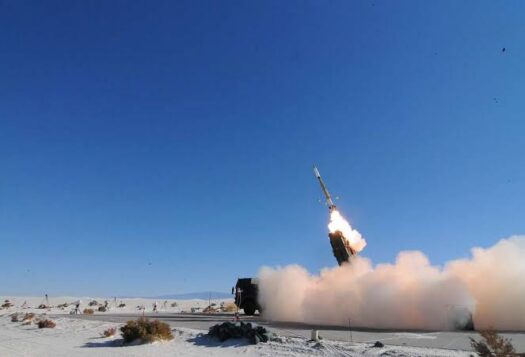
The kill chains of India and Pakistan differ in platform diversity, scale, and redundancy. India’s is a broad and multi-domain kill chain (see Table 1) with two key nodes. The first is its extensive space-based assets that provide communication, synthetic aperture radar (SAR), and high-resolution optical imagery in all-weather conditions to strengthen all stages of the kill chain. The second key node includes its strike capabilities, most notably its BrahMos and SMART missiles. When cued with timely sensor and C2 data, the supersonic BrahMos is capable of compressing the phase from targeting to engaging, while SMART is a missile-assisted torpedo canisterized system that extends anti-submarine warfare (ASW) reach by carrying a lightweight torpedo to a distant splash point before its terminal search. Together, these capabilities lay out a layered sensor-to-shooter network that syncs with India’s maritime doctrine.
Pakistan’s kill chain also covers all stages of F2T2EA (see Table 2), but is more streamlined and prioritizes integration over extensive redundancy. Earth Observation (EO) satellites are expanding Pakistan’s surveillance capabilities, but currently they provide less persistent and mission-tailored naval coverage, with their focus mainly on littoral waters, than India’s larger satellite constellation. Similarly, the integration of the ADVENT CMS and ASELSAN ESM suites strengthen networked operations, particularly the Track and Engage stages. Furthermore, Pakistan fields a diverse inventory of cruise missiles including Harbah, the Taimoor, and Babur‑3, and is developing the SMASH ship-launched ballistic missile, which improve penetration and enhance overall force survivability.
Overall, the two navies have adopted different approaches to build effective naval kill chains in line with their respective maritime doctrines. India’s extensive, layered sensor and communication architecture offers persistence, extended operational reach, and redundancy; whereas Pakistan pursues a streamlined architecture that relies on integration, mobility, and survivable strike capability. However, the effectiveness of both chains will depend on real‑time data fusion, electronic‑warfare resilience, and the ability to sustain operations under attrition.
Comparative Assessment of Indian and Pakistani Naval Kill Chains
The Indian and Pakistani naval kill chains reflect different operational approaches and priorities, with India optimizing for sea control and power projection under its new NWNP conditions and Pakistan for sea denial. Instead of comparing platform numbers, the following comparison aims to assess how well the two kill chains meet the three key requirements.
Persistence and Situational Awareness
Persistence is essential for effective naval kill chains because maritime targets are mobile and often difficult to detect. India builds persistent maritime domain awareness through satellites, an expanding P-8I fleet, coastal radar networks, shipborne sensors, and maritime information-fusion mechanisms. Here, the satellites provide wide-area, continuous persistence, while the P8-I aircrafts provide high-fidelity tactical sensing and ASW capability. Together, these capabilities support the Indian Navy’s NWNP philosophy as well as strengthen Find, Fix and Track stages of the kill chain.
In contrast, Pakistan’s surveillance architecture relies primarily on the Z-9EC Harbin ATR-72 Sea Eagle and Sea Sultan MPA, coastal surveillance systems, and surface and sub-surface sensors. Collectively, these assets provide situational awareness in line with Pakistan’s maritime doctrine of sea-denial and maritime operations in a more geographically constrained battlespace by improving the Find, Fix and Track stages. Although Pakistan’s growing EO satellite capability is expanding its surveillance, it currently offers less than continuous persistence. The latest induction of long-range maritime patrol aircraft, namely the Sea Sultan, will likely improve persistent awareness of the northern Indian Ocean region and cover approaches beyond Arabian Sea.
However, persistence alone does not guarantee effective targeting: Information must also be transmitted rapidly between sensors, decision-makers, and strike platforms.
Connectivity and Command-and-Control
Once information is collected, the effectiveness of naval kill chains hangs on transmitting, processing, and disseminating it accurately and rapidly among sensors, shooters, and strike platforms.
On the one hand, the connectivity within the Indian naval kill chain depends on the nodes that connect satellites, platforms, its maritime fusion center, and its national command, control, community, and intelligence (NC3I) to transmit real-time data to naval operational units. The indigenously-developed tactical data communications suite, Link II, provides secure real-time exchange of information across the kill chain. Regardless of this integrated and dense connectivity, the Indian naval kill chain still faces the common challenge of translating surveillance data into weapon-grade targeting data. This can impact the Find, Fix and Track stages of the kill chain. On the other hand, Pakistan’s naval kill chain depends on the Naval Information Exchange System (NIXS) and data links that integrate naval aviation, sensors, and ships to support over-the-horizon (OTH) targeting and facilitate information sharing.
The distinction between the two kill chains is not in technology, but in architecture. India’s larger satellite constellation provides persistent, all-weather intelligence, surveillance, and reconnaissance (ISR) and secure military communications. Pakistan’s relies more on long-range maritime patrol aircrafts supported by a smaller dual-use but growing satellite fleet to provide wide-area reconnaissance, trading satellite persistence for airborne flexibility and faster redeployment.
Regardless of the scale of strike capabilities and the level of coordination, information sharing across the kill chain is still vulnerable to cyber-attacks and electronic warfare. Therefore, the kill chains depend on the resilience of communications networks and the successful integration of a diverse range of sensors and platforms.
Resilience and Survivability
Resilience enables kill chains to continue function despite operational attrition, cyber disruption or interference, and electronic warfare. It involves two complementary characteristics: redundancy and survivability. Redundancy involves using multiple communication nodes and weapon systems, a distributed network of sensors, and propulsion design to ensure continuity of the kill chain during times of crisis; survivability involves a ship’s ability to minimize its vulnerability and susceptibility to attack, and to contain and restore from damage to ensure the kill chain endures and operates during a crisis.
The Indian naval kill chain, as shown in Table 1, derives its resilience from an extensive network of satellites, different surveillance platforms, communication systems, and maritime C2 and fusion centers, along with multiple communication pathways. This reduces dependence on a single node, highlighting redundancy. Moreover, the Cooperative Engagement Capability (CEC), a network-centric warfare enabler, enhances this architecture through jam-resistant data links, enhanced situational awareness, improved interception at longer ranges, and layered defenses. From the AK-360 close-in weapon systems (CIWS) providing point defense and interception to the Barak‑8 interceptor offering extended terminal engagements, and from fire-control radars to electronic warfare suites such as Ajanta and Ellora (as shown in Table 1), the naval kill chain is structured for a distributed, jam-resistant terminal defense. However, an adversary could overwhelm Barak-8 and AK-630 CIWS through saturation attacks and terminal evasive maneuvering. This limitation is less acute against Pakistan’s missile inventory, which can launch a saturated attack to put India’s defenses under stress but, at the moment, have limited terminal maneuvering. The stealth design and electronic countermeasures of modern surface combatants enhance survivability. The overall transition toward network-centric warfare is a step toward ensuring the survivability of the kill chain.
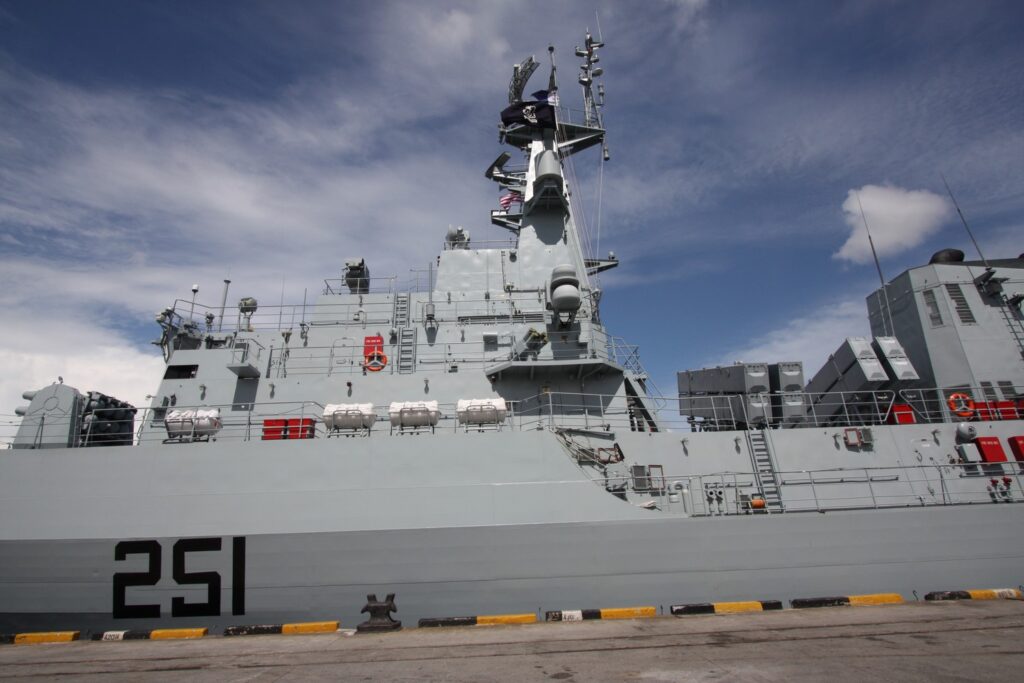
Comparatively, the Pakistani kill chain derives resilience from a model that relies on efficient integration of a smaller number of assets. Here, the NIXS, based on an open and flexible design that allows information to flow between ships and sensors reliably in real-time without depending on any single node, is key to shoring up redundancy and survivability. At the strategic level, the Babur-3 SLCM enhances resilience by providing a survivable second-strike capability, while the Hangor-class submarine and the integration of stealth and electronic warfare suites in its vessels enhance survivability further. The growing EO satellite capability is also improving redundancy. However, these assets currently supplement rather than replace airborne persistence.
There are two different models of resilience. The Indian model relies on redundancy through an extensive and layered sensor network that enhances operational reach and persistence but increases C2 complexity. Pakistan’s is a leaner and more integrated model that relies on efficient networking and survivable platforms to support its sea-denial strategy, but its smaller surveillance layer is vulnerable to the loss of a high-value asset. Its terminal defenses, including short-range surface-to-air missiles (SAMs), the Type-730 and GOKDENIZ CIWS, and electronic warfare suites provide point defense against subsonic sea-skimming missiles, but can be overwhelmed by a saturation attack and terminal evasive maneuvering, such as the terminal weaving of India’s BrahMos missile.
Both [India and Pakistan’s] trajectories characterize regional naval competition by shifting emphasis from the sophistication of individual platforms to resilient, integrated kill chains.
Conclusion
A naval kill chain depends on uninterrupted sensor fusion and distributed, jam-resistant terminal defense. However, an adversary can break that chain by exploiting structural vulnerabilities. An adversary could target critical nodes such as fire-control radars, or degrade data links through jamming, spoofing, and cyber-attacks, or overload sensors with data. If connectivity is compromised, then even a layered architecture becomes vulnerable to single-point degradation. These vulnerabilities are particularly important to consider as both the Indian and Pakistani navies have embarked upon different modernization trajectories.
Going forward, India’s transition to network-centric warfare and robust network interoperability through indigenization and technological upgrades will be challenged by its legacy platforms and its adversary’s advanced electronic warfare systems. On the other hand, Pakistan is modernizing its navy through joint ventures with China and Turkey to protect Gwadar and its sea lines of communication, balancing scalable foreign support with the long‑term benefits of indigenization. Both trajectories characterize regional naval competition by shifting emphasis from the sophistication of individual platforms to resilient, integrated kill chains.
The effectiveness of both kill chains depend on their ability to maintain information superiority under operational attrition, cyber attack, and electronic warfare. Both states have developed systems to forge this connectivity; however, the compressed timelines of any missile flight in a conflict in South Asia are a challenge that automated networking, electronic warfare, deception, and defense-in-depth can address. It is perhaps only a matter of time until India and Pakistan deploy those solutions and address challenging find-to-engage timelines, and increase the survivability and credibility of kill chains. While this could strengthen deterrence, at the same time, automation raises the risk of miscalculations and complicates crisis signaling if human-in-the-loop safeguards are weak. This necessitates both India and Pakistan work toward codifying automated engagement rules and confidence-building measures to preserve strategic stability in the IOR.
Views expressed are the author’s own and do not necessarily reflect the positions of South Asian Voices, the Stimson Center, or our supporters.
Also Read: Beneath the Surface: Pakistan’s Hangor Submarine and Maritime Deterrence in South Asia
***
Image 1: British High Commission, New Delhi via Flickr
Image 2: Mak Hon Keong via Wikimedia