In June 2025, the United States’ Department of War announced that it had renamed the Indo-Pacific Command (INDOPACOM), a geographic combatant command established in 1947 to integrate U.S. forces in Asia-Pacific in service of national security objectives, back to its original of Pacific Command (PACOM). This reversal in nomenclature has been perceived by many in the Indian strategic community to indicate a significant shift in U.S. policy towards South Asia, with Washington potentially withdrawing from the sub-theater of the Indian Ocean and India left to manage the region largely alone. However, the shift in nomenclature should not be read as a complete U.S. pull back from the IOR. Instead, it can be an opportunity for the United States and India to pursue more focused cooperation in the region, especially with regard to operational readiness, while managing a rising China.
Misaligned Objectives
In 2018, PACOM was renamed INDOPACOM to reflect the renewed U.S. focus toward its West, as it formally acknowledged the interconnectedness between the Pacific and Indian Oceans. This interconnectedness was demonstrated through institutional linkages, joint and combined exercises, and regular high-level engagements with allies and partners to advance interoperability. Moreover, this shift in nomenclature was initiated to manage a rising China and to center India in U.S. plans to balance against Beijing, cementing New Delhi as a potential bulwark.
The key goals of the INDOPACOM renaming have not been achieved due to New Delhi and Washington’s differing politico-military objectives, methods, and mode of engagement.
However, despite concerted efforts, the Indian and the Pacific Oceans could not emerge as a unified operational entity in the INDOPACOM era. This was due to divergences in how the United States and India viewed the “China threat” at the strategic and operational levels. For instance, Washington had envisaged the fusion of the Indian and the Pacific Oceans as one singular space to counter China, with a critical focus on the First Island Chain, to protect it against further Chinese intrusion while assuming at least some logistical or operational support from New Delhi in a Taiwan or South China Sea contingency in the future. To enable this, Washington had expressed willingness to increase defense cooperation and advance interoperability with India while offering it consistent support in managing the continental border with China. However, it would be highly unlikely that India would ever consent to engaging with the United States in a direct military conflict against China, due to existing military asymmetries between Beijing and New Delhi. For instance, the Indian Navy consistently maintains that Taiwan lies outside its primary area of responsibility, with the IOR being its main concern, and New Delhi engages in what many analysts term limited hard balancing across the Indo-Pacific to avoid openly countering China.
Thus, the key goals of the INDOPACOM renaming have not been achieved due to New Delhi and Washington’s differing politico-military objectives, methods, and mode of engagement. However, the reversal in nomenclature potentially allows both sides to reset expectations and have a practical discussion on their threat perceptions in the Indian Ocean and how they can feasibly tackle them together.
China as the Binding Threat
Beijing’s increasing forays into the IOR through the provision of conditional aid to vulnerable countries, employment of grey-zone activities, construction of dual-use infrastructure, and deepening military exercises are a serious concern for both India and the United States. The Indian Parliamentary Standing Committee on External Affairs has termed China’s strategic presence in the IOR as a challenge for New Delhi, while the 2026 U.S. National Defense Strategy outlines the Indo-Pacific region, of which the IOR is an integral part, as a critical economic and security lifeline for Washington in the context of its competition with Beijing.
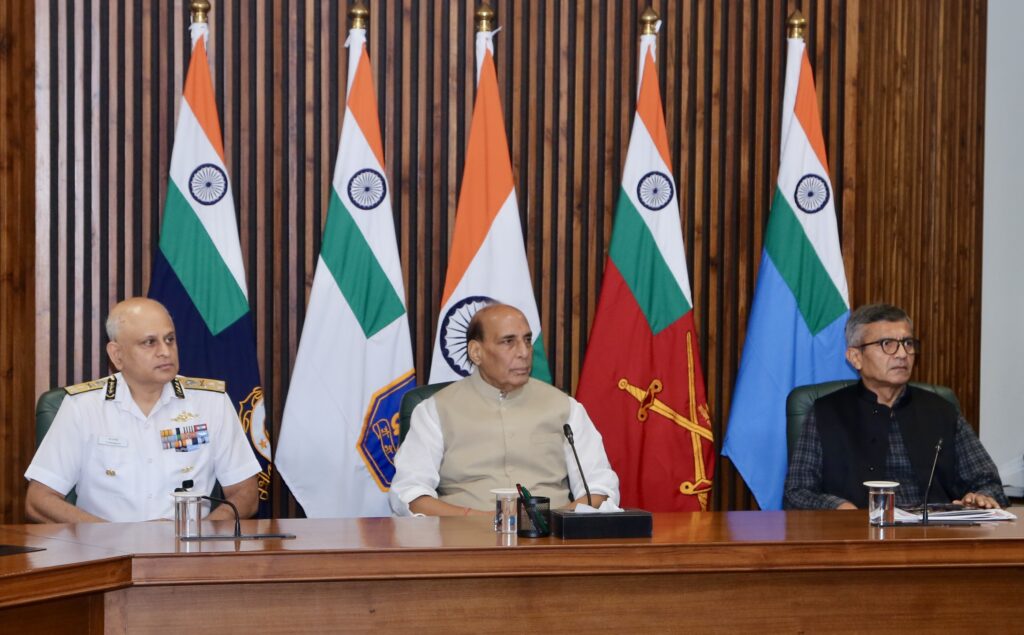
However, both sides have struggled with how to deal with the China challenge individually. India, which views the Indian Ocean as a natural corollary of its geographical location, has engaged in cooperative and collaborative arrangements with littoral states and other external players over the years, including leveraging its own island territories and investing in capacity building in the region. However, its efforts have not had the desired effect. India is building critical infrastructure along its eastern and western seaboards, such as a new naval base INS Jatayu, an Indian Air Force facility at Agatti, and an airbase in Minicoy, to extend its operational reach in the IOR. This infrastructure build-up will strengthen its own maritime and aerial defenses and manage incoming military contingencies. Such efforts are also geared toward increasing operational integration and enhanced jointness between India’s own armed and defense forces. Similarly, the Great Nicobar Project is likely to offer strategic access at the convergence of the Indian and the Pacific Ocean, enabling India to engage in acquiring comprehensive intelligence, surveillance, and reconnaissance (ISR) capabilities.
However, though India continues to be an important player in the IOR, it is encountering skepticism about its role in the neighborhood. Additionally, with some prominent ocean states adopting more aggressive posturing both domestically and in their external orientations, the idea of the potential militarization of the IOR is getting reinforced. The Maldives’ “India Out Campaign” and its idea of “forward maritime defense”, which entails operating beyond their Exclusive Economic Zones (EEZs) while diversifying defense partnerships by incorporating China, Pakistan and Turkïye within the existing security matrix, are the clearest examples of these dynamics among IOR littoral states.
Meanwhile, the United States has continued to deploy and project military power in the Indian Ocean since the Cold war, viewing it as a “support ocean” to manage risks and threats emanating from the Persian Gulf in case of security and energy-related contingencies. However, the increased militarization of the IOR due to China’s growing presence over the last 15 years or so and the supposed attempts by some states like Iran to acquire nuclear weapons have also shifted U.S. focus back to the IOR. This pivot to the IOR is also geared toward ensuring U.S. energy security, freedom of navigation and overflight, and freedom of commerce through international shipping lanes.
Despite these concerns, the IOR has remained somewhat absent from larger U.S. national security discourse, due to the lack of a dedicated South Asia strategy. This lends U.S. policy toward the region a degree of strategic ambiguity. In this regard, Washington’s limited presence in the Western Indian Ocean, coupled with its limited engagement in South Asia, despite recent overtures, could turn out to be its Achilles’heel.
Furthering U.S.-India Engagement in the IOR
In this context, the name change of the command offers Washington and New Delhi an opportunity to reevaluate and reset their engagement on the IOR. The fact that the renaming of the command has not resulted in any change of the operational area of responsibility is a clear indication that the United States still cares about the Indo-Pacific theater and New Delhi’s role in it. Given its enduring threat perceptions of China, the United States should adopt a multipronged approach to and deepen engagement with India in the IOR to ensure operational preparedness.
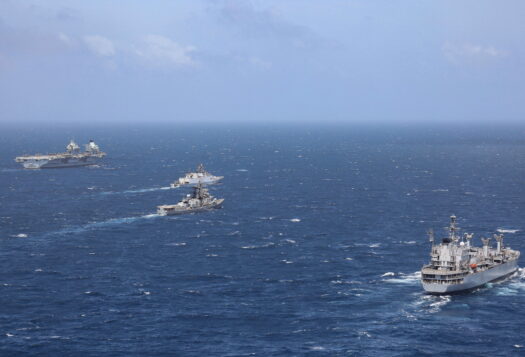
As the IOR is likely to become further securitized due to China’s all-pervasive footprint, Washington could scale up the level of the existing joint, combined, and table-top exercises with India exclusively in the Indian Ocean focusing on maritime chokepoints, such that they acquire better situational awareness of the region. In this regard, better utilization and operationalization of the existing U.S.-India-Logistics Memorandum Exchange Agreement could be an excellent starting point. For instance, the agreement could be leveraged to ensure mutual berthing of military aircraft, warships, and troops during port exercises. Similarly, replenishment-at-sea and air-to-air refueling could also be carried out on a regular basis to build operational habits of cooperation between India and the United States.
Further, the United States and India should engage with France as a partner to build operational synergies in the Southwest Indian Ocean. Existing precedents include the conduct of joint patrols involving anti-submarine warfare operations by India in France’s Indian Ocean territory La Réunion deploying U.S.-provided P-8Is. More importantly, India, France, and the United States have recently jointly conducted Exercise La Pérouse to improve maritime surveillance, interdiction, and air operations in the region. This potential trilateral can be further operationalized with the three countries using their platforms—Poseidon P8s for India and the United States, and the Atlantique II by France—to enhance maritime reconnaissance efforts in the IOR.
India and the United States should attempt to better integrate platforms to nuance their maritime domain awareness. […] For New Delhi’s part, India should consolidate its existing partnership with island member states in the IOR focused on maritime sustenance.
After effectively integrating the SeaVision software that India recently purchased from the United States, in conjunction with the use of its indigenous NISHAR-MITRA software, India and the United States should attempt to better integrate platforms to nuance their maritime domain awareness. Some work is already being done on this count with the co-production of American sonobuoys in India, but more advanced efforts would require solving hurdles as they relate to existing U.S. regulatory regimes such as the International Traffic in Arms Regulations and Export Administrative Restrictions.
For New Delhi’s part, India should consolidate its existing partnership with island member states in the IOR focused on maritime sustenance. Currently, India undertakes refit, repair, and maintenance of the ships and vessels given to regional countries on grant, lease, or under Lines of Credit. A step further in this direction could be institutionalizing such efforts through the signing of Master Ship Repair Agreements (MSRAs), along the lines of the U.S.-India MSRAs, or other facilitation agreements for maintenance, repair, and overhaul (MRO) operations (such as between India and other IOR littoral states like Mauritius and Maldives). For instance, India exported the first-ever custom-made warship CGS Barracuda to Mauritius in 2015 and also undertook its repair in 2021. Similarly, India has routinely undertaken the MRO operations for the MCGS Huravee, a former Indian navy ship now with the Maldives, to strengthen cooperation. Institutionalizing such cooperation at a time when these IOR member states are attempting to become self-reliant in such technologies will enable India to build genuine goodwill and trust in the IOR while also make it an operational hub for ship, repair, and maintenance facilities, providing it potential strategic leverage in future.
Finally, the United States and India should also consider investing more in coordinating multilateral efforts in the IOR. For instance, the Quad’s Indo-Pacific Maritime Surveillance Initiative and the Indo-Pacific Maritime Domain Awareness initiative—both initiatives bearing the name “Indo-Pacific”—could be leveraged to include IOR member states such as the Maldives and Sri Lanka. Doing so would make these initiatives more inclusive and representative of the perspective of island states, ensuring the participation of IOR member states and generating greater operational coordination in the future. It will also ensure deeper interactions and confidence-building between their forces, which has unfortunately remained at the peripheral level. Such initiatives will ensure greater U.S. and Indian convergence in the IOR, enabling more effective cooperation, collaboration, and operational coordination in an increasingly volatile maritime space.
Views expressed are the author’s own and do not necessarily reflect the positions of South Asian Voices, the Stimson Center, or our supporters.
Also Read: India’s Military Vision for 2047: A Challenging Path
***
Image 1: Wikimedia Commons