Hot on the heels of its May 2025 conflict with India, in which Pakistan used the guided Fatah rocket series against military targets, Islamabad’s announcement of the formation of the Army Rocket Force Command (ARFC) on the eve of its 78th Independence Day caught many by surprise. The formation of the ARFC spells a departure from Pakistan’s historic posture on missile systems, which entangled both conventional and nuclear warheads under its National Command Authority (NCA) and valued ambiguity over clarity in targeting. This raises questions about the utility of the ARFC, its impact on doctrinal ambiguity, nuclear risk, and its overall deterrent value. Deeper analysis suggests that the ARFC fills the limited precision-strike space that was exposed by the May 2025 crisis by institutionalizing conventional missile responses and at the same time disentangling nuclear and conventional capabilities, thereby reducing nuclear risk. Paradoxically, however, Pakistan’s apparent resolve to use conventional missile capabilities in a future crisis, paired alongside Indian risk-taking, is likely to make future conflicts more destructive from the onset.
Regional and Domestic Drivers
There are regional precedents for having a dedicated missile force in Southern Asia. China established its Second Artillery Corp, later branded the People’s Liberation Army Rocket Force (PLARF), as early as 1966. In 2021, sensing growing missile and nuclear asymmetry with China, then-Indian Chief of Defense Staff General Bipin Rawat proposed forming an Integrated Rocket Force (IRF). The ongoing Russia-Ukraine war and the Iran-Israel conflict of 2025 have also showcased the military utility of missiles in evolving precision-strike warfare. However, as compared to the PLARF, which operates both conventional and nuclear missiles, the IRF and ARFC are dedicated to conventional missile inventories alone.
Arguably, the strongest catalyst for the Pakistani announcement of the ARFC seems to have been the May 2025 crisis with India. Traditionally, asymmetric resource constraints have compelled Pakistan to designate several of its missile systems as dual-capable in ISPR releases, even though they have remained primarily dedicated to the nuclear role under the NCA. This arrangement reflected necessity rather than design: it allowed Pakistan to economize on its limited missile inventory while keeping operational control centralized. However, it also restricted the types and command flexibility of delivery systems available for limited, precision-strike missions, such as those witnessed during the 2019 and 2025 crises. India, conversely, was much freer to use its extended arsenal of cruise missiles, like BrahMos, and SCALP and HAMMER precision-guided munitions in both instances.
“Pakistan’s apparent resolve to use conventional missile capabilities in a future crisis, paired alongside Indian risk-taking, is likely to make future conflicts more destructive from the onset.”
During both the 2019 and 2025 crises, the Pakistani Air Force demonstrated operational competence and credible deterrent signaling vis-à-vis the Indian Air Force. Notwithstanding the Pakistan Army’s response under Operation Bunyan-un-Marsoos, there is little evidence to confirm that it was able to hit all its desired target locations without Indian interception. Given the centrality of Pakistan’s army in its polity, the ARFC will give it more tools at its disposal during future crises.
Another factor that may have precipitated the formation of the ARFC may be intra-army dynamics. Amongst the army’s fighting arms of infantry, armor, and artillery, the Strategic Plans Division (SPD) has been the turf of the artillery generals; this is because notionally artillery officers’ familiarity with delivery physics, munitions handling, and other technical aspects better prepares them for the operational dimensions of nuclear delivery systems. This was true from early 2000 until 2017, when Lieutenant General Sarfraz Sattar, an armor officer, was posted as the Director General of SPD. Since then, there has been another armor and infantry officer at the helm, reflecting the institutional view that the DG SPD was an administrative and developmental post suitable for any qualified officer. However, with the ARFC, potentially another artillery officer will again be commanding a post—a possibility widely noted in Pakistan’s strategic community.
Doctrinal Ambiguity and Nuclear Risk
Since the May crisis, there have been claims and counterclaims on what the scale of the hostilities represents for deterrence stability in South Asia. India claims to have called out Pakistan’s “nuclear bluff” and created a new normal. Pakistan denies this, stating that its minimum nuclear threshold for deploying Nasr against Indian integrated battle groups was never actualized. Leaving the debate aside, to quote a former SPD official, “if force is employed, deterrence has by definition failed.”
Yet, from a Pakistani point of view, the crisis represented neither a failure of conventional nor nuclear deterrence in the traditional sense. What unfolded was not a full-scale conventional war, but rather, a limited contest of precision capabilities that exposed a gray space between conventional and sub-conventional operations. Deterrence failed in this intermediate domain—the limited, precision-strike space—which both sides sought to exploit without triggering broader escalation. The ARFC is designed to address this gap by strengthening conventional missile response options and, by extension, conventional deterrence.
However, this readiness to use stand-off missile capabilities represents an incremental shift from Pakistan’s nuclear doctrine, which values ambiguity over transparency. The ARFC offers no new insight into what Pakistan’s nuclear doctrine entails, but it delineates by exclusion what falls outside it. That is to say, Pakistan’s nuclear threshold will not be breached if India uses stand-off missiles to hit military bases and alleged militant sites in mainland cities, as Pakistan would now respond in kind. The idea is that the deterrent value Pakistan loses in strategic deterrence via doctrinal transparency it now hopes to achieve in conventional deterrence via the ARFC.
Thus, the induction of the ARFC becomes an effective firebreak between a conventional and nuclear conflict, thereby reducing the chances of nuclear use. This disentanglement between conventional and nuclear delivery systems is welcome news for regional and international communities’ concerns about escalation stemming from perceptions of Pakistan’s low nuclear threshold and nuclear war fighting plans. However, the tendency to use conventional stand-off capabilities during a crisis or conflict will increase the probability of unintended consequences and accidents, thereby spiraling higher on the escalation ladder in less time. Similarly, even though the chance of millions dying in a nuclear exchange is reduced, the certainty of hundreds dying in a conventional missile conflict increases.

Will the ARFC Deter?
The fundamental question worth the budget of the ARFC is whether it will deter Indian leadership from carrying out limited precision strikes. Even after 2019, Pakistani decisionmakers claimed deterrence had been restored, yet the May 2025 crisis happened. While it is true that Pakistan was able to restore intra-war/conflict deterrence during both the 2019 and 2025 conflicts by effectively displaying military resolve on both air and land, the function of future crisis and deterrence stability will rest on the effectiveness of the ARFC’s deterrent effect.
Capability Requirements for the ARFC
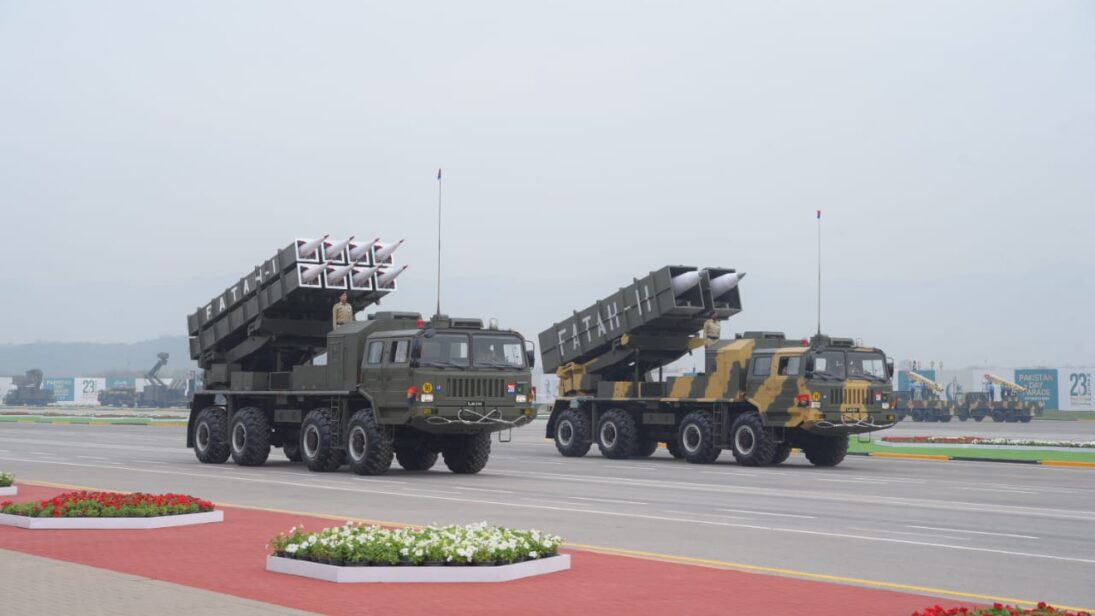
With the ARFC, Pakistan intends to deter Indian planners by the threat of punishment via assured retaliation. With the induction of the Fatah I and II, which predates formation of the ARFC, the focus has been on navigation, trajectory, and maneuverability to evade missile defenses and hit targets accurately. The emphasis on the Fatah IV cruise missile’s “reach, lethality and survivability,” alongside its terrain hugging capabilities, also portends that Pakistan’s future conventional missile development will focus on missile defense evasion and accuracy to assure successful retaliation.
“The function of future crisis and deterrence stability will rest on the effectiveness of the ARFC’s deterrent effect.”
However, claims of Indian air defense systems intercepting Pakistan’s Fatah missiles on May 10, alongside India’s ambitious Mission Sudarshan Chakra—which envisions an indigenous integrated air and missile defense system to cover all strategic and civilian infrastructures by 2035—would require prompt Pakistani counter-developments. The ARFC would need to make both qualitative and quantitative leaps to evade and overwhelm Indian defenses and to accurately hit targets in a future crisis. This would present a high possibility of investments in supersonic and eventually hypersonic missile systems to better defeat missile defenses.
Credibility and Need for Clear Signaling
As a sum of 3Cs—capability, credibility and communication—deterrence would require Pakistan to clearly and credibly communicate how it intends to employ the AFRC against India in a future crisis. Fatah I & II rockets during the May crisis were employed in a counterforce role to target air and military bases, storage sites, air defense systems, and radar sites. However, India responded by targeting Pakistani airbases using standoff missiles, just before the ceasefire announcement. This suggests that Indian leadership, at least partly influenced by Pakistan’s failure to completely destroy well-defended military targets, was not sufficiently deterred.
Thus, for deterrence to be credible, the idea on the part of Indian leadership of limited-precision conventional strikes for political gains should be a cost too high to conceive. This would require Pakistan to target not just counterforce targets, but also some degree of countervalue targets that can cause massive economic losses, thus inhibiting hostile retaliatory action. There have already been some allusions by the Pakistani military leadership to this end: during the Pakistan Military Academy’s passing out parade in October, Field Marshal Asim Munir warned that Pakistan would respond “beyond proportions” and with “retributive military and economic losses” to Indian aggression. The Field Marshal’s infamous “dump truck”-“Mercedes” analogy alongside his explicit mention of the large-scale Indian oil refinery in Gujarat also impresses this point. Such a declared targeting strategy would stretch Indian missile defenses, already restricted by geographical and technological challenges, forcing them to choose between defending either military or economic targets.
Implications for Crisis Stability
However, this new targeting strategy, alongside Indian propensity for risk-taking and the absence of any real crisis management and dispute resolution mechanisms, will make an already precarious strategic environment prone to even more rapid and violent escalation. A future May 2025-type scenario will start at a higher rung on the escalation ladder, involving wider precision strikes against military and industrial targets, with less political restraint and greater lethality. This would force the other side into even wider retaliation, resulting in far greater humanitarian, military, and economic losses than South Asia has witnessed since overt nuclearization. Absent restraint, this will likely remain the leading challenge to strategic stability in the region over numbers of years.
Views expressed are the author’s own and do not necessarily reflect the positions of South Asian Voices, the Stimson Center, or our supporters.
Also Read: Pakistan’s New Rocket Force: Strategic Deterrence and Escalation Risks
***
Image 1: Wikimedia Commons
Image 2: Yeddulas at Wikimedia Commons