On August 26, 2026, a massive rock-ice avalanche in Nepal’s Rasuwagadhi border region, large enough to register a seismic signal equivalent to a magnitude 5.2 earthquake, triggered an extreme debris torrent that cascaded more than 150 kilometers down the Bhotekoshi-Trishuli corridor. The disaster decimated critical infrastructure along the river, indefinitely closed a vital trade corridor highway, wiped out over 10 percent of Nepal’s generation capacity, and left about 1,451 dead and more than 5,000 missing as of September 21, according to Nepal’s National Disaster Risk Reduction and Management Authority (NDRRMA). A World Weather Attribution analysis found that human-caused warming of about 1.5°C in July and August near the site, together with permafrost degradation and glacier thinning, may have weakened a slope already geologically primed to fail.
Five days after the avalanche, Nepal’s Finance and Environment Ministers formally invoked the Governing Instrument of the Fund for Responding to Loss and Damage (FRLD). An operating entity of the financial mechanism of the United Nations Framework Convention on Climate Change (UNFCCC) established in 2023, the FRLD finances responses to loss and damage from climate impacts in developing countries, funded by donor pledges and run by a Board that decides on funding requests. In response to Nepal’s request, eight board members demanded an extraordinary meeting outside of its usual schedule. On October 22, the FRLD held its first-ever extraordinary meeting, which resulted in a provisional set-aside of USD $21.6 million, making Nepal the first country to receive such an earmark.
By climate finance standards, this turnaround represents an unprecedented velocity—one that was made possible by an ad hoc Board decision, not the system. Yet measured against Nepal’s assessed needs in this ongoing humanitarian emergency, it is a sobering reminder of the structural limitations of the Fund itself: a cap of USD $20 million per request, no standing rapid-response window, and thin capital.
Nepal will not be the last country to require such loss and damage funds after a disaster. In that light, the question of whether this recent chain of extraordinary procedural events can be reified in the FRLD’s permanent fund-disbursement architecture is all the more urgent. Three decisions before the 31st Conference of the Parties (COP31) in Türkiye and the next Board meeting can settle this debate in the short-to-medium term and help shore up the Fund’s ability to support countries undergoing severe environmental disasters in the years to come: quickly approving Nepal’s proposal, establishing a permanent rapid-response window, and offering real capital behind the pledges.
“Nepal will not be the last country to require such loss and damage funds after a disaster. In that light, the question of whether this recent chain of extraordinary procedural events can be reified in the FRLD’s permanent fund-disbursement architecture is all the more urgent.”
A Historic Decision, an Inadequate Response
The FRLD pays for losses already suffered, whereas climate funds mostly finance projects that cut emissions or build resilience in advance. Each follows its own approval path. Understanding the discrepancy between the funding mechanisms at the Fund’s disposal—both the established pathway and the ad hoc one that arose around the Nepal floods—is crucial for contextualizing the positions in which Nepal and the FRLD each now find themselves.
The Barbados Implementation Modalities (BIM) are the Fund’s interim start-up route, designed for testing and learning, with a cap of USD $20 million per request. Countries submit a full funding request during a call window, which the Fund’s Secretariat assesses against the standard BIM criteria—country-led approaches, expected results, and fit with national priorities—before the Board makes its decision. The Long-Term Model, which the Board will begin shaping at the 10th Board meeting (B10) in Manila in December, will set the Fund’s permanent access rules. That means that the Fund did not have a rapid-response procedure when the Nepal floods occurred in August and still does not have one now.
Nepal has made two requests under the BIM this year. The first request, filed during the call that closed on June 15, 2026, was for USD $20 million. The Kathmandu Post reported that it had been approved, but the Board deferred its first funding decisions under the BIM to B10 in December, and no funds have been released. Nepal’s August 31 letter following the floods, which asked for a special Board decision absent a rapid-response pathway, requested a further USD $20 million, the maximum request amount under the BIM. This was the request that the Board responded to on October 22, where Nepal was awarded a set-aside of USD $21.6 million, including USD $1.6 million for oversight fees. The set-aside is additional to the BIM envelope, so it does not draw on it.
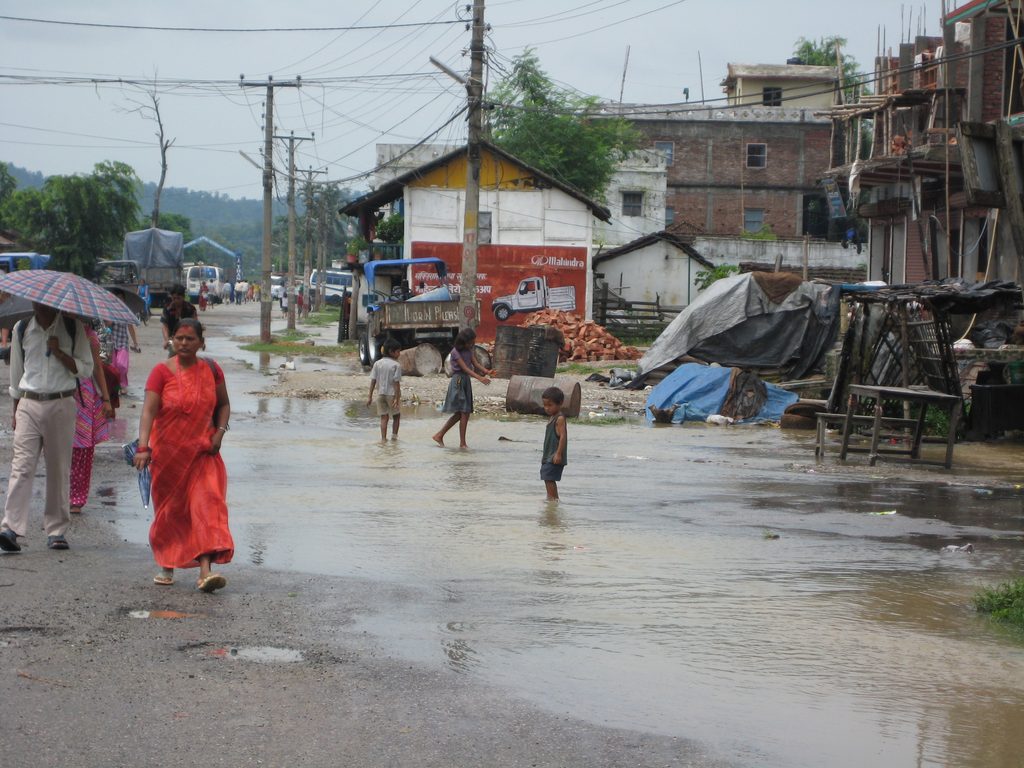
It is important to acknowledge that this amount, which is also not yet paid out, covers less than 0.5 percent of the more than USD $4.7 billion that NDRRMA puts as its need for post-disaster repair and reconstruction. But while the headline numbers seemed to signal institutional agility, the October 22 meeting revealed operational fractures with implications for how the Fund handles future disasters. That the Nepal set-aside rested on an ad hoc process outside the BIM’s regular cycle has caused board members like Japan’s Kazuho Taguchi to stress that this “strictly exceptional” response does not prejudge the design of the Long-Term Model. Germany, for its part, said the Board must also protect the Fund’s integrity and fairness to all other applicants during the BIM phase and beyond, while still drawing lessons from Nepal’s response. On the other hand, Pakistan’s representative, Ali Tauqeer Sheikh, supported the decision but remarked that the text was “much narrower than we had discussed and proposed,” sets no timeframe for approval, and predetermines Nepal’s needs by existing BIM allocations. Pakistan speaks from experience: Its post-disaster needs assessment after massive floods in 2022 put recovery and reconstruction needs at no less than USD $16.3 billion.
But it is precisely this question of precedent and lessons learned—of whether rapid response becomes standing Fund policy or stays a one-off—that is perhaps the most consequential part of the October 22 outcome. The difference matters for any country that will suffer a climate disaster in the future: With a standing window in place, it could invoke a settled process to seek funding, whereas if rapid response remains a one-time exception, it will have to start from scratch to negotiate its own special decision, as Nepal did over 52 days from the August 31 letter to the October 22 decision.
Towards Permanent Architecture
Nepal is already bearing losses of the kind that a loss and damage fund is meant to address. Research on a 2021 debris flood in the Melamchi Valley found average household losses of USD $52,113 against just USD $380 in support received. Mountain disasters also strike national finances. After a glacial lake flood destroyed the main border bridge at Rasuwagadhi in July 2025, trade through the crossing fell about 95 percent within six months, as earlier Stimson Center analysis documented from government customs records—a kind of loss that existing climate finance is not designed to capture. The August 2026 flood hit the same corridor and also halted Nepal’s electricity exports to Bangladesh, which had been flowing under a three-country power-trade arrangement since late 2024. The interruption was partial and temporary: Seasonal exports of 40 megawatts (MW) to Bangladesh, routed through India’s grid under a 2024 agreement between the Nepal Electricity Authority and the Bangladesh Power Development Board, resumed in late October with different plants supplying power. Whether the Fund’s framework can recognize losses felt across borders remains an open question.
For now, Nepal’s experience presents the international community with a specific set of institutional decisions that cannot wait for COP31’s general commitments. Three things must change before COP31 in Türkiye and B10 in Manila can be considered progress, not just process. The Board holds the pen on the first two, COP31 guidance to the Fund can reinforce them, and the third rests with donors.
First, Nepal’s project proposal must be approved on an expedited basis. Pakistan requested and the United Arab Emirates (UAE) encouraged approval between scheduled meetings rather than at B10, while the Co-Chair said she would “strive to adapt,” but the Board must commit to a specific timeline at or before B10. That also requires the Fund to offer guidance to Nepal on what to submit in the first place.
Second, the Nepal pilot must be codified as a permanent rapid-response modality under the Long-Term Model, which the Board will begin to shape at B10 in December. If codified, the pilot would become a standing window that could shape future allocations to countries suffering after major disasters. A codified window would need three features: a defined trigger, a first tranche of up to USD $20 million (the BIM cap), and a decision in weeks rather than the 52 days the Nepal case needed. That there was a second extreme flow event in Nepal, the October 11 Budhi Gandaki flood in Gorkha, underscores the need to establish such a window sooner rather than later. The legal basis for this already exists: Tamim Alothimin of Saudi Arabia grounded developed-country obligations in Article 4.3 of the UN climate convention and Article 9.1 of the Paris Agreement, and civil-society observers added Articles 4.4 and 4.5 of the convention—provisions that, put plainly, place obligations on developed countries to provide finance and support. With their framing of obligations rather than voluntary pledges, these provisions would also give the Fund a firmer basis for predictable capital, one of the other decisions it must make. B10 should begin from that more robust legal footing.
“The case of Nepal showed that the Board can move fast. Now the Fund must show Nepal, and the world, that it can deliver at scale.”
Third, the Fund must have enough capital to operate at the scale its mandate requires. The Fund’s funding page lists USD $719.46 million in total contributions as of November 4, but only about USD $486 million had actually been received as of July 31, against calls for at least USD $400 billion a year by 2035 from a campaign backed by more than 250 organizations in April. The Fund’s current pipeline shows the strain: 176 funding requests from around the world, amounting to a combined USD $2.8 billion, are competing for the USD $342 million the Board has allocated to the BIM. This means that a single country like Nepal, with both its earlier BIM request and the August 31 request, could notionally draw about USD $40 million, about 8 percent of that USD $486 million. Only its earlier request, of up to USD $20 million, would come from the USD $342 million BIM envelope.
As examples of climate finance turnaround times, the Green Climate Fund (GCF) took seven years, from a 2018 concept note to approval in 2025, to clear a USD $49.9 million glacial lake outburst flood project outside the Bhotekoshi basin; a second Nepal project, the Alternative Energy Promotion Centre’s clean cooking project, received its first disbursement in January 2024, more than four years after its concept note. By contrast, the FRLD went from Nepal’s request to a decision in a remarkably agile 52 days—but to a set-aside, not an actual disbursement. Nepal’s proposal has yet to clear assessment, and approval at B10 in December, if it comes, would be under four months after the letter. COP31 should write a standing rapid-response window into the Fund’s permanent rules so that an emergency like Nepal’s no longer needs its own Board decision.
COP31, set to begin on November 9, is the first place to press these issues. Nepal’s position paper, presented at the National Climate Summit on October 29, should put them on record, and Nepal’s pavilion in Antalya will showcase the Bhotekoshi-Rasuwa floods. Nepal and Bhutan have also formally proposed a COP31 agenda item on 1.5°C warming in mountains, including mountain priorities in loss and damage arrangements. The marker to watch in this immediate period is whether donor statements or COP31 guidance to the Fund address the rapid-response window.
Following COP31, the FRLD’s own 11th Board meeting comes to Nepal on March 17–19, 2027, making Nepal both a claimant and host. That meeting will present an opportunity for Nepal and the Least Developed Countries (LDC) Group to ask donors in the room for three things: moving Nepal’s own proposal from set-aside to disbursement; creating a standing rapid-response window under the Long-Term Model; and turning promised pledges to the Fund into paid-in capital, or money that the Fund has actually received. The case of Nepal showed that the Board can move fast. Now the Fund must show Nepal, and the world, that it can deliver at scale.
Views expressed are the author’s own and do not necessarily reflect the positions of South Asian Voices, the Stimson Center, or our supporters.
Also Read: Treaty at the Crossroads: Climate Pressures and the Future of Ganges Basin Water Governance
**
Image 1: Wikimedia
Image 2: The Advocacy Project via Flickr