Pakistan has seen one of the fastest rooftop-solar expansions in the Global South in recent years, with net-metered rooftop capacity rising from under 1 GW in 2023 to approximately 4.9 GW by March 2025, and solar imports increasing to roughly 16 GW in 2024. The driving forces were not government policy, but rather consumer desperation stemming from recurring and increasing circular debt, tariff hikes, and unreliable energy supply pushing households, businesses, and factories to generate their own electricity. Significantly, cheap Chinese solar panels, the prices of which had fallen fivefold between 2022 and 2024, made this transition economically viable. As a result, Pakistan’s adoption of solar has been the fastest of any country of its size.
But this impressive growth faces a new regulatory hurdle: in February 2026, Pakistan’s National Electric Power Regulatory Authority (NEPRA) issued new Prosumer Regulations 2026, effectively ending the older unit-for-unit net metering model for new adopters and replacing it with a financial settlement system under net billing. Under the net-billing structure, exported rooftop electricity is credited at the national average energy purchase price, while imported electricity continues to be billed at the applicable retail tariff. The asymmetry is around PKR 11 per unit sold versus up to PKR 50 per unit bought. Net billing makes rooftop solar far less financially viable at a time when Pakistan’s energy and climate security demands more, not less, decentralized generation.
Officials have argued that net metering created cross-subsidies, burdened distribution companies, and complicated grid management. While these concerns cannot be dismissed, they are incomplete when treated in isolation, because they ignore the deeper drivers of Pakistan’s power sector stress and the energy and climate security role distributed solar has played in Pakistan. That is why this shift is bigger than a technical tariff adjustment: it fundamentally changes the economics of rooftop solar and worsens Pakistan’s overall energy security at a moment of acute geopolitical risk.
People-Led Solar Expansion Enabled by Policy Signals
The regulatory backbone for popular solar adoption was NEPRA’s 2015 net metering framework, which allowed consumers to offset electricity consumption with solar exports to the grid on a near 1:1 basis. The response was remarkable: peak period net-metered electricity exports more than doubled in 2025 alone. Over time, Pakistan has installed more distributed solar than many countries with dedicated national renewable programs. Additionally, by 2025, Pakistan had become one of the world’s largest importers of Chinese solar panels, with cumulative imports roughly equivalent to three-quarters of the country’s entire installed generation capacity.
“Net billing makes rooftop solar far less financially viable at a time when Pakistan’s energy and climate security demands more, not less, decentralized generation.”
Rooftop solar functions as a decentralized buffer and hedge against a centralized system that has been chronically unable to deliver affordable and reliable electricity. Most critically, it served as an energy supply shock absorber during the 2022 and 2025 floods, which exposed the deep vulnerability of Pakistan’s centralized energy infrastructure. During both crises, households and businesses that had already adopted rooftop solar were able to maintain critical power when grid connectivity was disrupted, demonstrating its energy resilience value. But the fact that this movement was a consumer-driven revolution that outpaced state planning has prompted the government to redesign the rules.
Net Billing and the Enduring Governance Problem
Net billing fundamentally alters the financial calculus of rooftop solar. Under the new regulations, it may take at least double the exported units to offset a single imported unit, given the export-import price gap. The new system also tightens technical and contractual conditions: the standard agreement term drops from seven years to five, capacity is linked to sanctioned load, transformer loading thresholds are introduced, and additional technical studies are required for larger systems. For households and SMEs, this substantially increases payback time and reduces the financial viability of new rooftop solar.
This reform, however, does not ameliorate the actual drivers of Pakistan’s power sector crisis. The crisis lies in the structure and design of Independent Power Producer (IPP) contracts—agreements with private electricity generators, particularly those running on imported coal and regasified liquid natural gas (RLNG), that obligate the government to pay for generation capacity whether or not it is actually used. The then-Energy Minister’s 2024 Senate briefing reveals that the power sector’s circular debt—the accumulation of unpaid bills cascading across the generation-distribution-consumer chain—had reached PKR 5.42 trillion, with capacity payments to IPPs alone at PKR 2 trillion. The concentration is striking: ten plants alone receive 40 percent of all capacity payments, while another ten account for roughly 25 percent of total circular debt. Under dollar-linked, take-or-pay contracts, the state must pay these capacity charges even when plants run below capacity due to weak demand or grid limitations. The fiscal and social consequences are severe: consumer tariffs rise to service the debt, public investment capacity shrinks, and the government faces constant pressure to find new revenue sources.
Net billing is one such attempt to service its energy-related debt. This policy targets the symptom of prosumer exports by reducing distribution company revenue while leaving the structural cause intact. Since every rooftop kilowatt hour marginally reduces the government’s capacity to service preexisting IPP obligations, the prosumer has been framed as a free rider. The result is a system that protects legacy contracts, prolongs circular debt, and shifts the burden of structural governance failures onto citizens who responded rationally to prior policy signals and market conditions.
Climate and National Security Costs
The rooftop solar boom is best understood as an energy security and climate adaptation response, not merely a decarbonization initiative—and the costs of undermining it extend well beyond household electricity bills. Pakistan’s climate risk is rising sharply. Temperatures are projected to increase anywhere between 2°C to 4.1°C by 2080, with extreme heat events already placing severe stress on the grid. By slowing the growth of distributed solar, net billing deepens Pakistan’s dependence on centralized, fossil-heavy fuel generation, effectively crowding out the very adaptation investments the country urgently needs.
The national security dimensions are equally pressing, made all the more urgent by recent events. Pakistan relies on imported fossil fuels for the majority of its energy needs, with most crude oil and petroleum passing through the Strait of Hormuz. The ongoing war in West Asia, which prompted the Strait’s temporary closure, has already triggered a nearly 20 percent increase in petrol prices—the largest single fuel price hike in Pakistan’s history. This has forced the government to introduce weekly petroleum price revisions and contingency conservation measures.
With reserves covering just weeks of supply, Pakistan’s centralized fossil-fuel dependence is a live, unfolding geopolitical exposure, not an abstract vulnerability. A stronger, more distributed solar base would directly reduce this import dependence, providing resilience against these severe supply shocks. Net billing, by contrast, slows the growth of that buffer at the precise moment when its strategic value is most apparent.
“Pakistan’s grid also needs modernization that treats rooftop solar as a reliable asset rather than as a burden to manage.”
Policy Options: Aligning Fiscal Concerns with Climate and Security Goals
The recent regulatory adjustments provide both warning signs and opportunities. An important corrective measure by NEPRA includes the grandfathering of most existing net-metering users. After substantial public outcry following the initial regulatory notification, which completely repealed the 2015 prosumer regulations, follow up clarifications from the government indicated that the new buyback terms and other changes would apply primarily to new prosumers. This protection mechanism for the existing contracts is a positive development for regulatory credibility, even if questions remain about future revisions. Four additional reforms deserve serious attention for the purpose of preserving energy security.
The transition to net billing must first be made predictable, rather than punitive. The export rate reduction should be phased and clearly signaled through multi-year, tiered paths for new export rates notified well in advance. This would preserve investor confidence while still allowing NEPRA to rebalance tariffs over time, avoiding the policy reversals that deter long-term capital investment.
The structural drivers of circular debt must then be addressed directly and as a matter of national security. Renegotiating or refinancing the most expensive IPP contracts, shortening agreement durations, and improving distribution company governance are the precondition for any credible power sector reform. Until they are underway, adjusting distributed solar incentives functions primarily as cost-shifting onto consumers.
Pakistan’s grid also needs modernization that treats rooftop solar as a reliable asset rather than as a burden to manage. With Pakistan’s prospective solar production capacity extensive enough to reshape the national load curve, investments in feeder-level monitoring, transformer upgrades, and improved interconnection standards would allow distributed production to strengthen, not strain, the grid.
Finally, climate and energy security framing should be used actively to access external financing for these reforms. Instruments like the Asian Development Bank’s Energy Transition Mechanism can reduce upfront costs for grid modernization, with a dual payoff of better distributed solar integration and reduced dependence on the imported fossil fuels whose price volatility is already having serious impacts around the country.
Pakistan does not have to choose between fiscal stability and distributed solar. But it does have to decide whether to confront the political economy of capacity payments and distribution losses, or manage the symptom while preserving the cause. With fuel prices spiking, climate risk rising, and a citizen-built solar base already demonstrating its resilience, the choice Pakistan makes will have consequences that extend beyond tariff design into national security.
Views expressed are the author’s own and do not necessarily reflect the positions of South Asian Voices, the Stimson Center, or our supporters.
Also Read: India’s Nuclear Inflection Point: Why Private Participation Demands Regulatory Reinvention
***
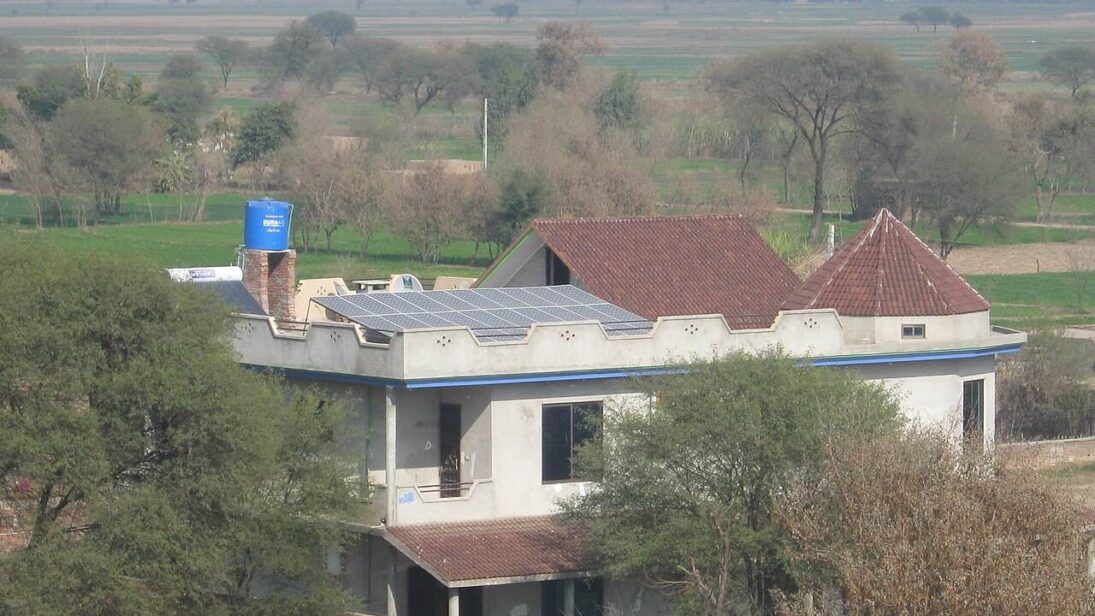
Image 1: Smilingsaifi via Wikimedia Commons
Image 2: Crosji via Wikimedia Commons