




The latest protest wave in Iran has plunged Tehran’s authorities into turmoil and significantly widened the region’s risk calculus. Nationwide protests erupted initially over Iran’s faltering economy, which has seen food inflation propelled above 70 percent, and the collapse of the Iranian rial, which has slid past 1.4 million to a dollar, only to spiral into anti-government demonstrations. Iranian political and security elites have deployed force, internet blackouts, and mass arrests to reassert control.
Meanwhile, outside Iran, the risk of instability spilling across borders remains high. Both Tel Aviv and Washington are escalating pressure on Tehran’s clerical rulers, with the Trump administration initially signaling its willingness to carry out military strikes on Iran’s political and military targets, though it has refrained so far amid opposition from Iran’s Gulf neighbors and Israel.
As a neighbor of Iran, Pakistan must closely track developments, and its policymakers need to brace for political, economic, and security contingencies while simultaneously bolstering border security.
Political: Shia Muslims and Pakistan’s Domestic Politics
Pakistan hosts one of the world’s largest Shia communities outside Iran, with Shia Muslims constituting 15 to 20 percent of the population, dispersed across four provinces and Gilgit-Baltistan. The 1979 Iranian Revolution and Zia-era Islamization forged deep clerical linkages between Pakistani and Irani Shia clerics via seminaries. In the 1990s, the then-leading Shia political party Tehrik-i-Nifaz-i-Fiqah-i-Jafria (TNFJ) also ventured into militancy through its offshoot, Sipah-i-Muhammad, and settled scores with the Sunni militant group Sipah-i-Sahaba Pakistan, itself an extension of Jamiat-i-Ulema Islam (JUI). This sectarian competition also took place in the regional backdrop of deepening Saudi-Iran rivalry, which later took the form of supporting their preferred religious seminaries within Pakistan.
Over time, new Shia political parties emerged pursuing rights-based politics. Majlis-e-Wahdat-e-Muslimeen (MWM), for example, pivoted toward electoral participation and legal advocacy. Despite limited electoral reach, the MWM and Shia Ulema Council retain strong street mobilization capacities, such as processions, sit‑ins, and protection claims. In the 2024 general elections, MWM allied with the banned Pakistan Tehreek-i-Insaf (PTI), amplifying its national profile; in October 2025, Imran Khan instructed PTI to support the head of MWM, Senator Allama Raja Nasir, as the Leader of the Opposition in the Senate, which was recognized by the PML-N-led government after a delay of over four months.
“Pakistan must closely track developments, and its policymakers needs to brace for political, economic, and security contingencies while simultaneously bolstering border security.”
Should protests in Iran spiral into nationwide unrest, in which the United States also intervenes, Shia groups may leverage their presence in Pakistan to express solidarity, as they did in January 2020 following the U.S. drone strike that targeted and killed Major General Qasem Soleimani of the Islamic Revolutionary Guard Corps (IRGC) in Baghdad, Iraq. Similarly, in coming weeks, anti-American rallies could take place to showcase humanitarian support for Iranian protesters, demand the safety of Pakistani citizens in Iran, and call for Pakistan to play an active role in protecting Iranian interests; indeed, in his fiery first speech as opposition leader on January 21, Senator Nasir denounced the U.S. intent to strike Iran, and called on the PML-N government to take the lead in building a regional consensus to oppose aggression against Iran. If order breaks down in Iran, policymakers in Pakistan must proactively engage anxious Shia communities to maintain sectarian harmony and domestic political stability.
Economic: Barter Trade and Food Security
Economically, Pakistan will inevitably feel the drag of prolonged unrest in Iran. In 2024–25, bilateral trade rose to about USD $1.4 billion, despite U.S. and UN sanctions, enabled by barter and informal channels through Balochistan border markets. Following the October 2025 shutdown of the border with Afghanistan, which reduced Pakistan‑Afghanistan trade by nearly 40% and choked land routes, Iranian fuel and edibles have been critical in sustaining domestic markets. Islamabad has imported fuel, fruit, nuts, and dairy, while Pakistani rice gained traction in Iran.
If protests disrupt Iran’s export logistics or if security officials prioritize internal security over cross‑border commerce, Pakistan should prepare for localized food shortages and sharp price spikes. Balochistan’s border districts, which are solely dependent on food and power supplies from Iran, will be the most exposed. Balochistan’s government, in coordination with the paramilitary Frontier Force (FC), needs to stockpile at least four weeks’ worth of fuel and supplies for districts bordering Iran to deal with potential disruption and to prepare for contingencies involving prolonged unrest and sudden border closures.
Security: Border Security and Vigilant Counter-Terrorism
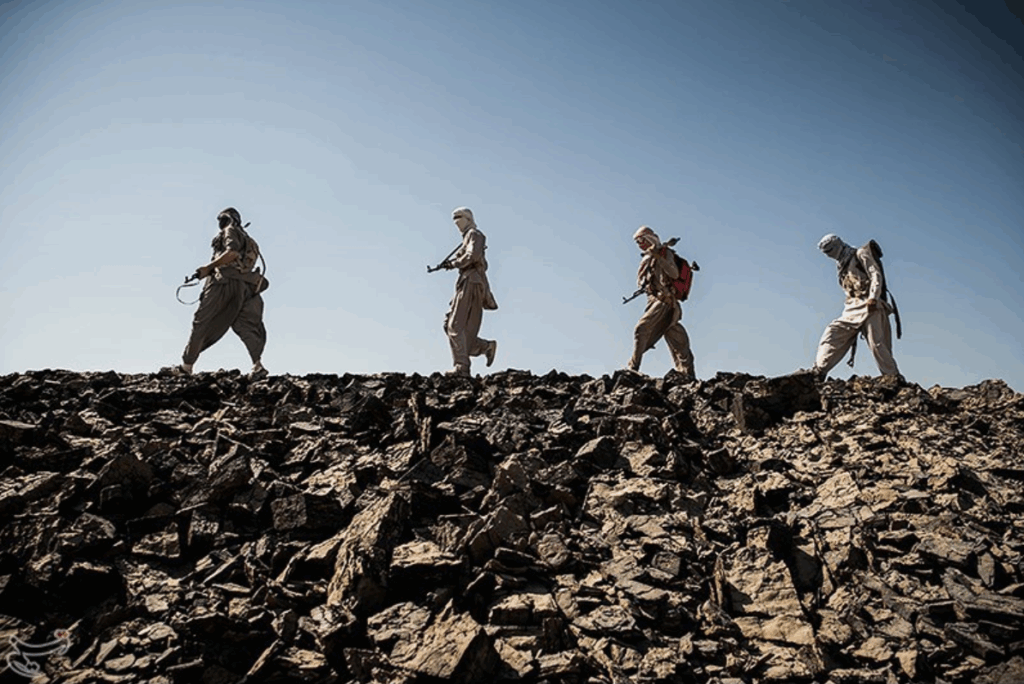
Pakistan must maintain hyper-vigilance regarding developments in Iran’s adjacent Sistan-Balochistan province, given the acute potential for unrest to spill over into its own Balochistan region. From a security perspective, the 565-mile frontier remains a porous “gray zone” where gaps in fencing and rugged terrain enable Baloch ethno-nationalist insurgent groups, such as the Balochistan Liberation Army (BLA) and Jaish al-Adl, and trafficking networks to conduct cross-border operations. According to a recent report, Baloch militant groups conducted 225 attacks across Balochistan and in Sindh in 2025, with most attacks conducted by the BLA and the Balochistan Liberation Front (BLF), which indicates the successful operational adaptation of BLA and other Baloch groups; on the Iranian side, Jaish al-Adl announced the merger of “several Baloch political groups” active in Sistan-Baluchistan province in southeastern Iran in December 2025, showcasing its agility and political pragmatism as it seeks to expand its footprint amid current unrest. Geographically, the security vulnerabilities of both Iran and Pakistan are exacerbated at the northern tripoint with Afghanistan, a convergence zone that serves as a strategic transit corridor for narcotics and militants.
Amidst this volatility, the risk of opportunistic cross-border movement is high. Consequently, any tactical incident necessitates the immediate activation of bilateral border coordination mechanisms—such as the appointment of liaison officers in Turbat and Zahedan following the January 2024 cross-border strikes—to ensure rapid de-confliction and prevent inadvertent escalation.
Worst Case: Regime Collapse
The two-weeks-long protests have been the most critical challenge Iran’s regime has faced in recent years. For now, Iran’s clerical regime, backed by a determined security apparatus, has not shown signs of elite fracturing, but if protests rebound and stay on the streets for a longer period of time, then internal rupture is possible.
For Pakistan, a total disintegration of the centralized clerical regime in Tehran would represent a catastrophic strategic shock. Pakistan would have to secure its south-western border while assessing evolving elite coalitions and engaging relevant stakeholders within Iran. Crucially, Pakistan’s security apparatus must track the leanings of top brass of both the IRGC and the Artesh, the regular army. Fractured elements within the Iranian security establishment could form a counter-coalition to resist a new regime, while trained cadres could cross the porous border to both explore new partnerships in the militant networks and also access arms in the Afghanistan-Pakistan border region.
“As Tehran grapples with internal dissent and external pressure, the spillover effects, ranging from sectarian agitation and refugee inflows to severed trade lifelines, will severely test Islamabad’s resilience.”
For Balochistan’s internal stability, the collapse of the clerical regime and the dissolution of the IRGC would create a dangerous security vacuum along the Pakistan-Iran border. The absence of a functional border security counterpart—i.e., the IRGC—would allow insurgent groups like Jaish al-Adl to “cannibalize” state infrastructure and expand operational staging on the Pakistani side of border, while also gaining an upper hand over militant groups active in Pakistan’s Balochistan. This fractured periphery would also allow BLA and other Baloch groups to widen their operational space for transit and staging attacks. Consequently, in the short run, Pakistan’s Frontier Corps (Balochistan) would have to bolster security along the frontier to check the flow of refugees, fleeing regime loyalists, and potentially illicit weapons into Balochistan province until new border security forces take over responsibilities on the Iranian side.
The domestic repercussions otherwise would also be significant. The collapse of the world’s primary Shia power center could violently agitate Pakistan’s internal sectarian fault lines. It could trigger existential panic among Pakistani Shia communities, necessitating defensive mobilization, while simultaneously emboldening hardline anti-Shia factions to exploit the vacuum. Economically, the severance of informal barter supply lines, which are crucial sustenance mechanisms in border districts, would precipitate an immediate humanitarian crisis that Islamabad lacks the fiscal space to absorb. To guard against these pressures, Pakistan must act now and build buffer stocks of fuel and edibles, diversifying sourcing via Gulf states and Central Asian partners.
Conclusion
The destabilization of Iran poses an imminent threat to Pakistan’s fragile equilibrium. As Tehran grapples with internal dissent and external pressure, the spillover effects, ranging from sectarian agitation and refugee inflows to severed trade lifelines, will severely test Islamabad’s resilience. While the short-term priority remains securing the porous Sistan-Balochistan frontier against insurgent blowback, the long-term strategic shock of a potential regime collapse in Tehran demands immediate contingency planning.
For now, Islamabad’s response has been confined to limited diplomatic engagement with Iran’s leadership and Gulf partners. Intriguingly, it appears that Pakistan has not deployed direct engagement with the White House to influence the Trump administration’s deliberations regarding the protests, seemingly content to let Saudi Arabia and Gulf partners take the lead in engaging Washington. However, Pakistan’s policymakers must move beyond their current strategy of passive observation to urgently diversify critical supply chains, fortify internal sectarian harmony, and reinforce border defenses to insulate their country from the coming geopolitical tremors.
Views expressed are the author’s own and do not necessarily reflect the positions of South Asian Voices, the Stimson Center, or our supporters.
Also Read: The Pakistan-Afghanistan-Iran Relationship: From Strains to Strength
***
Image 1: franke2 via Wikimedia Commons


.jpg)