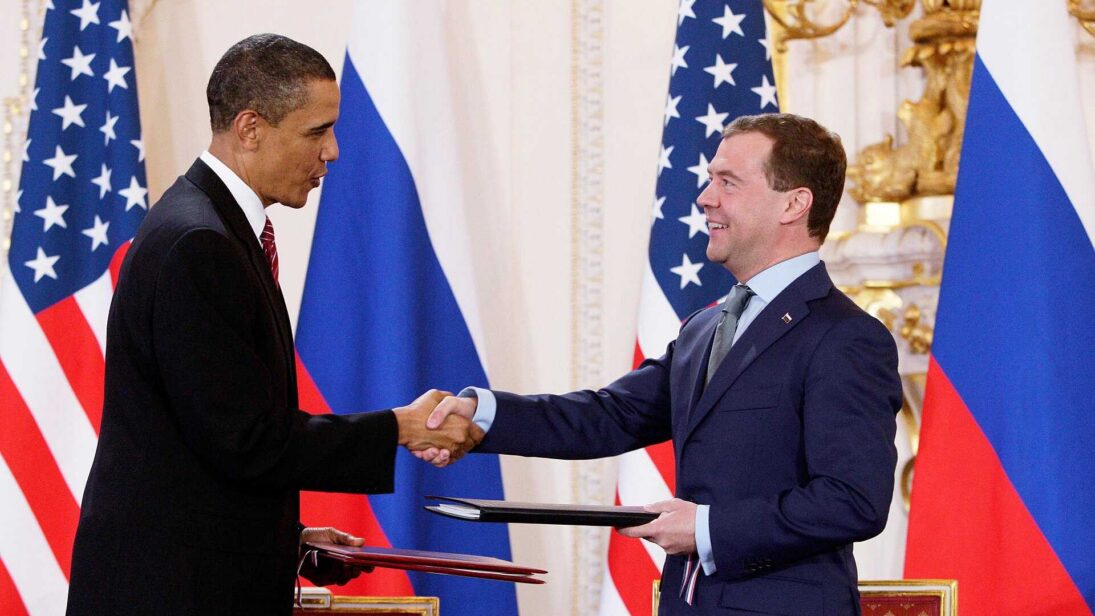
The expiration of the New START agreement marks the end of the last bilateral treaty regulating the world’s two largest nuclear arsenals. Signed in 2010 and extended in 2021, New START capped deployed strategic warheads and delivery systems and provided verification through on-site inspections and data exchanges. Although neither India nor Pakistan was party to New START, its expiration removes the last remaining institutional guardrail between the world’s two largest nuclear powers, weakening global norms of restraint in ways that indirectly but meaningfully shape South Asian deterrence stability.
New START’s Normative Impact
Since they were first negotiated in the 1970s, bilateral arms control agreements between the United States and the Soviet Union provided an assurance to the world that restraint among nuclear-armed adversaries was possible. From the era of Strategic Arms Limitation Talks (SALT) in the 1970s to the START process in the 1990s, bilateral U.S.-Soviet and later U.S.-Russian agreements institutionalized numerical ceilings on strategic delivery systems and, later, deep reductions in deployed warheads. SALT I (1972) capped intercontinental ballistic missile (ICBM) and submarine-launched ballistic missile (SLBM) launchers, while the 1979 SALT II agreement, though it was not formally ratified, sought to constrain qualitative arms racing by limiting multiple independently targetable reentry vehicles (MIRVs). These frameworks signaled that states in nuclear dyads could accept numerical limits on nuclear weapons, verification of those limits, and institutionalized dialogue on nuclear issues.
In the post-Cold War environment, START I, which mandated substantial reductions in deployed strategic warheads and delivery vehicles and introduced extensive verification provisions, as well as its successor arrangements emerged from the recognition that unconstrained nuclear competition imposed unsustainable strategic and financial costs. New START (2010) restored legally binding ceilings on deployed strategic warheads and delivery systems and reestablished a comprehensive verification regime. By combining reductions with transparency and inspection measures, the START process renewed hopes that nuclear rivalry could coexist with institutionalized restraint.
Even for states outside the Nuclear Nonproliferation Treaty (NPT), like India and Pakistan, the U.S. and Russian example underwrote expectations that nuclear rivals could institutionalize restraint through transparency and dialogue. In South Asia, this logic was partially reflected in bilateral nuclear confidence-building measures (NCBMs), including the 1988 Agreement on the Prohibition of Attack Against Nuclear Installations and Facilities and the 2005 agreement on pre-notification of ballistic missile tests. Although far narrower in scope than U.S.-Russian treaties, these arrangements embodied the same underlying principle: that adversarial nuclear states could reduce risks through structured communication and predictability.
Arms control among the largest nuclear powers did not eliminate competition, but it did impose predictability. With New START’s expiration, that demonstration effect fades. The immediate consequence is subtler, however, than a sudden surge in warhead numbers in South Asia. When the major nuclear powers appear unconstrained, transparency diminishes, and verification mechanisms disappear, the global standard of “responsible” nuclear stewardship shifts. In such an environment, domestic constituencies advocating restraint, transparency, or doctrinal caution may find it harder to sustain their case. The erosion of global arms control thus reshapes the normative context in which regional nuclear policies evolve.
“Even for states outside the Nuclear Nonproliferation Treaty (NPT), like India and Pakistan, the U.S. and Russian example underwrote expectations that nuclear rivals could institutionalize restraint through transparency and dialogue.”
South Asian Peculiarities
South Asia lacks anything comparable to New START’s nuclear arsenal regulation or the verification architecture. India and Pakistan maintain a handful of NCBMs that have survived crises and periods of political tension. Most recently, the two countries completed their 35th consecutive annual exchange of lists of nuclear installations on January 1, 2026, an encouraging signal of continuity even after the high-intensity crisis of May 2025. Yet these measures remain narrow in scope: they do not regulate arsenal size, constrain modernization trajectories, or address emerging domains, such as sea-based deterrence or cyber vulnerabilities, nor do they substitute for sustained political dialogue after nearly a decade of frozen official bilateral engagement.
Unlike the United States and Russia, India and Pakistan operate within compressed geography. Missile flight times are measured in single-digit minutes. Conventional and nuclear signaling are deeply entangled. Military deployments are forward-leaning, as the conventional formations remain in proximity, rapid mobilization doctrines have further shortened response timelines, and both states have also expanded capabilities that reinforce forward signaling. The May 2025 India-Pakistan crisis, which unfolded in this forward-leaning environment, illustrated how rapidly escalation can unfold across multiple domains—air, missile, information, and cyber—under the nuclear shadow. The regional context is poised to grow in complexity: India’s development of the Agni series, including longer-range variants and multiple independently targetable reentry vehicles (MIRVs), indicates continued modernization; Pakistan, for its part, has expanded its full-spectrum deterrence posture, including the development of short-range systems such as the Nasr and the formation of the Army Rocket Force Command (ARFC), intended to counter India’s conventional force posture. In such an environment, crisis stability depends on capabilities as well as on expectations, signaling clarity, and risk tolerance.
The erosion of global arms control norms may not trigger immediate quantitative arms racing, but it can subtly shape doctrinal debates and modernization priorities. If major powers appear unconstrained, arguments for restraint in South Asia may carry less weight domestically. This can also impact the risk tolerance of both states, potentially leading to crisis behaviors that can prove costly. The disappearance of great-power guardrails reduces the perceived credibility of restraint as a durable norm. While nuclear modernization in India and Pakistan—already in process prior to New START’s expiration—cannot be attributed directly to the erosion of U.S.-Russian arms control, in a global environment where legally binding great-power limits weaken, arguments for force diversification may encounter fewer normative constraints. Beyond South Asia, China’s ongoing strategic expansion also shows a broader global trend toward nuclear modernization in the absence of inclusive arms control frameworks. That shift influences domestic and strategic debates about modernization, survivability, and counterforce capabilities. These altered perceptions can shape crisis behavior, particularly regarding escalation thresholds and risk acceptance. In a region where crises have been recurring and decision windows are narrow, even marginal increases in risk tolerance can have outsized consequences.
The absence of New START does not predetermine instability in South Asia. India and Pakistan’s nuclear dynamics are driven primarily by bilateral factors, including conventional imbalances, territorial disputes, and evolving military doctrines. However, global norms matter. Leading nuclear powers upholding transparency and limits reinforces the argument that competition can coexist with guardrails. When those guardrails vanish, restraint becomes a matter of unilateral choice, rather than mutually understood expectation.
What Can Be Done?
India and Pakistan cannot restore New START, nor can they reverse global arms control trends. They can, however, take steps to insulate regional stability from global deterioration. Reaffirming existing NCBMs and ensuring their full implementation is the most logical step for India and Pakistan. While the annual exchange of nuclear installations lists continues, broader bilateral frameworks have shown strain. Recent tensions surrounding the Indus Waters Treaty (IWT), including renewed political rhetoric questioning its durability, underscore how foundational agreements can become entangled in broader strategic competition. Although the 1972 Simla Agreement formally remains in force, periodic political signaling has raised questions about the stability of the broader bilateral architecture. A public recommitment to these arrangements would signal continuity amid global uncertainty and exhibit the significance of bilateral nuclear risk reduction measures.
The impasse on bilateral dialogue must also be broken. Short of a diplomatic breakthrough, both sides could benefit from reviving or sustaining Track 1.5 and Track 2 dialogues to explore emerging risks. Structured discussions involving retired officials and experts can clarify threat perceptions, examine escalation pathways, and explore risk-reduction concepts without the burden of formal negotiation. Historically, such channels have helped sustain intellectual communication during periods of official freeze. There are some initial signals that suggest limited political space for dialogue may still exist: Recently published opinion pieces from former Indian officials argue that sustained disengagement carries long-term strategic costs and that both sides should pursue incremental dialogue and establish crisis-management mechanisms. While such views may not represent official policy, they signal that elite debate in India continues over the utility of engagement. If that space exists, it could be operationalized through narrowly scoped, issue-specific dialogues. Even incremental engagement can help rebuild communication habits that reduce escalation risks.
“India and Pakistan cannot afford complacency: the stability of their deterrence relationship may increasingly depend not on the residual structure of a fading global arms control order, but on their own initiative.”
Conclusion
The expiration of New START does not alter India’s or Pakistan’s legal obligations, nor does it immediately transform their nuclear capabilities. Its significance lies instead in the broader strategic environment it shapes. As global arms control erodes, norms of restraint weaken, institutional mechanisms disappear, and competitive modernization risks become normalized. For South Asia, such shifts affect the context in which policymakers assess risk and calibrate deterrence. During the Cold War, arms control institutionalized predictability between Washington and Moscow, even if it did not eliminate their rivalry. That institutionalization carried normative weight beyond the bilateral relationship. In a world without great-power guardrails, regional responsibility becomes more critical. India and Pakistan cannot afford complacency: the stability of their deterrence relationship may increasingly depend not on the residual structure of a fading global arms control order, but on their own initiative.
Views expressed are the author’s own and do not necessarily reflect the positions of South Asian Voices, the Stimson Center, or our supporters.
Also Read: India and the Debate on Explosive Nuclear Testing: Strategic Opportunity or Costly Mistake?
***
Image 1: President of the Russian Federation via Wikimedia Commons
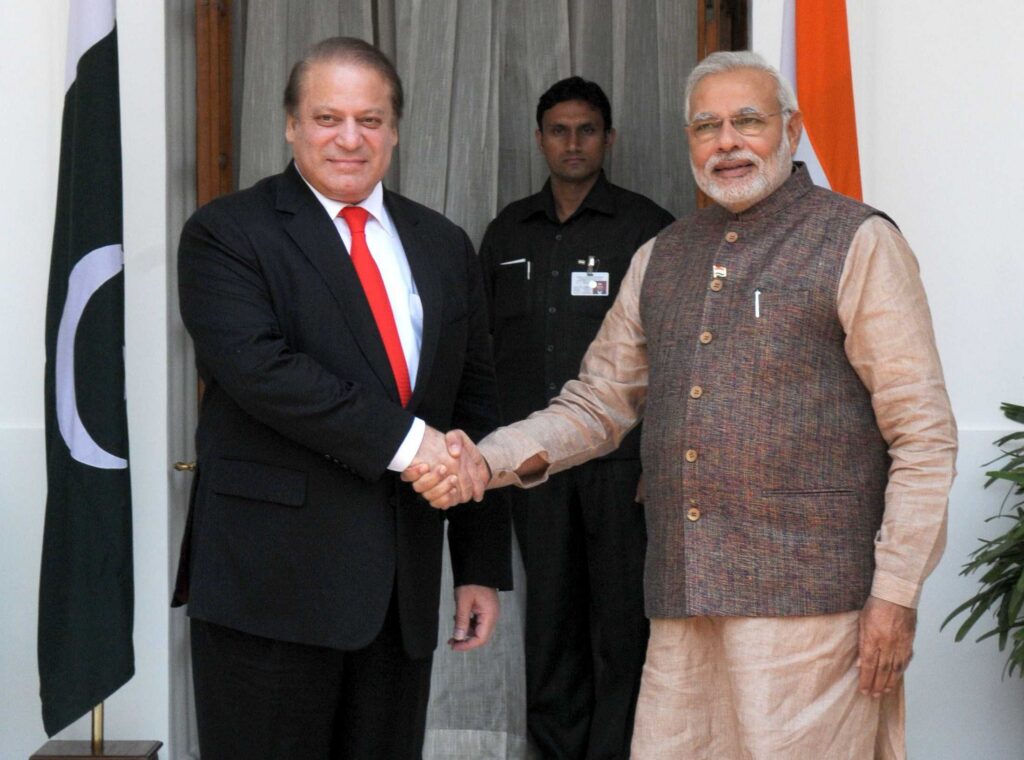
Image 2: Prime Minister’s Office via Wikimedia Commons